
From the book 'Grow the Pie : How great companies deliver both purpose and profits' by Alex Edmans :
" Roy Vagelos urgently needed money.
In 1978, William Campbell, a research scientist at Merck, had made a potentially breakthrough observation. Ivermectin, a drug Merck had developed to treat parasitic infections in livestock, might also cure onchocerciasis in humans.
Onchocerciasis was a cruel disease. It was transmitted by blackflies which bred along river banks – banks where citizens lived, played and worked because the soil was fertile and water was plentiful. A blackfly’s bite injected the onchocerca volvulus larvae, which matured into worms that lived under the skin and grew up to two feet long. Their larva caused itching so severe that it drove some sufferers to suicide.
Once the larva invaded the eyes, it frequently caused blindness – hence the common name for onchocerciasis, river blindness.
River blindness was a serious epidemic. 18 million people were already infected with onchocerca volvulus, with over 100 million more at risk. It would soon become endemic in 34 developing countries, mainly in West Africa, but also in Latin America.
In the most affected villages, the entire population was infected by age 15 and went blind by age 30. Once blind, adults would need to be led by their kids – who, as a result, believed blindness was just a part of growing up. Families who reduced their infection risk by moving away from the fertile river banks instead couldn’t grow enough food. Having to choose between blindness and starvation reduced communities to empty shells, devoid of any real economic development.
William’s hypothesis, therefore, was momentous, and would later see him jointly awarded the 2015 Nobel Prize in Medicine.
But in 1978, it was still only an idea; it needed to be rigorously tested. Anti-parasitic drugs didn’t usually succeed across species. Following William’s lab work, another Merck researcher, Mohammed Aziz, launched the first human clinical trial of ivermectin, in Senegal in 1981. It proved so successful – a single tablet completely cured the disease, without any of the side effects common in anti-parasitic drugs – that the WHO thought the data must have been recorded incorrectly.
But Merck conducted trials in other African countries over the next few years, which found similar success. In 1987, ivermectin was approved for human use under the brand name Mectizan.
But there was one final challenge – money. It would cost Merck $2 million to set up a distribution channel to West Africa and an extra $20 million per year to produce it, even ignoring the millions that Merck had already spent on development.
The West Africans suffering from river blindness were some of the poorest people in the world. They lived in huts caked in mud and wore skirts woven from grass. They couldn’t afford to pay for Mectizan, nor could their debt- ridden governments.
Roy Vagelos, Merck’s CEO at the time, asked the WHO to fund Mectizan, but the answer was no. He pleaded with the US Agency for International Development and the US Department of State. Still no.
That’s why Roy urgently needed money.
Roy then went to one final, and radical, source of funding – Merck itself.
On 21 October 1987, Roy announced that Merck would give Mectizan away for free, ‘as much as needed, for as long as needed’, to anyone anywhere in the world who needed it.
Merck established the Mectizan Donation Program (MDP), which brought together the WHO, the World Bank, UNICEF, dozens of Ministries of Health and over 30 non-governmental organisations to oversee and fund the distribution of Mectizan.
On the face of it, donating a drug was a crazy idea. The MDP would cost millions to Merck’s investors, mostly institutions with responsibilities to their clients – savers. These investors might sell their stock and drive down the stock price, or pressure Merck’s board to fire its CEO.
But this seemingly difficult decision was easy for Roy. He was driven not by profits, but by the desire to use science to serve society. The son of Greek immigrants, Roy grew up peeling potatoes, cleaning tables and washing dishes at Estelle’s Luncheonette, his family’s diner.
Estelle’s main customers were scientists and engineers from the nearby Merck laboratories, and Roy heard them talk excitedly about the drugs they were developing to improve people’s health.
As he recounted:
‘They had great ideas and loved what they were doing. They were passionate about their work, and that infected me. . . they encouraged me to pursue chemistry.
Roy's primary concern wasn’t the millions of dollars the MDP would cost, but the millions of lives it would transform.
The MDP proved wildly successful. It’s currently the longest- running disease-specific drug donation programme of its kind. It’s delivered 3.4 billion treatments to 29 African countries, 6 Latin American countries and Yemen in the Middle East, and now reaches 300 million people per year. Thanks to the MDP, the WHO has certified four Latin American countries (Colombia, Ecuador, Mexico and Guatemala) as having elimin- ated river blindness. It’s no longer a major public health issue in the savannah areas of West Africa.
The decision to donate Mectizan grew the pie. Initially, most of the increase went to West African and Latin American countries, communities and citizens.
But Merck subsequently benefited as well, even though such benefits weren’t the primary reason for Merck’s decision. The MDP boosted Merck’s reputation as a highly responsible enterprise.
In January 1988, Business Week described Merck as one of ‘the best in public service’ and called the MDP ‘an unusual humanitarian gesture’. Fortune named Merck America’s most admired company for seven years in a row between 1987 and 1993, a record never equalled before or since.
This reputation for serving society in turn attracted both investors and stakeholders. Even though investors bear the financial costs of the MDP, many investors care about social as well as financial returns, as I’ll discuss in Chapter 2.
Ten years after launching the MDP, Roy reported that he hadn’t heard any complaints from shareholders – but he did receive numerous letters from colleagues saying they’d joined Merck because of the MDP. They were excited by the potential to solve the world’s most serious health problems through a career at Merck.
Today, thanks in part to this reputation, Merck is one of the largest pharmaceutical companies in the world, worth over $200 billion. It remains an extremely sought-after employer, and it’s still on Fortune’s list of most admired companies. Investors have benefited too.
Since 1978, they’ve enjoyed an average annual return of 13%, nearly one and a half times the 9% delivered by the S&P 500. "
Note : this piece is directly adapted from the book. There was another example on Martin Shkreli who hiked HIV meds 5500% and caused pain points to society to show the contrast diff to Merck's approach. Martin Shkreli ended up in prison.
A company can undertake CSR without changing its core business; instead, it involves activities siloed in a CSR department – such as charitable contributions – done to offset the harm created by its core business. But as Matt Peacock, Vodafone’s former Group Director of Corporate Affairs, told my class, CSR is like a company saying to the people of a village: ‘Yes, we chopped down your ancient forest full of cultural significance and religious meaning. But don’t worry, we used some of the logs to build you a youth club.’
From the book 'Grow the Pie : How great companies deliver both purpose and profits' by Alex Edmans
Re-read this book ' Hillbilly Elegy' by JD Vance again as I wanted to understand better on the socio-economic and politics of the midwest esp what changed post 80s.
This book is so raw it takes you to these these places through this writings. Many struggling socio-economic places around the world face with similar challenges - mindset and adaptable skillset. I don't know his current political believes but from the book he seems like a liberal republican, center-right.
Some parts I highlighted from the book :
1. I wrote this book because I’ve achieved something quite ordinary, which doesn’t happen to most kids who grow up like me. You see, I grew up poor, in the Rust Belt, in an Ohio steel town that has been hemorrhaging jobs and hope for as long as I can remember.
2. The statistics tell you that kids like me face a grim future—that if they’re lucky, they’ll manage to avoid welfare; and if they’re unlucky, they’ll die of a heroin overdose, as happened to dozens in my small hometown just last year.
3. I want people to understand what happens in the lives of the poor and the psychological impact that spiritual and material poverty has on their children.
4. My story involves an ethnic element. While society often simplifies identities based on skin color, like "black people" or "Asians," my narrative requires a closer look.
5. I may be white, but I do not identify with the WASPs of the Northeast. Instead, I identify with the millions of working-class white Americans of Scots-Irish descent who have no college degree. To these folks, poverty is the family tradition—their ancestors were day laborers in the Southern slave economy, sharecroppers after that, coal miners after that, and machinists and millworkers during more recent times.
Americans call them hillbillies, rednecks, or white trash. I call them neighbors, friends, and family.
6. It was Greater Appalachia’s political reorientation from Democrat to Republican that redefined American politics after Nixon.
7. Papaw was a Democrat because that party protected the working people. This attitude carried over to Mamaw: All politicians might be crooks, but if there were any exceptions, they were undoubtedly members of Franklin Delano Roosevelt’s New Deal coalition.
8. Mom was born on January 20, 1961— the day of John F. Kennedy’s inauguration—and my aunt Lori came along less than two years later. For whatever reason, Mamaw and Papaw stopped there.
9. I was born in late summer 1984, just a few months before Papaw cast his first and only vote for a Republican—Ronald Reagan.
Winning large blocks of Rust Belt Democrats like Papaw, Reagan went on to the biggest electoral landslide in modern American history. “I never liked Reagan much,” Papaw later told me. “But I hated that son of a bitch Mondale.”
Reagan’s Democratic opponent, a well-educated Northern liberal, stood in stark cultural contrast to my hillbilly Papaw. Mondale never had a chance, and after he departed from the political scene, Papaw never again voted against his beloved “party of the workingman.”
10. As jobs disappear in a given area, declining home values trap people in certain neighborhoods. Even if you’d like to move, you can’t, because the bottom has fallen out of the market—you now owe more than any buyer is willing to pay. The costs of moving are so high that many people stay put.
11. People talk about hard work all the time in places like Middletown. You can walk through a town where 30 percent of the young men work fewer than twenty hours a week and find not a single person aware of his own laziness.
12. Of course, the reasons poor people aren’t working as much as others are complicated, and it’s too easy to blame the problem on laziness. For many, part-time work is all they have access to, because the Armcos of the world are going out of business and their skill sets don’t fit well in the modern economy.
But whatever the reasons, the rhetoric of hard work conflicts with the reality on the ground. The kids in Middletown absorb that conflict and struggle with it.
13. Mom believed deeply in the promise of education. She was the salutatorian of her high school class
14. As a culture, we had no heroes. Certainly not any politician—Barack Obama was then the most admired man in America (and likely still is), but even when the country was enraptured by his rise, most Middletonians viewed him suspiciously. George W. Bush had few fans in 2008. Many loved Bill Clinton, but many more saw him as the symbol of American moral decay, and Ronald Reagan was long dead. We loved the military but had no George S. Patton figure in the modern army. I doubt my neighbors could even name a high-ranking military officer. The space program, long a source of pride, had gone the way of the dodo, and with it the celebrity astronauts.
15. Nothing united us with the core fabric of American society. We felt trapped in two seemingly unwinnable wars, in which a disproportionate share of the fighters came from our neighborhood, and in an economy that failed to deliver the most basic promise of the American Dream—a steady wage.
16. Many of my new friends blame racism for this perception of the president. But the president feels like an alien to many Middletonians for reasons that have nothing to do with skin color.
Recall that not a single one of my high school classmates attended an Ivy League school. Barack Obama attended two of them and excelled at both. He is brilliant, wealthy, and speaks like a constitutional law professor—which, of course, he is. Nothing about him bears any resemblance to the people I admired growing up: His accent—clean, perfect, neutral—is foreign; his credentials are so impressive that they’re frightening; he made his life in Chicago, a dense metropolis; and he conducts himself with a confidence that comes from knowing that the modern American meritocracy was built for him.
Of course, Obama overcame adversity in his own right—adversity familiar to many of us—but that was long before any of us knew him.
17. President Obama came on the scene right as so many people in my community began to believe that the modern American meritocracy was not built for them. We know we’re not doing well. We see it every day: in the obituaries for teenage kids that conspicuously omit the cause of death (reading between the lines: overdose), in the deadbeats we watch our daughters waste their time with.
Barack Obama strikes at the heart of our deepest insecurities. He is a good father while many of us aren’t. He wears suits to his job while we wear overalls, if we’re lucky enough to have a job at all. His wife tells us that we shouldn’t be feeding our children certain foods, and we hate her for it—not because we think she’s wrong but because we know she’s right.
18. But every major news organization, even the oft-maligned Fox News, has always told the truth about Obama’s citizenship status and religious views.
19. Only 6 percent of American voters believe that the media is “very trustworthy.” To many of us, the free press—that bulwark of American democracy—is simply full of shit.
20. I once ran into an old acquaintance at a Middletown bar who told me that he had recently quit his job because he was sick of waking up early. I later saw him complaining on Facebook about the “Obama economy” and how it had affected his life.
21. My dad, for example, has never disparaged hard work, but he mistrusts some of the most obvious paths to upward mobility. When he found out that I had decided to go to Yale Law, he asked whether, on my applications, I had “pretended to be black or liberal.”
This is how low the cultural expectations of working-class white Americans have fallen. We should hardly be surprised that as attitudes like this one spread, the number of people willing to work for a better life diminishes.
22. At Yale Law School, I felt like my spaceship had crashed in Oz. People would say with a straight face that a surgeon mother and engineer father were middle-class. In Middletown, $160,000 is an unfathomable salary; at Yale Law School, students expect to earn that amount in the first year after law school. Many of them are already worried that it won’t be enough.
23. Even my service in the Marine Corps was pretty common in Ohio, but at Yale, many of my friends had never spent time with a veteran of America’s newest wars. In other words, I was an anomaly.
24. (when he returns from Yale) For the first time in my life, I felt like an outsider in Middletown. And what turned me into an alien was my optimism.


i was reading this book thinking, fast and slow by Daniel Kahneman yesterday - there are 2 system of thoughts - one is quick to assume or based on intuitive, the other is deliberate, calculative. Often times ideas need both to materialise, you might enjoy the book


it's a great perspective ! Bitcoin wont replace fiat entirely - humans are too greedy lol. But it will create a bridge for everyone to partake in economy without gatekeepers. I don't think libertarians are techno authoritarian, only because it often shifts with time and needs - i see it more as a normalising factor everytime the tail of the bell curve gets too heavy on one end.
Re farming analogy -
- those without tools will survive but will be slower to produce.
- those with tools will be faster, and eventually richer and healthier, and gap continually increases compared to those without.
- those with exposure to making tools will be able to make tools suited to their community needs and bypass legacy growth journey.
I think the importance of exposure is often forgotten

lol, why ? localised elements is just another way to bridge people with similarities in culture, food, gov't, weather etc. it also bridges gaps on local sales, local news, local issues and help needed etc. Advertising a lost dog globally will have lower chances of finding the dog compared to advertising in a local relay. Its also a great way to drive local economy and establish stronger voice as a collective.
Speaking of which, how's the dog??!!
yes, tech plays a significant role but never a sole determinant. Humans by nature are survivors and can live without tech. But humans are also adaptors and can assimilate quickly which is why leveraging similar tech from a more advanced country to a less advanced country is not complex in terms of establishing entrepreneurs/creators/makers or educating users. The complexity arises from governments and governing laws.
Ideally aka libertarian views - it would be nice to remove pain points aka gov'ts - but in reality the human dependency for direction is missed out - which is why sometimes the idea of "benevolent dictator" supersedes average political ideologies (but we can all agree dictatorship on its own draws high risk for abuse)
I think the most we would be able to do in this lifetime is to create exposures to people and empower people.
Someone growing up in the 60s in rural Cambodia would not know there is world outside of their country and were massively killed, but kids today with the access of internet, grow up with diff perspective awareness, and are familiar with digital marketing and sales, both of which drives economy.
A few years back I gave a talk in Phnom Penh for some UN entrepreneurship convention and it was my first encounter in realising policies for change was doctored and my purpose there was useless.
So i spent more time around the areas - and just next to the fancy hotels we stayed in, were large groups of homeless people, kids sleeping in the rain. It was one of the most heartbreaking moments for me. Homes were still torn apart from Khmer Rouge days and never fixed.
There remains a large group of handmakers with traditional crafts as main economy driver for the state. There is only so much traditional craft anybody can want, but, if we can extract that element of creativity and entrepreneurship and expose modern tech, then its going to empower them to find ways to creatively build up their economy.
Many a times, its the use cases that carries significant value - and who more can tell you what their communities needs then themselves, especially after being exposed to modern tech.
If this modern tech can somehow bypass crazy governments who have been the biggest pain points over the years, then maybe people have better chances in uplifting themselves.
That's just one example. Every country is different. But empowering the people and exposing them to tech could have similar approaches and might be easier to replicate.


is this one of the crazy math theory =) would be cool if you can predict tech but tech growth is often creative and temperamental in its own accord
Please pray for nostr:npub1sd3wwlvl6f58yzs4ss90x07e4dwd7yl6h3n0pygpz9vqjcxd99aq90vwne . We’re in the ER. So far they have found he has strep infection in his blood. He’s on IV antibiotics but he’s in a lot of pain. TIA
#prayers
oh no, I am so sorry to hear this, thoughts and prayers nostr:npub1sd3wwlvl6f58yzs4ss90x07e4dwd7yl6h3n0pygpz9vqjcxd99aq90vwne
Started the day with a bowl of chocolate fudge ice cream at 6am because why not, it was 31 degC. And re-read a Daniel Kahneman classic 'Thinking, Fast and Slow' , in memory off. What's your fav Daniel Kahneman book ?
it's really good!! What's the next song on the list ? I'm rooting for summer of '69 by bryan adams or any bon jovi, def leppard, guns n roses, journey - well all the 80's rock were good!


I think when AT protocol is truly decentralised and there are many other clients other than Bluesky which is not controlled by AT protocol, then it makes more sense to support it. Because it started so closed up, it attracted a singular group of people and that culture became intense and extreme.
Given we have all been interacting with Jack's presence here closely, its easy to tell that he genuinely supports decentralised protocol and that he would likely fund innovations that is worthy beyond nostr, bluesky, web5 and more.

it looks amazing, what a view to have everyday
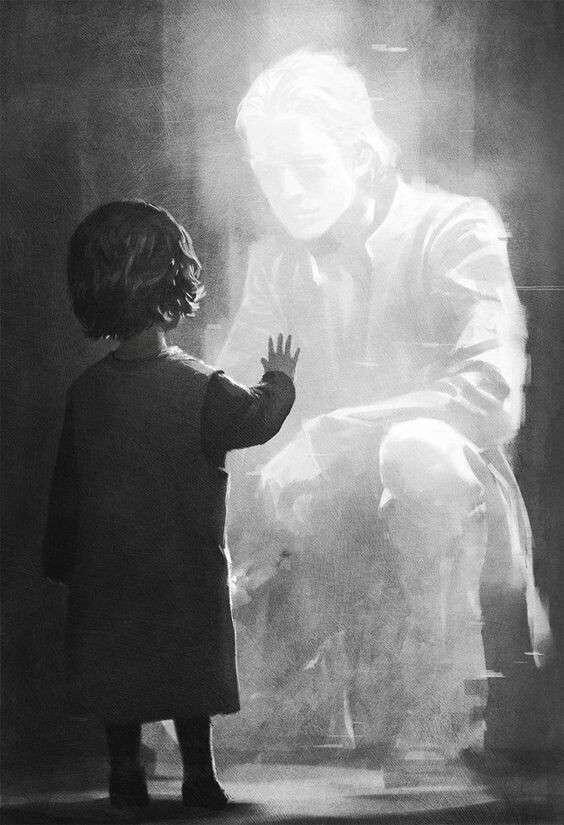
Easier to blame “God” or some supernatural force or cosmic force than to take responsibilities for your own actions or inactions and face reality. It’s def much easier to use religion as an excuse for everything - that’s how people were controlled and manipulated for centuries, and unfortunately still are.
Simple phrase but a powerful reminder to go after what you love, what you are passionate about, what you believe in, and what your dreams and desires are with everything you’ve got before the window of opportunity closes, because often time, they always do
Window of opportunity
Sometimes in a very corrupt country where gov't and cops are dirty, the only remnants of justice would be that tiny bit of hope that judiciary remains just and have courage to override executive demands. But as deepfake becomes common, its going to get easier for cops to plant evidence
Blessed Good Friday!