
TIL Monet painted The Water Lilies, 12 gigantic canvases at a time, based on the movement of the sun and its ray of lights, all while suffering from blurred vision, color blindness, and cataracts that began at the age of 73. There are a total of 250 canvases in the series. He began painting this vision in his sixties based on what he saw in his garden in Giverny, and continued working on it for several decades until his death at the age of 86. Now that’s a whole different level of multitasking under extreme challenges and patience. The Musée de l'Orangerie was designed to showcase the Water Lilies series in an oval-shaped room with natural light (sunrise to sunset), to immerse viewers in his artistic vision. Some consider it the first art installation ever. But while he was alive, Monet was reluctant to part with his art, and even after the museum was completed, he felt he wasn't finished with it. In fact, there remains a small unfinished patch in the series. After his death in 1926, his paintings were initially displayed but didn’t receive the attention hoped for and were largely forgotten. However, they were rediscovered in the 1950s and gained popularity for the emotional and artistic impact they left on viewers. I’ve never been to the Orangerie, but maybe someday.

I don’t know if there is one person who is a “know-it-all”. My brother is one of the smartest people I know and everytime we catch up, I learn something new. We can have very in-depth conversations on political ideologies and history, science, general knowledge (and he is the only one who can keep up with my geekiness) and we can have really simple ones - like the other day, I realized the only Trump I will support is Judd Trump. But try having a conversation on colors and you get nowhere. Jack is also smart. I pick up something new with each of his talks - he drops high level clues to get people thinking - like the whole open source ecosystem. Of late I realized that many that I thought were smart were just people who bragged a lot, and sold themselves really well and because I didn't know enough at that point I was impressed. I think it helps to be really curious about things and see what feeds your curiosity - you can learn something new from anywhere.
MacGyver (the old one) is a nice inspiration of making the most out of everything you've got (That and he has nice hair, and an even nicer smile).
that excitement when your gadgets arrive! While stocking up for myself, i decided to get an arduino uno and a smart car chassis and its assemblies for my nephews, and they are super excited (or maybe I am). This will be their first encounter of electronics / programing project that's fun. But first, I've got to set up a proper discharge process, how do you'll normally remove static ? metal to metal or one of those anti static bracelets ? i've been kinda lazy about it so i just use a coin and touch a metal bracket

so much to do, so little time
Who sees the human face correctly : the photographer, the mirror, or the painter? – Pablo Picasso
I have long been fascinated by the Renaissance movement (14th - 17th century) with Leonardo Da Vinci and Michelangelo. When I was a little girl, I grew up seeing pictures of the Renaissance art, with my big brother telling me stories about it. During a backpacking trip to Italy many years ago, I fell in love with Florence, and walking through the Chapel in Vatican City and just looking up, felt surreal.
Another movement I love is Impressionism of the late 19th century, particularly the works of Monet and Renoir, with their loose brushwork, vibrant colors, and play of light. This always felt safe, romantic, dreamy and just nice.
This week, though, I thought I would shake it up a little and explore the Surrealism movement (1920s up to post-WW2).
The first I looked into was the works of Salvador Dalí. And whoa, I was amazed by how he experimented with everything he felt - he captured his surreal visions so succinctly. His most famous painting, "The Persistence of Memory," with melting watches, became his iconic trademark (and I only recently noticed the ants!) .
Dali had an interesting life journey, from his fascination with Freudian theories to becoming a Hollywood celebrity. That, and his method of boosting creativity: he would hold a spoon while napping in a chair. As he drifted off, he would drop the object, and the sound would wake him, allowing him to capture the bizarre dreams from his light sleep. This technique led him to explore the depths of his imagination and unveil hidden meanings. There's so much more to Dali and his paintings than I can possibly write here.
Another interesting figure in Surrealism is Lee Miller. She went from being a Vogue cover model to becoming a famous photographer and war photojournalist during WW2, with that infamous picture of her captured in Hitler’s bathtub. Miller's journey is nothing short of a relentless pursuit of excellence, of wanting to be the best of the best.
When she decided to become a photographer, she took a flight to meet Man Ray, a super famous surrealist photographer, and told him she wanted to apprentice under him. When he said no, that he didn't take an apprentice, she boldly said “ you now do”, and became his apprentice and assistant for 3 years. (As I was looking through Man Ray's works, I noticed his iconic "Violon d’Ingres" violin symbol looked similar to nostr:npub1sg6plzptd64u62a878hep2kev88swjh3tw00gjsfl8f237lmu63q0uf63m's ink - not sure if its an intended resemblance).
Miller wanted new adventures, so after her apprenticeship ended, she went to New York, moved to Cairo then to Europe. During WW2, she took numerous war photographs that were published in women's magazines, leading to her role as a war photojournalist. Coincidentally, on the day she took the infamous photograph in Hitler’s bathtub, Hitler shot himself, and the war ended soon after.
Upon returning home, Miller suffered from PTSD due to the horrors she witnessed in concentration camps. Despite her many accomplishments, including becoming a renowned cook in her later life, the war images haunted her, and she kept the films hidden in her attic. It was only after her death that her son found these photographs, which cemented her legacy as one of the greatest surrealist photographers of our time.
There’s definitely a lot of interesting things that went through this era with the art movements. I think understanding the art movement in parallel to history is incredibly fascinating, but this is something that comes as light bulb moments over time, at least for me. If there is one thing I’ve learned, it’s to let thoughts and imaginations flow. It takes you to the next step and the next…

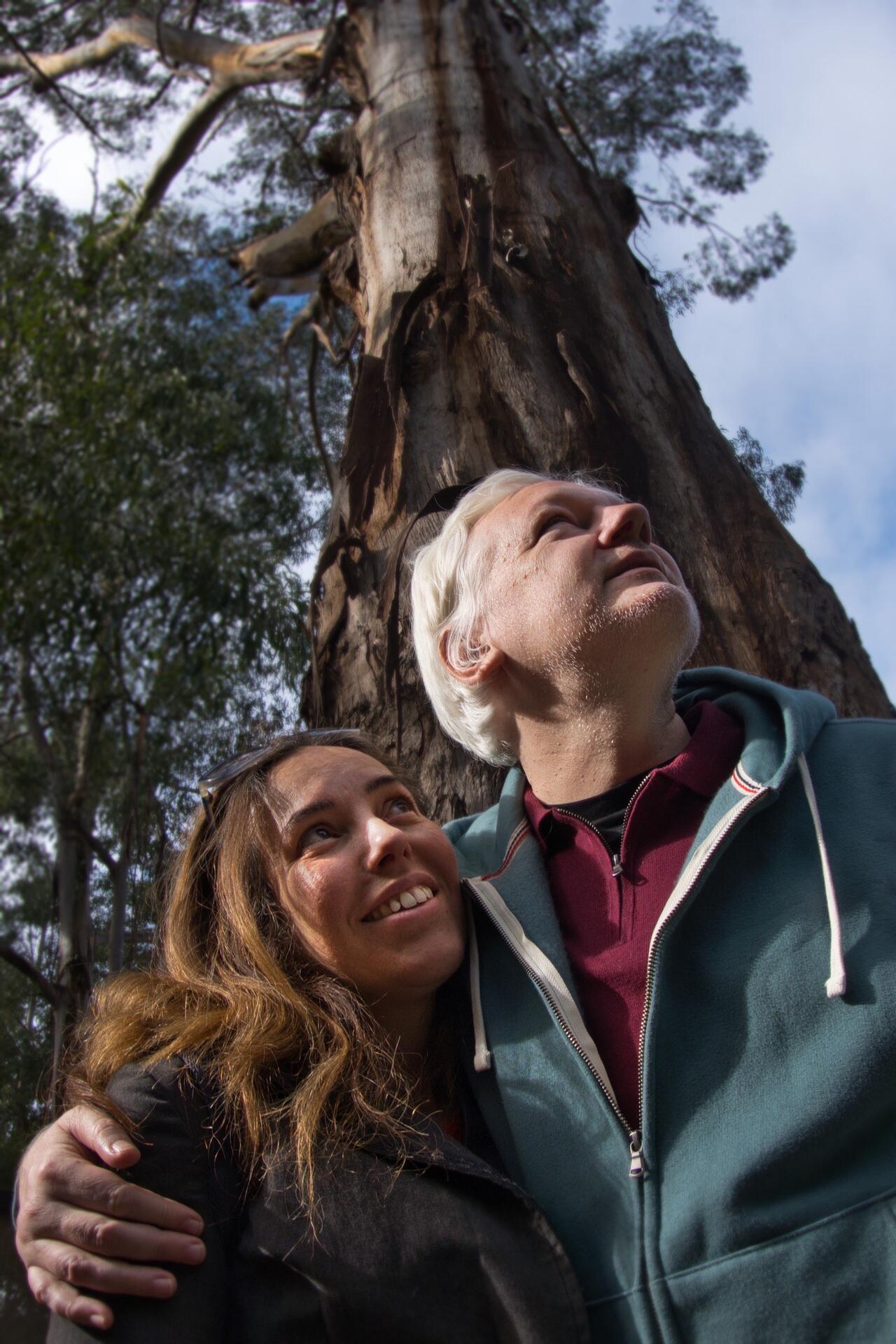
Happy happy birthday Julian Assange! It's so nice seeing this picture. And a big shout out to you nostr:npub1xw7h0efeg5s8gla2uyu55jh4lfrlgppcjemrwkmdc7lgvhkcz3fqpvumsa for that unwavering fight for love and freedom, and in continuing the battle for all journalist globally ❤️

wow. also, seeing a lot of attacks on RFK of late - I'm guessing his poll is increasing ?
It's the durian season. If you have not tried them, you have no idea what you are missing out on.

It's really good and aptly put, we need separation of state and bank.
—-
Loved the indie concept and the clips of the past, the little things - like the price of a TV when Thatcher was in power, £10, before the conversation moved to inflation. That beautiful little girl dressed as a princess who lost her eye and a limb just broke my heart.
I also like the timeline of history and the political concept progression. And it started with the fact that oil in Saudi was discovered and invested by Americans during Roosevalt’s era in ‘38.
The rise of Marxism in the 60s in Afghanistan was a big thing - and the reason why the king was killed, and the CIA slipped in.
Another irony is that the Kabul Universities had more liberalism back then than they do now - in debating what teachings Afghanistan should adopt - be it Marxism or the Islamic militant way that reached Afghanistan through Egypt.
I did not know abt the Wahhabism concept of extremist oligarchs of the Saudis but it makes sense. The 70’s Islamic wave was anti-American and authoritarian, and it killed the richness and beauty of diverse culture in not just the Middle East but also Northern Africa and SEA. This period was right after most countries achieved independence from the British
Mujahids and Taliban are like the left and right in the Islamic militant group, and Al Qaeda is like the international marketing group of Taliban (similar concept of spreading Wahhabism by the Saudi’s)
The CIA's intervention was strong. Russia left in ‘89. Massoud backed by the CIA, eventually became the leader of the Mujahids in ‘92 and led Afghanistan.
An important missing element was that Massoud died 2 days before 9/11 and he warned the US and EU of Osama’s rise of power.
The 90’s (right after Cold War ended) was peak extremist intensity - Iran’s Ayatollah, Charles Taylor of Liberia who funded the RUF to rise against their own corrupted gov’t in Sierre Leone because he wanted a hold of the diamonds. And the Talibans, formed in ‘96.
Massoud who was against the Talibans lost the battle and fled to Tajikistan. He asked EU to put pressure on Pakistan who was supporting Talibans but Benazhir Bhutto who was apparently heavily corrupt, was untouchable (till she was killed).
There is an interesting piece by Julian Assange interviewing Imran Khan on the influence of the West in Pakistan and funding Talibans and corrupt leaders.
On September 9, 2001, Massoud died from a suicide bombing act (jihadis) as instructed by Osama bin Laden.
Two days later, the September 11 attacks occurred in the United States.
NATO and CIA then intervened in Afghanistan and allied with Massoud's former forces the ‘Northern Alliance’, and ousted the Taliban in 2001. And now they are back.
That video of Saudis meeting the Queen, with Princess D following behind was interesting too. She was such a big voice of anti war. That week that she died, for some reason, CIA, M16, Mossad were all there in Paris, and her driver had links to all the intelligence agencies.
I also liked how Adam Curtis drew a clear linkage between economic downturn and shift of power from government to financial systems.
For many other 3rd world countries the marketing gimmicks were on infrastructure loans, sustainable, millennial development and these days ESG as a methods of supplying money to these countries and siphoning it out through their corrupt leaders. Many of these countries who took on debts could not recover during economic downturns. Originally, 3rd world were known as countries who neither support US nor Soviet, and eventually 3rd world countries became known as poor countries.
Towards the end of Bitter Lake, it reminded me of why the Vietnam war could not be won either and I quote “what we thought was the Taliban was actually an allergic reaction to us turning up in the middle of a complex civil war” . Similar struggles. Really good documentary, thanks for sharing.
The above are also based on my recollection of a few books ,
Ghost Wars: The Secret History of the CIA, Afghanistan, and Bin Laden, from the Soviet Invasion to September 10, 2001, by Steve Coll
A long way gone : Memoir of a Boy Soldier by Ishamael Beth
The Blood Bankers by James S. Henry
Gideon Spies by Gordon Thomas
Currency Wars by James Rickards
Mohammad Ali’s writings on Gaddafi
I think one of the most important use cases needed to improve and accelerate Bitcoin adoption is its flexibility in quick multi-currency transactions.
If we look at it from 2 perspective :
1. De-dollarisation and Geopolitical Shifts
Saudi refusing to renew the 1974 petrodollar deal in recent weeks, and further strengthening its partnership with BRICS is a symbolic movement towards de-dollarisation.
The weakening of the US currency will reduce global trade dependency, undermine sanctions, expose vulnerabilities, and amplify FOMO towards BRICS (many countries are already quietly and rapidly joining this bloc). This can create global currency war.
Bitcoin could serve as a "peacekeeper" by being a neutral medium that reduces dependency on politically influenced currencies. But more importantly, with the ease of currency exchanges, countries globally will no longer need to depend on USD or BRICS. Any two countries can interact with each other using Bitcoin or their own currencies via Bitcoin seamlessly.
2. On small business payments for global trade
Small businesses often represent 80% - 90% of a country's business but struggle in competition with hegemony trades that have advanced payment systems, manufacturing and logistics. Current payment gateways often lack the ability to handle small business needs effectively, and manual wire transfers are cumbersome and expensive. Overcoming currency exchanges would improve Bitcoin’s ease of transfer and simplify cross-border transactions, making it an attractive option for SMEs.
Both these scenarios got me thinking of how Bitcoin can come into play, for quick multi-currency transactions.
There are possible options out there for now :
1. Collaboration with stable coins - Pros is stability in value and ease of integration with existing financial systems. Cons is that it is tied to specific currencies, corporate control, and potential centralization issues.
2. Token-based Solutions
With tokens like Cashu, pros is that it is programmable to represent different currencies in real-time. Cons is that it lacks risk assessment, real-world usage, and challenges with ownership concentration.
With tokens like the sidechain that Fiatjaf once shared, the pros is that it can enhance the scalability and functionality of Bitcoin without altering the main chain. But the cons is that there is potential centralization if tokens are controlled by individuals or specific entities.
3. Web5 financial layer - I’m not sure how the financial layer works, but I recall Jack mentioning Block and TBD will be releasing more info soon. The potential lies in integrating decentralized identity and financial systems more seamlessly.
4. Nostr zaps - any global trade or B2B focused client (or other stuff) can be created. Pros is that it could enable flexible currency display, conversion, and quick calculations for businesses. Cons is that it is still figuring out user adoption use cases and challenges. Also limitation of amount spent?
5. Wallets with multi-currency features for KYC and non-KYC - i reckon this follows many pros and cons of the above.
I don’t know if the above list is accurate / inaccurate but all innovations have pros and cons and specific use cases. Continuous feedback from users in different use cases will help improve these technologies. But we definitely do need more innovations and brainstorming in this area.
If the adoption of Bitcoin increases among businesses and individuals, then it will further drive innovation and refinement of Bitcoin's role in global finance.
I thought Odell’s caps lock was his version of dad joke. And you make even more dad jokes. This could be over an hour of dad jokes.
In the real world out there, Saudis decided not to renew the Petrodollar and its further strengthening its alliances with BRICS. Many countries are joining Brics like windfall but quietly. US currency is under serious threat, trade and sanction powers will weaken and avenues for attacks will open up. More than anything technology strength in the US needs major boost if it ever wants to come out of debts. US style of claiming dominance through political interference, military and currency is no longer working. There is a real danger in America weakening today and it needs a strong and wise leader to turn things around, otherwise, its rapid downward hill. I hope people are able to pull themselves out of these mind games of "left", "right" and pick a leader that will bring up the country again, sooner than later.

as far as i understand, in the case of llms, they learn from all the contradictory opinions and 'live with them all the time'. the way you ask a question or the way the conversation evolves, they choose which book to serve from. they are like hypocrites. if the conversation evolves towards socialism, they can happily serve you socialism or any other topic. they have no inner dialogue to sort things out, i.e. to reduce cognitive dissonance. you can install 50 capitalism and 50 socialism books at the same time. so yes i guess that is 'compassion' for anything 😃
answers:
1. after spending probably millions, facebook have shared weights of the llama3 model and i am building on that. western models are better than eastern ones in terms of freedom of speech. it is also the smartest among open source. what i do is technically called 'fine tuning'. the phase is pre-training (i don't do supervised fine tuning). my 'touch' is light. i give nostr notes and also books as a training material. it learns from those texts. unstructured nostr notes work too! amazing tech.
2. these are large language models, inside them there are two main structures. attention block and neural network block. attention is a newer tech. search for 'attention is all you need' paper.
3. you need gpu's to train them in a reasonable time. on cpu it is like 20 times slower?
4. i train them on my pc's. then i upload to huggingface. everyone can download it from there and use a tool that runs gguf files to run it and ask questions to it. you can also talk to it here on nostr!! nostr:npub1chadadwep45t4l7xx9z45p72xsxv7833zyy4tctdgh44lpc50nvsrjex2m
my turn to ask questions! what are those books that could be source to this project? i know you are a bookworm 😄
oh that's interesting - i've got a lot to catch up on. Thanks for sharing! I realised the adoption of AI in general workspace is also increasing rapidly - or rather the conversation and executive decisions made around it, even locally. I'm beginning to think everything is going to be AI based one way or another to optimise process and flow. Doesn't hugging face come with pre-trained models ? I presume the benchmark specs and parameters make a difference ?
These are some books I read over a year or 2 - i don't have specific reasons or favourites - its merely out of curiosity and often times trying to figure out stuff i don't know that lead me to it
1. It’s Not Only Rock ‘n’ Roll: Iconic Musicians Reveal the Source of their Creativity by Jenny Boyd
2. The Mamba Mentality by Kobe Bryant
3. Makers: The New Industrial Revolution by Chris Anderson
4. Creative Confidence: Unleashing the Creative Potential Within Us All by Tom Kelley & David Kelley
5. Innovation and Entrepreneurship by Peter Drucker
6. Mindset: Changing the Way You Think to Fulfill Your Potential by Carol S. Dweck
7. Ideas and Opinions by Albert Einstein
8. Out of Our Minds: Learning to be creative by Ken Robinson
9. Neuroscience of Creativity edited by Oshin Vartanian, Adam S. Bristol, and James C. Kaufman
10. Windows of Opportunity by Pam Schiller
11. Prototype Nation: China and the Contested Promise of Innovation by Silvia M. Lindtner
12. How Iceland Changed the World by Egill Bjaanason
13. Genghis Khan and the Making of the Modern World by Jack Wetherford
14. JFK and the Unspeakable by James W. Douglass
15. Demokrasi: Indonesia in the 21st Century by Hamish McDonald
16. Drugs as Weapons Against Us by John L. Potash
17. Mukiwa: A White Boy in Africa by Peter Godwin
18. Long Walk to Freedom by Nelson Mandela
19. The Blood Bankers by James S. Henry
20. Trillion Dollar Coach: The Leadership Handbook of Silicon Valley's Bill Campbell by Eric Schmidt, Jonathan Rosenberg, and Alan Eagle
21. Founders at Work: Stories of Startups' Early Days by Jessica Livingston
22. Playing to Win: How Strategy Really Works by A. G. Lafley and Roger L. Martin
23. The Bezos Blueprint: Communications Secret of the World’s Greatest Salesman by Carmine Gallo
24. Contagious: Why Things Catch On by Jonah Berger
25. The 22 Immutable Laws of Branding: How to Build a Product or Service into a World-Class Brand by Al Ries and Laura Ries
26. Get Scrappy: Smarter Digital Marketing for Businesses Big and Small by Nick Westergaard
27. Whole Body Barefoot by Katy Bowman
28. My Inventions by Nikola Tesla
29. Math and the Mona Lisa by Bulent Atalay
30. Fashion Brand Stories by Joseph Hancock
31. A Guide to UX Design and Development by Tom Green and Joseph Labrecque
32. Design Thinking by Peter G. Rowe
33. The Idiot Brain by Dean Burnett
34. The Memory Illusion by Dr. Julia Shaw
35. Navajo Code Talkers by Brynn Baker
36. Fat Leonard by Craig Whitlock
37. Steve Jobs by Walter Isaacson
38. Fashion History: A Global View by Linda Welters and Abby Lillethun
39. Mexicana Fashion by Aida Hurtado and Norma Canto
40. Gideon Spies by Gordon Thomas
41. Currency Wars by James Rickards
42. Grow the Pie by Alex Edmans
43. Jay-Z by Michael Eric Dyson
44. Savage Inequalities: Children in America’s Schools by Jonathan Kozol
45. The Wise Men by Walter Isaacson and Evan Thomas
46. X-Teams: How to Build Teams That Lead, Innovate, and Succeed by Deborah G. Ancona and Henrik Bresman
47. Connecting the Dots: Lessons for Leadership in a Startup World by John Chambers and Diane Brady
48. The Expert Guide to Retail Pricing by Kiran Gange
49. High Growth Handbook: Scaling Startups from 10 to 10,000 People by Elad Gil
50. Guerrilla Marketing Field Guide: 32 Powerful Battle Maneuvers for Non-Stop Momentum and Results by Jay Conrad Levinson and Jeannie Levinson
51. Outbounding: Win New Customers with Outbound Sales and End Your Dependence on Inbound Leads by William Miller
52. Lean Brands: Catch Customers, Drive Growth & Stand Out in All Markets by Luis Pedroza
53. The Best Service Is No Service: How to Liberate Your Customers from Customer Service, Keep Them Happy, and Control Costs by Bill Price and David Jaffe
54. Lean Six Sigma by Jeffrey Ries
55. The Entrepreneurial Bible to Venture Capital by Andrew Romans
56. They Ask, You Answer: A Revolutionary Approach to Inbound Sales, Content Marketing, and Today’s Digital Consumer by Marcus Sheridan
57. The Geek Way by Alex McAfee
58. Innovative Product Development by Additive Manufacturing 2022 by Roland Lachmayer et al.
I have a different perspective - i think having books with contradictory opinions widens train of thoughts and develops a deeper understanding and compassion for the other side. On a different note, I have questions if that's ok =) Are you training on custom local models using open-source AI ? and are you training based on LLM or neural network or small modals, and if LLMs what's the GPU performance like ? are you optimising it or is this developed on cloud services like Azure and Google ? And if it is based on cloud services, what are your thoughts on its privacy and localisation ? Many thanks in advance!
Nice to see people winning this week - with chat privacy maintained in Europe - and oh man, Julian Assange walking free! Never ever stop believing.
People wonder what democracy is - if its left right, white black, AA merits, city rural, race, religion etc etc . Nope, that's not democracy. That's what your leaders fool you into thinking and try you box you in. People get so engrossed choosing sides that even when the leaders are mentally incapable, they will defend to the end. Don't fall for that mind game.
This, what we experience this week, this is democracy. Where people come together collectively and voice out what they want fervently, passionately and relentlessly, that it cannot be ignored, and leaders of many nations have to listen.
Assange's fight is not over, and a shame he had to plead guilty to make his 5 year imprisonment justifiable which only goes to show he was imprisoned for no reason to begin with. But if they try to catch him again, people all over the world will flip out like hell.
I can't wait for someday when Snowden gets to go back to the US and be welcomed a hero that he truly is. But for now, compared to all that's been happening, its been a damn good week. The people are winning. Don't stop believing.
The rarity of people gifted in both arts and science - the creative geniuses. Little did I know Leonardo’s full time job was an engineer, scientist and part time job was an artist. Throughout his life, Leonardo was portrayed as obsessively curious and intensely observant. His cross-disciplinary brilliance made him known as the quintessential The Renaissance Man.
I picked up his journal interpretation last week and I’ve got Walter’s Isaacson’s copy of him for this week. There are very few people from the past and in today’s time who would fit into this category - and their brain just works differently.
Here’s Leonardo Da Vinci to-do list - it's quite something. His thirst for information and knowledge is something else. He writes all he wants to achieve and underlines it, and how he plans to achieve it. I'm guessing the latter is a variable factor in achieving his goals, ie one way or another.

Picked up this book “My Inventions" by Nikola Tesla. Tesla invented AC current, wireless transmitter, transformer, magnifying transmitter, turbine generator, first one to mention end to end privacy in communications, stationary territorial waves, arc lamp, initiated automation among his many inventions in late 1800s.
His style of writing was a Huckleberry Finn meets Catcher in the Rye meets In Pursuit of Happiness (Will Smith movie) - which vividly describes his adventures , his mental / emotional stage and his sheer determination.
Here are some of the lines I liked from the book :
1. My method is different. I do not rush into actual work. When I get an idea I start at once building it up in my imagination. I change the construction, make improvements and operate the device in my mind. It is absolutely immaterial to me whether I run my turbine in thought or test it in my shop. I even note if it is out of balance. There is no difference whatever, the results are the same. In this way I am able to rapidly develop and perfect a conception without touching anything.
2. On one occasion I came across a novel entitled “Abafi” (the Son of Aba), a Serbian translation of a well known Hungarian writer, Josika. This work somehow awakened my dormant powers of will and I began to practise self-control. At first my resolutions faded like snow in April, but in a little while I conquered my weakness and felt a pleasure I never knew before—that of doing as I willed. In the course of time this vigorous mental exercise became second nature.
3. Most persons are so absorbed in the contemplation of the outside world that they are wholly oblivious to what is passing on within themselves.
4. A new idea must not be judged by its immediate results.
5. Instinct is something which transcends knowledge.
6. (Describing complex work used by many) - Under such circumstances the progress must be slow and perhaps the greatest impediment is encountered in the prejudicial opinions created in the minds of experts by organized opposition.
7. We crave for new sensations but soon become indifferent to them
8. The wonders of yesterday are today common occurrences.
9. My project was retarded by laws of nature. The world was not prepared for it. It was too far ahead of time. But the same laws will prevail in the end and make it a triumphal success.
10. My belief is firm in a law of compensation. The true rewards are ever in proportion to the labor and sacrifices made.
11. I am prompted to this prediction not so much by thoughts of the commercial and industrial revolution which it will surely bring about, but of the humanitarian consequences of the many achievements it makes possible.
12. War can not be avoided until the physical cause for its recurrence is removed and this, in the last analysis, is the vast extent of the planet on which we live.
13. What we now want most is closer contact and better understanding between individuals and communities all over the earth, and the elimination of that fanatic devotion to exalted ideals of national egoism and pride which is always prone to plunge the world into primeval barbarism and strife.
14. As I view the world of today, in the light of the gigantic struggle we have witnessed (WW1), I am filled with conviction that the interests of humanity would be best served if the United States remained true to its traditions and kept out of “entangling alliances.”
15. Deficient observation is merely a form of ignorance and responsible for the many morbid notions and foolish ideas prevailing.
16. (On the League of Nations, predecessor to the UN, formed after WW1) - The proposed League is not a remedy but on the contrary, in the opinion of a number of competent men, may bring about results just the opposite. It is particularly regrettable that a punitive policy was adopted in framing the terms of peace, because a few years hence it will be possible for nations to fight without armies, ships or guns, by weapons far more terrible, to the destructive action and range of which there is virtually no limit.
This was a short book. A good read.
