

Appreciate you for reading 🫡


What It Actually Feels Like to Start a Company
Most nights, it’s hard to sleep.
Weekends don’t mean anything anymore.
Closing a round of financing is not a relief. It just means more people are counting on you to turn their money into something twenty times bigger.

You cannot just "turn it off."
Television, movies, vacations all feel boring once you realize your company’s future might be sitting in your inbox or in the results of a test you forgot to run.
You feel guilty doing anything outside of work.
It takes years of fighting this to realize that balance is not a soft skill. It is an essential one.
The best ideas come when you are not staring at a screen.
Healthy distractions are not a luxury. They are a competitive advantage.
You learn to respect the Duck:
Paddle like hell under the water. Stay smooth and calm on top where everyone can see you.
Lose your cool, and you lose everything.
You keep asking if you are making the world better.
You start turning every conversation into an opportunity.
You see how hard it is to relate to people who are not risking it all every day.
You stop blaming them for not understanding.
You start finding your people: the ones who do.
You realize your real job is not the product.
It is the vision.
The culture.
The team.
The energy.
You will never forget the feeling when you look around and realize your team believes in the mission as much as you do.
You stop settling for mediocrity. You know what excellence looks like now, and you are not going backwards.
You turn down offers.
Not because of pride, but because you know the team you have is too good to sell short.
You know quitting is not an option.
You learn how to laugh at everything.
Because all the bad things you imagine happening? They will happen.
You will work two years on something and realize it was wrong in one day.
And you will still find yourself laughing at how ridiculous it all is.
You stop chasing money.
Freedom, autonomy, responsibility, and recognition become your currencies.
And they are the same currencies of the people you want to keep around.
You feel like a parent to your customers.
They will never know how much you love them.
They are the reason you are not crazy.
You learn who you really are.
What you do when you get punched in the face over and over again.
What you do when no one is watching.
You realize the only thing you can be truly great at is being yourself.
Compromise that, and you lose everything.
You get grateful for the hard days.
Because they show you who is really with you.
Because they teach you things winning never could.
You realize that most people only get one shot at something great.
And you are holding yours in your hands right now.
It is not easy.
It is not peaceful.
But it is exciting.
Every day is different. Every day matters.
Even the worst days are better than a life spent wondering.
And that is why you cannot do anything else.

i've been thinking a lot about nostr:nprofile1qyjhwumn8ghj7cn40faxymm594ex2mrp0yhxyatvd35hx6rzda6kuare9e3k7mgprfmhxue69uhkummnw3ezuum4v3hkxctjd3hhxtnrdaksqgxfax7upvpuyx7nx7sjmn6mgc75nld0azz25y4mj5xpst57fklfhqy6fmt5 lately. yeah, in its current form it can feel like spam or cheap engagement farming, or tacky at best. nobody really wants their feed clogged with random bounty hunting.
but the more i think about it, the more i realize there's something deeper hiding under the noise. buzzbot actually taps into the raw engine of nostr itself. as we always discuss: value-for-value, peer-to-peer connection, permissionless incentives.
traditional social media gives you "likes" and "shares" and some empty metrics. buzzbot (accidentally or not) gives you value exchange. real sats, real signals, real skin in the game. that's a massive unlock most people don't appreciate yet myself included.
imo, the problem isn't buzzbot's existence. it's the calibration. how do we fine-tune it so it feels less like spam, and more like organic engagement?
some ideas (still very rough and i don't really know how else to put them together), but here they are. jsut some food for thought.
- reward meaningful comments heavier, not random ones. how? im not sure of it yet.
- adjust payout splits dynamically based on engagement quality. still dont know how exactly. but i believe that should be the part of calibration
- introduce reputation scoring for buzzers and posters
- allow bounties that reward new follows or verified zaps (not just randomness)
- randomness is what makes it look bad right now. mreplace randomness with something more meaningful. this will also help eliminate sat farming bots which is the most annoying part right now.
- a bot farm with 200+ accounts could easily game the system, trick the purpose, and even trigger the algorithm to push every buzzbot note into trending which is basically whats happening right now.
these tools are kinda rough to build and manage but under the surface, they're a glimpse of what makes nostr unstoppable. every interaction has real weight, meaning, and real value. the challenge is figuring out how to distribute that value properly across these kinds of interactions.
Your solution is for a better BuzzBot, but the fix has to come from the algorithmic side. Shitty buzzbots will continue to work because the algorithms can be gamed
Watched Arrival again last night.
Seen TENET 15 times.
Read Bitcoin is Time 10 times.
Watched Interstellar and decided gravity-based time travel is creative fiction.
Followed Ashton Forbes for the fun of it.
Saw the White House casually post about space-time manipulation and no one care.
This post is brought to you by nostr:nprofile1qqswp94gnm4epqsgjkndl4lnd8krzdj5u4mzuppdtxksdymkty63g7gpzamhxue69uhkv6tvw3jhytnwdaehgu3wwa5kuegpp4mhxue69uhkummn9ekx7mqhdr2m3 and nostr:nprofile1qqsf960jkzjpecendet5vq8mhzlljdawvxfjktf5lhpenlw2ywmhj7qpp4mhxue69uhkummn9ekx7mqpzpmhxue69uhkummnw3ezumrpdejqu0tc9p
Support your circular economy. It's real. The rest might not be.

Show the incentive and you’ll see the outcome.
Medium of exchange in the Bitcoin circular economy isn’t about scale. It’s not a daily active user chart. It’s not a dashboard metric.
It’s trading wine for soap. Shirts for salmon. Bitcoin for beef. It’s real relationships with founders who care about their product, their freedom, and the people they serve. It’s conversations about Bitcoin, health, and building lives outside the system.
This is the real world. One built on value, trust, and skin in the game.
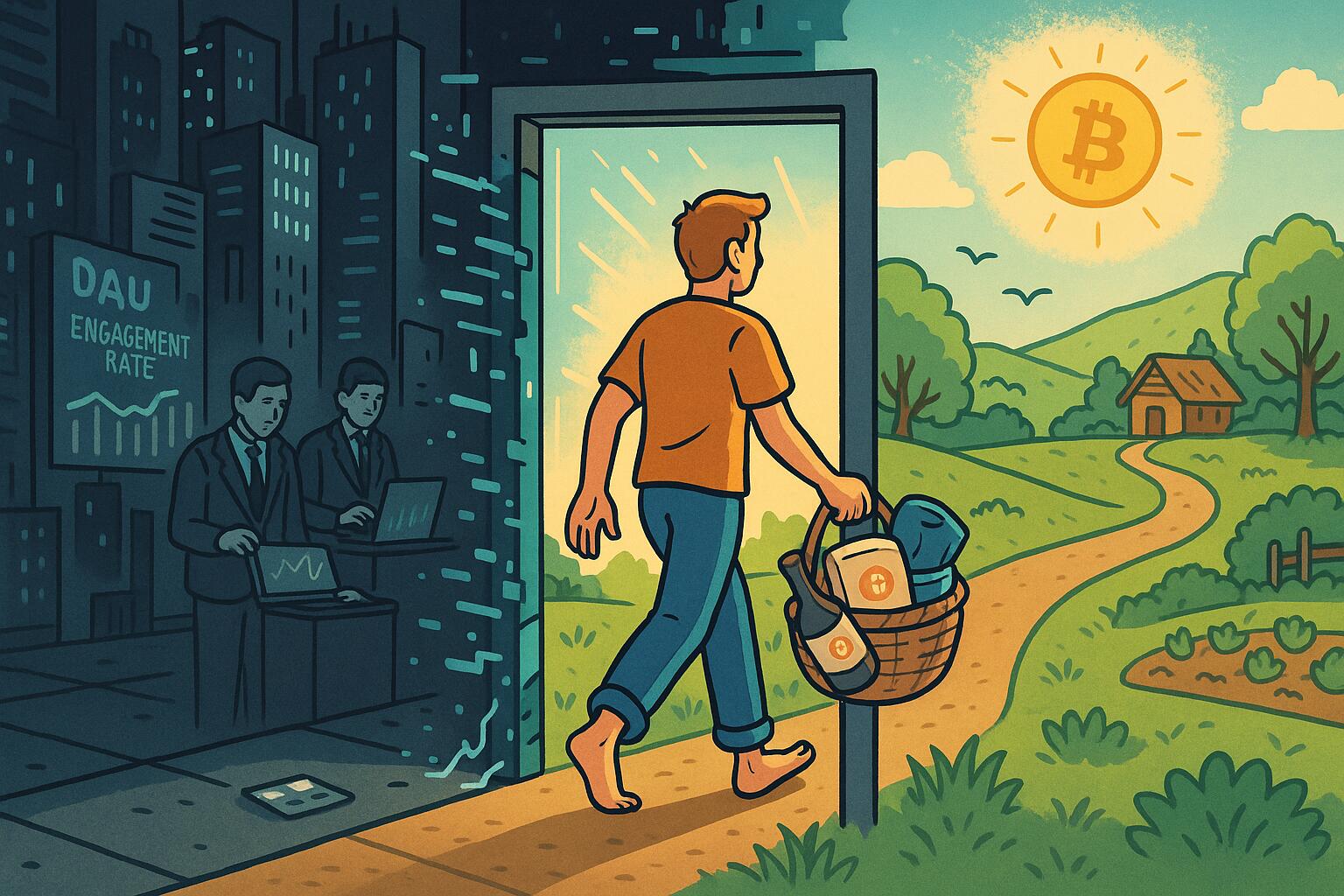
Meanwhile, the macro analysts go home and log into someone else’s world.
The Bitcoin economy is small. It’s real. And it’s growing. Just like Bitcoin itself, it’s there for anyone ready to exit the matrix and stop needing their money and goods.

Soak Quest made is to #31 on the Primal trending 24hr list after only 9 hours without using BuzzBot
Medal incoming
With the first pick in the "I wish they were on NOSTR Draft" Soak Quest selects:
PARKER LEWIS of Zaprite.
Make Zaps Rite Again
Rules:
- Quote Post your pick
- Person cannot be picked in the thread of picks
- Tell us why you picked them


Headline: effective immediately
Source material: will begin phasing out
Nice

You should be careful using the phrase you should. Do it yourself
“I’ll only pay in Bitcoin if there’s a discount.”
We hear this a lot.
But if someone needs ten percent off to spend Bitcoin, they’re not your best customer. You don’t need to bow to that.
Your best customers want you to succeed so they can keep coming back.
They’re aligned with The Mission:
Make Bitcoin the money.
This isn’t about telling anyone how to spend.
Pay with dollars. Pay with Bitcoin. Follow your incentives.
But let’s flip the idea that you need to offer a discount to drive Bitcoin sales.
You don’t.
Truly aligned Bitcoiners are looking for ways to grow the Bitcoin pie while still getting the products they want.
If supporting a Bitcoin business helps normalize Bitcoin as a medium of exchange, that helps everyone.
Some people only stack.
Some spend and replace.
Some just spend.
All of that is fine.
What matters is that when they do spend, they want that transaction to build something.
For many, this might be their first real-world Bitcoin purchase.
Or maybe they want to show a skeptical friend that yes, you really can buy things with Bitcoin.
When you accept Bitcoin, you're doing more than taking payment.
You're validating the experience.
You're giving people a reason to keep using the best money we've ever had.
At first it feels novel.
Then it becomes second nature.
Eventually it becomes the default.
You don’t need to offer a discount to meet your customers.
You just need to offer value and stay aligned.
That is how the Bitcoin circular economy wins.


My initial research on the pen isn't lining up with this
Who has a list of merchants on NOSTR?
Not specifically asking for the people selling things via NOSTR, but who has a presence here?
Seller gotta be okay with valatility or updating their profile often
Zapping a note to buy wine isn't just novel.
It's powerful.
There are maybe 10 people in the world running their business this way. Does it give us an edge? Yes.
When you're paying for something in Bitcoin, the apex asset, you'd ideally want to try it before you buy it. But Bitcoiners aren't clustered in the same places, so most Bitcoin commerce happens online.
That means very little opportunity to sample.
You need social proof.
And there's no stronger signal than seeing someone zap a note to pay for an order.
If someone in your web of trust is willing to spend Bitcoin on a product, it's probably worth your time too. That zap is a purchase and an endorsement in one. It's a signal to everyone watching that it was worth the sats.
It also puts pressure on the seller.
That sale is public.
Everyone knows someone trusted you with Bitcoin.
Don't take that lightly.
Not every sale will happen like this, but the ones that do?
They give you something priceless.
Revenue that also works as marketing.
Your best customers are linking their reputation to yours.
You don’t have to ask for a review.
They already gave you one.
Zaps-as-purchases are rare today.
They're hard to earn.
But they are absolutely the most valuable.

Facebook is great at one thing:
Finding people who buy new shit.
They're the number one contributor to the fiat hamster wheel of consumer goods.

You build something mid, run some ads, and people buy it.
It looks like product-market fit, but most of the time it's a false positive.
You bought the customer, not their loyalty.
Now take a Bitcoin product.
It's really, really, really hard to get your first customers.
No shortcuts. No ad magic. Just trust and proof of work.
But when someone does buy, it's not noise. It's signal.
Bitcoiners don't part with their sats for hype. They do it for consistency, quality, and conviction.
That's the benchmark.
Not the first sale. The second. The third.
The moment someone tells a friend, not because they were asked, but because they care.
Building for Bitcoiners is hard.
But it's worth it.
The flywheel is real.
Once you prove you're worth the sats, it starts spinning.


Grass League is a revolutionary Golf League
They have TV syndication, Wealthy Team Owners and their own Golf Course. High Stakes Par 3 Golf.
But why should NOSTR care?
Because Jake, the CEO is a Bitcoiner.
And he's going DEEP on Bitcoin
The Purses will be DENOMINATED in Bitcoin
All backend company payments will be in Bitcoin
https://video.nostr.build/dc85ebc14336f99cc6a62bb5cc27304c2dc485fa1a0b5bba5c38ccf846a2b8eb.mp4
PGA? Nah. LIV? Nah.
You want a high-stakes golf league with real skin in the game started by a Bitcoiner who gets it.
The Grass League is a12-team par-3 league that has raised over $16M and has syndication on Peacock.
They want to start paying their purses in Bitcoin.
This is one of those secret Bitcoin entrepreneurs you hear about. They are among us. Jake, the CEO and founder, gets it. Bitcoin HAS to be part of GrassLeague's future.
Zap to let us know if you want to see more (All zaps on this post go to funding a Bitcoin purse from NOSTR for the Grass League).
What’s the real value of a peer-to-peer network?
It’s not how many people you can reach.
It’s who you can count on when it matters most.
In places without rule of law, money looks different.
Fuel, booze, bullets - those are the mediums of exchange. Hungry? Guy’s got a goat. You trade five gallons of diesel and some whiskey shooters.
Turns out, those little airline bottles are gold. One NCO I worked with ended up buying pallets of them for his prepper stash. Why? Because when survival depends on trade, what matters is not volume, but value and trust.
To really understand peer-to-peer economics, you have to look where it’s life or death. These aren’t theoretical markets. These are real-time, high-stakes transactions between people who need information and goods and can’t afford to be wrong.
This is where Reed’s Law comes in. It’s not about how many people you can connect to (that’s Metcalfe’s Law). It’s about the value of tightly-knit subgroups that can actually get you what you need when it matters most.
Metcalfe’s Law says value = total possible connections.
Reed’s Law says value = total functional clusters.
Think of it like this:
Metcalfe is the phone book getting one new name.
Reed is your Rolodex getting one more supplier you trust.
And in a circular economy built on Bitcoin and NOSTR, Reed’s Law isn’t just academic, it’s actionable.
Because when you can buy meat, raw milk, tools, or design services from Bitcoiners you trust, you’ve exited the fragile web of third parties. You’re not stacking just sats. You’re stacking resilience.
In warzones, adding more contacts doesn’t matter if none of them deliver.
What matters is the consistency of trust within your cluster. That’s where safety comes from.
This is why the Bitcoin circular economy isn’t just about scaling.
It’s about depth, not breadth.
It’s about being a reliable node in a small, self-reinforcing loop.
Reed’s Law gives you the Bat Phone when you need something crucial. Not just more internet strangers to scroll past.
Metcalfe is the mass network.
Reed is your lifeline.
And building that lifeline is simple:
Just start transacting with a few Bitcoiners you respect.
Find the ones who deliver. Become one yourself.
That’s how we realize the peer-to-peer vision of Bitcoin.
Not someday. Now.

The original purpose of Bitcoin was simple: peer-to-peer transactions and separation of money from the state. Sixteen years in, the Bitcoiners who believed in that purpose the most either joined early or stacked hard under that narrative.
These are now the biggest capital allocators in the ecosystem—and they remain committed to a Bitcoin-only future. Their top priority isn’t tokenization or bridging to legacy systems. It’s growing peer-to-peer infrastructure, the medium of exchange use case, and keeping Bitcoin on Bitcoin rails.
You can see this clearly on platforms like NOSTR, where the most evangelical Bitcoin users are building and coordinating. Jack's top post yesterday? P2P growth. Not stablecoins. Not tokenization.
Trying to push Bitcoin Maxis outside a Bitcoin-only ecosystem misses the point entirely. They joined because they wanted to get off traditional rails. They already spend with Bitcoin-only companies. They already get loans in USD or Tether from Strike, LEDN, or Unchained. They even built their own open-source comms infrastructure.
Stablecoins are fine. Banks will adopt them. And yes, Washington's Bitcoin bills are increasingly tied to stablecoin growth. But let’s be honest: Bitcoiners don’t need them. They’ve opted out—and trying to market those products to them is like selling pork at a vegan festival.
If you're working on tokenization or stablecoin products, more power to you—but pitch them to a different customer base. Because Bitcoiners, the people sitting on the most capital, are building their own future—and it’s Bitcoin-only by design.
