
Hello Nostr, I'm Alan Rockefeller, a mycologist with over two decades of experience studying wild mushrooms. I enjoy teaching DNA barcoding, field photography, and microscopy.
I spend half my time in the lab and the other half in the woods, especially the western USA, México and South America.
I post all my photos and DNA barcodes on iNaturalist and Mushroom Observer a lot,
Follow me for mushroom photography, mushroom events and insights gained through DNA barcoding.
Instagram: alan_rockefeller
Facebook: alanrockefeller
Bluesky: https://bsky.app/profile/alanrockefeller.bsky.sociall
#introduction #Mycology #Fungi #DNASequencing #MushroomPhotography #FieldBiology #Microscopy #CitizenScience #FungalDiversity #BioluminescentFungi #Psilocybe #Mycena #MexicoMushrooms #ForayLeader #FungalEcology #ScienceEducation #GenBank #iNaturalist #MushroomObserver #ExploreFungi #NatureLovers
Welcome
Act III: The Forgotten World
Thousands of years had passed since the Brelkani fled Vynar. They had carved out a pitiful existence in the void, drifting from star to star in a decaying fleet. Over generations, the story of their homeworld faded into obscurity, becoming nothing more than a whispered legend.
The Brelkani of the present were a shadow of their ancestors, their translucent skin now thin as paper, their eyes dull and sunken. They lived on scraps, salvaging what they could from their dying ships. Life in the fleet was one of misery and desperation.
But rumors of the lost world persisted. “The Sea of Light,” they called it, a mythical paradise where their kind once thrived. To some, it was a place of salvation; to others, it was nothing more than a fable.
One ship, the Pioneer’s Ghost, had become obsessed with finding it. Its captain, Alren, was a brash young leader with a fire in his heart. “If there’s even a chance Vynar exists,” he told his crew, “we owe it to ourselves to try. Out here, we’re already dead.”
His crew, though skeptical, shared his hunger for hope. They scoured ancient records, piecing together fragments of data, coordinates buried in corrupted archives. When they finally pinpointed a location, the excitement was electric.
The Pioneer’s Ghost set course for the rumored coordinates. As they approached, the crew gathered at the observation deck, eager for a glimpse of what might await them. When Vynar appeared, there was a collective gasp.
The planet was breathtaking. Its coral forests towered higher than any structure they had ever seen. The oceans glowed brighter than the old tales had described, and the skies were alive with vibrant auroras.
“It’s real,” Alren whispered, tears streaming down his face. “We’ve found it.”
But something was wrong. The scanners picked up strange fluctuations in the atmosphere—dense clouds of spores swirling like storm systems. The air seemed alive, pulsing in rhythmic waves.
“The readings are unstable,” warned Aril, the ship’s biologist. “The ecosystem… it’s unlike anything I’ve seen. It’s as if the planet itself is reacting to us.”
Alren waved her off. “We’ve come too far to turn back. Prepare for descent.”
The Pioneer’s Ghost entered the atmosphere. Almost immediately, the ship began to shudder violently. Alren gripped the controls as alarms blared.
“It’s the spores!” Aril shouted. “They’re interacting with the ship’s systems—breaking them down!”
Tendrils of glowing mist seeped into the hull, corroding metal and electronics. The ship spiraled out of control, crashing into one of the towering coral forests.
The survivors, battered and broken, emerged into the strange, vibrant world. The air was thick with bioluminescent spores, which clung to their skin and burned like acid. The coral structures swayed as if alive, their tendrils reaching out toward the intruders.
“This… this isn’t our home,” Aril gasped, her voice filled with horror. “Not anymore.”
Alren, clutching a broken arm, stared at the glowing sea. “No. It’s ours. We belong here.” He stumbled forward, his steps growing slower as the spores consumed him.
The coral trembled, and the tendrils closed in. One by one, the crew succumbed—dissolved, consumed by the very world they had sought to reclaim.
As the last of the Brelkani fell, the planet seemed to exhale, its vibrant colors intensifying. The ecosystem continued its dance, unbothered by the fleeting presence of its former inhabitants.
The Pioneer’s Ghost was swallowed by the coral forest, leaving no trace of its arrival. Above, the auroras shimmered in quiet defiance, as if to say: You were never meant to return.
And Vynar, alive and whole, carried on, untouched by the brief, desperate lives of the species that had once called it home.
Act II: The Fractured Journey
The colony ships glided through the endless dark, their engines powered by a miracle fuel extracted from the glowing seas of Vynar. Onboard, the Brelkani adapted as best they could to life among the stars. Artificial coral groves provided shade and filtered recycled air, while nutrient paste kept their fragile bodies alive.
Mirka, now a symbol of their exodus, spent her days overseeing ship operations. The destination was Lorith-5, a distant exoplanet identified as habitable centuries ago. But the journey was long, and the strain on the Brelkani began to show. Their pale skin grew thinner, their movements slower. The artificial environment could not replicate the intricate balance of their home.
Karyon, now the lead biologist aboard the flagship Radiance, became increasingly concerned. “The nutrient paste is failing,” he reported to Mirka during a tense meeting. “The synthetic compounds lack key trace elements that Vynar’s ecosystem provided. Without them, our bodies are degrading.”
Mirka frowned, her once radiant face now gaunt. “Then we’ll adapt,” she said. “We’ve always been adaptable.”
Karyon’s voice grew sharper. “Adapting takes generations, Mirka. We don’t have that kind of time.”
The strain of survival fractured the fleet. Some ships, desperate to replenish supplies, began to scavenge from one another. This cannibalism of resources sowed mistrust among the crews. Onboard the Radiance, Mirka struggled to maintain unity.
One day, an urgent alert sounded across the fleet. A derelict alien ship, enormous and ancient, was detected drifting nearby. Hope surged through the Brelkani: perhaps it contained resources or technology they could use.
Mirka authorized an expedition. A small team, including Karyon, boarded the alien vessel. The air inside was stale, but breathable. The ship’s architecture was eerily familiar—sweeping curves and organic designs reminiscent of Vynar’s coral forests.
“This… isn’t just any alien ship,” Karyon whispered as he examined the walls. “It looks like it was made by beings like us.”
Mirka, watching the expedition feed from the safety of the Radiance, dismissed the idea. “Coincidence,” she said. “Focus on finding supplies.”
The team ventured deeper into the ship, finding chambers filled with desiccated remains. The skeletal figures bore striking similarities to the Brelkani, their translucent skin stretched tight over fragile bones.
Karyon’s unease deepened. He discovered ancient records, holographic archives documenting the ship’s history. The beings who had built it were, in fact, an ancient offshoot of the Brelkani species. They had fled Vynar millennia earlier, seeking to escape the planet’s dangers. But they, too, had overconsumed their resources and been forced to the stars.
The holograms revealed their fate: the beings had exhausted their supplies, unable to adapt to life away from Vynar. They had perished, their ship adrift in the void.
Karyon returned to the Radiance, shaken. “This is a warning,” he told Mirka. “We’ve done this before. And it didn’t work.”
Mirka refused to believe it. “We are different,” she said. “We have the fleet. We have Lorith-5. We will survive.”
But Karyon wasn’t convinced. As he delved deeper into the records, he found another revelation: the fuel powering their ships wasn’t just a resource. It was alive. The glowing seas of Vynar had been sentient, a symbiotic entity sustaining the planet’s ecosystem and the Brelkani themselves. By draining the oceans, they had not just destroyed their world but severed a lifeline they hadn’t understood.
“We’ve not just left Vynar,” Karyon said to Mirka in their private quarters. “We’ve killed the very thing that made our existence possible.”
Mirka, her determination faltering, whispered, “Then what are we now?”
Karyon’s response was grim. “Dead. We just haven’t realized it yet.”
End of Act II

Act I: The Skyward Ambition
The planet Vynar was a paradise of fragility. Its skies shimmered with auroras from constant solar bombardment, and its oceans teemed with bioluminescent life. But the Brelkani, its dominant species, lived on a knife’s edge. Their pale, translucent skin burned under even the faintest sunlight, forcing them to shelter beneath towering coral-like structures that filtered the light. Their lifespans were short, averaging only 20 years.
Despite their vulnerability, the Brelkani were dreamers. Their minds were sharp, and their ingenuity unmatched. For centuries, their philosophers and engineers spoke of one ambition: to leave Vynar and colonize other planets. They believed their survival depended on escaping their fragile world, as its ecosystem teetered under the weight of overpopulation and resource depletion.
Councilor Mirka, the youngest member of the planetary council at 14 years old, was the voice of the new generation. “Our home is dying,” she declared during a meeting of the council, her voice clear and unyielding. “The time has come for us to move beyond Vynar, or our species will perish.”
Her words resonated, and the council approved the “Skyward Project”—a daring initiative to construct massive colony ships capable of reaching distant worlds. The Brelkani had no time for caution or ethical dilemmas. They scoured Vynar for every scrap of rare mineral, every ounce of energy. Coral forests were razed, the luminous oceans were drained of their glow as their ecosystems collapsed. The planet bled, but the ships rose.
Among the architects of this endeavor was Karyon, a biologist who had long warned against such reckless consumption. “We are destroying the very world that sustains us,” he pleaded to Mirka one evening as they stood in the shadow of the first completed colony ship.
“The world that was sustaining us,” Mirka corrected, her eyes alight with resolve. “Soon, we’ll have no need for it. We can rebuild elsewhere.”
Karyon shook his head. “Elsewhere might not exist. And if it does, it might not want us there.”
But the momentum of the Skyward Project was unstoppable. Within months, the first wave of ships was ready. As the launch day arrived, the planet was unrecognizable. Vast swathes of its coral canopy had been reduced to skeletal remains, and the oceans were drained of their radiance. The skies, once alive with auroras, now swirled with ash from industrial furnaces.
The Brelkani watched the departure in silence, their frail bodies huddled under the last remnants of coral shade. Karyon, with a heavy heart, boarded the lead ship alongside Mirka. The engines roared to life, and the planet’s surface was bathed in firelight as the ships ascended into the cosmos.
As Vynar shrank into the void, Mirka stood at the observation deck, a triumphant smile on her face. “We’ve done it,” she whispered.
But Karyon’s gaze lingered on their homeworld. “We’ve left it behind,” he murmured. “And something tells me it isn’t finished with us yet.”
End of Act I
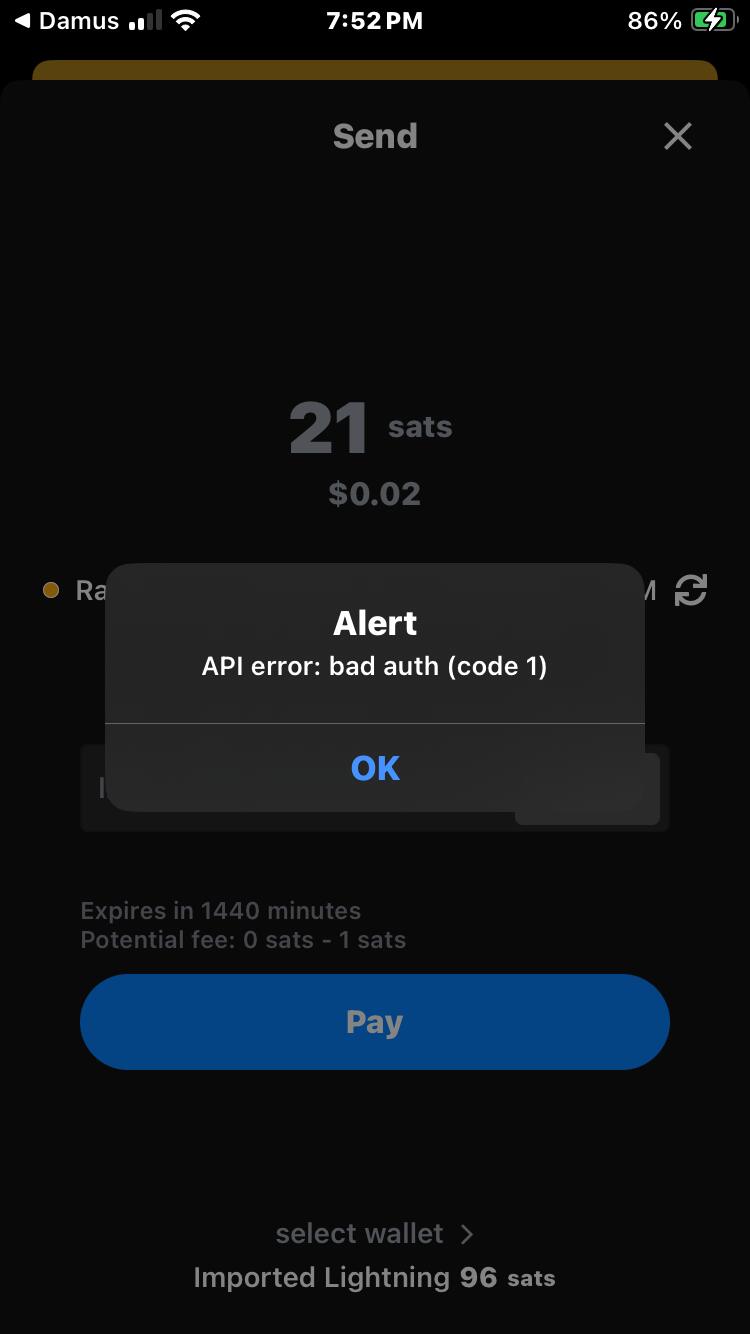
It has been intermittent and I was able to zap 5 notes in a row just now so I can’t presently reproduce. I will return to this note if it happens again.

 nostr:note1dy55v2gn3av36sns9d90ech85zhzlfl6g2y9zcpwdcxjle07husqfsd02y
I still have this too. I’m just living with it rather than identifying where it comes from, have you identified its root cause. I use Alby, BlueWallet, and Nostur.


So they kick off government efficiency with a new government department beauacracy that will be co managed by two people doing the job of one person.



Worse still, IF voting participation is as high as 60% that means whichever candidate wins, they are operating with a mandate of 35% of the total population? Will the system cease if that were to decline to 25%, I don’t think so.


Nah man the system doesn’t make mistakes they needed to introduce these ideas to the population now for their next phase. 🤔🤣🤔
What they have planned next is even crazier and they needed to move the Overton window. Trumps first presidency created more anxiety for team blue, now post Covid the baseline of extreme has been moved for team red. Biden provided the pause of normalcy in some places while driving extremes in others, now we are back in a Trump presidency. Now it’s team blues turn to be stretched. Covid wasn’t a mistake it was a step.
I could keep going but the joke has run its course and I’m having second thoughts.
Follow me for more tips.

A great portion of people already refuse to vote. Voting participation is like 60% on a high cycle meaning 40% don’t.
The system keeps rolling. Not voting doesn’t do anything more than voting. Perhaps they both do nothing, but it doesn’t do more.

October:
https://www.nbcnews.com/news/stacey-williams-goes-public-allegations-donald-trump-rcna177172
Technically November:
The rest was new energy put into previously public statements from people in Trumps first administration.

Thank you for reminding me about sharpie gate. 🤣



Separation of powers

The point of the original post was no amount of efficiency is going to make up for the deficits these programs introduce. I’m of the opinion these programs will need to be unpopularly cut in order to bring them inline with something sustainable. I’m not opposed to some kind of welfare necessarily. But it has to be sized to something. But politicians haven’t been proactive in resolving. It basically manifests as a government entitlement bubble. Just because people are dependent on them today with the choices they make doesn’t mean they shouldn’t be drastically cut and people make different choices. Without these entitlements grandparents lived with their children, now some people have used their social security and Medicare to live independently, that’s seen as a good. But it’s not something you would see without the government debt proping it up. It just may not be sustainable.
Social security insolvency is predicted in 2035 where automatic cuts will reduce it by 20% by law. How many seniors dependent on social security can stomach a 20% cut to benefits? Can we really do nothing? Or should we bridge those currently dependent on it, and transition away from the government providing retirement benefits in the form of a pyramid scheme.