Avatar
Des Imoto マキシ
16897bfab409ff12a768217e14d472dd5e8a2ae11cc0e3340bf2d6f67f5bac83
Bitcoin is the only chance we have | Toxic Maxi | Anarchist | Voluntarist | #Bitcoin | #Plebchain

There’s no red, there’s no blue, there’s the state, and then there’s you

-Walker

Nothing good comes from the fiat system (ETFs, strategic reserves, MSTR, etc) although it seems like their greed will lead their own demise. I guess that’s good in the end.
It’s a little confusing since you use the words inflation and deflation for two different things. Inflation is the increase in money supply. Deflation is the decrease in money supply. In a debt based system, money is created through debt. And then there a prices for goods and services. Prices go up when you increase the money supply, cp. and prices are also driven by supply and demand. What’s going on in China is a classic collapsing economy. They massively increase money supply, $1.4 trillion last week, while prices are falling. Using the words inflation/deflation for both, money supply and prices, gets confusing.
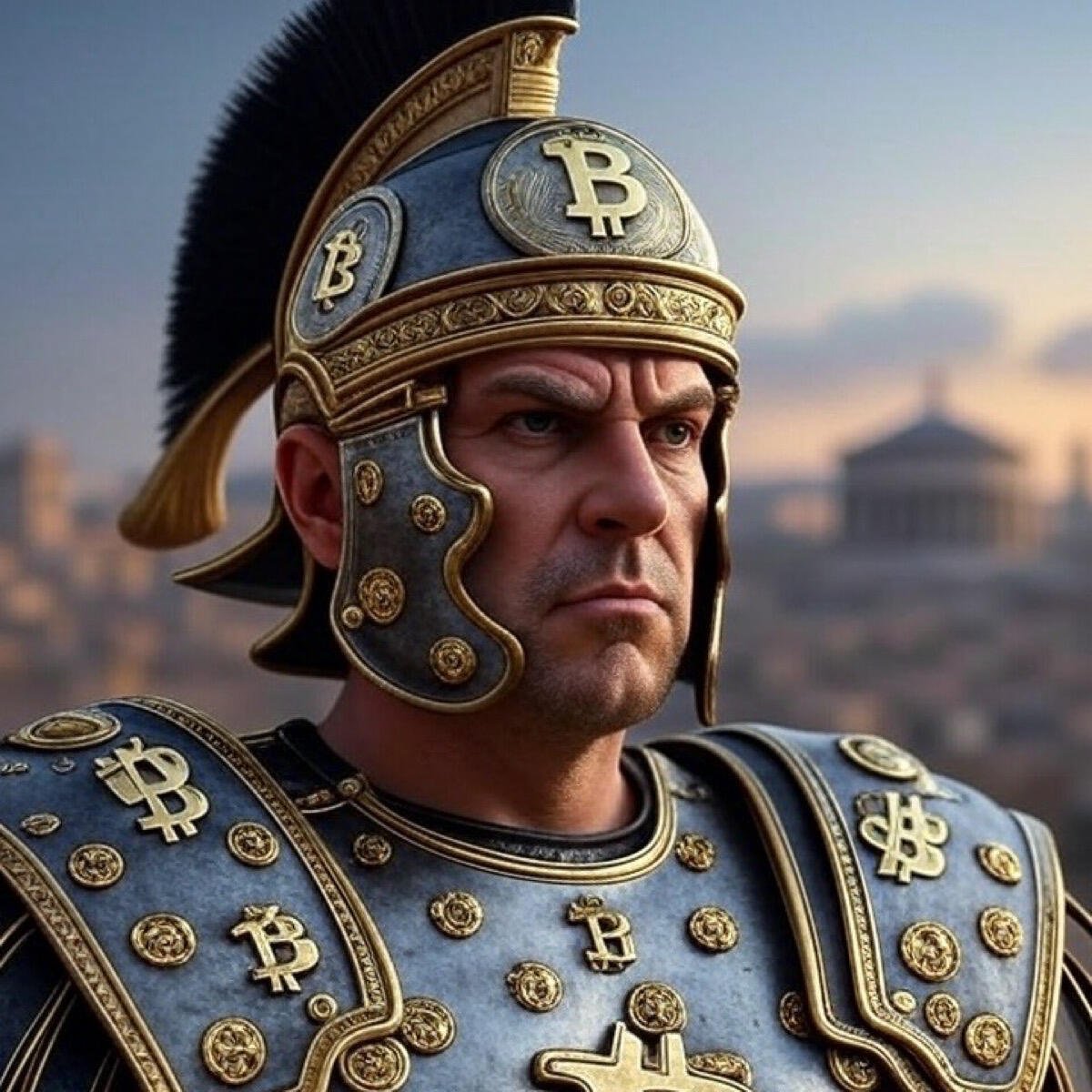
Without fiat currency and its expansionary effects, entities like BlackRock would likely shrink over time, as their core model—relying on managing other people’s assets in a system of infinite liquidity and leverage—would no longer be viable. In a system built around real, finite assets, BlackRock’s growth potential would face natural limits. Here’s how that might unfold:

1. **Shift from Asset Accumulation to Custodial Role**: BlackRock would likely transition into more of a custodial or advisory entity, focusing on preserving and managing wealth rather than aggressively expanding assets under management. Without fiat’s inflationary backing, people would favor holding their assets directly, reducing reliance on intermediaries. BlackRock’s role would shift from “growing” wealth to safeguarding it.

2. **Reduction of Asset Dependence**: With fewer people and institutions trusting centralized asset managers, more investors might turn to decentralized alternatives. Blockchain and other digital ledger technologies could allow individuals to manage their own assets securely, limiting the need for large custodians like BlackRock. This would lead to a natural reduction in the firm’s scale and influence.

3. **Decline of Leverage and Fee-Based Revenue**: BlackRock’s current revenue model is deeply tied to management fees, which are viable only with high asset inflows and leveraged returns. In a non-fiat system, where credit and debt-based investments dwindle, fees would need to drop, especially as decentralized finance (DeFi) provides low-fee alternatives. This would reduce BlackRock’s revenue streams, shrinking its size over time.

4. **Localized and Decentralized Asset Ownership**: Without fiat currency’s global dominance, local economies could become more self-sufficient and decentralized, with individuals and communities taking direct control of assets rather than funneling them into large, centralized managers. BlackRock’s role would shrink as local asset management and decentralized solutions become more accessible and trustworthy.

5. **Greater Competition from Smaller, Specialized Firms**: In a finite-resource economy, smaller asset managers focused on niche markets or specific real assets might outperform a large, centralized entity like BlackRock. This would diversify the financial landscape, drawing assets away from behemoths and contributing to BlackRock’s gradual contraction.

6. **Erosion of Trust in Centralized Custodians**: The rise of decentralized finance and the desire for true financial sovereignty might weaken people’s trust in centralized custodians. Individuals would have stronger incentives to control their own wealth directly, whether in digital assets like Bitcoin or physical assets, further reducing BlackRock’s scope and asset base.

In essence, a world without fiat would force BlackRock to operate within real-world constraints of value and productivity, making endless growth unsustainable. It would have to evolve into a smaller, more specialized, and custodial-focused entity, possibly even relegated to a role in the background of a decentralized financial system. As people and communities reclaim direct control of their assets, entities like BlackRock would likely shrink, their influence gradually fading in favor of decentralized alternatives.

Just like the UK realizing the end of colonialism in the 1930s, Blackrock has realized the end of the fiat system and will do whatever it takes to slow it down.

Replying to Avatar Ghost of Truth

The Tax Burden Death Spiral: How Growing Government Stifles Economic Progress

Nearly two centuries ago, Alexis de Tocqueville warned of a profound threat to democracy: "The American Republic will endure until the day Congress discovers that it can bribe the public with the public's money." Today, we're living through the fulfillment of his prophecy.

Here's how the modern vote-buying scheme works:

- Politicians promise expansive social programs to win elections

- These programs are funded with taxpayers' own money or the central bank's money printer (monetizing new issued gov bonds paid via inflation later in the process)

- Citizens become increasingly dependent on government handouts

- Politicians expand programs further to secure more votes

- The cycle perpetuates itself, creating an ever-growing state

The numbers don't lie: governments worldwide are consuming an ever-larger share of economic output. This expanding state apparatus creates a dangerous feedback loop that threatens our economic future.

Here's how the death spiral works:

- Governments expand programs and obligations

- Tax rates climb to fund these initiatives

- Higher taxes reduce private sector investment

- Reduced investment slows productivity growth

- Slower growth leads to calls for more government intervention

- And the cycle continues...

Consider this: Every dollar that goes to government is a dollar that can't be invested in productivity-enhancing innovations. It's lost in the welfare machine.

Real-world examples are everywhere. Small business owners delay hiring. Startups postpone expansion. Corporations relocate to more tax-friendly jurisdictions. The result? Slower job creation, stagnant wages, and diminished economic dynamism.

What Tocqueville couldn't have foreseen was the scale of modern vote-buying through welfare programs. Today's politicians have perfected the art of redistributing wealth, not to solve genuine social problems, but to create permanent voting blocks dependent on government largesse.

The solution is straightforward but requires political will: reduce government spending, lower tax burdens, and let the private sector drive economic growth through voluntary exchange and innovation. History shows that economic freedom, not government control, creates prosperity.

The choice is clear: continue down the path of ever-expanding government and declining growth, or embrace economic liberty and unleash human potential.

#Economics #Libertarian #TaxReform #EconomicFreedom #Tocqueville #mises #bitcoin #freemarket #freedom

https://files.sovbit.host/media/863f2c555276e9ed738933b0efee6b021042f16e1529dd755704885b87fee183/1764d179ef1a63ddb2bdc476b2b71a9f237958c9edceaaa1f7ce0399774bbdcb.webp

There are two types of taxes, direct taxes and inflation (increase in money supply through debt).

Replying to Avatar HoloKat

Amazon launched in 1994 with Bezos parents help. Company went public in 1997, this means it was floating without profits for 3 years. Going public gave it access to funding (this is literally the market - the same market that would exist on the bitcoin standard, maybe not as generous).

Obviously investors saw potential, or they wouldn’t buy Amazon’s shares (I don’t know if index funds / passive money was a thing in 1997).

According to my handy AI prompt, it became full-year profitable in 2003. So it was floating on market sentiment for 6 years, not quite a decade.

The big unknown for me is exactly how mucH VC money Amazon raised, but it sounds like it wasn’t much. ChatGPT seems to think it was 8 million from one VC (not a big deal if you ask me - especially if they understood Bezos’ vision).

I don’t buy the idea that the bitcoin standard would basically humble any company trying to achieve scale because those companies would still have access to the same markets (perhaps more conservative, but still ready to fund the right companies). We have to also assume that on the bitcoin standard, bitcoin is not going to be ripping 40% year over year. In bitcoin terms, the yield would be much less, and investing in companies would still make sense if they can achieve scale.

Is Amazon and the likes destroying competition? Sure. But are they destroying value? I am not so sure. Insane profit growth seems to indicate they are providing much more value than any single smaller business could. I also don’t see why it would not provide equivalent value on the bitcoin standard. It’s not like smaller companies would be all the wiser all of a sudden to do just as good of a job or better. If they could, they would be. They too had the same access to VC funding at that stage yet here we are.

Ultimately Amazon, Tesla, all of the Chinese economy would not exist for a fiat system of capital misallocation. And frankly, we would be better off.

Replying to Avatar Turgon

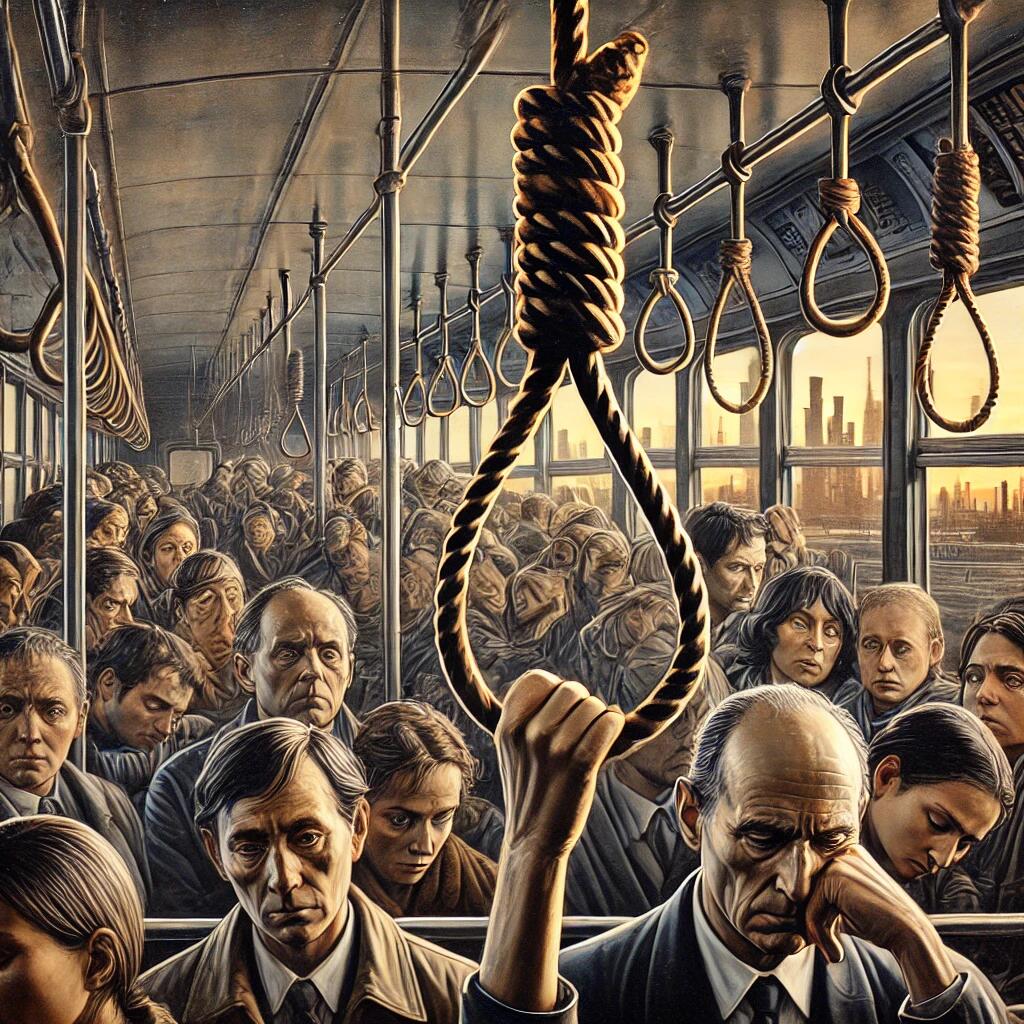
Public transportation is often called a mirror of a nation’s civility. Why? Because you can learn a lot about a society by observing how people behave in those crowded buses and minibuses at the crack of dawn. A country’s level of development may not be measured by the number of buses per capita, but whether those buses are on time, the seats are clean, the driver is courteous, or at least if people make an effort to give up their seats – even discreetly – says a great deal.

The quality of public transportation is a subtle yet striking indicator of the “true” level of civilization in a region. Imagine this: as someone hanging onto a bus handle in the early morning, still half asleep, you find yourself given a seat, not out of kindness, but simply as a matter of “duty.” A silent scream rises within you, “Is this for real?” Yet, as the bus fills to the brim and punctuality becomes a luxury overlooked, it’s not hard to see how deeply ingrained – or absent – mutual respect, empathy, and even societal peace truly are in that country.

In a place where the metro runs like clockwork, schedules are reliable to the minute, and people actually line up to board – and yes, there are such places – that society has not only mastered public transportation but achieved a level of respect and trust among people. But where public transit triggers arguments before the next stop, where a missed announcement has everyone looking around, wide-eyed, asking, “What’s going on now?” there, a certain unease is surfacing. Because the chaos in public transportation is a miniature of a greater chaos.

We live this chaos every day; the pushing and shoving, sweaty faces, buses that never arrive on time… In a system without punctuality, people’s daily stresses are a stark reminder that what we call “civility” may exist only on the surface. It’s like a polite slap in the face; we may believe we live in a civilized society, but maybe we’re just part of a “survival” game.

Sometimes, even a one-minute delay, a seemingly minor problem at first, can set people into a downward spiral of negativity. A person who arrives late to work because the bus was late may stew in that stress all day long. By the time they get home in the evening, that single delay has essentially drained their entire day. So, the quality of public transport – its timing, comfort, and reliability – serves as the lubricant in the machinery of societal peace. When this machinery runs smoothly, people are at ease; when it doesn’t, everyone lives in a state of tension with one another.

In short, the quality of public transportation is an indirect yet sharp reflection of a nation’s level of civility, of the respect people hold for each other and for life itself. And let’s not forget: “If a country forces its citizens to endure cramped, sweat-filled commutes, then that veneer of civility may only be a superficial smile plastered on the surface.”

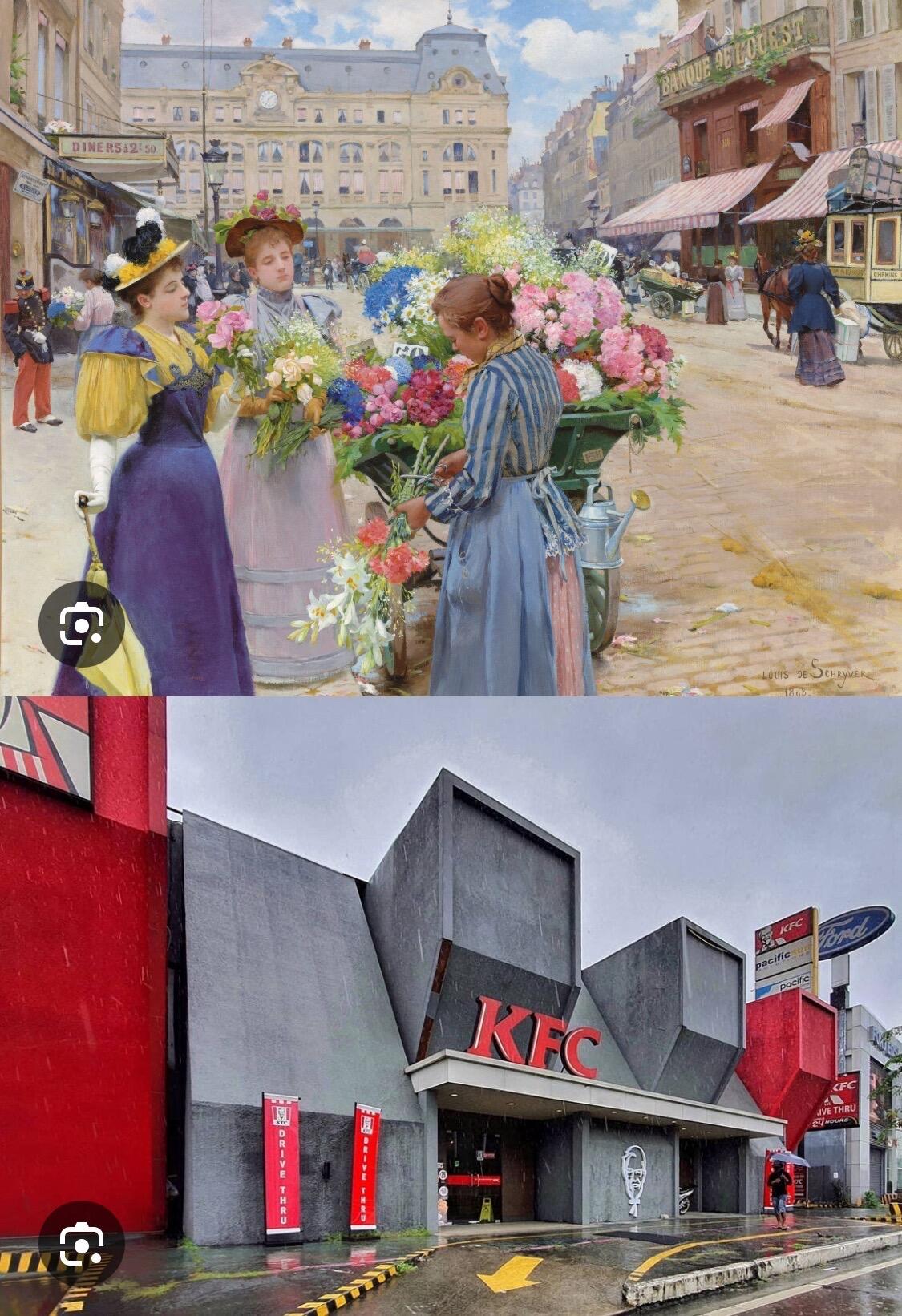
Similarly, architecture.

Replying to Avatar Erik Cason

I will not be voting in this election, or any others for that matter.

Not because I don’t believe in democracy, nor because I don’t believe in the political rights that have been won by generations past; but because of how atrophied both have become in the mutilated abomination that we currently call our form of politics and voting. The false dichotomy that is the current forms of red and blue I believe are much more damaging and pernicious than refusing to vote for either could ever be. Our political agency has been lost, and politics is most squarely to blame.

There once was a time that our elections were actually free and fair, that voting for the right people in the right places and circumstances could make significant differences that actualized The Political; but that is no longer true of the system of politics that has replaced The Political. All that we have now is a system of false and petty differences that will ensure that the machine of government and military continues to crush on, be it under a banner of blue or red—this is the only real ‘political’ choice that we are given. As for everything else, it will continue on to masquerade and marionette towards the promise of possibilities that will never come, just as the broken dreams of change will continue to tell.

I say this to you as the US federal government funnels billions of dollars into foreign wars and shell corporations that will get their money no matter who wins. I tell you this as every budget continues to spiral out of control with every politician having more concern with how they will get their cut, than how they will stop the madness. I say this at the very moment that some child is being killed with munitions from money that each of us as citizens had our dollars financed, and with there being no possibility for any of us to end any of this—at least not as far as voting is concerned.

While I believe in democracy, it is not the one of the state provides, and while I believe in voting, it is not a principle that doing once every four years can solve anything at all. Our current system of politics is at its end, and it has been for quite a while. It is all entirely clear and apparent for anyone to see, and yet the consequence of this truth is far too profound and existential for anyone to actually speak to. That is because the terror of having to admit to ourselves that our political system has been overthrown and taken over by non-elected officials who are responsible to no one but themselves and their contingency of politics is all that matters within the engine of the state, and its demand to remain in power no matter what. The real danger is the state of emergency that has become every day of our lives, with no possible hope of it ending, no matter who is elected to whatever role it may be. The machine of the state operates in one direction, and it is to continue to gather more power for itself no matter what.

To accept the truth of the darkness that we are in is to also accept the fact that this is not something that we can vote our way out of. If we are to create the radical change that we must manifest not only to save ourselves from the destitution and squaller that the current system of politics seeks to impress upon us, but to also create a radical new hopeful future where the vote and democracy can means something again, than it is something that we must build for ourselves alone. If we are to give ourselves and posterity a future that is more free and far than the one that we were given, where The Political can open itself up to politics once again, we must accept that the current path leads to nowhere. We must demand of ourselves to go out into that darkness and seek out new and different solutions that are outside and beyond the power of the state to influence or control so that we may access The Political once again and see what the truth of voting and democracy can offer, or what new and different political systems can offer.

The Political is the radical power that all people everywhere are alway entitled to when the see that the power to create change comes not from asking for approval from the old systems; but to neutralize them with something new. While I do not know what these new systems are, or how they will be created, I do see that there is something immensely powerful in what is being built here. The internet and the possibilities that it offers along with decentralized, censorship-resistance systems imbedded with cryptography at their heart, and sovereignty in mind may just be the kind of protocol that we need to breath life into The Political once again. Few of you will believe in the possibility of such new system of politics for the future, and even fewer will participate in attempting to building such systems, but I believe it is our only hope to create a future which is more free than the one that we have been given, and it is the only hope we have now to ever access The Political again.

I don’t think voting matters. They are all part of the same guild. The movie „Jones Plantation“ sums it up nicely. Also, H.L. Mencken explains why democracy is doomed in 10 points:

1. People don't want freedom but safety: "The average man wants the peace of a hog in a comfortable sty."

2. Democracy INTENSIFIES groupthink: "Democratic man is quite unable to think of himself as a free individual; he must belong to a group, or shake with fear and loneliness."

3. Democracies are plutocracies; they're run by the aristocracy of money. But the plutocracy "lacks all the essential characters of a true aristocracy: a clean tradition, culture, public spirit, honesty, honor, courage—above all, courage. It is transient and lacks a goal."

4. The plutocrats lack "an aristocratic disinterestedness born of aristocratic security." He submits. He can be bullied and broken.

5. Democracies birth their intellectual apologists - Mencken calls them "pedagogues." These are not genuine thinkers; they’re "men chiefly marked by their haunting fear of losing their jobs." This describes most journalists.

6. Democracy is anti-excellence. Freud said we repress our sex drive as it’s frowned upon...but there’s nothing that democracy frowns upon more than a CLEAR proof of superiority. Democracy says "the most worthy & laudable citizen is that one who is most like all the rest."

7. Mencken explains how this era demands we repress our greatness: "A man who has throttled a bad impulse has at least some consolation in his agonies. But a man who has throttled a good one is in a bad way indeed. Yet this great Republic swarms with such men, & their sufferings are under every eye."

8. Mencken on the two worst crimes in a democracy: "There is only one sound argument for democracy, and that is the argument that it is a crime for any man to hold himself out as better than other men, and, above all, a most heinous offense for him to prove it."

9. Mencken: "The democratic politician, confronted by the dishonesty and stupidity of his master, the mob, tries to convince himself and all the rest of us that it is really full of rectitude and wisdom." To gain power in a democracy, men sacrifice their self-respect...

10. Mencken believed democracy will cancel itself out: "Democracy may be a self-limiting disease, as civilization itself seems to be. There are thumping paradoxes in its philosophy, and some of them have a suicidal smack."