

I appreciate it! Primal won’t let me setup my wallet with them and haven’t had time to setup my own node yet.

I absolutely second Bitcoin Infinity nostr:nprofile1qqsymrmayr3t54hru0q5w4pfxn6s4pz6j7q60ugsxutajk2ahs0dh8gprpmhxue69uhkv6tvw3jhytnwdaehgu3wwa5kuef0qy88wumn8ghj7mn0wvhxcmmv9uqjqamnwvaz7tmwdaehgu3dwfjkccte9e3xjarrda5kutnwd9hx5cf0sugfjm nostr:nprofile1qqsf9jl9scw0c5snmkylpfhkppzgd7z7dupul6ms5yl52kfcz9jr8wqpz3mhxue69uhhyetvv9ujuerpd46hxtnfduq3vamnwvaz7tmjv4kxz7fwwpexjmtpdshxuet5qyv8wumn8ghj7un9d3shjtnndehhyapwwdhkx6tpdsrwnevq.
I'm not familiar with Bitcoin.Review
Bitcoin review is NVK’s podcast going over software updates, exploits, etc.
Kind of like an audio version of a newsletter. Not everyone’s cup of tea but some people like it. There are dozens of us!
You've got the wrong favorite Bitcoin podcasters, maybe? (Let the infighting begin, lol).
But really though, just listen to nostr:nprofile1qqsg86qcm7lve6jkkr64z4mt8lfe57jsu8vpty6r2qpk37sgtnxevjcpzpmhxue69uhkummnw3ezuamfdejsz9rhwden5te0wfjkccte9ejxzmt4wvhxjmcprfmhxue69uhkummnw3ezummjv9hxwetsd9kxctnyv4mqgevlfj and make sure you do your part to keep Bitcoin decentralized and secure. It's in your own best interest, after all.
Don’t forget the nostr:npub1qdcakl75gd7wv0nqmmwrz09ddm5tzl7xj8lq2gclng2qzd8up5yqjpzclt and the Bitcoin Infinity podcasts!

The KYC part seems doomed to fail eventually.
Merchants will see their bitcoin holdings gain purchasing power long term and might stop converting to Baht. When that happens they’ll start accepting BTC outside their government approved point of sales apps.
John von Neumann [1] is certainly up there among the greats. His list of contributions to math, physics, and computer science is so long I won’t bother writing here but to name a few, he:
- formalized the math of quantum mechanics
- invented game theory
- invented cellular automata
- proposed the von Neumann architecture that powers today’s computers
- first to axiomatically define a Hilbert space
- first proposed quantum logic
- invented the Monte Carlo method
- invented the first pseudorandom number generator
- first to describe the technological singularity
I recommend reading “The Man from the Future” if you want to learn more.

If we could wait a couple months for me to sell my house and both of my kidneys first that would be great.

I’ve found the best way to pick up a new language is to have a goal in mind like a project you want to build. Consider making a basic CLI at first and then build up from there.
Along the way you’ll learn a lot about Rust and in the end you’ll have something to show off.

 nostr:note1xx2txwq3pkk3zktj2j6q67cy3arye0wnms58flhxwgaumvzvdpsq2g6e8w
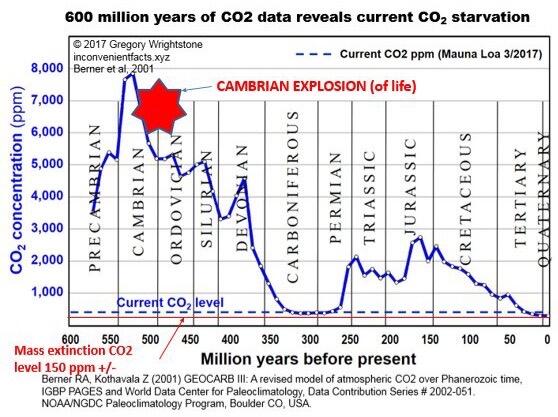
Is it also possible that animals producing the CO2 going extinct is causing the drop in CO2 rather than the opposite?
What’s the mechanism for lower CO2 causing an extinction event? Animals do require CO2 in order to absorb oxygen via the Bohr effect [1] so it’s plausible but it would be nice to know the mechanisms.
Move those sats folks.
If you’re a merchant or small business owner then accept sats like you’d accept cash.
If you go out with friends and someone pays the bill then pay them back with your corn.
Someone’s birthday or a big holiday? Send them bitcoin. Normalize the flow of sats.
nostr:note1s25apq4tlk27ndzh4nsc9cw80p9dmw3eqdnn5ym890kx49sz5u8qlnnysp
Not your node, not your rules.
Happy Genesis day everyone!
Don’t forget to rug the exchanges if you’ve got any IOUs left on there.
And so it begins: https://www.bbc.com/news/articles/c3weye2j0e7o
nostr:note1qdyrzw5gpjg7h989eft8e33jgapg26myfehzmkmatj3v6whwp5lqsujh9y
What does it mean for #bitcoin to “succeed”? What metrics can we use to know how successful it is?
Most diverse ecosystem? Reserve asset for the most people? Facilitates the most trade? Survives the longest? First currency used on the moon?

A train ride to Machu Picchu you say? Going on the bucket list.
Everett’s interpretation of quantum mechanics [1] is a more compelling and in my opinion a framework more faithful to the principles of physics than Copenhagen.
The Copenhagen interpretation introduces a wave function collapse which, aside from placing an unnatural emphasis on the observer, also introduces an arrow of time where the Schrödinger equation is symmetric in time. It’s a weird and unintuitive crutch bolted on.
Oddly enough, Everett’s interpretation implies the past is as uncertain as the future. At a “fixed moment” there’s a branching where the system continues forward in time as concurrent “worlds” but also the same is true in reverse. Going backwards there were many branches that merged at that point and then branched again.
What does that imply for us? On the macroscopic scale we don’t know, but one possibility is the idea of confluence. Basically at the smallest scales of the universe we have these parallel quantum systems but for every branching there’s a corresponding merging eventually and at the larger scales all we are capable of observing are the states that are consistent between each of the parallel systems.
1. https://en.m.wikipedia.org/wiki/Many-worlds_interpretation
The average block reward and the energy cost to produce that block sets a floor for the price of bitcoin.
Bitcoin gives the most accurate insight into the true cost of compute. The biggest input cost for AI is just the cost of compute.
Over time we’ll see metrics like hashprice [1] become a good proxy for the cost of training and running a frontier model.
1. https://data.hashrateindex.com/network-data/bitcoin-hashprice-index

We knew all along he was a fiat maxi. Bitcoin is just his fulcrum in a leveraged play.
Researchers find a way to boost (microwave) signals by up to 1,000x at room temperature [1].
One day we’ll get that tech into pleb devices like #meshtastic for more robust decentralized telecommunications networks.
1. https://www.unsw.edu.au/newsroom/news/2024/12/Boosting_weak_microwave_signals_purple_diamonds
It's amazing what choosing the right first step can do for solving a problem. It can mean the difference between finding a solution step-by-step naturally and having no hope of doing it.
Example: let's create a database for all of humanity to pass along for generations. A singular, never-ending story written by many authors over many centuries.
First we need to make it resistant to loss, so we make it easy for anyone to store. Let's limit the amount of data anyone can add in a fixed amount of time. We'll create fixed blocks of data that can be stored in a window before moving on to the next one.
Next we need to detect corruption and tampering so we use a Merkle tree.
We want to prevent vandalism so we make it unsustainable to put low value content in there. We'll do that by requiring credits in order to write to the database.
In order to fairly distribute the credits and give everyone a chance to get some we'll release them only if you can provably trade something of value, say, energy. We do this via proof of work.
Next we need to account for technology improvements over time so we'll make the credit issuance rate dependent on how fast we're adding data. We'll add a supply cap so we don't dilute holders over time. Without this, some subset of credit holders will eventually get crowded out indefinitely.
We need to enforce ownership rights of credit holders so we use public key cryptography. ECDSA will do for now. However, we need to account for cryptographic security changing over time so let's hide the public key behind a one-way function to give us time to upgrade when the time comes. Better yet, make it 2 layers of hashes: SHA256 and RIPEMD160 will do.
We'll transfer the data peer-to-peer to prevent any one group of people from locking out others.
We now have something very much like #bitcoin.