#ClimateChange #CentralPlanning #Meme


Great initiative Joey! ☀️✨️🌟⭐️
Followed.
I can also recommend following Jay nostr:npub1jw63d0ykym7rpd3n6cme7p3rghc77se3ql8drg78p55c5xe3npdscrh29m , he's a Dutch pianist and composer here on Nostr.
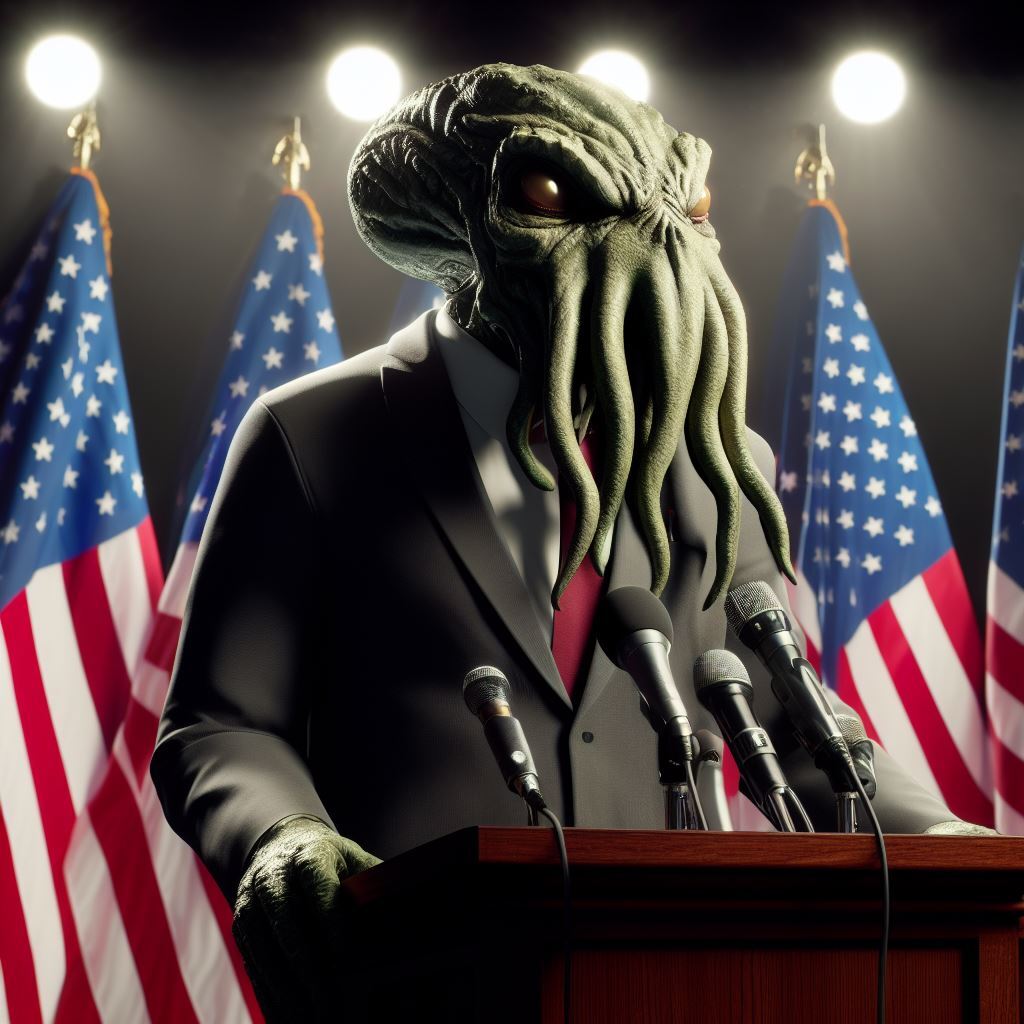
That's not my point. Candidates will increasingly have to compete regarding who is most pro Bitcoin. That process has started.
If RFK is the most liberty-oriented Democrat candidate then a Republican candidate will need to match him on the pro-Bitcoin stance.
A race between RFK and a better Republican candidate would be ideal.
Perhaps you just need sleep, have a walk in the park and return to the issue later.
Consistency to foundational values is important.
Consistency in work schedule can be both a benefit and a drawback. If my performance drops too low compared with my peak then I probably don't want to work on tasks that require full focus. Switching work tasks to those that are most suitable to our current performance is a good habit.
As for angle of approach, some degree of chaos, change and creativity is useful.


The language models obviously have some learning data that hardcode, or approximately hardcode, political narratives.
How that hardcoding is done isn't as important as who is able to hardcode it. Who pulls the strings? Judging from the answers it gives; Governments and government alignment narratives.
English have incorporated a plethora of words from Greek, Latin, French, Germanic and Scandinavian.

I believe that there is no perfect solution to reduce bots. Whatever a filter defines as undesirable, bots can be tweaked to avoid triggering those characteristics.
However, if we assume that price or 'trading advice' bots are deployed to impact the market or in some way generate revenue, then filters can be designed to reduce that type of activity. I think that's a category specific enough to be separated linguistically from normal conversations. How bots will be tweaked to respond to such a filter remains to be seen.

No, AI art is not digital painting.
Digital painting is when an artist paints with digital brushes that attempt to mimic how real brushes work.
AI art is when a person commissions a program to do the work, without doing the work themselves.

Correct.
There is zero actual work involved when someone commissions a program to generate something.

I would make a general distinction:
Artists create art whereas people who write a prompt are commissioning an AI to make something for them. The person who commission a piece doesn't create it.
Detailed AI art is not appreciated among artists since the algorithms steal art and details from artists without consent. No artists have been asked for their agreement. Some algorithms are also trained to remove watermarks, to hide how the art is embedded as a collage in the final result.
In human-created art there is a person with experiences inside the artwork. There is a soul in there. In every design-decision there is a result of creativity and personality. Our decisions inherit our unique outlook.
Generated art: you didn't create that. That's not your voice. That is not your personality speaking.
If there is no person behind the artwork it doesn't mean anything for me. There is nobody there to connect with.


Absolutely.
We should evaluate all ideas with a critical mind.
While I respect Aristotle in many areas, he was also wrong on a number of positions from a liberty perspective. Like most other Greeks of his time he supported slavery. This was likely a result of the contemporary culture. In wars, prisoners of war were often captured as slaves rather than killed. The silver mines of Athens were operated by slave labor.

Nostr will grow and customers will come. ☀️🌟⭐️✨️