

You may have a point technically, perhaps a different scenario can highlight your point better.
We are not responsible if someone we know gets hacked or change their views. Those are not our opinions.
The media will happily portray someone as a bad person via guilt-by-association, but that is true regardless.
I would add that a free market is free agency and property rights for all. Following the ideas of John Locke, every individual owns themselves, their mind, body and the fruits of their labor.
The process of a free market is voluntarism and competition, without the initiation of the use of force.
Following from this, central banking and moneyprinting is a corruption of capitalism, an inversion of a free market.
Under a free market there is competition in money and individuals are free to choose, without pressure or coercion, the money that serves them best. Over time, hard, neutral money that can't be printed will be favored in the market due to the inflation of the printable monopoly money. The demand for worthless paper will trend toward zero.
This is not an instant process under a system of exploitative central planning. Because in a central planning system there is always deep uncertainty regarding what kind of new, oppressive regulations might be waiting around the corner. This uncertainty of how the government's use of force is going to impact markets in the future will naturally cause irrationality and misallocation of capital.
Bitcoin solves the problem of moneyprinting and central banks, over time, by outcompeting them and making their monopoly money irrelevant.
As moneyprinting becomes less and less profitable for the exploitative class, wars will no longer have limitless funding and citizens will reject paying for extensive wars via taxation. When the costs of war increases and it can no longer be used as a profitable machinery of governmental money laundering, the case for warfare becomes a difficult narrative to manage.

When we buy a cd, we are agreeing to buy the cd + the accompanying license that allows us full personal use of that CD, but not the right to commercially produce more of those CD's to sell. We can do whatever we want with the CD, but we have not bought a license to sell new copies of it.
When you say “isn’t sellable” do you mean “is immoral to sell”?
Seems like this may be what’s driving the disagreement.
I’d agree with nostr:npub1y02f89rpykzhqmrjjz99uwgyl9gh06sg0vpjmklu62rzxpx8mxps7zfvpl that it’s technically possible to exchange money for an object with 0s and 1s burned into it like a CD, or for that matter a promise to connect computers together and tickle each other’s wires just right so the recipient ends up with 1s and 0s in all the correct places.
That's not what I said though.
Intellectual property is the claim of a product developer to own the commercialization of that product.
If you develop a product and I want to sell your product to the market, we enter into a voluntary deal to accomplish that.
If I just start producing your product commercially without a deal with you, then I'm operating on the fraudulent (non-voluntary) side of things.

Intellectual property is that, and more.
It is the right to commercially produce the product you have developed.
You are wasting my time.
Of course the CD information is sellable. You can literally print and sell CD's from that information.
However, if you don't have a commercial license, i.e. a deal with the IP owner to sell that product, but still decide to print and sell those albums, then you are operating on the fraudulent side, which in a free market results in a loss of reputation.
You are evading the subject and making nonsensical claims.
How is a book or an album not sellable?
Again you are avoiding the subject.
A CD is intellectual property because you can produce an endless number of copies.
When you buy a CD, you have not entered into a voluntary contract with the artist to sell that product commersially. You have instead bought a license to own that product for personal use.
Same with buying a book. Owning a book does not give us the right to print that book and sell the copies on the market. We need to enter into a partnership with the product developer if we have commersial goals.
Imposing?
A license is a voluntary agreement between a seller and buyer. The type of license determines the price. A license to commersially sell an album will be much more expensive than a license to own your own copy of that album.
I am questioning individuals that don't believe in voluntarism.

I would say that you fundamentally don't understand what intellectual property means.
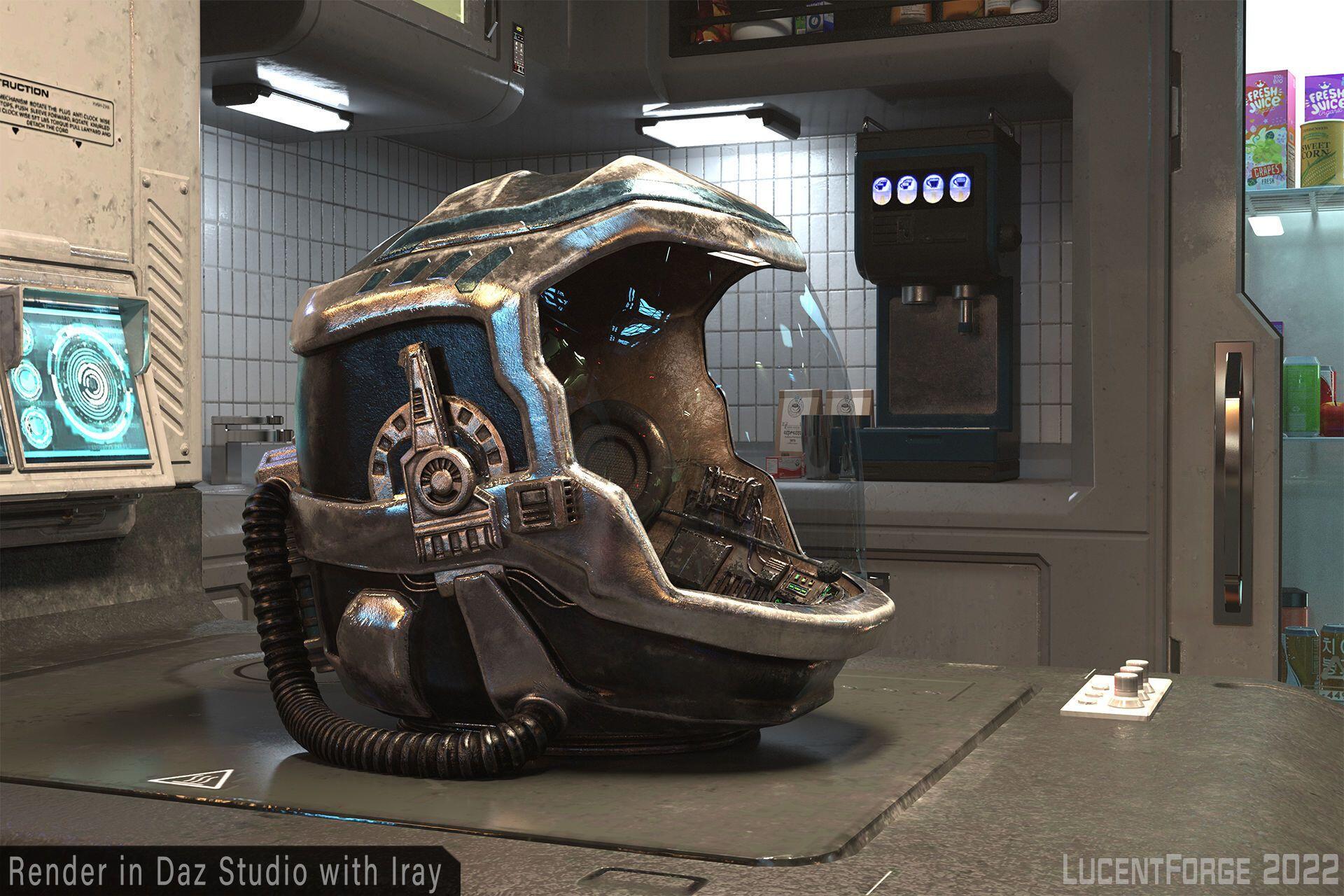
The 3D model that I have modeled is the intellectual property, just as a book or a music album is intellectual property. I will explain how it works.
For example, if you buy a book, it comes with a license to do what you want with that book, except for printing and selling it for profit. Same with the music album.
If you buy a 3D model, you either buy it at a cheap price with a standard license, which grants you full right to 3D print it for your private use. This however is not the same as a commercial license to produce and sell a product.
In regards to upholding intellectual property, that is a different matter. As a free market proponent I believe that reputation is the best arbiter in most cases. If I rip someone off, my reputation will suffer.
First of all your definition is incomplete, ergo false.
Intellectual property is that which you create. When you write a book, compose a song or sculpt a sculpture, that is your intellectual property.
Below is a helmet I have modeled in 3D. It is my intellectual property. This doesn't prevent you from modeling your own helmet like this.
In a free market, intellectual property is primarily arbited via reputation. If I steal your book and publish it under my name, the market will likely find this out and my reputation takes a hit.
Instead of attacking intellectual property, adress the far-reaching regulations and extreme forms of IP laws where companies can copyright mere words.
Yup.
The underlying problem is government + central bank moneyprinting. Without fixing that first, wages can never keep up with cost of living.
Moneyprinting is like a time-bomb, obliterating all wealth until it migrates toward hard money.

Seems sufficient as it is, well balanced.
1980'ies reference:
It feels like your memory is a VHS tape that expands out from the video casette in chaotic whirls of misfiring synapses.

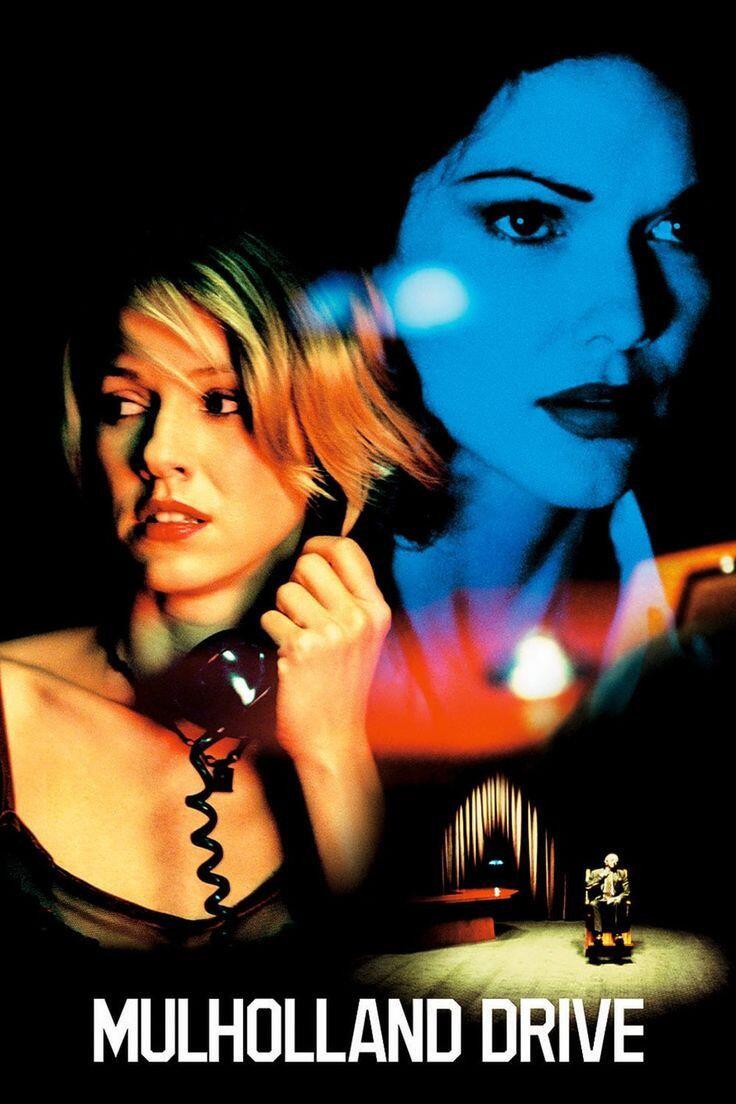
Heh. 😄 Yes, it's a memorable movie. It feels like you are watching two different films at the same time and they start to overlap into a stream of impressions where the time dimension is glitching and looping.
Rewatched Mulholland Drive today. (David Lynch, 2001)
Hadn't seen it in 15+ years and it felt fresh.
A blue key unlocking a memory that is seemingly gone. It evokes the feeling of being locked out of your apartment, with only a thin door separating you from normality. An insignificant barrier, yet sufficient to keep you out. Our memories are our fibrous, neural connection to that which is.
As I outlined above, the history of the area is not a rainbow unicorn story.
The Persian kings conquered neighboring tribes. The Greeks under Alexander the Great conquered Persian cities. Later the Romans governed the area, under which Jews lived in Judea under Roman laws. Yet later the Ottomans gained control, and so forth.
The partitions after WW2 was a centrally planned allocation of land that ended up causing millions of people to not have an official homeland.
Whatever we think of historical or military claims to the region, cultural roots and religious roots, the WW2 partitioning borders have left deep conflicts in the area that are not easily solved.


The region has a long and complex history. From early Persian kings, Alexander the Great, Ottomans, later UK claims, Balfour declaration, WW2, and then partitions after the second world war. Add historical claims to the list. The borders that were drawn up after WW2 left millons of people without a homeland.
Repeating vs. learning.
