



Jules et Jim. Trust me.


New follower of yours, really interesting to me as I've got a small hobby farm and a lot of wood waste. Any episodes of your podcast that get into it?

I just mix flour and water. Great when you're on the go and no kneading.

I needed to see this today. Thanks.
Great post. I very much like where this is headed and will look for the next in the series.
Glad to run into a fellow McLuhan reader! Such a fascinating guy.
Marshal McLuhan has this idea that when a medium (technology / tool) overheats or is pushed to it's limits, it actually reverses it's characteristics. McLuhan uses the country side as the place of work and cities for leisure then flipped to cities as the work center and rural leisure as an example.
I, of course, like the example of easy and cheap money leading to the emergence of a new ultra scarce money. This has already played out throughout history with currency. So why wouldn't it just mean a reemergence of gold backed money? I think history rhyming rather than repeating suggest a new form that has similar characteristics but enables new activity. These mediums become more technological over time.

Bowie read his McLuhan!
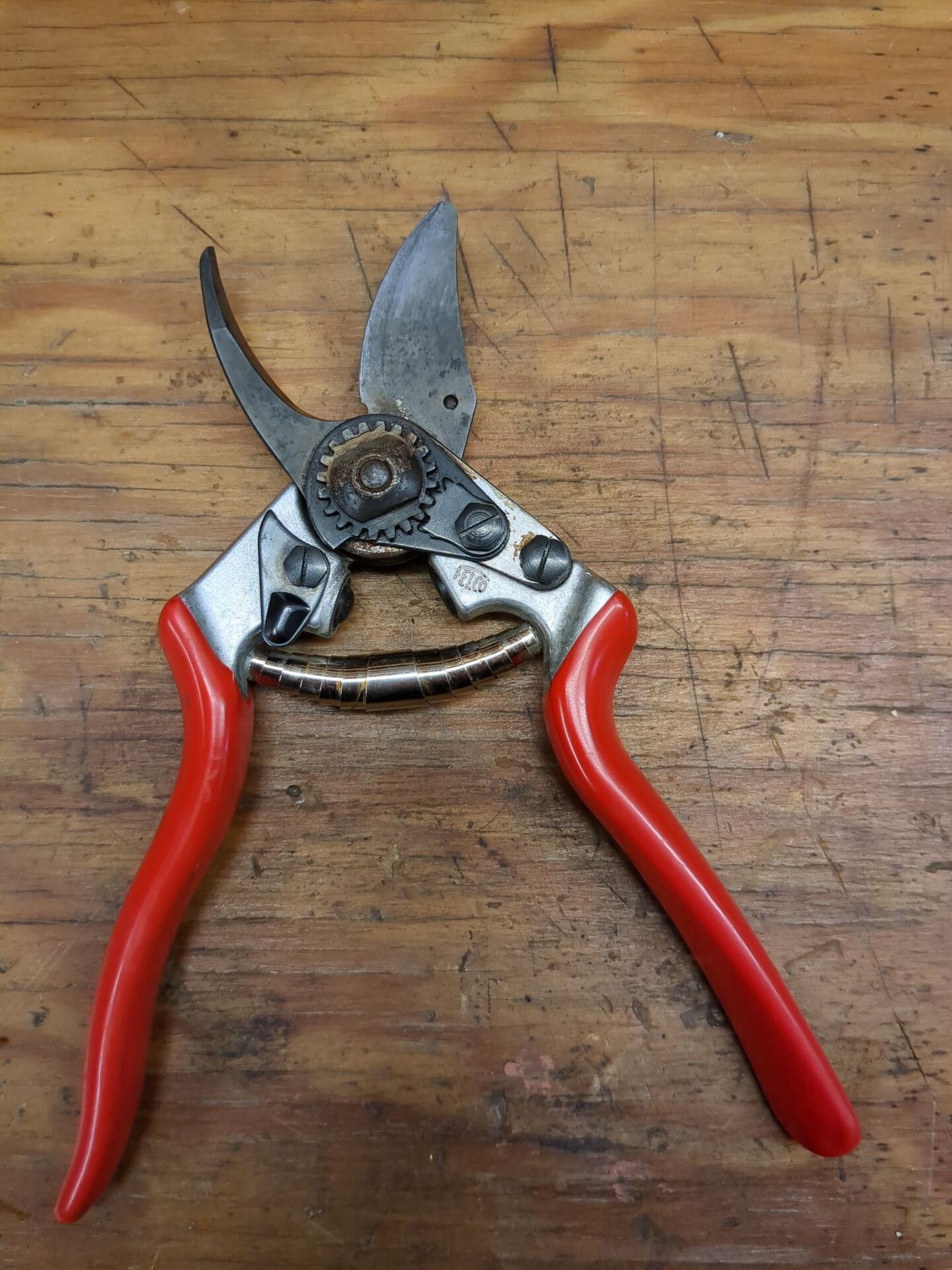
Favorite Tools - The Felco 6 Pruners
Indispensable in the garden and handy in the orchard when you can't be bothered to grab your loppers. These are satisfying to use and effortlessly give a clean cut. They will last a life time if well treated.
Id recommend buying them directly through Felco as there are a lot of fakes being sold on eBay and Amazon.

This book “Contagious” by Jonah Berger is highly rated, with many positive reviews.I mean the book is about how to make things go viral and the book itself went viral =)
I enjoyed most parts of it, great examples and explanations. But for some areas I would tread cautiously. Coming from a Ziglar school of thoughts for sales where willing buyers leads to willing sellers, I think it's important to draw the line between how marketing benefits people vs how marketing manipulates people. I share a similar view on neuromarketing efforts - it's a great attention grabber amidst information overload environment, but we must avoid manipulation, like margarine mimicking butter by changing color from white to yellow and packaging to gold in the 90s.
I’m doing a lot of heavy homework on marketing, pr, and branding for my own benefit. I’m sharing my notes here for everyone’s benefit. And as usual, you don’t have to agree with everything. The author has written a great summary as well, I will share his link below.
Chapter 1 : Social currency
1. Word of mouth is social currency. Scarcity and exclusivity boost social currency
2. Example - speakeasy bars - hidden, exclusive, but accessible (I had a blast barhopping speakeasy bars once - it was like treasure hunting).
3. But be cautious, limiting access can seem snobbish. This is why I declined Bluesky's invite (I hope Bluesky opens their doors for everyone )
4. Choices signal identity. People love talking about themselves, just as they enjoy food and money rewards. They prefer being seen as entertaining, smart, or hip.
5. If your product generates these types of topics, it becomes word of mouth.
6. Three ways to increase word of mouth:
- Find inner remarkability - what's interesting, surprising, or novel.
- Leverage game mechanics - rules and feedback loops engage and motivate.
- Make people feel like insiders.
7 More examples:
- Snapple cap fun facts spark conversations.
- Blair Witch Project's mystery generated buzz.
- Frequent flier points are addictive for top-tier benefits despite 90% never claiming the points.
- Credit cards evolved from gold to platinum, sapphire, diamond - as gold became norm.
- Gamification, badges, and sharing achievements on social media.
8. Exclusivity makes people feel special and privileged. Scarcity techniques, like limiting McRib (made out of pork tripe and stomach) by days/locations, boosts demand, even inspiring people to create tracking apps.
9. People don't always need payment to be motivated, sometimes external rewards can diminish their natural drive
10. People gladly talk about companies and products they like. Bzz Agent is an example, testers get free products and coupons to share.
Chapter 2 : Triggers
1. People naturally talk about products, brands, and organizations, but how can you encourage them to talk about a specific product or brand? Through triggers. This chapter reminds me of Pavlov's theory.
2. Word of mouth can be immediate or ongoing. For instance, Rebecca Black's song "Friday" was bad but gained traction because it triggered searches every on Fridays. Similarly, Budweiser's "Wassup" ad became a global phenomenon due to its widespread use of the phrase by dudes globally.
3. However, Geico's slogan, "so easy, a caveman could do it," was catchy but ineffective because it didn't trigger people (as they were not cavemen).
4. Negative reviews can surprisingly boost sales. A $60 Tuscan red wine's sales increased by 5% after being called "redolent of stinky socks" on a wine website. Even the widely mocked Shake Weight vibrating dumbbell made $50 million in sales.
5. Kit Kat's "Give me a break" ad was a brilliant trigger, and further associating their product with coffee using coffee as stimuli. Merch can also be a trigger factor if high usage and publicly visible to generate ongoing word of mouth.
6. Common and frequently used stimuli is more effective as trigger factor
Chapter 3 : emotions
1. People share because they care, driven by emotions. Jonah Berger's 'Most Emailed' list shows that education articles surpass sports, and health trumps politics in shares.
2. "Awe" - that sense of wonder and amazement, triggers higher shares, as seen in viral videos.
3. Dave Carroll's song about United Airlines breaking his guitar while throwing cargo went viral as it related to so many people, leading to a 10% drop in United's shares in just 4 days
4. Focus on emotions, not just features or facts, to motivate action. Example - google ad "Parision in Love".
5. Good news, humor, anger, and anxiety drive sharing due to the psychological arousal they evoke.
“The most beautiful emotion we can experience is the mysterious. It is the power of all true art and science. He to whom this emotion is a stranger, who can no longer pause to wonder and stand rapt in awe, is as good as dead.” Albert Einstein
Chapter 4. Public
1. Visibility matters; what's built to show, is built to grow.
2. Social proof, the "monkey see, monkey do" effect, is powerful. For example, baristas fill tip jars to encourage tipping by making customers assume others have tipped.
3. Design ideas that advertise themselves can thrive, like Hotmail's "Get Your Private, Free Email from Hotmail at www. Hotmail. com," which led to 8.5 million users in a year, resulting in a $400M acquisition by Microsoft. Apple and Blackberry followed suit with "sent by iPhone'' and "sent by Blackberry."
4. Other products that self-advertise : Burberry, Lacoste, Apple's white earphones, Pringles' tube container, and Louboutin's red soles
5. Behavioral residue like reviews, write-ups, likes, and zaps, matter.
6. However, a bad example is the "Just say no" smoking ad, which ended up encouraging more kids to smoke instead of reducing it. If you want people not to do something, don't highlight that lots of their peers are doing it.
Chapter 5. Practical value
1. Most viral videos are made and watched by adolescents. However, video by an elderly, Ken Craig's corn video also went viral because it is practical and useful.
2. Behavioral economics is fascinating. Prospect theory suggests people prefer options that yield a win over a loss, even if the end result is the same as psychological impact > rational thoughts. Diminishing sensitivity explains why high-value discounts are effective ( Many good YouTube lecture series on this)
3. A restrictive / limited promotions work better, as constant sales can become a norm and bore to customers. Limited-time offers make deals more appealing. Quantity limits, like "One per household" or "Limit three per customer," have a similar effect.
4. For low-priced products (<$100), percentage discounts seem more significant than absolute ones.
5. Discount cards that don't publicize the discount/savings to others and encourage hype may not generate much excitement and hype
5. Practical value, like cost savings and useful information, encourages sharing of content.
6. Specific specific / narrow focus content, such as Ethiopian food in the US, gets more shares because it compels people to share with those who might find it useful, unlike general content about food locations.
Chapter 6 : Stories
1. Stories provide persuasive proof through analogy. Narratives captivate, leaving little room for doubt and making people more susceptible to persuasion
2. For instance, Jared Fogle's 245-pound weight loss by eating Subway for six months became the "healthy diet" story and benefited Subway
3. Stories are like Trojan Horses. We craft carrier narratives that people share, and subtly discussing our product or idea along the way. Dove's 'Real Beauty' campaign triggered realisations on how women are insecure without makeup and became a global sensation while it made Dove synonymous with the cause. Dove was the Trojan Horse
4. However some attempts such as Bensimhon's 'fool in the pool' Olympics guerrilla marketing stunt failed. It generated word of mouth, but people were concern over other athlete's performances and were angry and the casino that was used to advertise on stunt-man's body was forgotten. The Evian baby ad, while super cute and great, lacks product correlation and failed to talk about Evian.
5. The key is to ensure people talk about the right things. Virality is most effective when the brand or product is integral to the story, like Blendtec's "will it blend" campaign - A simple YouTube video just blending everything they can find to show how sharp it is and that went viral
6. When stories become viral and it is narrated from one to another, people will focus only on critical details, leaving out the extraneous ones.

Summary by Jonah Berger : https://executiveeducation.wharton.upenn.edu/thought-leadership/wharton-at-work/2013/04/crafting-contagious/
Here's a previous book notes within this category:
nostr:note1zsalxlyvehmd8we594pwtt7h0smlem70k3x9jddmrk49ex7s3dpqgtnmxe
Thank you for these! Very helpful.

Thinking about hyper local tech. What if your data was stored with a shop downtown whose owner you could meet with face to face?
Will interest in de-Googling / de-Microsofting / de-Appling continue to grow?
Hyper local NOSTR relays for neighborhood watch, community organizing, church activity, farmers markets.
Uncle Jim banks, compute, comms, etc.
We need tech with a face.

Yep - there’s a low end casino, crime, drugs, etc. The park by the falls is fine but the city is a pretty dangerous place.
I’m not doubting this at all but Niagara Falls US is an absolute dump whereas the CA side is very touristy but definitely more affluent.
The family and the church used to handle this before the state. Strong communities needed.

When big tech hates its users will they be surprised that people begin to hate their products. It’s starting to happen outside our little bubble.
You won’t want to but you might have to.
I think there was strong interest to break up twitter - was getting too powerful. Funny to see the new reality spelled out along political lines. Everyone is atomized once more. nostr:note13ffg35t5u98c88fs9h7lwn8hyutp8ezluc4ddad04d43rh7ep09qhzdw92