
Happy New Year to all the real ones out there! 

The IPFS on File-Drop is optimized to use almost 97% less bandwidth and doesn't require NAT Transversal.

Good question! I recommend setting up two nodes using an affordable Raspberry Pi 4 or 5. I've equipped my Raspberry Pi 5 with a 2TB SSD, which allows me to upload 4K films and share them with my friends for viewing.

Navigate to your /admin.html page. It should display something similar to this.


nostr:nprofile1qqsqa6p85dhghvx0cjpu7xrj0qgc939pd3v2ew36uttmz40qxu8f8wq8vdeta is this true ?

just this month I am seeing how many are developing tools that can help problems that have been arising, the tool that this type developed is something that I have been looking for for a long time, I just didn't know how to do it.
https://primal.net/e/nevent1qqs8wpwyp0l2lj9adpnmqucsef2vdwjnxtsvtulxnaff730dex2sscsvlfekf
SO FAR SO GOOD !


I've been using IPFS for the past five years, and I haven't encountered any issues. For safety, I use two nodes: one in the cloud and one on my Raspberry Pi.

They're smart now—using Google Lens to scan and identify what it really is.


It's already that way!

If you're interested in a simpler, blossom-based alternative to IPFS:
https://files.iris.to/#/npub1xndmdgymsf4a34rzr7346vp8qcptxf75pjqweh8naa8rklgxpfqqmfjtce/hashtree-ts
https://files.iris.to/#/npub1xndmdgymsf4a34rzr7346vp8qcptxf75pjqweh8naa8rklgxpfqqmfjtce/hashtree-rs
WebRTC poses privacy concerns, though I appreciate the concept.
i will explore this as well

perfect, do you have a URL for us or is it private for personal use ?
Simply enter your NPUB and it handles all the details automatically—you don't even have to monitor your node, just set it up and let it run on its own.
it automatically does, all you need is to post the media on your NOSTR.
my example node : https://filedrop.besoeasy.com/admin.html
this is why you mark them with PIN.

well you do me a favour, don't be confused install 0xchat and pick our file-drop server at
It's free : https://filedrop.besoeasy.com
then you run your own on your laptop or pc or mac or raspberry pi - it will backup your media automatically on your computer
so even if https://filedrop.besoeasy.com deletes your media, as soon as your laptop turn on, it will repopulate your media to https://filedrop.besoeasy.com
There is a common misunderstanding between pinning and redundancy. While pinning does provide protection against garbage collection, it doesn't automatically make the pinned files more accessible. Instead, files that are frequently accessed are typically cached on multinodes and generally have better availability than files pinned to a single node that might happen to be offline.
so IPFS as a network favours active files

Since IPFS is a public network, if you need something private, you'll need to encrypt it, convert it to a blob, and then upload it. This is similar to how 0xChat works for file drops.

I dropped it because it wasn't optimized, and I don't like Blossom servers. The technology is completely different here; once you try this, it renders Blossom servers obsolete. Best of all, it works independently, without requiring any special Nostr events.
you don't need your own node, just like blossom you can use public nodes

not anytime soon boss, but m sure you can run it in docker

You're right to ask—IPFS does lack a built-in economic incentive like blockchains often have, which is a common point of confusion.
But think of it this way: unused storage is wasted storage. If you’ve got 100 GB of disk space and you’re only using 1 GB, that remaining 99 GB is just sitting idle. Why not let it do something useful?
In practice, people often host content they care about—like files from people they follow on Nostr or communities they’re part of. When you pin (i.e., intentionally store) someone’s content, you’re helping keep it online. And because IPFS is content-addressed and peer-to-peer, your node automatically shares those files with others who request them. It’s like a collaborative spiderweb: everyone contributes a little, and in return, everyone can access what they need.
Plus, if you store your own files on IPFS, other nodes can serve them on your behalf when you're offline—as long as someone has pinned or cached them. So the more people participate, the more resilient the whole network become

It shouldn't be difficult, perhaps you could create an issue on GitHub requesting that they implement file-drop functionality.

I received numerous direct messages, so with the holiday season happening, I provided a basic explanation in one unedited recording. A more comprehensive video will be released soon. Perhaps someone skilled at creating YouTube content could produce a video that explains file-drop in detail.


I haven't utilized Start9 up to this point. I plan to review the documentation and potentially incorporate it when I have available time.

Oh my, I'm hooked
FileDrop is now Nostr-native.
Set your NPUB and your node keeps your media, no matter where it was uploaded.
Own your media. This is real decentralization.
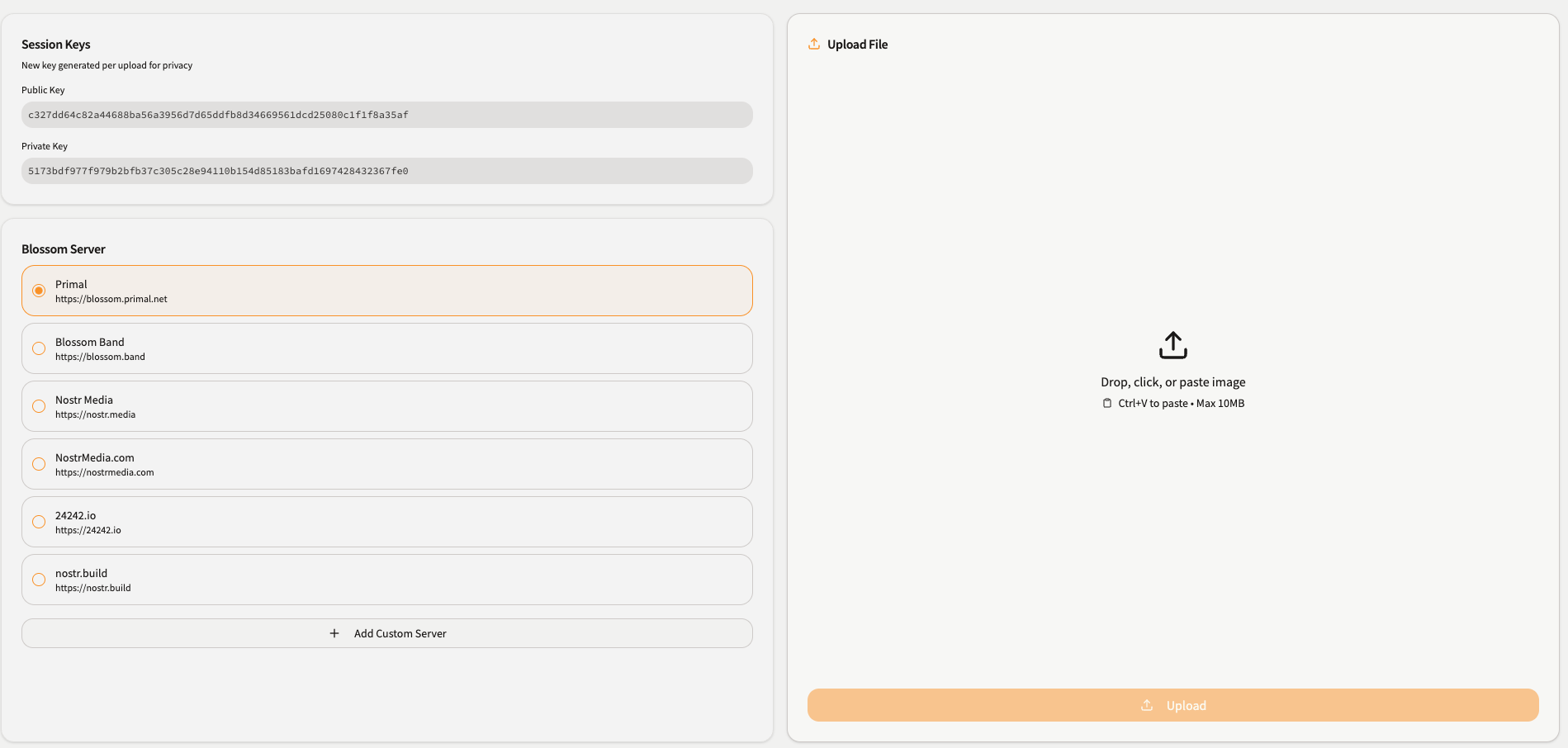
Nice work on the UI! The only thing I noticed is that the text doesn’t scale quite right on larger screens—otherwise, everything looks solid.
I've never had Twitter, Facebook, or WhatsApp. Nostr is the first platform that truly feels like home.
Hello, world!