Profile: 4ecbcda8...

If that were true then it would imply that the government does in fact lie to its people. So yeah, can't be true /s

This is why nostr is so important.

Satoshi could only fight up until Wikileaks kicked the hornet’s nest. Good thing he was anonymous.
The speaker describes a scenario where a baboon in the African savanna faces a survival dilemma of choosing whether to risk its life for bananas near a lion. The decision involves calculating probabilities: the likelihood of starving if it doesn't eat versus the likelihood of being attacked by the lion. The baboon, like humans, collects data about the bananas (quantity, ripeness) and the lion (distance, size, state) and uses its senses to process this information. The entire body, especially the nervous system and brain, acts as a calculator, swiftly translating the data into probabilities. Instead of numerical results, the baboon experiences the answer as a feeling or emotion.
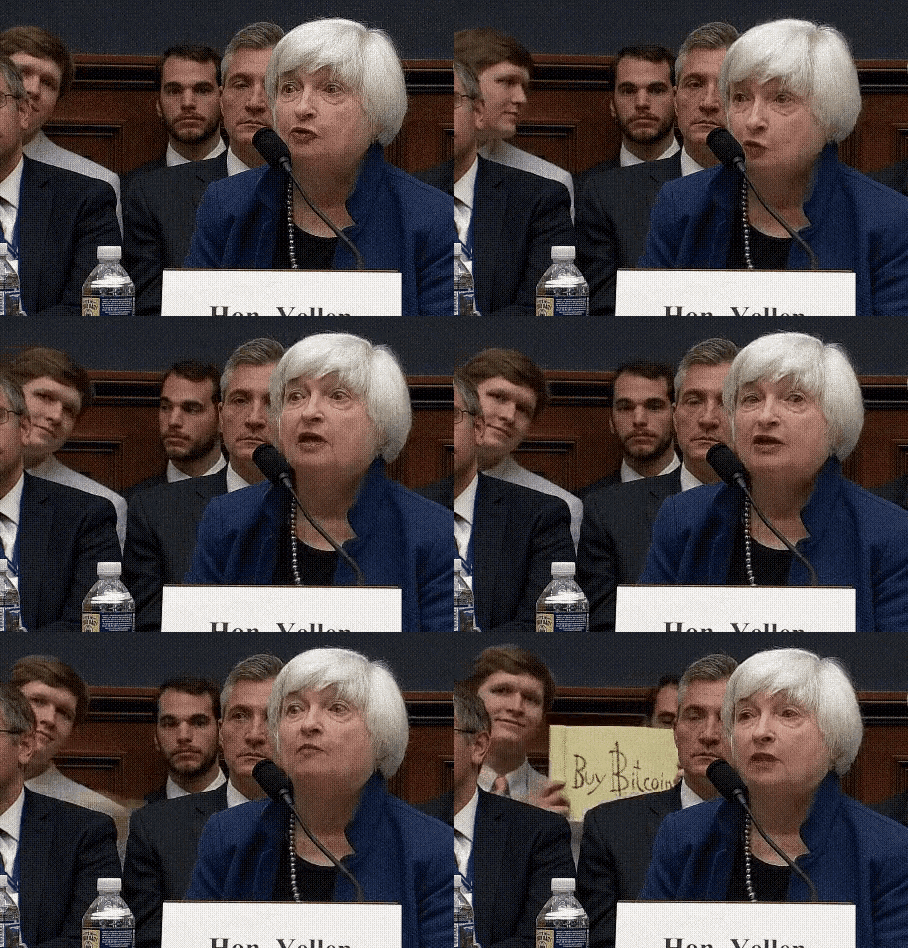


7 days of greed

*if you are not risk averse then maybe you don't care
The IRS will make a claim against your wealth based the the information you give them (assuming you play honestly). Any money going out is subject to capital gains tax and any money going in subject to income tax. Transfers between wallets must be proven, and they always make mistakes in their favor. It's all about risk mitigation. If you are risk averse then maybe you don't care. If you don't mind sending all your crypto metadata to the IRS then maybe you don't care.

And then the IRS sends you a letter that looks like this
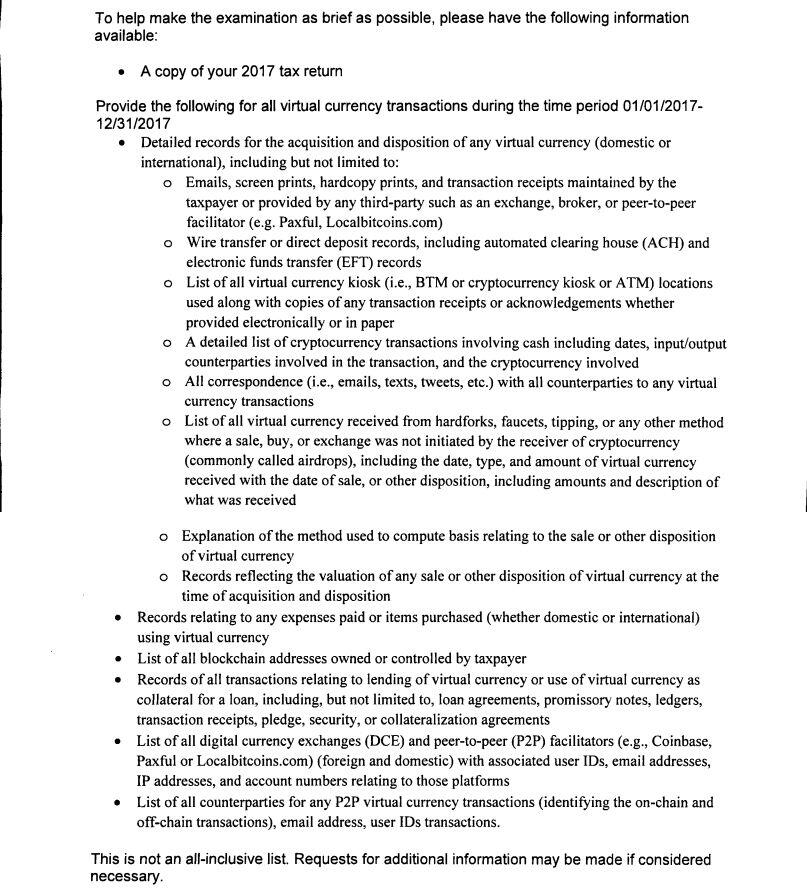
Not to mention the IRS goes after the little guys because they are easier to plunder from.

That's because if you have too many transactions to report to the IRS (e.g. zapping at will), it increases your chance of getting audited. Just having a complicated tax return is all it takes to get flagged, even if it's accurate.
Probably by lowering the standards of the prison system more than it already is.
You are right. They would just execute you. It's cheaper.
In an IRS audit, the burden of proof is on you. That means they can make a claim on your wealth, and it's on you to prove otherwise. If your transaction history is complex then it becomes even harder to prove. After the audit is over and the IRS determines that you owe them (typically an arbitrarily large amount) and you don't pay them then you go to jail.
Until you get audited. In the end you will have to give them more because of interest and fees. Why risk it?