
Why are Property Prices High.
A Canadian Perspective.
Things were not always like this... Housing prices used to reflect the "utility value" of the building and property. In that free market system "supply and demand" kept housing mostly in line with the cost of construction and the scarcity of the land.
A few things have all contributed to the issue, ranked in the order I believe they contribute.
1) MONEY PRINTING
Prices go up and down for various reasons, certain sectors of prices going up isn't inflation. (War in Ukraine, scarcity of fuel/wheat, prices go up, not inflation) Inflation is when ALL your prices go up across the board. The ONLY cause of that type of inflation is the central bank creating more money and the government injecting it into the market in their budget items. This tactic, makes all the money in the market less valuable by a small percent. It's a hidden, unaccounted for tax on everyone who holds government "fiat" money. Every government that issues fiat has done this, since the invention of fiat, going back thousands of years. This means, that hard assets (real estate, precious metals, a pile of gravel etc) need cost more and more fiat currency, as the fiat currency is worth less and less every time the central bank prints more it dilutes the value. So if your stock portfolio goes up by 5%, but inflation was 8%, you've actually lost 3% of your purchasing power. However, if you have a rental property, that rental property, will always hold the same "utility value", it can still keep the occupants warm and dry. So it may not track inflation precisely, but over the decades, it protects against the erosion of the dollar. Saving dollars makes you poor, buy hard assets in an inflationary environment. (Consequently this acts as a wealth transfer tax from the poors without assets to the wealthy with assets.)
2) ZONING LAWS
The people in politics, both at federal and provincial levels, but also all the way down to the municipalities, and the (generally older) citizens that are meaningfully active in politics ALL are massively and disproportionately made up of people who own at least one, if not multiple properties. For most of those people, property makes up the majority of their portfolio.
Consequently, they are systemically bent to protecting the value of their properties. You see this in the NIMBY movements, and puplic hearing on zonings and such. The result is that municipalities artificially limit the number and types of buildings that they approve, no one wants a big "affordable housing" complex built in their nice neighborhood. This creates artificial scarcity and keeps prices high, because builders can't make all the cheap housing that the market demands. This will not change, because as by the time someone gets there life in order enough to influence politics, they have their financial affairs in order and benefit from it.
3) BUILDING CODES
Progressives in the past 3-4 decades have been aghast at the conditions some people lived in, packing into a rooming house with shared washrooms for instance. So in cities across north America, they have changed building codes to ensure that new builds have certain minimums, like bedrooms must have a window and a closet, each suite needs to have it's own washroom etc. These restrictions, don't improve peoples living conditions, they remove peoples free choices. Some of the people that would be ok in these conditions needs to rent an apartment and are financially stressed by it, some of them go homeless, despite having modest employment. Removing choices, doesn't magically change the economics of it.
4) CHINESE MONEY
Specific to the Lower Mainland in British Columbia. The Chinese underground banks are taking advantage of Canada's lax financial laws to circumvent the Chinese limits on exporting money outside of China. By getting street cash from the fentanyl crisis addicts, and then washing it through BC casinos, and then using the "winnings" to buy property in Canada. This is all documented in great detail in Sam Coopers book "wilful blindness"

Immersion mining with canola oil to concentrate maple sap more quickly
https://v.nostr.build/n997.mp4
I'm using a single S9 hash board immersed in canola oil to heat maple sap to increase the effectiveness of the reverse osmosis sap concentration system.
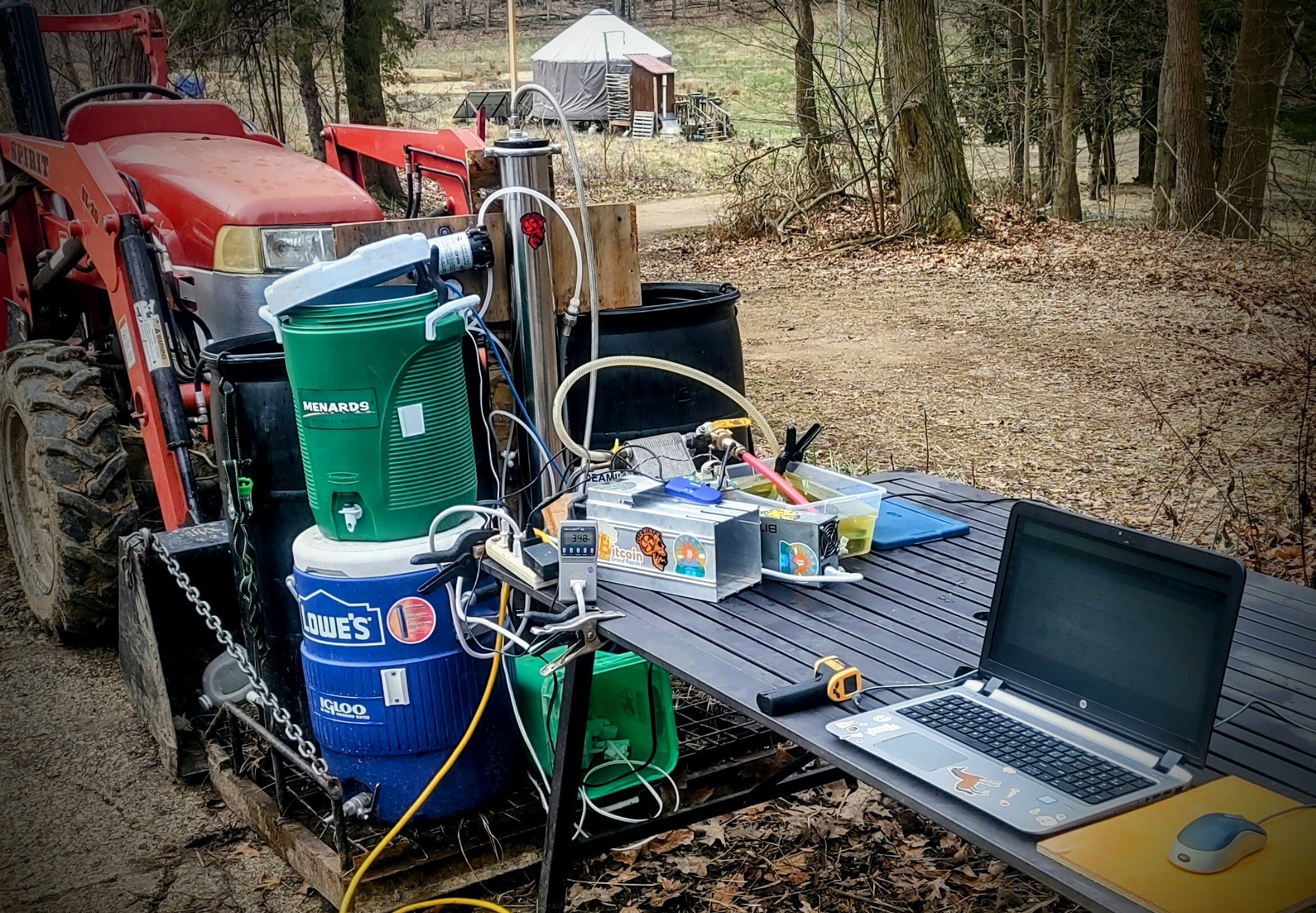
The weather conditions this season have caused the maple sap to be cold and stay cold which drastically slows down the ability of the RO system to filter water out of it. I ran into a bottle neck where there is more sap than I can keep up with concentrating so I needed to come up with something quickly!
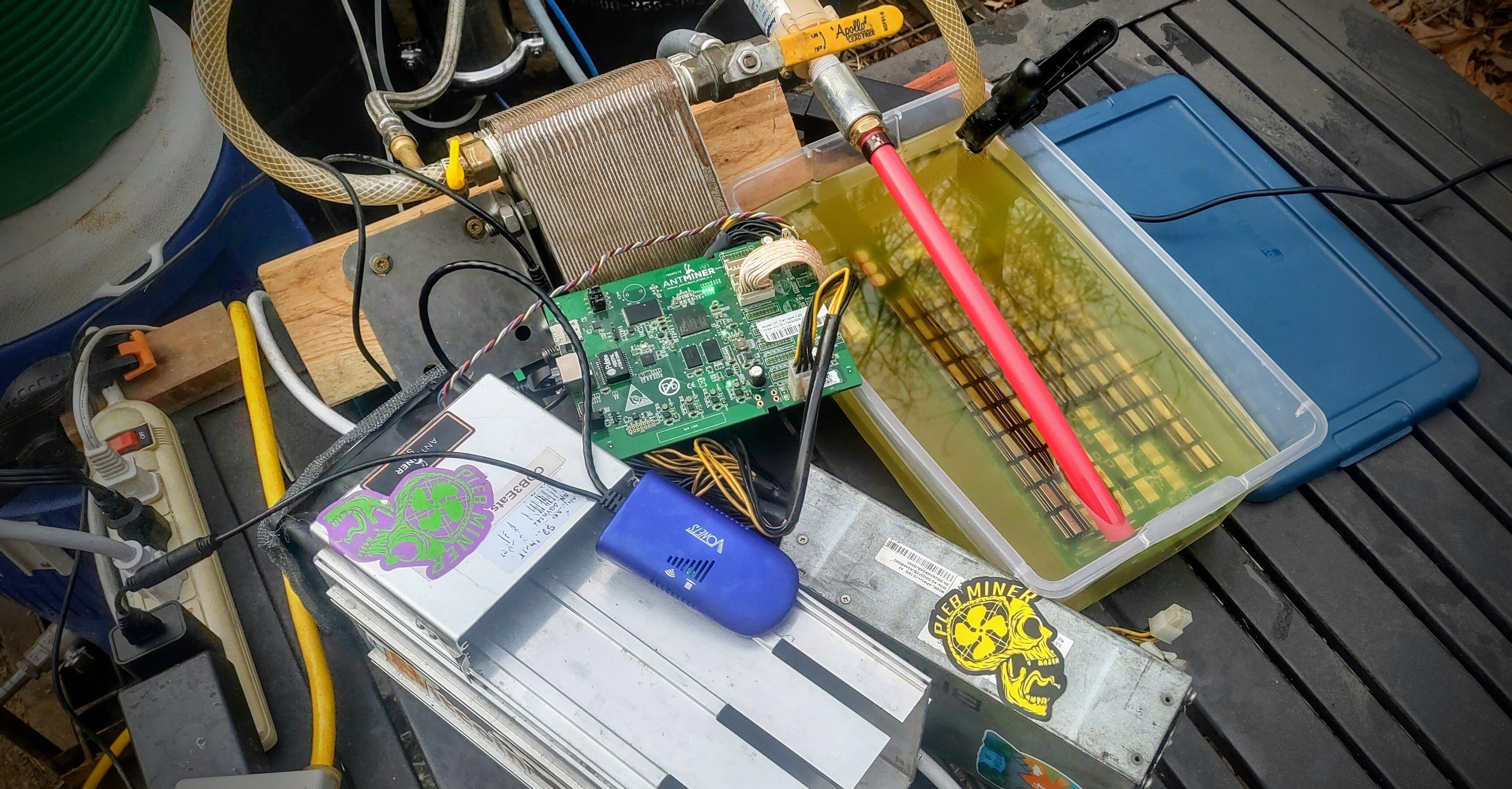
Ideally if the temperature of the sap is 77°f the filter will operate most effectively without damaging the RO membrane. Of course, my mind immediately turned to Bitcoin mining for the heating solution. What I came up with was an immersion system using the homebrew equipment I already had to heat the sap just before it entered the RO. This would allow the majority of the sap to stay cool keeping it from spoiling and still remove the most water possible.
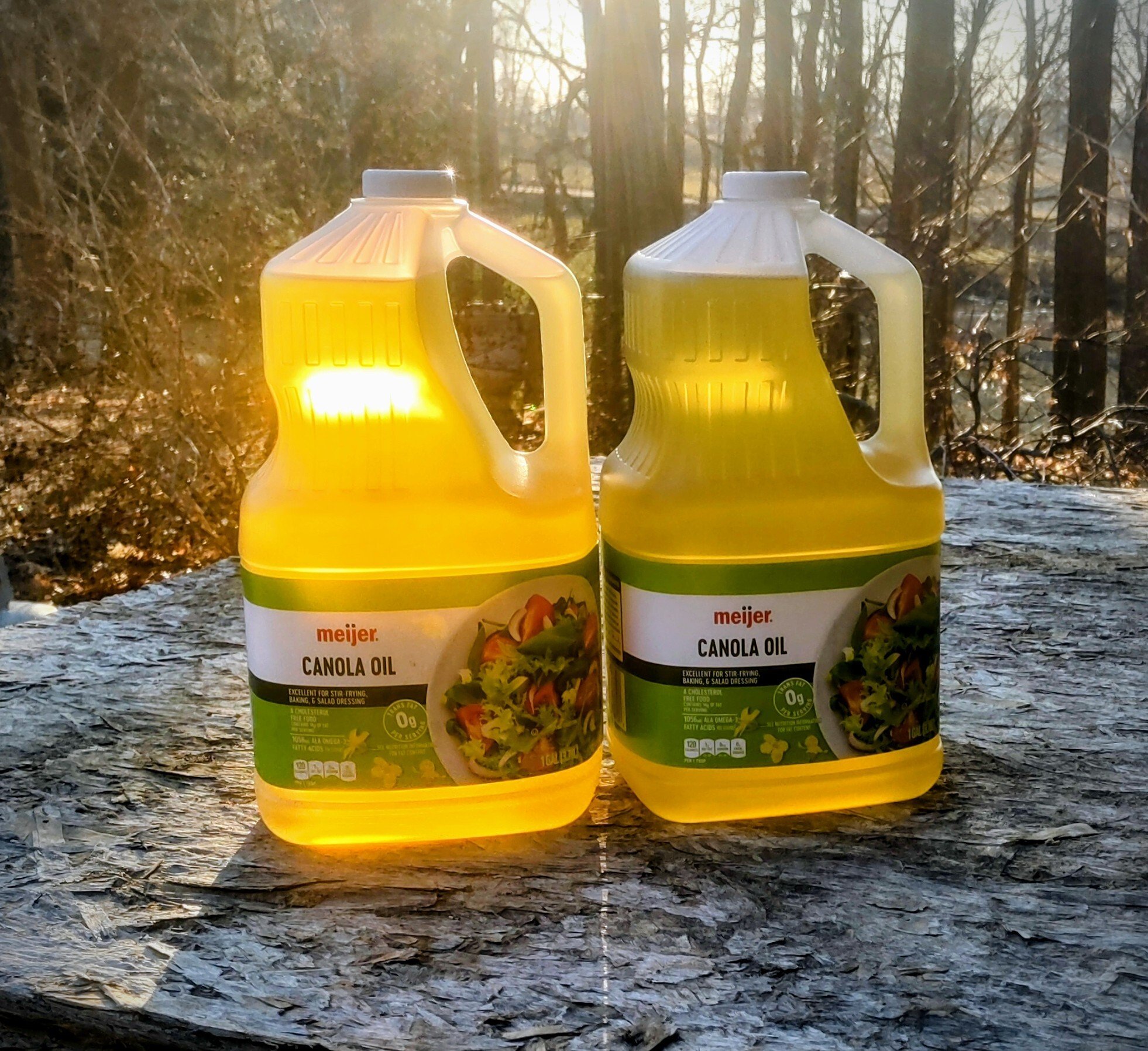
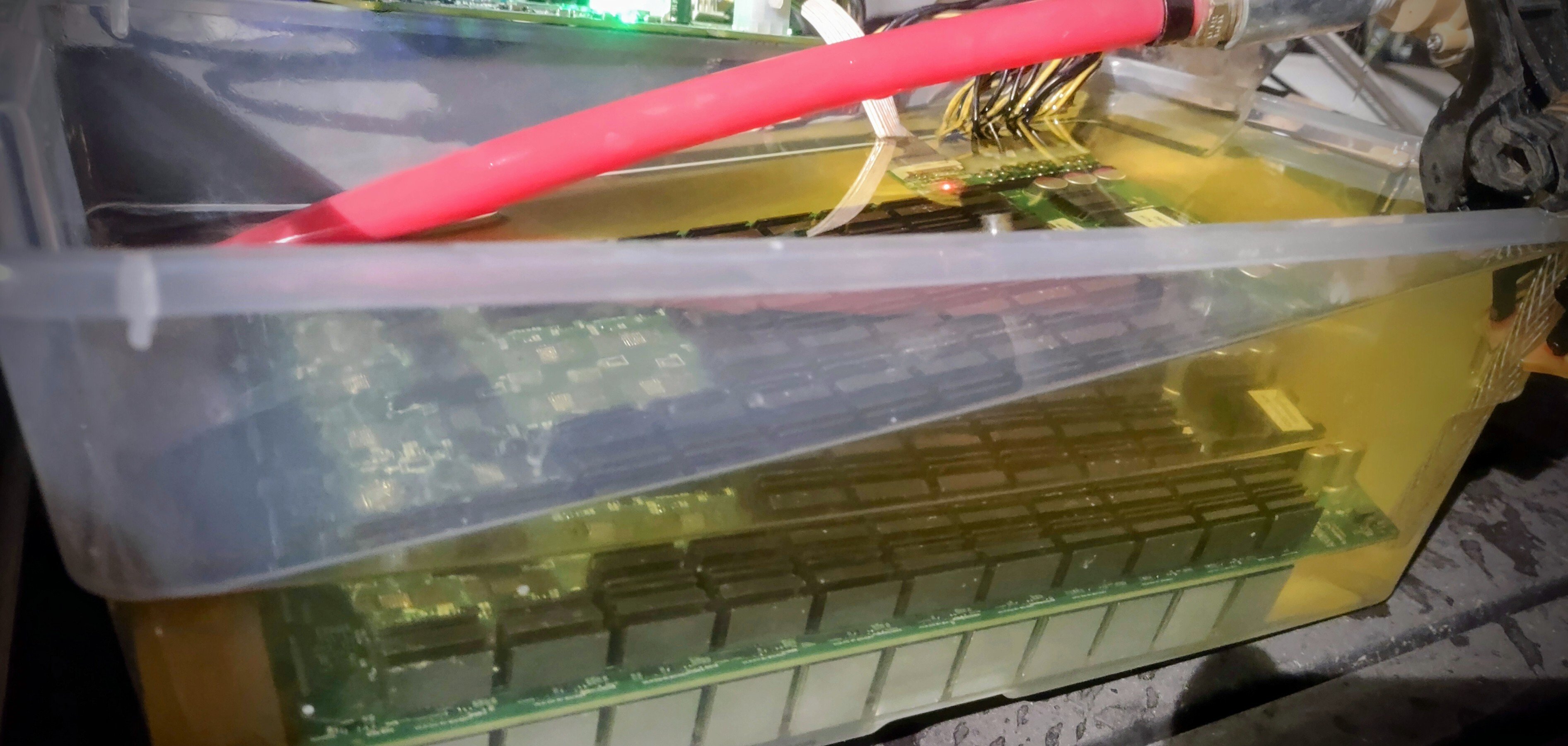
The only thing I didn't have for the immersion system was the dielectric fluid. I had no idea where to find the proper fluid nor did it make sense to pay the high cost for it. The application for this system is very specific and I will only need it until April. I had been joking about using canola oil as dielectric fluid for almost a year but for this situation it seemed like the perfect fit. Canola oil is 70% cheaper than bitcool before shipping and was immediately available!
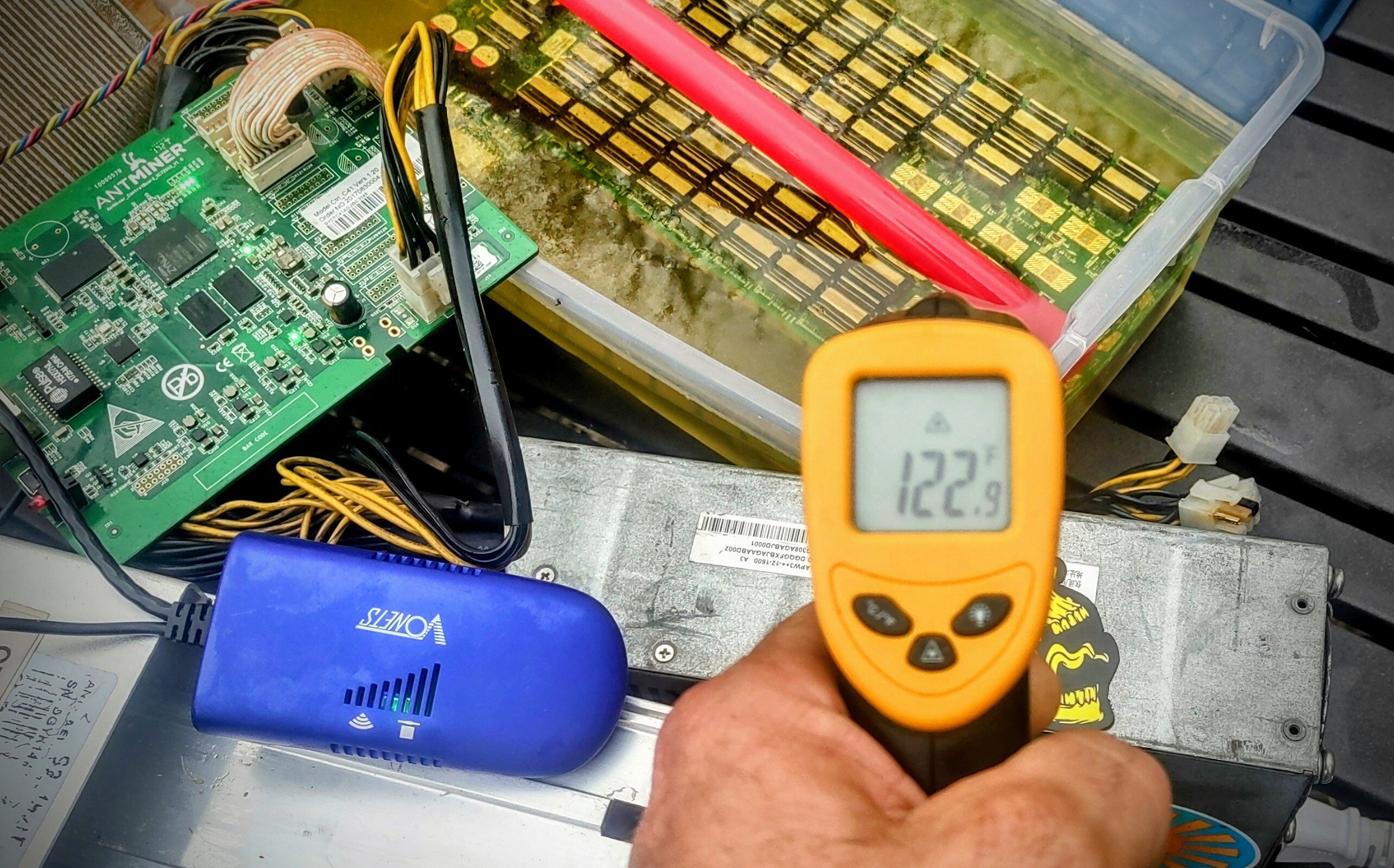
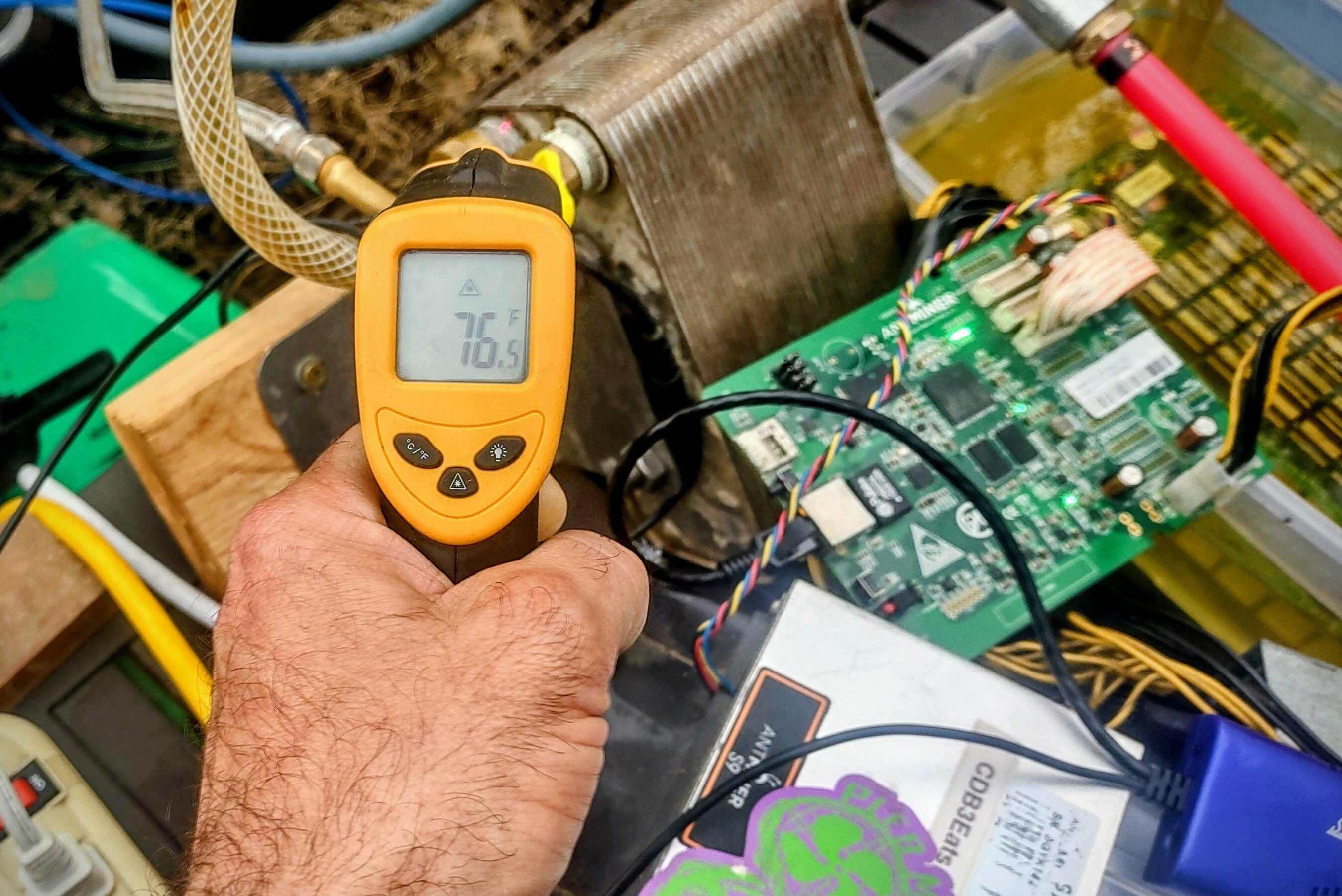
Amazingly, I put everything together and it worked very well without major adjustments. I tip-toed the voltage and frequency of the single S9 hashboard up slowly to find the right balance in temperatures between the two fluid loops. Ultimately, I ended up with an overclocked board drawing over 600w! By the time I got the system setup and dialed in I was already half way through concentrating this collection of sap. The next collection will offer more concrete data on what this system is capable of. For now, even with the worst S9 board I have, I'm getting a 15% rebate on the total power usage of the whole process and it's definitely concentrating sap more quickly. All for ~$10 of canola oil... 👀
#homesteading #permaculture #permies #plebminer #meshtadel #grownostr #immersionmining #seedoil #homemining #homeminer #bitcoin #bitcoinmining #maplesyrup #maplesugaring #reverseosmosis
As a canadian bitcoiner, also living on the land, this may be my favorite post of all time. It's a pretty specific niche you itched there.

I imagine one of the phones are compromised, not the signal app or system. An app, including SimpleX, is only as secure as the environment it is being executed in #GrapheneOS

I'm relieved on your behalf, what a fuck twit, so glad that this chapter is closed for you. Congrats!

The main profile when you boot the phone is a generic one with a bunch of random web history and data poisened contacts, logins savedtlo cloud accounts I don't use etc.
I also have the account I actually use all the time, and a seperate crypto wallet profile
The media lies

There is a setting under security for the phone to restart if not unlocked for a period of time. Which is a stunning security feature when paired with the Titan M chip. Maybe check that?


I can't recommend simplelogin enough. Really solves this. Setting it up to work with a custom domain that you own is excellent as it makes it much less likely to be blocked or cancelled, and lets you "own" and migratethosee emails toanother service in the future.


nostr:npub1a2cww4kn9wqte4ry70vyfwqyqvpswksna27rtxd8vty6c74era8sdcw83a I know how you feel. I think I am the only Uranium investor on Nostr. If you thought macro on Nostr was small, Uranium is non-existent.
A fellow uranium squeezer, I didn't know there was a community outside of reddit!

For what it's worth anecdotally, I really enjoy your macro content, newsletter and podcast interviews, but don't have a twitteraccountt to get your updates there.
“If there’s two great evils in the world it is centralization and complexity”
-George Hotz
