

The greatest threat to evil is truth.

Lick her ass like a bowl of cake mix 🧑🍳

My days are also numbered.
In fact it would be hard to have days that aren't numbered.
Could you imagine trying to reference, say, January 17th, 2009 without numbered days? Impossible. Preposterous.

Human beings tend to prefer cognitive comfort, or the reinforcement of the familiar, to an encounter with the unknown.
Dog and pony shows.
No matter what you do, no matter how good your intentions, there is always some mean-spirited person who wants to bring you down.
So what if I'm fucking crazy?
In 1999, powered flight tests of the missile began. These were successful, and production of the JASSM began in December 2001. The weapon began operational testing and evaluation in 2002. Late that year, two missiles failed tests and the project was delayed for three months before completing development in April 2003. Two more launches failed, this time as a result of launcher and engine problems. In July 2007, a $68 million program to improve JASSM reliability and recertify the missile was approved by the Pentagon.[15] A decision on whether to continue with the program was deferred until spring 2008.[16] Lockheed agreed to fix the missiles at its own cost and tightened up its manufacturing processes.
Underground nuclear tests
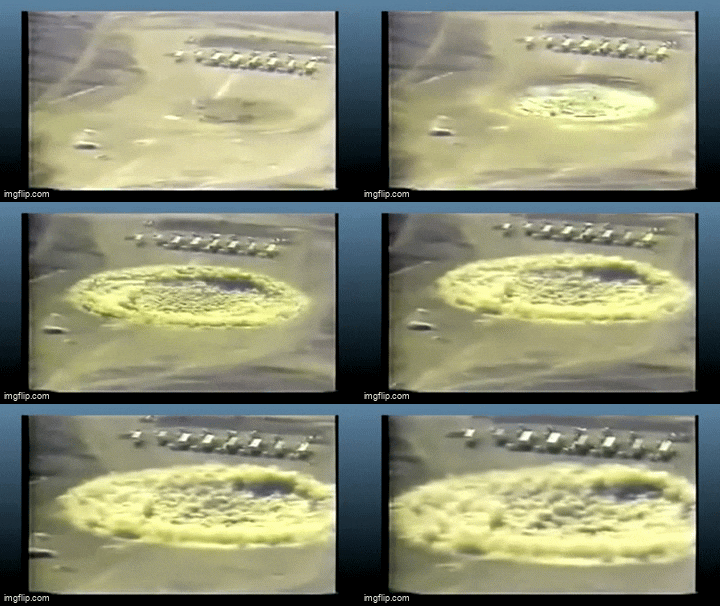
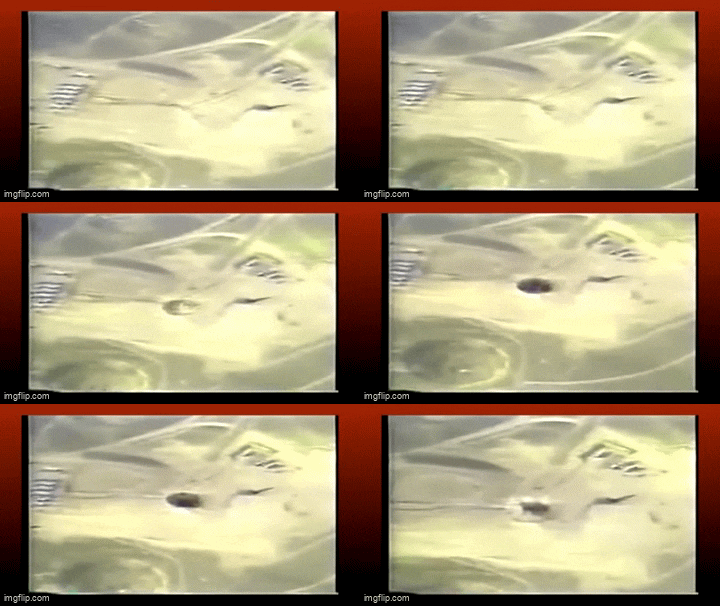
The AGM-158 Joint Air-to-Surface Standoff Missile (AGM-158 JASSM) is a low detection standoff air-launched cruise missile developed by Lockheed Martin for the United States Armed Forces.
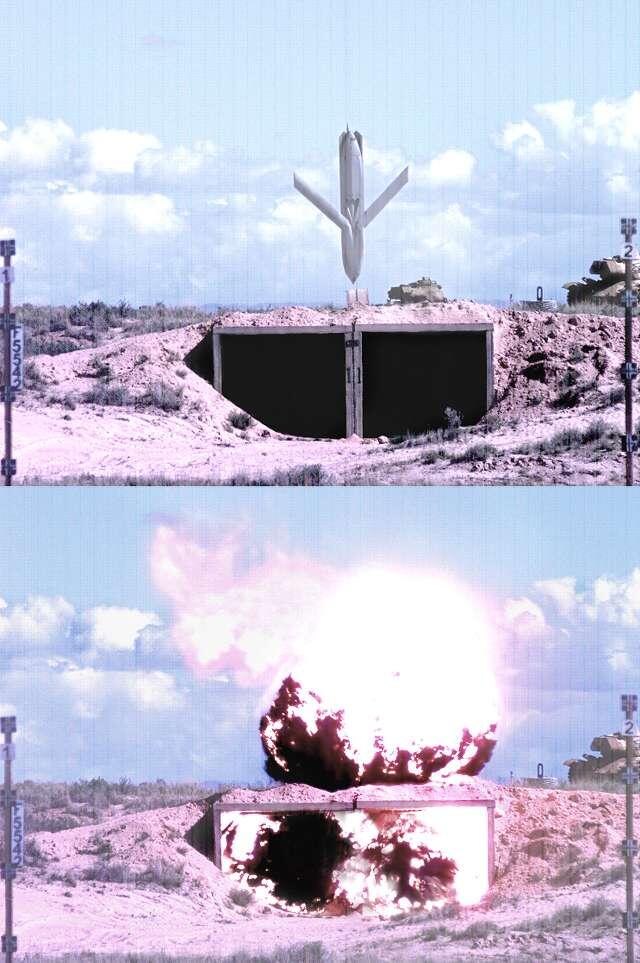
The JASSM project began in 1995 after the cancellation of the AGM-137 TSSAM project. The TSSAM was designed as a high precision stealthy missile for use at standoff distances, but poor management of the project resulted in rising costs. Since the requirement for such weapons still existed, the military quickly announced a follow-up project with similar goals. Initial contracts for two competing designs were awarded to Lockheed Martin and McDonnell Douglas in 1996, and the missile designations AGM-158A and AGM-159A were allocated to the two weapons. Lockheed Martin's AGM-158A won and a contract for further development was awarded in 1998.
The AGM-158A is powered by a Teledyne CAE J402 turbojet. Before launch the wings are folded to reduce size. Upon launch the wings deploy automatically. There is a single vertical tail. Guidance is via inertial navigation with global positioning system updates. An imaging infrared seeker provides target recognition and terminal homing. A data link allows the missile to transmit its location and status during flight, allowing improved bomb damage assessment. The warhead is a WDU-42/B 1,000 lb (450 kg) penetrator. The JASSM may be carried by a wide range of aircraft: the F-15E; F-16; F/A-18; F-35; B-1B; B-2; and B-52 are all intended to carry the weapon. Unlike typical cruise missiles, which fly close to the ground to avoid detection, the JASSM's stealthy design allows it to fly at higher altitudes to achieve long flight ranges without using up energy maneuvering around terrain obstacles.

The design is very human.

I don't know you but I follow you and you post about a lot of stuff I care about so I really hope you find that you are wrong. Feel free to reach out. Things will get better.
Suffering in the midst of plenty.

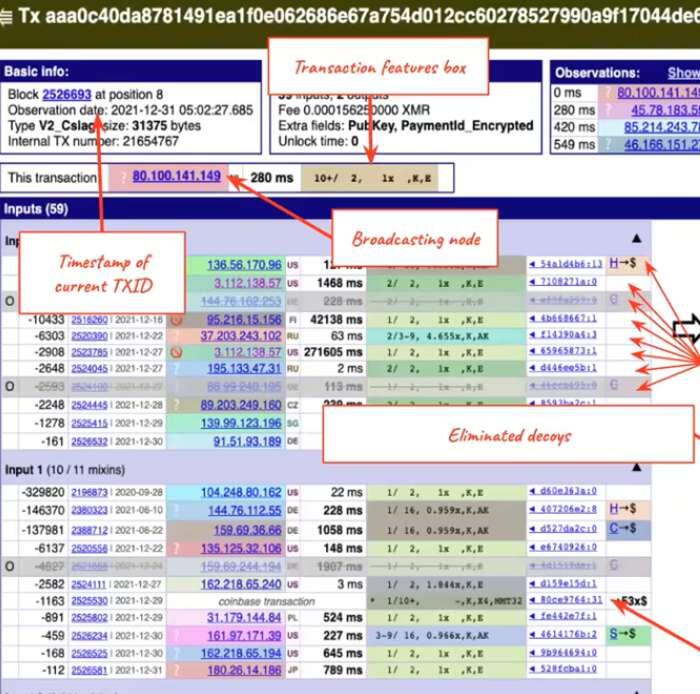

https://github.com/relaytools/interceptor
https://github.com/relaytools/interceptor-proxy
No docs maintained yet but nostr:nprofile1qqs8eseg5zxak2hal8umuaa7laxgxjyll9uhyxp86c522shn9gj8crspzemhxue69uhkyetkduhxummnw3erztnrdakj7qgwwaehxw309ahx7uewd3hkctcprfmhxue69uhkummnw3ezuargv4ekzmt9vdshgtnfduhsgjx9px can likely answer questions if you have any