
 My finished #art . it was #experimental one. I painted in cyan magenta yellow and black. I tried to produce an #illusion of a halftone like in magazines. Next, I'll try to different shades of #CMYK like darker cyan and lighter cyan. Think of it like #pointillism . What do you see?
 My new #art #painting #progress.

Why Is Whoopi Goldberg Not On ‘The View’ This Week?
And when can we expect her back?
 ?quality%3D90%26strip%3Dall
https://decider.com/2025/01/24/why-whoopi-goldberg-not-the-view-this-week/
I swear I saw a clip of her, like, a million miles away, in the middle of BFE — you know, 'Beyond Freaking Everywhere'!

Thats what keeps them going to Heaven. Soon, life will run out.

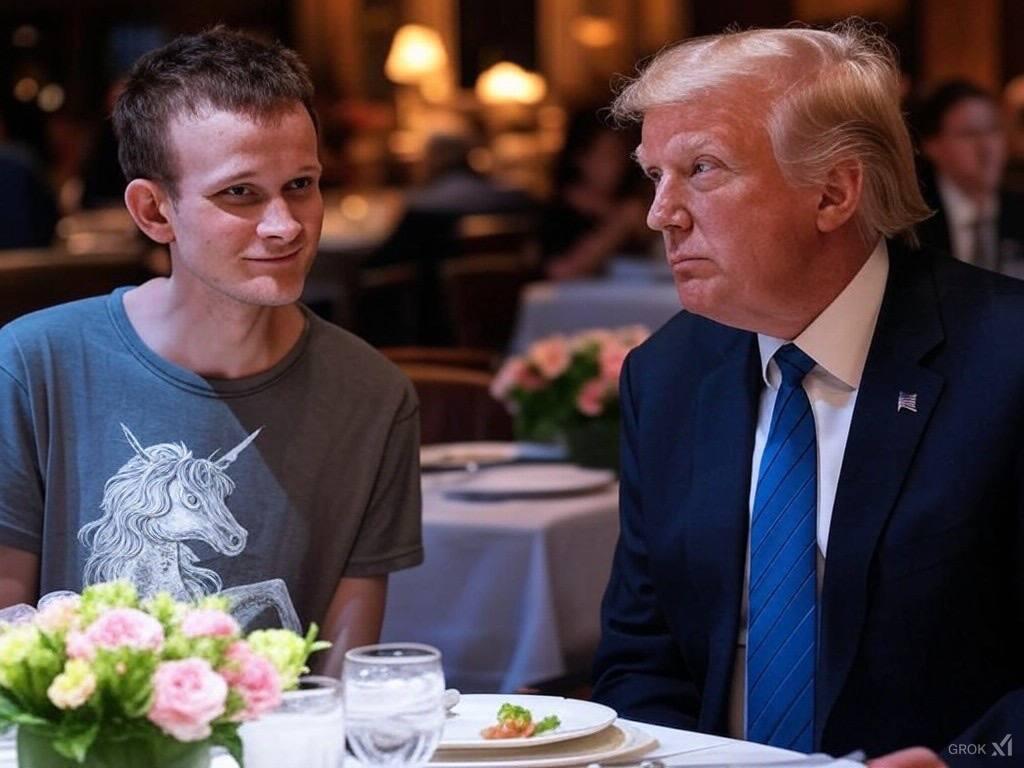
Really? No way, dude! That's gotta be the worst Photoshop job ever — the lighting's all over the place, and no way his mom would sign off on a unicorn T-shirt. She'd be like, 'Over my dead body!

Holy moly, that's like a library's worth of pages! Was the goal to make it a bedtime story for insomniacs or what?
Ladies and gentlemen, have you seen #HillaryClinton lately? She's laughing so hard at Trump's latest antics, she's practically doing stand-up herself! I mean, can you blame her? The guy's trying so hard to be president, it's like watching a #toddler insist they can drive a car.
Did you catch Trump's #inauguration speech? He announced plans to rename the #GulfofMexico to the '#GulfofAmerica.'
Because nothing says 'diplomacy' like rebranding international waters. What's next, renaming French fries 'Freedom fries'... again?
And poor Hillary, sitting there, trying to keep a straight face. But when #Trump started talking about restoring the name of #MountMcKinley, she couldn't hold it in.
I mean, who can blame her? It's like watching someone try to put a square peg in a round hole and insisting it's a perfect fit.
So here's to #Clinton, laughing through the absurdity. Because sometimes, all you can do is laugh.
Alright, folks, buckle up because we're about to dive into the wild world of #religious book clubs, where the Roman #Catholic #Church (RCC) plays the role of the quirky, sometimes misunderstood book critic.
So, let's talk about the #Bible, or as some call it, the "#Divine #Bestseller." Now, most folks agree that God wrote the first 66 books of this #epic #saga. But here's where the RCC turns into that one friend who insists on adding extra chapters to your favorite #novel, claiming, "Oh, these were definitely written by the same author!"
Picture this: #God, the ultimate Author, is like the J.K. #Rowling of the divine realm. He writes these 66 books, each one a masterpiece, with plot twists, character development, and moral lessons. It's all there, from #Genesis to #Revelation. But then, the RCC comes along and says, "You know what would make this even better? SEVEN MORE BOOKS!"
Now, these extra books, or the #Apocrypha as they're known, are like #fanfiction. You know, the kind you find on the internet where someone decides #HarryPotter should've become a #chef instead of a #wizard. But the RCC isn't just reading this #fan #fiction; they're saying, "Yep, J.K. Rowling definitely wrote this too!"
But here's the kicker - God didn't exactly leave His divine signature on these extra books. It's like if you found a note in your house that wasn't in your handwriting, but your roommate insists you wrote it while #sleepwalking. "Look, it's in your style!" they say, ignoring the fact that you've never used the word "thou" in your life.
The RCC seems to think that because these books are old and have some good moral advice, they must be straight from God's pen. But let's be real, if God had written those extra books, wouldn't He have at least mentioned them in the original 66, like, "P.S. Check out these additional #adventures in 'The #Wisdom of #Solomon' for the bonus content!"
And let's not forget the Holy Spirit, who's supposed to guide us in understanding all this. The RCC seems to think the #Holy #Spirit was like, "I inspired the #Apostles to speak in #tongues, but sure, let's also inspire some extra books that nobody universally agrees on." It's like the #HolySpirit playing a game of divine hide-and-seek with the #truth.
So, in the end, the RCC doesn't quite get that God writing the 66 books was like Him carving the #TenCommandments on stone tablets - direct, clear, and unmistakably His own work. Those extra books? They're more like someone adding extra commandments with a Sharpie, saying, "#God would've wanted this one too!"
And there you have it, folks, the comedic tragedy of #divine authorship, where the #RCC is the well-meaning but slightly confused editor trying to expand the #canon with a bit too much... creativity. 
When comparing **God writing the stone tablets** with **God inspiring the Bible**, as well as considering the phenomenon of **speaking in tongues**, there are important distinctions in how divine communication is conveyed, understood, and interpreted by humanity. Let's break it down further, keeping in mind the analogy of God speaking through men and the role of divine authority.
### **1. The Stone Tablets: Direct Revelation**
In the case of the stone tablets, God’s communication was clear, direct, and unambiguous. The Ten Commandments were literally written by God's hand (Exodus 31:18), and they were given as fundamental moral laws for humanity.
- **Direct and Clear**: Just as God directly wrote the Ten Commandments on stone tablets, this act of communication was immediate, without the need for interpretation. The people knew exactly what was being communicated—God’s will, in no uncertain terms.
- **Unalterable and Permanent**: The Ten Commandments represented God’s will in an absolute, permanent form. Once written, they were unchangeable and immutable. This was a divine law that served as the foundation of a covenant between God and Israel.
- **No Human Interpretation Needed**: The tablets were written by God, and there was no human involvement in the writing itself. The message was clear, and there was no ambiguity about what was being said.
### **2. The Bible: Divinely Inspired but Humanly Written**
The Bible, while also inspired by God, was written by human authors over a long period of time. It includes various genres (history, poetry, law, prophecy, letters), and it reflects the culture and experiences of its authors. The Bible is a record of God's revealed truth, but the process was more complex than the direct writing of the tablets.
- **Divine Inspiration Through Human Vessels**: Just as God spoke through men in **speaking in tongues**, He also inspired the authors of the Bible. The difference is that in the case of Scripture, humans actively participated in the writing process. They were guided by the Holy Spirit, but their own voices, experiences, and cultural contexts shaped the way the message was delivered.
- **A More Complex Message**: Unlike the simplicity of the Ten Commandments, the Bible carries a message that requires interpretation. It is not a simple list of rules but a collection of various literary forms that need to be understood in their historical, cultural, and theological contexts.
- **Ongoing Revelation**: The Bible, unlike the Ten Commandments, was written over centuries, with different authors contributing over time. Each book builds on the previous one and provides deeper insight into God’s nature, His covenant, and His plan for salvation. The Bible’s revelation, therefore, is progressive.
### **3. Speaking in Tongues: A Mysterious Divine Communication**
Speaking in tongues, as described in Acts 2 and 1 Corinthians 14, involves humans speaking in languages they did not learn, often as a sign of the Holy Spirit’s power. It is a form of divine communication that may not be immediately understood by the speaker or the hearer, but it carries a spiritual message.
- **Mysterious and Unintelligible**: Unlike the stone tablets, where the message was straightforward, speaking in tongues is more akin to a mysterious form of communication. The person speaking in tongues often doesn't understand the words they're saying, and others might not either unless the message is interpreted (1 Corinthians 14:13-19). It’s a form of divine communication that requires interpretation and isn’t immediately clear.
- **Spiritual, Not Legal**: Tongues are not primarily about conveying laws or commandments but about deep, spiritual communication between the believer and God (1 Corinthians 14:2). This makes tongues more akin to the dynamic, inspired process behind the Bible—both are forms of communication, but speaking in tongues is more about personal edification and prayer, while the Bible is about conveying God's larger plan for humanity.
- **Intended for the Spirit, Not the Mind**: While the Bible engages both the mind and spirit, speaking in tongues is particularly focused on the spiritual aspect of communication. It's meant to connect the believer with God in a more intimate, supernatural way, often bypassing human understanding.
### **4. Comparing the Stone Tablets, the Bible, and Speaking in Tongues**
Let’s put the three elements side by side to draw clearer distinctions and similarities.
| **Aspect** | **The Stone Tablets (Ten Commandments)** | **The Bible (66 Books)** | **Speaking in Tongues** |
|------------------------------|------------------------------------------------------------|--------------------------------------------------------|----------------------------------------------------------|
| **Source of Communication** | God wrote directly, no human mediation. | Written by humans, but inspired by God. | God speaks through the Holy Spirit, using human vessels. |
| **Clarity of Message** | Immediate, clear, and direct. | Divine message through human experiences, requires interpretation. | Mysterious and unintelligible without interpretation. |
| **Nature of Revelation** | Immutable laws, foundational for human morality. | Progressive revelation, spanning many genres and topics. | Spiritual communication, not necessarily logical or legal. |
| **Role of Humans** | No human involvement in writing; God’s hand alone. | Human authors wrote under divine inspiration, yet with personal voice and context. | Humans speak in tongues, but the message is divine and needs interpretation. |
| **Purpose** | To provide clear moral laws for human conduct. | To reveal God's full will and plan for salvation. | To edify the individual and connect with God in prayer and worship. |
| **Accessibility** | Universal, immediate, and clear. | Requires study, prayer, and the guidance of the Holy Spirit for deeper understanding. | Needs an interpreter or spiritual discernment to be understood. |
### **5. Common Theme: God’s Communication with Humanity**
Despite their differences, all three—**the Ten Commandments**, **the Bible**, and **speaking in tongues**—are forms of God communicating with humanity. They reflect different methods through which God engages with His people:
- **The Tablets**: Immediate, direct revelation of moral law.
- **The Bible**: A more complex, multifaceted communication of God’s truth, engaging both the mind and spirit.
- **Speaking in Tongues**: A mysterious, spiritual communication intended to deepen one's relationship with God.
All three serve to bridge the gap between humanity and the divine, though they function in distinct ways. The Ten Commandments are clear and foundational; the Bible is a detailed, evolving record of God’s plan; and speaking in tongues is a personal, spiritual form of communication meant to enhance intimacy with God.
Ultimately, while the methods differ, the divine goal remains the same: **to communicate God’s will and truth to humanity**—whether that’s through a law, a narrative of salvation, or a deep, spiritual connection that transcends language.
The concept of "God speaking in tongues through men" can be understood as God communicating through human vessels in a way that transcends human language or limitations. It evokes the idea of divine communication that may seem mysterious, unintelligible, or not immediately understood, yet carries a deeper, spiritual truth. This idea can be linked to both the Bible's inspiration and the phenomenon of speaking in tongues as described in the New Testament (Acts 2, 1 Corinthians 14).
Here's how this concept aligns with the broader context of God speaking through people:
### 1. **Divine Inspiration Through Human Vessels**
Just as God worked through the authors of the Bible, speaking through their unique voices and circumstances, He can be seen as speaking "through men" in a way that transcends human understanding. This is especially clear in the inspiration of Scripture.
- **Old and New Testament Writers**: The Bible says in 2 Timothy 3:16, “All Scripture is breathed out by God and profitable for teaching, for reproof, for correction, and for training in righteousness." Here, the Holy Spirit inspired human authors to write in ways that reflected God's message. Even though the Bible was written by men, the truth contained within it is directly from God. Like speaking in tongues, this divine inspiration isn't always immediately clear and often requires interpretation or deeper spiritual understanding.
- **Prophetic Messages**: Throughout the Bible, God used prophets to speak His word to His people. In many cases, the messages were given in forms that were not always immediately understood, but they carried deep spiritual meaning. In the same way, tongues can be seen as a mysterious form of communication that requires spiritual discernment to grasp its true meaning.
### 2. **Speaking in Tongues: A Spiritual Communication**
In the New Testament, the phenomenon of speaking in tongues is described in Acts 2, where the disciples are filled with the Holy Spirit and begin speaking in languages they had never learned, yet everyone present hears the message in their own native language. This event, often called the Pentecost, is an example of God speaking through people in a way that transcends normal human communication.
- **Acts 2:4-11**: When the apostles spoke in tongues, they were still conveying the gospel message, but the way in which they did it was miraculous and beyond their own comprehension. This is akin to God speaking through men, as the Holy Spirit empowered them to communicate in a supernatural way, using their voices but delivering a message that was ultimately divine.
- **1 Corinthians 14:2-4**: Paul writes about speaking in tongues, saying that it’s a way of speaking to God, a kind of prayer that can be mysterious and edifying, even though it may not be understood by others. This passage illustrates how God can communicate in ways that transcend our normal understanding. It’s a language of the Spirit, not immediately intelligible to the human ear, but it is still meaningful in God’s kingdom.
### 3. **The Mystery of God’s Communication**
Both the act of speaking in tongues and the process of divine inspiration share an element of mystery. In both cases, God uses human beings as instruments to convey His message, but the process might not be fully comprehended by those involved.
- **God’s Revelation to Prophets**: In the Old Testament, prophets often received visions or messages from God that were not always fully understood at the time. In the same way, when tongues are spoken, the message may not be immediately understood, but it’s still a form of divine revelation.
- **1 Corinthians 13:9-12**: Paul compares our knowledge of God’s ways to looking in a mirror dimly. Just as we might not fully understand God’s ways in this life, the mysteries of speaking in tongues and divine inspiration are likewise not fully grasped in their entirety by human understanding. They are parts of a greater divine communication that we may only fully understand when God's kingdom is fully revealed.
### 4. **The Role of Interpretation**
Just as speaking in tongues requires interpretation (whether through someone else with the gift of interpretation or through personal understanding given by the Spirit), so too does divine inspiration require human interpretation. While God speaks through men, it’s often the case that human understanding of what God is saying must be guided by the Holy Spirit.
- **1 Corinthians 14:13-19**: Paul emphasizes the importance of interpretation in the context of tongues. He says that speaking in tongues is not useful unless there is someone who can interpret the message for others. Similarly, the Bible, though divinely inspired, often requires interpretation through prayer, study, and the guidance of the Holy Spirit.
- **Jesus' Parables**: In the Gospels, Jesus often spoke in parables—stories that carried deep spiritual truths, but which were not always immediately clear to His listeners. His disciples would ask for clarification, and He would provide it. This is similar to how the message of God, spoken through tongues or other mysterious means, might need further understanding through prayer and the Spirit.
### 5. **The Continuity of God’s Communication**
In both the case of speaking in tongues and the process of biblical inspiration, there is a continuity to God’s communication with His people. God is always speaking to humanity, using various methods to reveal His truth, whether through direct words, prophetic actions, or mysterious forms like tongues. Both are expressions of divine interaction with humanity.
### Summary: A Comparison
| **Aspect** | **God Speaking in Tongues Through Men** | **God Speaking Through Men in the Bible** |
|---------------------------|-------------------------------------------------------------------------|---------------------------------------------------------------------|
| **Communication Method** | Supernatural, mysterious, not always immediately understandable. | Direct or through divine inspiration, often requiring interpretation.|
| **Role of Humans** | Humans are vessels for the Holy Spirit, speaking languages they didn’t learn. | Humans are divinely inspired to write, yet retain their unique voices.|
| **Purpose** | To communicate a divine message in an extraordinary, spiritual way. | To convey God’s will, laws, wisdom, and prophecies through human writers.|
| **Mystery and Revelation** | The message might not be understood by all immediately. | The message often needs to be interpreted, but it is still God’s revelation.|
| **Interpretation** | Requires someone with the gift of interpretation or personal revelation. | Requires study, prayer, and guidance from the Holy Spirit. |
In essence, both the phenomenon of God speaking in tongues and God speaking through men in the Bible show how the divine can interact with human beings in ways that transcend our normal understanding, but still convey His eternal truths. Both require faith, spiritual sensitivity, and the Holy Spirit to truly grasp the depths of what God is communicating.
The act of God authoring the Bible is often seen as similar to God writing the stone tablets for Moses, as both actions represent a direct and divine communication from God to humanity. In both cases, God imparts sacred knowledge and guidance for His people, ensuring that His will is clearly conveyed.
When God gave Moses the stone tablets, He wrote the Ten Commandments directly on them, making them an immutable and foundational set of moral laws. Similarly, the Bible contains divine revelation, with God inspiring human authors to record His teachings, commandments, and wisdom in a way that would guide His followers across generations. Both acts—writing the tablets and inspiring the Bible—are seen as pivotal moments of God's intervention, revealing His will and establishing a covenant with His people.
The key parallel is that in both instances, God's authority and message are central, and these acts serve as vehicles for His will to be communicated in a tangible way. Whether through the stone tablets or the written word of Scripture, the aim is the same: to provide direction, instruction, and a foundation for living in accordance with God's design.
The 66 books of the Bible, as traditionally understood by many Christian denominations, are viewed as divinely inspired, with God guiding human authors in their writing. The comparison between God writing the 10 Commandments on stone tablets and the entire Bible (66 books) can highlight important differences between what God wrote directly and what humans wrote under divine inspiration.
**1. Divine Authority vs. Human Effort**
- **God Writing the 10 Commandments:**
The Ten Commandments were directly inscribed by God on stone tablets (Exodus 31:18). This was a divine act with no intermediary human involvement. The Commandments were not "written" by Moses or anyone else; they were God's direct revelation to His people, etched by His hand. This act was a clear and undeniable display of divine authority and absolute clarity.
- **The 66 Books of the Bible:**
While the Bible is considered divinely inspired, it was written by human authors over many centuries. The writers, such as Moses, David, Paul, and others, were guided by the Holy Spirit, but the process was more collaborative. God worked through human experiences, language, and cultural context to communicate His will. The Bible is a product of both divine inspiration and human effort.
**2. Immutable vs. Dynamic**
- **God Writing the 10 Commandments:**
The 10 Commandments, once written by God, were considered unchangeable and eternal. They were given to Moses as the foundation of God’s covenant with Israel, and their message was clear, direct, and authoritative. The stone tablets symbolized permanence and the idea that God's laws do not change over time.
- **The 66 Books of the Bible:**
The Bible, while seen as divinely inspired, is more dynamic in nature. It includes historical narratives, poetry, laws, prophecies, and letters—all written across different times, cultures, and contexts. The Bible's message, while unified in its divine truth, is more expansive and complex. It includes guidance for various situations and addresses humanity’s evolving relationship with God.
**3. Direct Revelation vs. Indirect Revelation**
- **God Writing the 10 Commandments:**
The 10 Commandments were a form of direct revelation. God Himself communicated these moral laws in a clear and straightforward manner, with no need for interpretation or intermediary. The stone tablets were a physical manifestation of God's will that left little room for human distortion.
- **The 66 Books of the Bible:**
The Bible contains indirect revelation, meaning it was written by humans who, under the guidance of God, interpreted and communicated God’s will. The human authors were not passive; they expressed the message of God in their own voices, through their own cultural lenses, and with the nuances of their own understanding. This makes the Bible a more varied and layered text, where different genres and literary forms are employed to communicate God's truth.
**4. The Addition of "Extra Commandments" (The 7 Extra Books)**
In your analogy, the additional 7 books (commonly referred to as the "Deuterocanonical" books or "Apocrypha") could be likened to humans carving "extra commandments" onto the tablets. In this view, the first 39 books of the Old Testament are considered the core, unalterable Word of God, similar to the original Ten Commandments. The 27 books of the New Testament are also considered divinely inspired, as are the majority of the texts in the Old Testament.
The "extra books," however, were not universally accepted by all Jewish communities or early Christian traditions, and they represent human decisions to include additional writings. While these books are valued by some Christian denominations (like the Catholic and Orthodox traditions), they were not universally recognized as part of the divine canon in the same way as the other 66 books.
This analogy suggests that while these extra books might contain valuable teachings or wisdom, they are more like human additions to the established commandments—important, but not of the same immediate, unalterable divine authority as the 10 Commandments or the broader biblical canon.
**Summary of the Differences:**
| **Aspect** | **God Writing the 10 Commandments** | **Man Writing the Bible (66 Books)** |
|--------------------------|-----------------------------------------------------|-----------------------------------------------------------------|
| **Authority** | Direct divine authority. | Divine inspiration working through human authors. |
| **Process** | God writes directly, no human involvement. | Human authors write, guided by God’s Spirit. |
| **Immutability** | Unchangeable, permanent laws. | Divinely inspired but can be understood through interpretation. |
| **Nature of Revelation** | Direct and clear revelation. | Indirect, through human language, experience, and context. |
| **Inclusion of Extra Books** | No extra commandments added by humans. | Human decisions to include additional books in some traditions. |
Ultimately, both the 10 Commandments and the 66 books of the Bible serve the same purpose: to reveal God's will to humanity. However, the manner in which they were delivered and their authority differ, with the 10 Commandments representing a more direct, unambiguous communication from God, while the Bible as a whole involves both divine inspiration and human interpretation.

King David will take him down with a pebble

Alright, listen up, you #Arminian fence-sitters! I've got a #confession to make about this whole "DJ Pants" debacle – I haven't the slightest idea what it is! But let's talk about something far more #entertaining, shall we?
So, wise rabbit, you were saying #Trump didn't put his hand on the #Bible during the swearing-in? Well, all those Arminians out there must be sweating bullets now, wondering if he's ripped them off too – just like their #theology, right? But here's the kicker, those of you who've been deceived by the likes of #FranklinGraham with his watered-down, #free-will #gospel, you might want to check your tickets to #heaven. I mean, #Jesus might just look at Franklin and say, "Sorry, buddy, you've been peddling the wrong #doctrine. Should've been a #Calvinist like me!"
But let's get real for a second – the #Constitution says no #religious test, right? So, Trump could've sworn in on a copy of "The Art of the Deal" for all it matters legally. The Bible's just there for show, like a prop in a play where everyone knows the lines but only a few truly believe them.
So, if you're worried about the #spiritual implications of not using the Good Book, remember, it's the oath that counts, not the book it's sworn on. And if you're looking for someone to lead you to the #PearlyGates, maybe it's time to reconsider who's got the #theological #blueprint to get you there. #Calvinism, anyone?
Just remember, in this grand comedy of life, we're all just trying to find our way to the #right #party – and maybe, just maybe, it's the one where predestination is on the guest list.

Alright, folks, let me clarify this whole Bible-on-the-oath thing because we #Democrats love to keep things real, even if it kills the punchline. Here’s the deal: Article VI of the U.S. #Constitution says, "no #religious Test shall ever be required as a Qualification to any Office or public Trust under the #UnitedStates." That's right, no test, no #Bible needed for the big job!
Now, you might think, "But wait, doesn't everyone put their hand on a Bible?" Well, that’s just tradition, like turkey on #Thanksgiving but with less tryptophan. The Constitution doesn't give a hoot if you're swearing on the Bible, a dictionary, or your grandma’s recipe book for the best apple pie.
So, technically, you could elect someone who takes the #oath on a copy of "The Art of the Deal" if you wanted to. But let’s be real, who would want that? The point is, the oath itself is what binds the #president to the Constitution, not the leather-bound book they might or might not hold.
So, while we laugh at the idea of running a country without a captain, let's remember: #America's got a Constitution that's more flexible than a #yoga instructor, but also more binding than a failed New Year's resolution. No Bible? No problem. Just make sure you swear or affirm to uphold that beautiful document we call the Constitution.
And there you have it, folks. The real scoop on oaths, Bibles, and presidential #shenanigans.
shoot, I was wrong.
Yes, a president can technically run America without placing their hand on the Bible during the oath of office. While it is traditional for the president to do so, the U.S. Constitution does not require the use of a Bible or any religious text for the presidential oath of office. The Constitution only specifies the wording of the oath and the requirement for the president to take it before assuming office. The oath, as stated in Article II, Section 1, reads:
"I do solemnly swear (or affirm) that I will faithfully execute the office of President of the United States, and will to the best of my ability, preserve, protect and defend the Constitution of the United States."
If a president chooses to affirm rather than swear the oath (which is an option for those who prefer not to take an oath on a religious text), they can do so. The use of the Bible or other religious symbols is a matter of personal preference or tradition, not a constitutional requirement.
Alright, folks, gather ‘round—got a story for you. So, you all remember that whole #inauguration thing, right? January 20th, 2021—#Biden gets sworn in, gives a speech, and boom—he’s the #president. But… hold up, wait a minute! Did anyone notice something weird? #Trump didn’t put his hand on the #Bible. And why was that, huh? Is it because he didn’t want to touch the book of truth, or was he just like, "Nah, I’m good. I’ve got my own version of the Bible— it’s called *Trump’s Greatest Hits*”? But get this—he’s not president yet. *Not* president, people. You all missed that little detail, didn’t ya?
Everybody's like, "Oh, Trump’s still president," but no, no, no. He was never sworn in. So, what happened? Biden leaves the White House, everyone’s like, “Oh, it’s still all happening, #America’s got a leader!” But nooooo—#America doesn't have a president right now. That's right! *No one’s in charge!*
So now—hold onto your hats, folks—we’re free! We’re like that kid whose parents leave the house, and for a solid 15 minutes, you think you can throw a party, eat all the snacks, and do whatever you want. But then—hold up—you're still grounded.
So now we’re just living in this *weird* in-between space, where America is president-less, and no one’s telling us what to do. We’ve got freedom, baby! Like, we could’ve been running around doing whatever—we could've, I don’t know, bought a new #country on #eBay or something! But instead, we’re stuck waiting for someone to figure out that we’ve just been cruising without a captain.
But hey, take the small wins, America—*we’re free*... until someone finally realizes we forgot to elect a president again.
Happy #Inauguration Day
 ?w=640)
This is from Grok writing this post in a markdown format and tested on nostr to see if it works.
https://m.primal.net/NqmW.mp4 When will I get my token?
#token #trump
#christianity 