
Avatar
August
556f3c4e9979760e8d48b5edd891bab75a349dc9f04ed76556075facbd69365b
The most consequential political decision you make is where you put your money

The money is broken. The few who have a surplus of it take refuge in assets. The many who don't have to trade more and more of their time for less and less. Unfortunately both are banal economic rationality and necessity respectively. Unfortunately, that makes it a tragedy that requires no bad actors. Fortunately, that makes it one we can solve together.
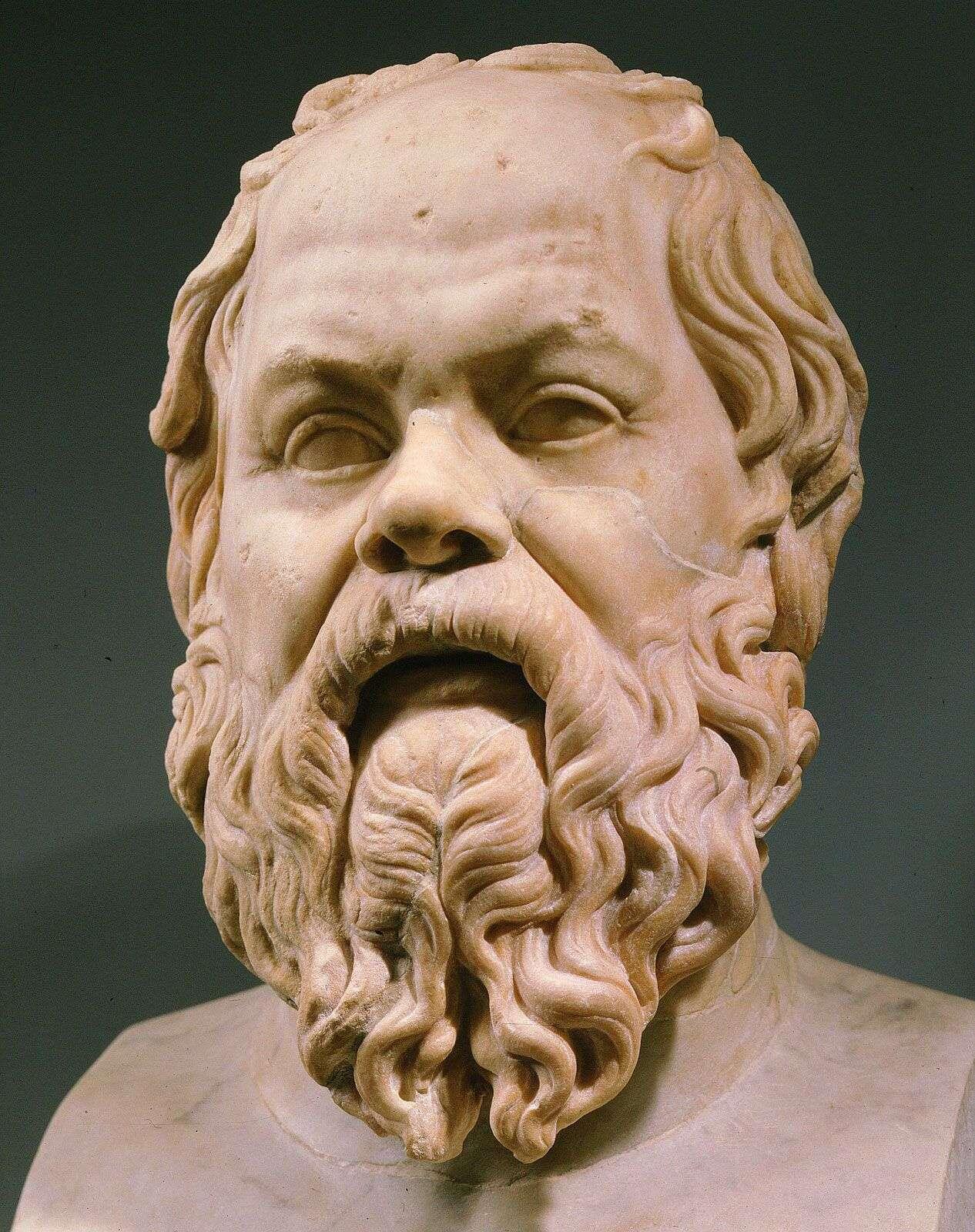
That's a Dan Millman quote, although you're right that the gas station attendant that said it was called Socrates!


Replying to Avatar Lyn Alden

Much of life comes down to trying to find the most workable point between two extremes.

We do that for a lot of things at the individual level, the institutional level, and the sovereign level. Even Aristotle wrote about this thousands of years ago with the Golden Mean (e.g. that the virtue of courage is somewhere between the extremes of cowardice and recklessness, and not necessarily right in the middle).

I think one of the hardest ones in today's age is the "tribal ignorance vs analysis paralysis" problem.

On on hand, people are very emotional decision-makers, and then they also are hardwired to form into groups. Agreeing with each other on one thing often then comes with an overlay of other things to form basically a tribal culture around it, as people start to adapt the mannerisms and ideas of those they already partially agree with. This is an effective shortcut in some cases, basically like ancestral/cultural knowledge rather than having to figure out everything from scratch ("this person seems like he's doing well, and he does/thinks these 25 things, so maybe I should do/think those 25 things too"), but has its obvious shortcomings. Social media algorithms further amplify it as well, connecting people of similar tribes together across space and helping them build echo chambers around themselves, often unknowingly.

On the other hand, human reason lets us apply logic and cold hard analysis to things. You can make an argument, and then spend equal time building up the strongest possible counterargument, fully understand your opponent's position in order to test your own position, see why a given thing often can have two rational people that disagree over it, etc. You can replace anecdotes with statistical analysis, you can compile tons of case studies, you can separate arguments themselves from the characteristics of those arguing them, etc. But then it often leads to a form of anti-tribalism which doesn't necessarily work well either: you become so aware of multiple perspectives that it's hard to commit to one. Your mind is so open that your brain falls out. You have so much data you barely know what to do with it. It plays a role in why academics are often not effective leaders, capable of getting a bunch of people to organize and achieve something specific.

Ideally, the right balance on important things is to do a lot of research, steelman the major opposition positions to understand them properly, but then find the right point to put it to rest and make a firm decision. Knowing where that point is can be the hard part, akin to finding Aristotle's Golden Mean.

That's the ideal to strive for, and likely impossible to reach most of the time. But there are still exercises one can do to get a bit closer to it.

If someone finds themselves more commonly in that tribal mindset, then forming a habit to remind oneself to research and steelman an opponent's argument, and separate the argument from the person making the argument, can go a long way toward making better decisions. It puts a brake on making too many emotional, overconfident decisions.

If someone finds themselves more commonly in the analysis paralysis mindset, then forming a habit to remind oneself to stop overanalyzing, go out and touch grass, pay attention to what your "gut" or "vibes" are telling you, and a make a decision you're willing to live with either way, can also go a long way. It puts an accelerator on your stalled condition.

The key part, then, is having self awareness to see which direction you tend to err in more often. That allows you to nudge your baseline toward that more optimal point, even if you never do quite reach it.

And on top of this trade-off, logic and cold hard analysis are just by themselves expensive in time and energy. It's almost a last resort if other heuristics don't point sufficiently to a conclusion. We need to actively remind ourselves to think and analyze before acting if we don't want to default to the shortcut (which to be fair we more than often probably do want to!)

I would add 'β€”in aggregate'. Leibniz (who came up with this 'best of all possible worlds' argument) conceded as much. Perfection in the whole may require imperfection, but those parts are in themselves still imperfect (the problem of evil isn't solved by denying its existence).

I think people building searchable databases of others who said things they disagree with in order to mass-report them to their employees is not particularly healthy. I think it's actually rather bad and pretty certainly suppressive of free speech.

One could argue the inverse. Truly living is to acknowledge and engage with the harshness and splendour of reality as best as we can perceive it. But perhaps that is itself a romanticisation of reality.

Idealisation all the way down.

Nutjobs speak freely on Nostr, and everyone can decide for themselves if they want to hear it. Great!

stablecoins are as unstable as the fiat they are pegged to

That's how anything that is powerful works. It eventually becomes popular among people you dislike. That's not a bad thing.

"And you will cheer it, because that's the whole point."

I can support a technology without endorsing all its uses. Permissionless money can liberate people, but that doesn’t mean I must cheer its role in their oppression.