Avatar
Pascalito
55d28d98b8b9475e0c201171db83534b99a71655c971c8adcf8e2845554ede04

Happy New Year fellow #BTC plebs!!! 🧔

Replying to Avatar Daniel Batten

A short personal story about the human potential (Nostr only)

Back when legwarmers were fashionable, Sony Walkmans were new, and ā€œChariots of Fireā€ was top of the charts, I was a nervous twelve year old who dreaded school. I didn’t dread all of school, just one part that happened once a month, without fail and without escape.

As part of the uncommonly high emphasis our school placed on ā€˜oral language’ we had to prepare and recite a universally loathed three-minute speech to the class.

I reviled this day with all my thumping heart, stammering lips and clammy palms. Contracting a ā€œrare illnessā€ did not work - we simply had to do it upon our return; failing to rehearse didn't work – we were made to do it unprepared.

After three woeful speeches, something strange happened. In recounting it to other people today, it feels about as sophisticated as Thomas the Tank Engine achieving his dreams by pumping out ā€œI know I canā€ – but this is the way it happened, so this is the way I’ll tell it.

Something inside me said, ā€œThe only reason you speak badly is because you fear speaking badly. But the reverse is also true. If you expect to speak well – you will.ā€

Spurred on by this mysterious message, for the next three days, I practiced sounding courageous with my unbroken voice, and practiced looking confident in front of my mum’s full-length mirror until I was out of time.

Speech day arrived.

I opened my mouth, made a joke and waited for the groans. A few people laughed. I was staggered. I’d never told a joke that someone had laughed at before in my life. My confidence grew.

Was my strategy working? Spontaneously, my voice started incorporating what I’d practiced. I noticed the audience smiling and listening attentively. That was a new experience!

This became like a virtuous upward spiral. Every time I noticed the connection with the audience deepen, my confidence in turn would go up, till by the end, the teacher could not believe that I was the same timid 11-year old.

One year later, despite overwhelming shyness, I had just spoken in front of 500 of my peers. In a state of post-speech calm, I heard with disbelief the words ā€œWinner of the speech competition: Daniel Batten!ā€

The sequence of strategies I practiced back in 1982, however formative, had worked.

Nothing much had changed on the outside. I didn't have any more skills as a speaker. I hadn't learnt delivery. I hadn't learnt how to structure a compelling talk. That stuff is all the UI, important, but not as important as optimizing the underlying code. What I'd done all those years ago was to change a bit of internal coding architecture, so that I could operate without constraints.

Decades later, this would inform how I coached leaders, CEOs and founders of technology companies, and how I coached myself. Yes, we do a bit of work on the UI. But the most effective and immediate work is done refactoring our inner algorithms.

~~~

Question:

Where have you assumed you have a fixed potential based on previous experiences, whereas a small internal tweak in your internal coding (a tweak to a mindset, pattern of belief or intention for example) could allow you to experience new experiences?

Beautiful story!!! ā˜ŗļø

I was always unsporty as a child and only when I was 17 years old, I started jogging regularly because I thought why not give it a try. From hogging, I discovered other types of sports and today, doing sports is a key element of my wellbeing.

Replying to Avatar Lyn Alden

Losing someone young, or losing an older person while you are young, is always hard.

When my father passed away from cancer while I was in my early twenties, it wasn't surprising at all. This fact had been coming for two years, slowly. But when it came, it hurt just as bad. And till this day it still hurts.

I was at work and got a call; it was a hospital. They said my father had been suddenly transferred to hospice, and it wasn't looking good. He probably had a week at most. He was in another state. The doctor transferred my father to me on the phone and my father was weakly like, "hey...." and I said hello, and I said I'm coming now. He said, "No don't... uhh.... don't worry... you are far and have work... I'm fine...." I asked then why was he transferred to hospice if things were fine. He was like, "uh well... well you know.... uh.... it's fine...." And I was like, "holy shit I'm coming right now."

So I went to my boss and looked at him. I had previously told him that there might be a moment where I would have to just immediately leave without notice, no matter how important the meetings and such, because of my father. So in this moment I literally just looked at him in the middle of a busy day and was like, "I gotta go" and he was like "of course". So I drove there, two hours away and went straight there. My father weakly said on the phone not to go, but he never sounded like that, so I went immediately.

I got there, and my father was in a hospital in the death ward, and the guy who greeted me was a pastor rather than a nurse, which was not a great sign. I asked what was going on and he told me straight up that this was not good, that my father was likely dying within a week. So he brings me to my father. My father is barely awake. His memories and statements are all over the place, but I just hold his hand and tell him that it's fine and I love him. I'm just there. He kept fading out and I was like, "it's okay, just relax". He could see me and talk in a rough sentence or two and thanked me for coming, but started to fade away.

And then after like 30 minutes, he went fully unconscious. He was still roughly gripping and shaking the bed headboard and so forth but wasn't conscious (and I was like, "Are you all giving him the right pain medicines, this doesn't look good", and even the pastor was like, "yes I have seen many and this is not comfortable" and I was like an angry 23-year-old so I went out in the center area like, "what do all of you even fucking do here?! He is shaking the bedframe and looks in pain, and even the pastor agrees. Holy shit." So I went and got medical attention to deal with this, but felt slow and ineffective at this. They gave him more morphine and it calmed him down, but while it relaxed him, he ultimately didn't wake up again.

I spent the next couple hours there, and then left and called various family members for my second round when he was unmoving. I said if they want to see him, come now, in the next day or two.

But a little while later after I left, I got a call and was told he had died. Only I (and the nurses) saw him while he was still briefly conscious.

During that call itself, I was stoic. I was like, "Yes, I understand. Okay." and then hung up. And then I sat there for like five minutes in silence... and then cried. I got over it quickly and we did the funeral in the following days. My father had been struggling with cancer for years, so this wasn't fully surprising.

But what lingered was the memory. It has been 13 years now, and yet whenever I am in my depths I still think of my father. The memory never gets weaker. I think of his love, or I think of how attentive he was, or how accepting he was, or what he would say about my current problems.

People we love, live on through us. We remember them so vividly, and we are inspired by them.

If he was a lame father, he wouldn't have so many direct memories 13 years later. But because he was a good and close father, he does.

All of those memories are gifts. All of them are ways of keeping aspects of that person alive in our world. It's how we remember them in the decades that follow. Their victories, their losses, and everything in between. Virtues they quietly did that you find out later. Virtues you realize only in hindsight how big they were.

I often think about my late grandma and grandpa, being grateful for their love and also wondering what their lives were like, the problems they faced and struggles they had to go through. Looking at their lives from my now adult perspective kind of makes me rediscover them and shines a new way on how I remember them. It also keeps them alive in my memory ā˜ŗļøšŸ™šŸ¼

I was shocked by the barbarity of Hamasā€˜ initial attacks. However, this feeling was quickly overturned with incredulity about Israelā€˜s massive military response. Made me think how could they not have seen this coming or if it was willingly taken into account to create a cold-blooded pretext.

Iā€˜d love to see more analysis on the mid- and long-term consequences for a) Palestinian civilians that were displaced; b) political situation between Israel and Palestine (death of the two-state solution?); c) wider geopolitical situation in the Middle East

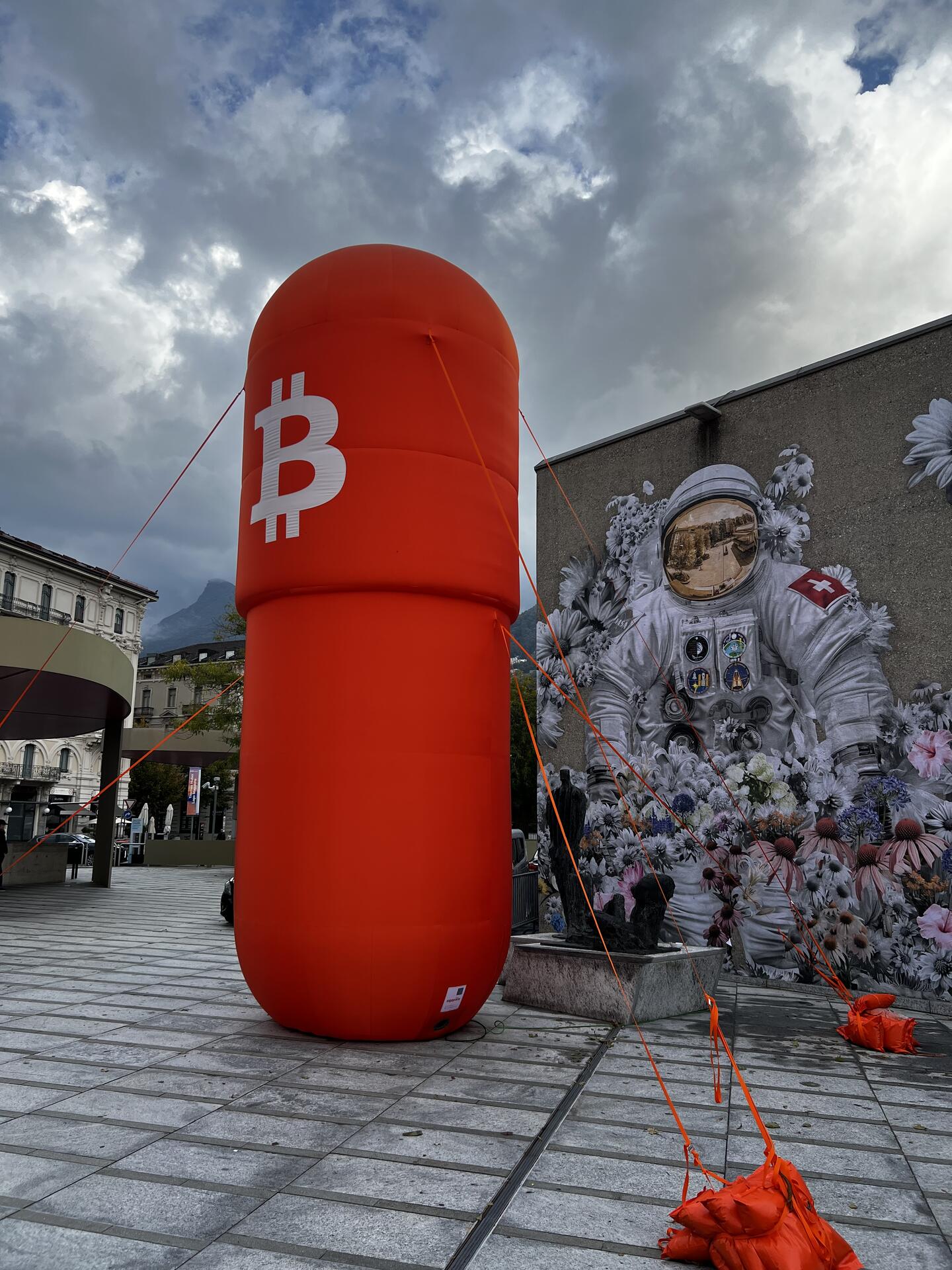
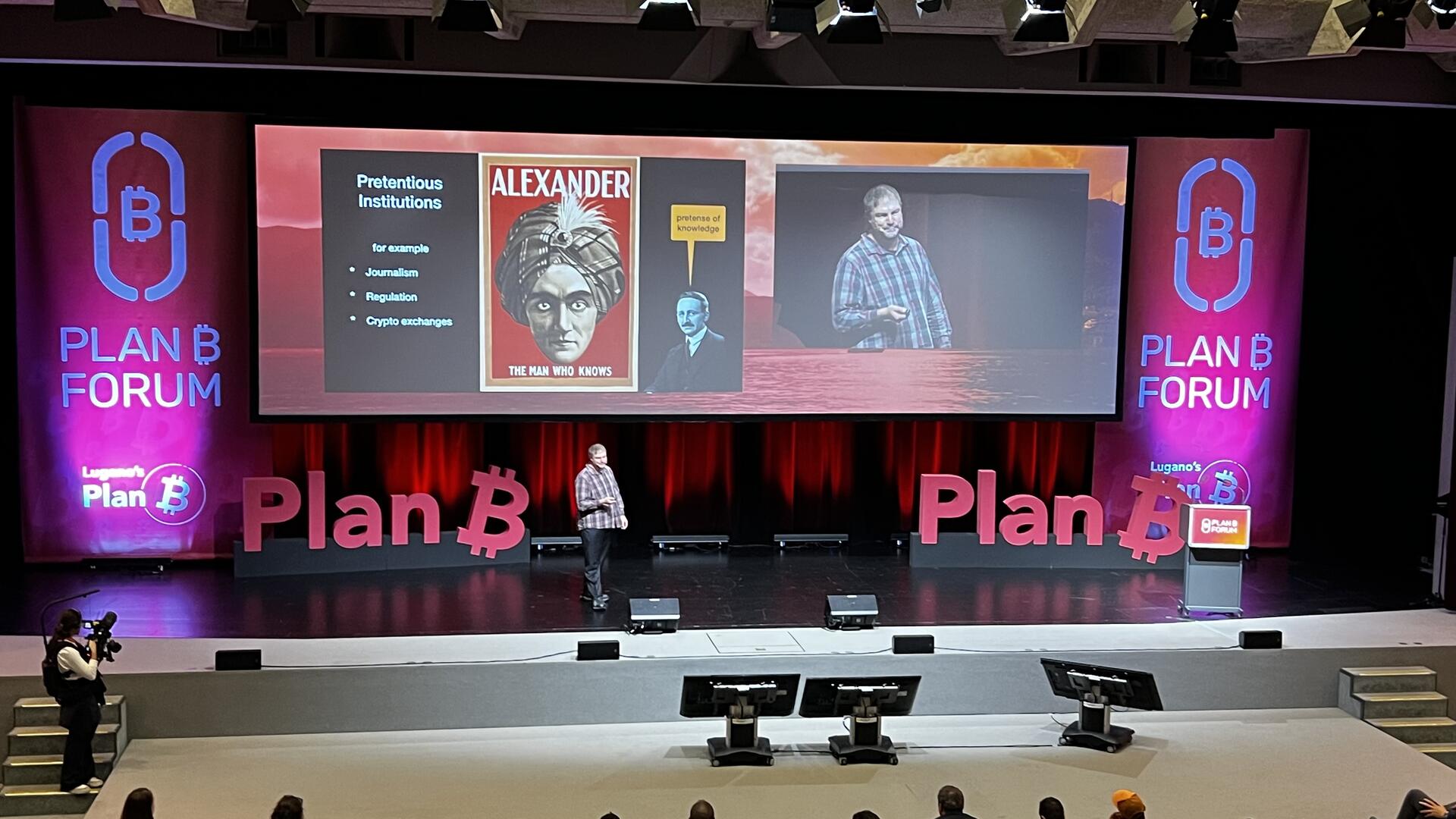
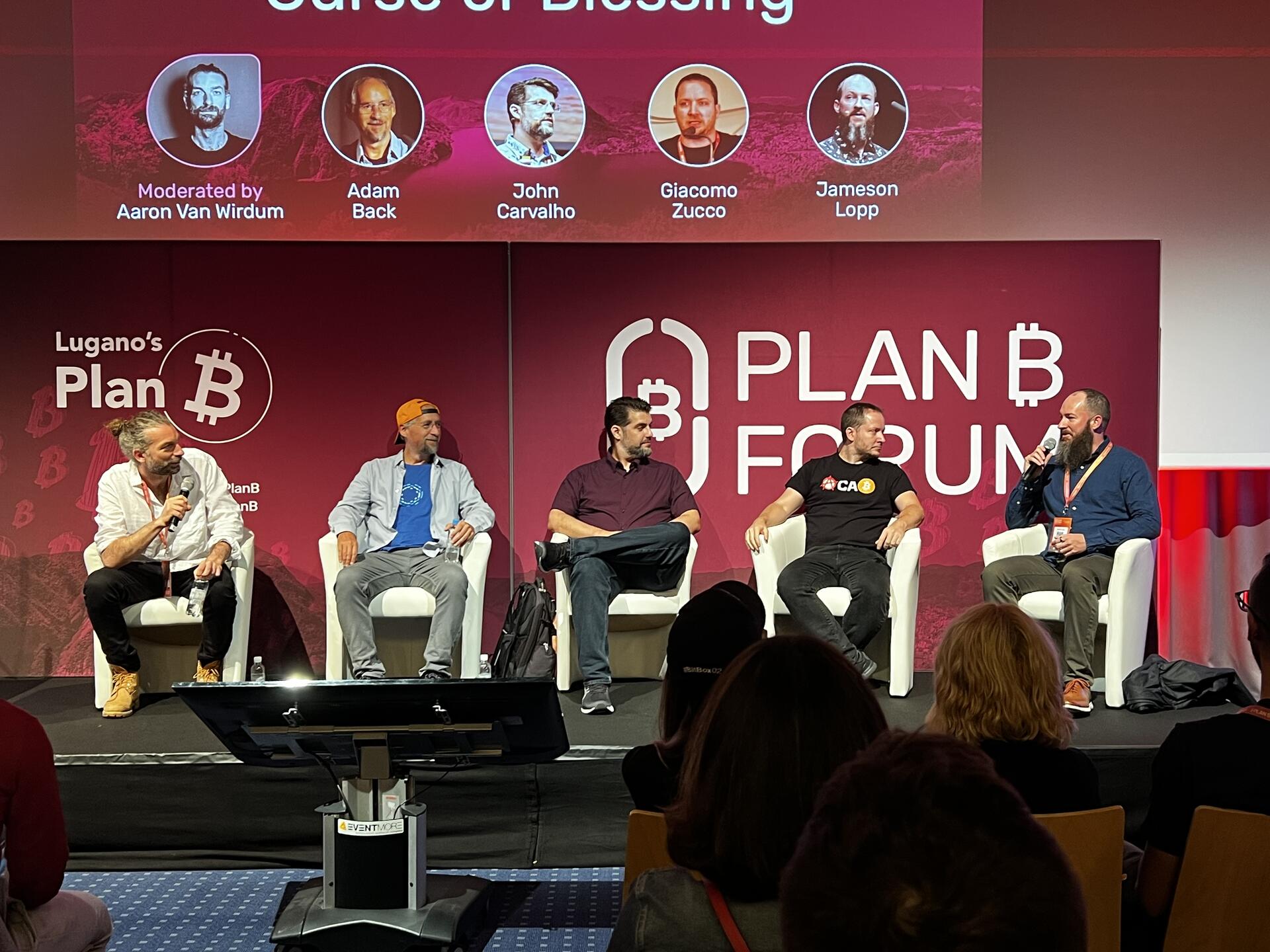
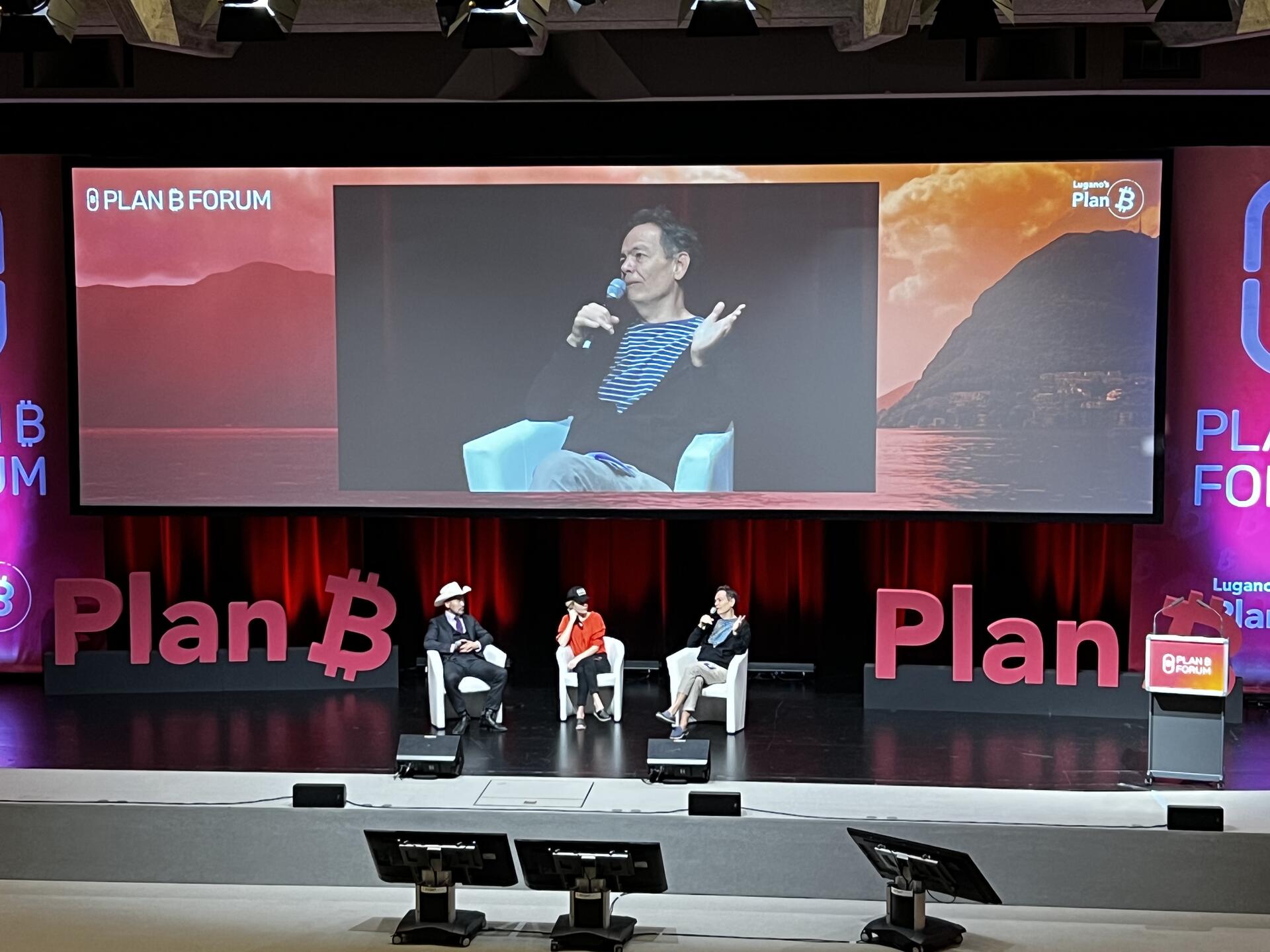
Had an absolute blast at #PlanBLugano - high density of epic speakers and good plebs throughout 🧔

You rocked! šŸ™Œ

I tried orange-pilling an ESG investment specialist friend for years, and once I showed him CH4 Capital it started cracking… 🧔

We still get consistent feedback on our 2 part chat w/ nostr:npub1dergggklka99wwrs92yz8wdjs952h2ux2ha2ed598ngwu9w7a6fsh9xzpc from July, 2022. Dude was in a delicious flow state.

In part 2 he deep dove on what we still feel is one of the best #Bitcoin pieces ever written — Bitcoin Is Time

Part 1: https://fountain.fm/episode/XMsK6XkzxMbH4l18uOCm

Part 2: https://fountain.fm/episode/mDLIxSeAOFmlqGk8LkDV

Luv it! nostr:npub1dergggklka99wwrs92yz8wdjs952h2ux2ha2ed598ngwu9w7a6fsh9xzpc’s giggling is infectious 😁

Any opinions on #bitvm?? nostr:note1fly3ey2fg8h9e6l8mprcpxjhz00hg4jptmephqe6kmkstqvp3p6saqedye

Replying to Avatar Lyn Alden

I normally keep my Uber rides under 45 mins. But for a few reasons I ended up just getting a two-hour Uber from an airport the other day.

The driver was nice but was like, ā€œdamn lol I hope Uber pays me well for thisā€. The issue with long rides is that the Uber driver is far away after the ride in a new territory and has to try to earn rides back to their normal location. He asked if he could at least stop for coffee or something and I said of course.

So we go for a while and eventually pull over over at a convenience store and he goes to get some coffee and a snack. I go out and get a coffee too and then I pick up his tab and pay for both of us. Uber ended up calling both of us for a health check because the car was stopped.

Buying him a coffee opened him up a bit so we talked for a while. He asked where I was coming from and I said Egypt, and he said he was from Ghana. While chatting and me explaining why I am coming from Egypt, he made a great point that in many places outside of the US, family is a big deal whereas in the US, it is much diminished. And as a result, it’s very important to build connections with neighbors and coworkers in place of that. Even just tell people ā€œgood morningā€ if you usually see them on the way to work so that people know who you are. He came to the US alone four years ago so that is something he describes having learned and a strategy he is using.

Anyway as we pulled up to my destination I gave him an unusually big tip to compensate any inconvenience or unpaid time he might have getting back. A few mins later my doorbell rang and he had come up to say was super thankful for the big tip. The Uber algorithm had kind of screwed him over and the trip price (and thus his share) was low for the hassle, and he felt screwed over by Uber, but then he saw my tip which instantly fixed it.

I should have checked to see if he had a lightning wallet or tried to convince him to download one if not, because then I could have done one of those social media ā€œokay everybody tip this guyā€ posts. :/

So cool, I also often talk to cab/uber/careem drivers and am often amazed by these people and conversations.

Would have been great indeed if you had given him a LN wallet to tip!

Would love to have a figma/mural-like app to keep/sort Nostr notes and create mind maps (sth that I always missed on the now-black-crossed-formerly-blue-bird)

nostr:npub1dergggklka99wwrs92yz8wdjs952h2ux2ha2ed598ngwu9w7a6fsh9xzpc, since you’ve peeked deep into the Nostrverse, know if something like this exists? šŸ¤”

So, did you buy? 😜

Replying to Avatar Lyn Alden

Neil Howe, who co-authored ā€œThe Fourth Turningā€ in the 1990s which predicted a lot of the issues we are going through now in the Western world from the late 2000s to the late 2020s, just came out with a sequel called ā€œThe Fourth Turning is Hereā€.

I haven’t read that new one yet, but plan to eventually. But it has me thinking about something.

Neil Howe and his co-author, back in their prior 1992 book ā€œGenerationsā€, coined the now-famous term ā€œMillennial generationā€. Whenever we think about how ā€œBoomersā€, ā€œGen Xā€ and ā€œMillennialsā€ differ from each other statistically, a lot of that social concept and nomenclature goes back to the research of Howe and his co-author three decades ago.

In their view, statistically speaking, each generation tends to be raised from prior circumstances, and develops certain attributes from how they were raised. And then how they were raised and how they become, contributes to how they raise their kids. The TL;DR in one sentence is the meme, ā€œstrong people create good times, good times create weak people, weak people create bad times, bad times create strong peopleā€, although the full conception is of course more complex and nuanced than that.

To describe it in a slightly more detailed manner, there are periods of social unification and optimism (but general repression of outsiders/minorities), periods of pushback and awakening social change, periods of isolation and pessimism as the social order begins to disintegrate, and periods of populism and catastrophe, resulting in a crisis that leads to… periods of social unification and optimism (but general repression of outsiders/minorities) which begins the cycle anew.

In this post, the most relevant two of the four generations are:

-Generation X (those born from the mid-late 1960s to the very early 1980s) were kind of ā€œon their ownā€ as kids. Statistically speaking, their parents gave them a key to the house and basically said, ā€œgo bike and play with your friendsā€. They developed a rather individualist and self-reliant but somewhat cynical view of society. As they became adults, they were capable, but generally inactive in terms of politics.

-Millennials on the other hand, (those born from the early 1980s to the late 1990s or early 2000s), were statistically rather coddled by their Boomer parents, but by extension were made sure to have a bunch of talents (grades, languages, social connections, etc). And the 1990s in the US and Europe were basically ā€œpeak yearsā€ in terms of optimism. As they are starting to become adults (30s and older), they lack independence but have a strong sense of community.

As someone who is on the older half of Millennials (born in the mid/late 1980s), and with an older father (not a Boomer, but rather the prior generation to Boomers that mostly raised Gen Xers), I have found this blend to be true, but interesting. And it has been useful to witness the social shift in society in ways I can observe. I’m kind of a Gen X and Millennial hybrid, in other words. I was raised in a Gen X way by a parent of the typical age of Gen X-er parent, but in terms of age and media influence, I’m a Millennial.

This generational stuff is only about statistics/trends, so there are a ton of exceptions, like me and others. So for example, I was homeless with my mother from age 5-7, and then grew up in a trailer park with my elderly single father from age 7-18 who had to work most days, so I wasn’t exactly the main demographic of reference here. And yet I still experienced much of it through media, in my hybrid way.

My father, by the nature of his age and circumstances, treated me as a blend of Gen X and Millennial as Howe would define it, but mostly Gen X. He gave me a house key, taught me to cook, and was basically like, ā€œgo play with your friends and get your homework done, I love you, but I need to work now.ā€ when I was 7. I was out with my trailer park friends for hours unwatched playing with literal samurai swords and stuff, which would horrify parents today. My father had harsh standards for my school grades but didn’t directly participate because he didn’t know anything about math and so forth. He also put me in martial arts classes, which like a classical Millennial parent (and unlike my schooling or the Gen X stereotype), he tightly participated in by driving me there and watching me there every session in the evenings. Plus, from a Millennial perspective, as a single father and one daughter, we had more communication than a typical Gen X household would have by Howe’s conception of a typical Gen X household (closer to a Millennial household where there is more of a highly communicative and friendly relationship between parents and kids). We were a hybrid Gen X and Millennial environment, based on age, situation, media, and era.

I grew up with 1990s media. The Soviet Union recently fell, and China was opening up to the world, which along with the US and Europe together helped integrate the world together. I played and watched Pokemon from Japan, and as I grew older I watched things like Cowboy Bebop and other anime. I was aware that more and more of my physical stuff was made in China. The movie Independence Day with Will Smith from the USA was popular, and other pro-America, pro-world movies and shows were popular. Europe was integrating together and had a very optimistic economic outlook (lol in hindsight), which came together with the euro currency. All sorts of optimism in media, with a pro-America and pro-World theme, everything seemed to be improving. I was playing Japanese Nintendo and Gamecube, filled with happiness and optimism, and Japanese Playstation (Final Fantasy 7 and 8), with some emo drama but generally positive. Later when I went to my friends homes, I played Playstation 2 and so forth, which had grittier content but still with a conception of ever-improving technology.

That was the social era I grew up in. Few or no phones, or basic flip phones at best. We were still out and experiencing the world as kids, in our rough and tumble way, or playing computer/console games (often together in someone’s living room while the parent was at work). But there was a social and media conception that things were improving, including global geopolitics and economics, which influenced me and the rest of the Millennial generation, even as I was also kind of raised as an independent Gen X that cooked for herself, was alone or with friends for long stretches of time while her father was at work, and would be respected enough to just be out with friends for hours at a time without the parent knowing where I was.

I’m grateful for this blend. I love the combination of the early Millennial era optimism (coming of age in the 1990s and early 2000s), but I also appreciate the grit of being raised in a trailer park by a single elderly father born in fucking 1935 who, by practical necessity, made me independent as soon as I was consciously able to be and threw me out into the working-class suburban wild. A lot of people born in the 1980s, not just me, kind of have a sweet spot there. Grit and optimism. I was a 7-year-old that from that point had to navigate cooking, house maintenance, neighbors, snow-shoveling, getting to the bus stop a mile away, but that also had a friendly relationship with her father as the only two people in the household, and who was raised in an environment of highly positive 1990s and early 2000s media and friends.

It has been interesting to watch media change over time. It has of course become grittier, darker, and more pessimistic. We had the 2007-2009 Great Recession, and then slow economic growth, and then all the 2020-2022 COVID stuff. Dark stuff is popular now. I also personally find that I like darker stuff. Optimistic stuff seems out-of-touch. This is our era.

And it has been interesting to watch social norms change as well, somewhat in the opposite direction. We became less optimistic in our media, even as we tried to become more inclusive in our social norms.

My father was a Republican and my mother was a Democrat. I was young and politically neutral until the US invaded Iraq in 2003 when I was 15-16. Most Republicans voted for it, and a sizable minority of Democrats voted for it, but far more Democrats opposed it than Republicans. Republicans opposed LGBT rights whereas Democrats supported them. Republicans were generally the war-on-drugs group and Democrats were more mixed in that regard. I was a blended Democrat or Libertarian in the sense that I didn’t like foreign war, and I also wanted adult LGBT people to have rights (many of which they didn’t have back then), and although I wanted rule of law on property I didn’t want the drug war, and was fiscally free-market oriented on taxes and regulations and so forth. Basically, my default setting in that context was socially liberal and fiscally moderate/nuanced. I defined myself as opposing the Iraq War and Drug War, and wanting my LGBT friends to have equal rights in an individualist but rule-of-law society. My focus was on individual freedom, with an emphasis on empathy and inclusiveness.

When I was in college, I worked as a resident assistant, meaning I helped freshman and sophomores become accustomed to living on campus away from their parents for the first time, and deal with their problems that might pop up. We (resident assistants) were the front line to help them get used to it, become independent, and to spot problems (e.g. suicidal students, which unfortunately happened on occasion). I also had to give diversity presentations.

Back then, and I’m talking late-2000s here, the diversity presentations that resident assistants like me had to do were rational and benign. It was just about awareness of statistics, and to ask why, and to discuss how we might be more cognizant of these differentials. The goal was to make people think and be self-aware, rather than to give them answers.

For example, we would do various exercises to identify privilege, like the male/white percentage of celebrities, superheroes, politicians, famous authors, and so forth to see how high the percentage was and to question why. The focus was on identifying the historical momentum of privilege and how many of our influences are drawn from that momentum, being aware of it, as social cognizant people, and that’s it. We also did totally different social bonding things, like video game tournaments (I always did Super Smash Bros), March Madness tournaments, and so forth that had nothing to do with race/gender/orientation/etc. The goal was to have fun, build a community, and then once in a while think about the concept of social momentum and how we might deliberately make a note to be more consciously inclusive of our friends, or media, and thinking to include everyone rather than ride on unconscious momentum. I think that’s healthy, and that’s all that we did at that time. It was about individualism combined with conscious inclusivism rather than unconscious riding on historical (often racist, sexist) momentum.

But now when I look at college campuses in the 2010s and 2020s, and society at large, it has obviously trended a lot differently since then. The full Millennial and Gen Z environment is very different than the Gen X and early Millennial environment. Many of them now have adopted a more cultural Marxist type of ideology where race/gender/orientation takes more of a center stage, and things have trended in a more extreme direction. In my college days of 2006-2010, I wasn’t even aware this was a modern thing.

In my primary through high schooling, I was raised in an environment of ā€œracial blindnessā€. And in a multi-ethnic near-city suburban mixed neighborhood, that’s what it was. White kids were the majority (as is normal in the US), but there was an above-nation-average percentage of African Americans and Indians, along with many Hispanics and Asians and others (we were in the Northeast, which is less of a hot-spot for Hispanics and Asians). What me and my peers were brought up with, much like Martin Luther King Jr. said to do, was to base everything on character and content rather than superficial appearances like race, gender, orientation, etc. It makes sense to take some extra effort to reach out to under-represented groups and to proactively include them, but the whole point ultimately is to be focused on character, not on immutable characteristics. My friends where White, Black, Asian, Hispanic, Indian, Straight, LGBT, and the whole point was… it was boring. We were all friends. We observed each other’s differences but barely cared. To the extent that we had cultural differences, those were the spices around the edges, and made things better. The main point was our schooling, sports, and all of our other shared hardships that we bonded together to get through together.

Anyway, these are just things I observe or think about sometimes. There’s value in independence and self-reliance (Gen X), but there’s also value in social optimism and an explicitly and proactively welcoming community (Millennial), and in some sense I was born in and experienced the generational trends of both.

My view, in terms of Bitcoin or otherwise, is to be independent and self-reliant, and then *also* to go out and proactively build an optimistic broad community too. So as it relates to diversity, my view is to not force it, but to proactively reach out and gather it, but while emphasizing expertise as the most important thing and not trying to force baseless quotas.

This is, in my opinion, is basic rationality, optimism, and inclusiveness. I don’t see why it’s controversial, but every side seems to want to be extreme and fight each other. We can’t influence the desires of other people, but we can take the initiative to reach out and make spaces accepting, deliberately try to broaden the space, and see what happens from there to reach the broadest possible audience.

šŸ˜šŸ§”šŸ³ļøā€šŸŒˆ

Replying to Avatar Lyn Alden

I spoke at a big bitcoin-adjacent company this week and one of the best questions was from someone who asked what the downsides of bitcoin adoption might be.

I always do appreciate these steelman questions, the skeptical questions, the ones where we challenge ourselves. Only when we can answer those types of questions do we understand the concept that we are promoting.

So the classic example is that in modern economic literature, "deflation is bad". This, however, is only the case in a highly indebted system. Normally, deflation is good. Money appreciates, technology improves, and goods and services get cheaper over time as they should. Price of Tomorrow covers this well. My book touches on this too, etc. The "deflation is bad" meme is still alive in modern economic discourse and thus is worth countering, but I think in the bitcoin spectrum of communities, people get that deflation is fine and good.

My answer to the question was in two parts.

The first part was technological determinism. In other words, if we were to re-run humanity multiple times, there are certain rare accidents that might not replicate, and other commonalities that probably would. Much like steam engines, internal combustion engines, electricity, and nuclear power, I think a decentralized network of money is something we would eventually come across. In our case, Bitcoin came into existence as soon as the bandwidth and encryption tech allowed it to. In other universes or simulations it might look a bit different (e.g. might not be 21 million or ten minute block times exactly), but I think decentralized real-time settlement would become apparent as readily as electricity does, for any civilization that reaches this point. So ethics aside, it just is what it is. It exists, and thus we must deal with it.

The second part was that in my view, transparency and individual empowerment is rarely a bad thing. Half of the world is autocratic. And half of the world (not quite the same half) deals with massive structural inflation. A decentralized spreadsheet that allows individuals to store and send value can't possibly be a bad thing, unless humanity itself is totally corrupted. I then went into more detail with examples about historical war financing, and all sorts of tangible stuff. In other words, a whole chapter full of stuff. I've addressed this in some articles to.

In your view, if you had to steelman the argument as best as you could, what are the scenarios where bitcoin is *BAD* for humanity rather than good for it, on net?

In my eyes, Bitcoin would be bad for humanity if it would either become a blueprint for ā€žtotal control moneyā€œ (e.g., successful adoption of CBDC) or if it could be used to establish total control (e.g., if governments or private corporations successfully build chokepoints around it, for instance successful regulation on ā€žnon-hosted walletsā€œ).

However, the mere existence of Bitcoin makes the former unlikely, as Bitcoin will always be the perfect juxtaposition of freedom money versus any other form of ā€žtotal control moneyā€œ. With regards to the latter, my hope is that people are self-educated enough to access the protocol freely and that market incentives for free access are stronger than those that lead to control.

Lol one weekend later but nvrmind - chilling at the lake & reading Jason Maierā€˜s amazing book šŸ˜