
The Menace of the State
Bitcoin Audible Read_852 - Nature's Many Attempts to Evolve a Nostr
Unpacking Mises: Fractional Reserve Banking and the Currency School
nostr:nprofile1qqstnem9g6aqv3tw6vqaneftcj06frns56lj9q470gdww228vysz8hqpzemhxue69uhhyetvv9ujuurjd9kkzmpwdejhgqg6waehxw309ahx7um5wghx7unpdenk2urfd3kzuer9wcq3wamnwvaz7tmjv4kxz7fwvd6hyun9de6zuenedyvu6425's Roundtable w/ nostr:nprofile1qqswex0dc4t8uq5pt7c4qgpgtch6swgfx88d7kwg844m930kac2npwgpzpmhxue69uhkummnw3ezumt0d5hszrnhwden5te0dehhxtnvdakz7qg3waehxw309ahx7um5wgh8w6twv5hsv3sy43, nostr:nprofile1qqsqlk5pjxkwgjh4x9gxj990vm5ewrqw0qmrwyst05wh5hexduvvt4cpzemhxue69uhhyetvv9ujuurjd9kkzmpwdejhgqgewaehxw309ahx7um5wgh8g6r9wdsk6etrv96zu6t0qyvhwumn8ghj7mn0wd68ytnvv43hgatjd9n8jtnwv46qyc8s3d, & nostr:nprofile1qqs8fl79rnpsz5x00xmvkvtd8g2u7ve2k2dr3lkfadyy4v24r4k3s4sppemhxue69uhkummn9ekx7mp0qy2hwumn8ghj7un9d3shjtnyv9kh2uewd9hj7qg4waehxw309aex2mrp0yhxummnw3ezucn89ur9eu8h

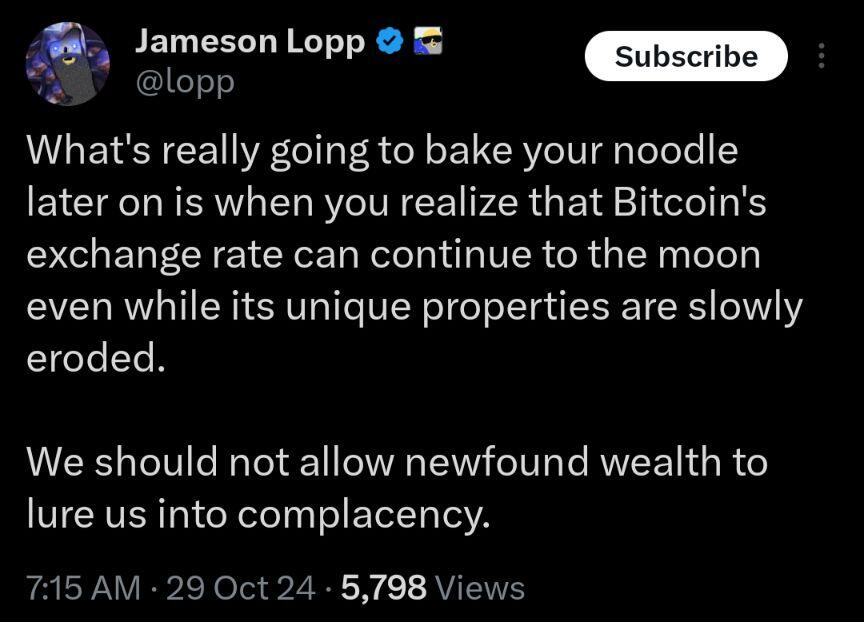
"Ossification is complacency. Yes, we all agree that Bitcoin is great. But I do not agree that Bitcoin has reached its full potential. I think complacency is one of the greatest threats to Bitcoin - we must not rest upon our laurels."
What stands in the way is the Way
What Will You Do When Kamala (or Trump) Wins?
One was left wondering at the true magic of that Halloween — namely, at the transforming effect of something as simple as the opportunity for free exchange, for the chance to derive mutual benefit from the difference in tastes between individuals.
In this, at least, Halloween was all about treats, and, despite what the opponents of the exchange economy will tell you, there was no trick about it anywhere you looked.
https://mises.org/mises-daily/halloween-and-its-candy-economy
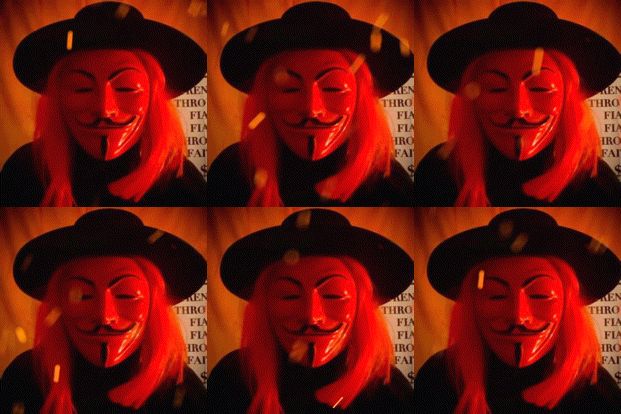
The most surreal aspect is that an overwhelming majority of people are voluntarist in their daily lives already. So the idea of it should not be shocking or hard to grasp, yet their world turns upside down when it comes to the fundamental coercion of the state.
Within the Bitcoin space the Matrix movie metaphor is often invoked regarding fiat money. But a more appropriate use of the metaphor in my opinion is statism.
"You have to understand, most of these people are not ready to be unplugged. And many of them are so inured, so hopelessly dependent on the system, that they will fight to protect it."
Cc nostr:npub1t42gfjzfv74v8xrv65f2lrwd65jr85ysrtdmkkfrvqgcss5r4g0qk487qz Wondering if you’ve ever experienced anything like this or thought about it.
In my experience, discussing the dangers of statism with "normies" often feels futile. No amount of rational argument or logic will persuade someone who isn’t willing to question their deep-seated beliefs, especially when they see the state as equivalent to society and essential for social order.
Your point about description versus prescription is insightful. It makes sense that they would interpret your description as a prescription, or even as an attempt to assert authority, because it presents a reality that challenges their own. If they're unwilling to examine such a foundational assumption, it’s no wonder they might feel threatened by the conversation.
A judicial monopoly will inevitably lead to a steady deterioration in the quality of justice and protection. If no one can appeal to justice except to government, justice will be perverted in favor of the government, constitutions and supreme courts notwithstanding. Constitutions and supreme courts are state constitutions and agencies, and all limitations to state action they might contain or find are invariably decided by agents of the very institution under consideration. Predictably, the definition of property and protection will continually be altered and the range of jurisdiction expanded to the government's advantage until, ultimately, the notion of universal and immutable human rights and in particular property rights-will disappear and be replaced by that of law as government-made legislation and rights as government-given grants.
- Hans Herman Hoppe
A tax-funded protection agency is a contradiction in terms--an expropriating property protector--and will inevitably lead to more taxes and less protection. Even if, as some classical liberal statists have proposed, a government limited its activities exclusively to the protection of pre-existing private property rights, the further question of how much security to produce would arise. Motivated (like everyone) by self-interest and the disutility of labor but endowed with the unique power to tax, a government agent's response will invariably be the same: To maximize expenditures on protection-and almost all of a nation's wealth can conceivably be consumed by the cost of protection-and at the same time to minimize the production of protection. The more money one can spend and the less one must work to produce, the better off one will be.
- Hans Herman Hoppe
Alone on his island, Robinson Crusoe can do whatever he pleases. For him, the question concerning rules of orderly human conduct—social cooperation—simply does not arise. Naturally, this question can only arise once a second person, Friday, arrives on the island. Yet even then, the question remains largely irrelevant so long as no scarcity exists. Suppose the island is the Garden of Eden; all external goods are available in superabundance. They are “free goods,” just as the air that we breathe is normally a “free” good. Whatever Crusoe does with these goods, his actions have repercussions neither with respect to his own future supply of such goods nor regarding the present or future supply of the same goods for Friday (and vice versa). Hence, it is impossible that there could ever be a conflict between Crusoe and Friday concerning the use of such goods. A conflict is only possible if goods are scarce. Only then will there arise the need to formulate rules that make orderly—conflict-free—social cooperation possible.
In the Garden of Eden only two scarce goods exist: the physical body of a person and its standing room. Crusoe and Friday each have only one body and can stand only at one place at a time. Hence, even in the Garden of Eden conflicts between Crusoe and Friday can arise: Crusoe and Friday cannot occupy the same standing room simultaneously without coming thereby into physical conflict with each other. Accordingly, even in the Garden of Eden rules of orderly social conduct must exist—rules regarding the proper location and movement of human bodies. And outside the Garden of Eden, in the realm of scarcity, there must be rules that regulate not only the use of personal bodies but also of everything scarce so that all possible conflicts can be ruled out. This is the problem of social order.
- Hans Herman Hoppe
Was Ricardo's Comparative Advantage Really Different From What Adam Smith Said About Foreign Trade?
The American Economy Is in Trouble
Despots and democratic majorities are drunk with power. They must reluctantly admit that they are subject to the laws of nature. But they reject the very notion of economic law. Are they not the supreme legislator?...It is impossible to understand the history of economic thought if one does not pay attention to the fact that economics as such is a challenge to the conceit of those in power. An economist can never be a favorite of autocrats and demagogues. With them he is always the mischief-maker, and the more they are inwardly convinced that his objections are well founded, the more they hate him.
- Mises
Playing With Fire and Its Critics

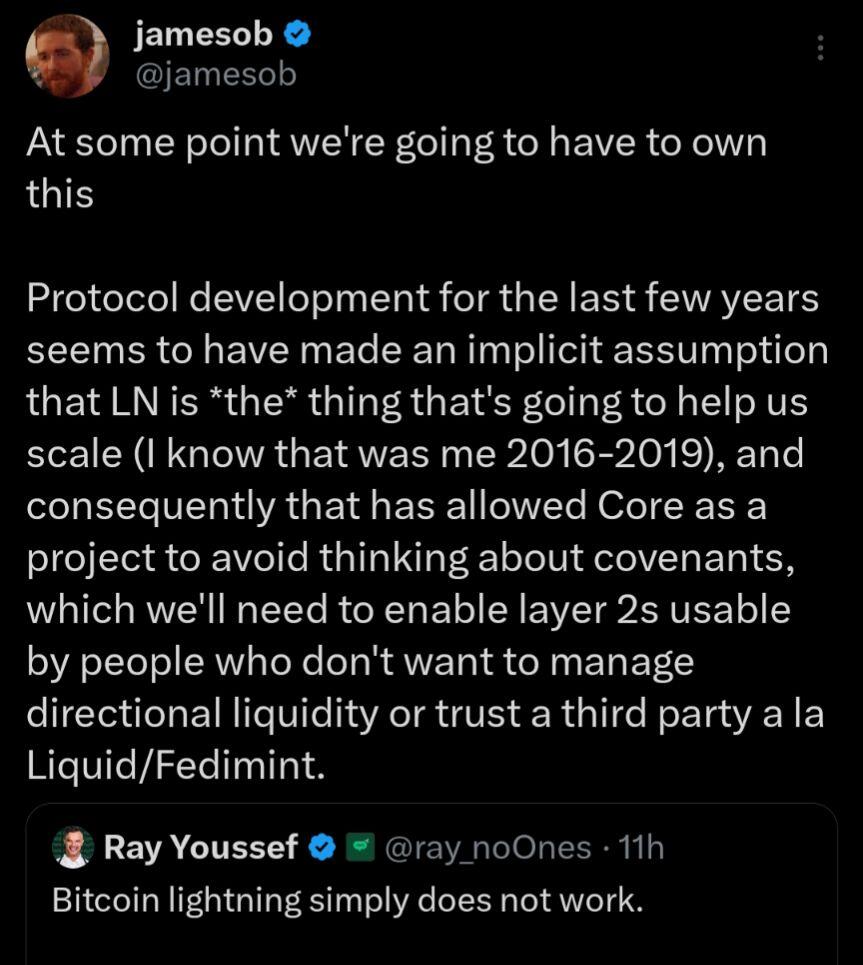
No words can capture the joy you feel when your newborn laughs for the first time.
People seem not to see that their opinion of the world is also a confession of character.
- Ralph Waldo Emerson
Some believe it is only [state] power that can hold evil in check, but that is not what I have found. It is the small everyday deeds of ordinary folk that keep the darkness at bay. Small acts of kindness and love.
Mises examines economic voting within a free market, where consumers cast “votes” through their spending, with each unit of currency acting as a ballot. This system reflects a democratic process, shaping economic outcomes based on individual preferences. Mises highlights an inherent inequality: wealthier individuals possess more market voting power, a result of past interactions where they have successfully met consumer needs. He argues that in a truly free market, devoid of government interference or cronyism, wealth accumulation is directly tied to the ability to satisfy consumer demands. Thus, the flow of wealth is subject to consumer votes, rewarding those who excel in serving societal needs while penalizing those who do not. Ultimately, Mises depicts the market as self-regulating, with consumer preferences continually redistributing wealth.
Expanding on Mises’s observation, we must recognize that our influence in the market extends beyond monetary transactions. How we allocate our time can be understood as a profound form of voting, with each choice reflecting our values and priorities, wielding significant power in shaping our communities and broader society. When we consciously dedicate our time to local initiatives, we not only strengthen social networks but also foster a sense of belonging and purpose. This engagement allows us to promote liberty and self-governance while creating alternatives to state-controlled systems. By participating in community-building activities or volunteering for causes we believe in, we cast votes for a more vibrant and resilient society. In this framework, our time becomes a ballot, signaling our commitment to the world we want to cultivate. Each hour invested in meaningful pursuits contributes to a collective movement that challenges the status quo and encourages innovation. By choosing to invest our time wisely, we lay the foundation for a future where liberty, self-determination, and respect for property rights thrive. Viewing our time as a form of voting harnesses its transformative potential, driving positive change, and empowering ourselves and our communities.
In truth, in the case of individuals, their actual voting is not to be taken as proof of consent, even for the time being. On the contrary, it is to be considered that, without his consent having even been asked, a man finds himself environed by a government that he cannot resist; a government that forces him to pay money, render service, and forego the exercise of many of his natural rights, under peril of weighty punishments. He sees, too, that other men practice this tyranny over him by the use of the ballot. He sees further, that, if he will but use the ballot himself, he has some chance of relieving himself from this tyranny of others, by subjecting them to his own. In short, he finds himself, without his consent, so situated that, if he uses the ballot, he may become a master; if he does not use it, he must become a slave. And he has no other alternative than these two.
nostr:note10kngwr77ndfxdpe7gtxjjg3q3c9ztrjawszvweag0rdy5yuqlnus624pvy
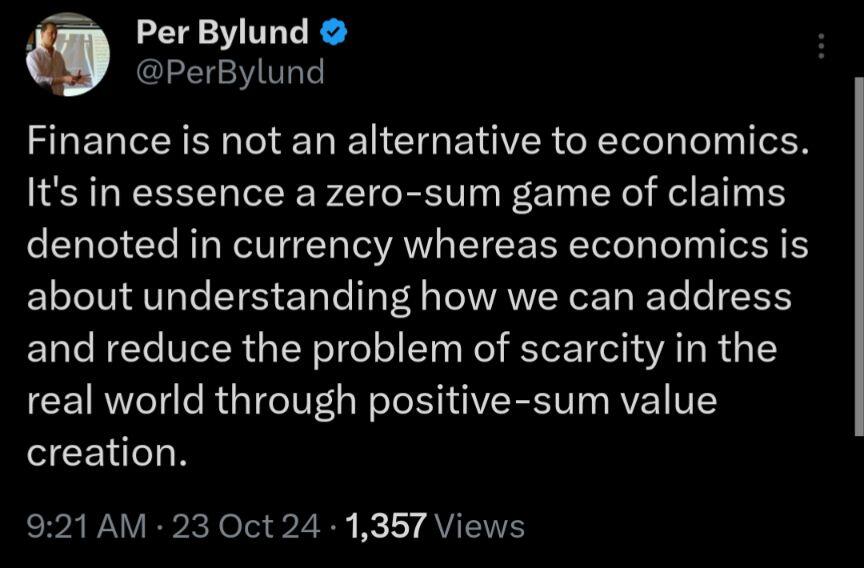
The more the state "plans," the more difficult planning becomes for the individual.
- Hayek
Our Enemy, Public Health
Dads Against Predators