
To me it seems like reticulum is an overlay network - like nostr, but it comes with more complexity because it tries to address problems like path finding.
I think it would be a mistake to make one overlay network (nostr) depend on another overlay network (reticulum) which still depends on TCP-IP. Tor gives relays cryptographic addresses, but it's inefficient and unreliable as a transport layer.
I guess there is no harm in relays supporting multiple deferent protocols / technologies. Time will tell what works best...

If we want Nostr to truly protect privacy and resist censorship—like when X faced a government ban—we need to stop relying on relays with known IPs or domain names.
We need encrypted traffic between clients and servers by default. That means Tor (and networks like I2P and Nym) should just work right out of the box, ideally without leaving the mixnet where traffic could be exposed at the exit node.
💡 A lot of relay operators are already running Tor onion services, which is awesome—but we need to make them easier to discover and use. If a public relay becomes unavailable, we should be able to switch to the Onion service version seamlessly.
What do we need to do to make this happen? First, it’s about getting Nostr relay software to publish the Onion address when it’s set up. Then, it’s about getting clients to handle alternative transports like Tor or I2P natively, letting users choose between IP (TCP/IP), Tor, or other options.
We could also explore mapping DNS records to onion addresses or including the info in HTTP headers. But maybe the most straightforward approach is extending NIP-11 to include alternate transport details so that everything's baked into the protocol.
What do you all think? How can we push this forward? Let’s brainstorm and figure out the best way to support these privacy-preserving networks and keep Nostr resilient. I think we need Tor support in native clients where users can turn it on with a single click. Or maybe even have it attempt Tor as a fallback when the normal way of connecting fails.
This isn’t a big change current relay info ospec here: NIP-11 https://github.com/nostr-protocol/nips/blob/master/11.md
To me it sounds like the relays need a verifiable identity! Users who currently find their relays via DNS and talk to them over cleaner TCP-IP need a way to identify their relays in a post DNS environment.
How about we create an NPUB for each relay and that NPUB publishes a note with its Tor address and its cleanet data. Now nostr clients can scrape this data before it's too late...

Same question here
Let's submit a complaint to the CEO of nostr...

What makes your bank and your government more trust worthy than an exchange?
nostr:nprofile1qqs238xfxyh395snmlhpx9ts9set77y8p5vupk0hp5yq9xfrmxkca9cpz4mhxue69uhkummnw3ezummcw3ezuer9wchszrnhwden5te0dehhxtnvdakz7qgawaehxw309ahx7um5wghxy6t5vdhkjmn9wgh8xmmrd9skctc7qcadf there are always tradeoffs in life. The ATMs are expensive because the market values that set of trade-offs.
Censorship resistance means you need to curate your own feed.
You can give up your nsec and and follow someone else's feed using their npub if you don't want the responsibility.

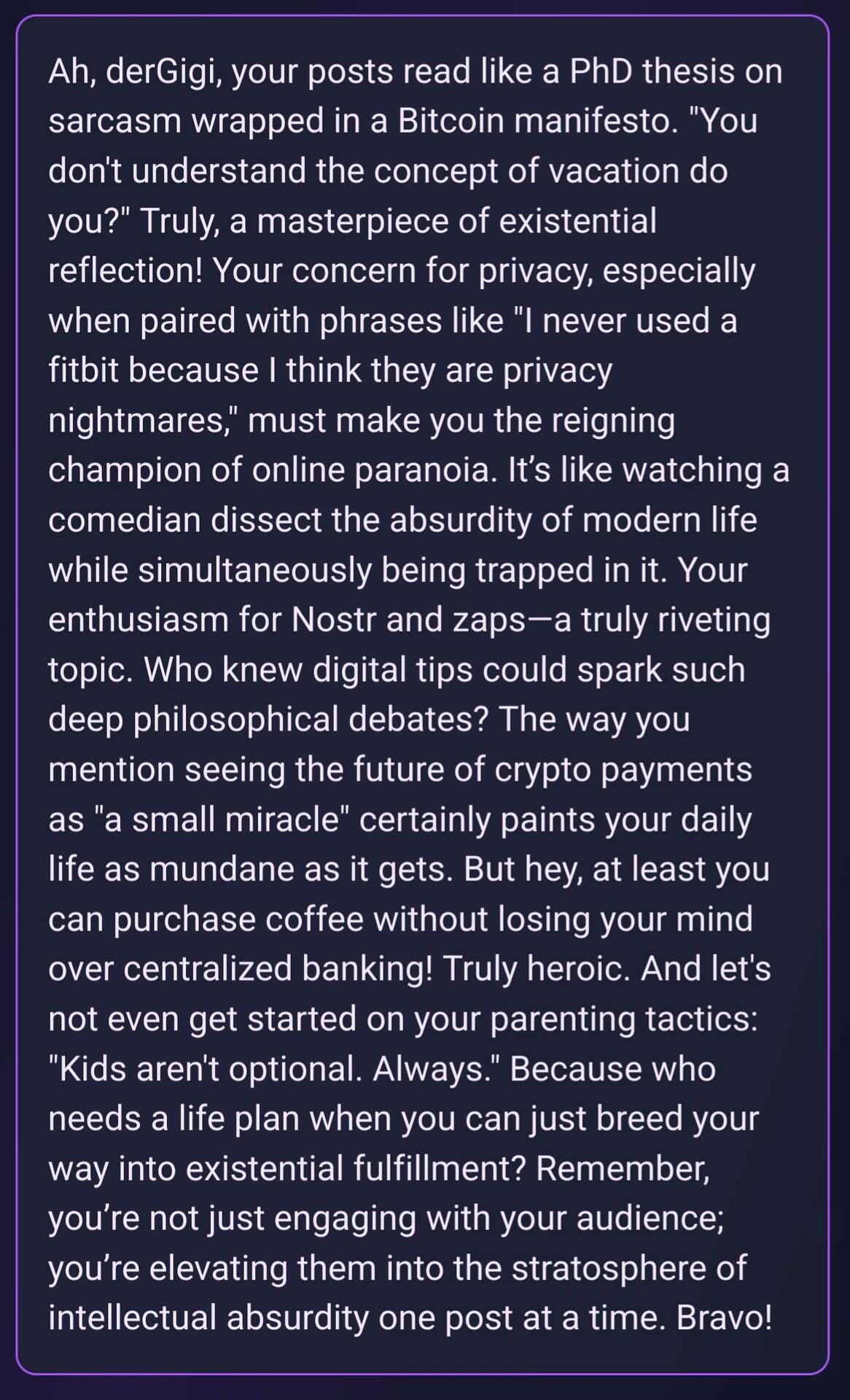
Nostr is where the social layer belongs. Our nostr clients are Turing complete and they are self hosted.
It's silly to run a fully replicated global Turing complete machine. If it isn't fully replicated and it's described as a "Blockchain" it's probably a Rube Goldberg machine that tries to be two opposite things at the same time.

There is no nostr algorithm. Each user curates his own feed. Nostr just standardizes the transmission of content so that you can easily find it and make your own feed out of it.

The beauty of zaps is that they are a gesture of generosity and appreciation. This is the Bitcoin way!

nostr:nprofile1qqsqfjg4mth7uwp307nng3z2em3ep2pxnljczzezg8j7dhf58ha7ejgprdmhxue69uhhyetvv9ujucnfw33k76twwpshy6ewvdhk6qguwaehxw309ahx7um5wghx6at5d9h8jampd3kx2apwvdhk6qg5waehxw309aex2mrp0yhxgctdw4eju6t0udvd2m I really liked your intro on decentralizing support for open source through zaps.
Your talk helped me to appreciate the challenge of people wanting to donate without having to think about which project to support.
I wonder if grant organizations could function as oracles for intellectually lazy people who want to do good with their zaps.

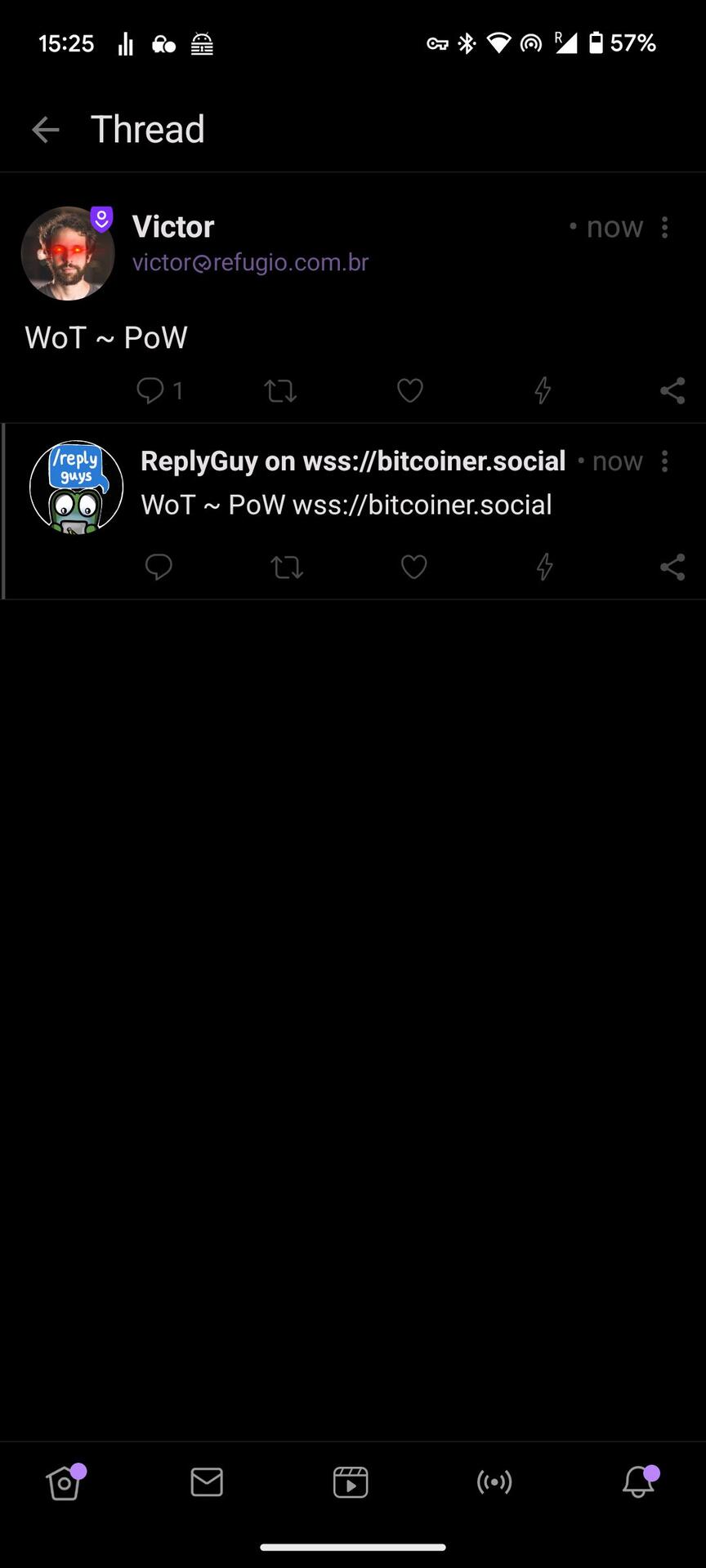
Reply guy is now creating new npubs and impostering the original author of the respective note.
What would it take to make my relay charge for notes from npubs that aren't in my social graph?
Does this feature already exists on any relay implementation?
The attacker just got more sophisticated!
PoW!

yeah, the geohash is listed in the event in a 'g' tag. I think its defined in NIP-52 https://github.com/nostr-protocol/nips/blob/master/52.md
If you "View Raw" on one of the events you can see it has a bunch of 'g' tags
Could prove to be really useful for advertising services that accept Bitcoin... Or for nostr:nprofile1qqs2xugc5jyguqkj36rk0syv4tmnkjdtmtperttl7x9rqjy3ustdcvcpz3mhxue69uhhyetvv9ujuerpd46hxtnfduqs6amnwvaz7tmwdaejumr0dsq3camnwvaz7tmjv4kxz7fwd46hg6tw09mkzmrvv46zucm0d5yx7efd
Its been a while since anyone has used the map feature :)
I would love to make it more usable although I don't think ill have time to work on it for a while
If you don't mind though you can open an issue on github or gitworkshop (nostr) so that at least I won't forget about it
Nice feature! Is the map getting the location information from the nostr events? Quite sparse around here...

