
Today the dollar turns 52 years old. On August 15, 1971, President Nixon created the current monetary experiment that we take for granted today.
During his official announcement, Nixon promised “Your dollar will be worth just as much tomorrow as it is today.” Since then the dollar has lost 98% of its value compared to my grandma's house ($29k to $1.39m). If the dollar held its value (no inflation), then the price of my grandma's home would most likely have gone down since 1971 as the materials have deteriorated, new technology has made new homes more appealing, and expanding infrastructure has made new areas attractive to live in in ways that they weren't attractive before.
The dollar is a young experiment, and it's clearly failing as inflation causes home prices to rise faster than wages. It's an unsustainable system by design.
The Great Dollar Ponzi Scheme. A Ponzi scheme is a form of fraud where there is nothing of value being produced, but instead the illusion of profits is created by paying yields from the money that comes flowing in from later investors. The scheme collapses once the flow of later investors starts drying up.
The dollar system is a literal Ponzi scheme that doesn't generate anything of value, yet currently promises to pay 5.5% yield. Where does the money come from to pay this yield? The Fed prints it, which devalues the existing dollars. So the Fed pays out yields by extracting value from anyone who is saving in dollars. Dollar savers are the investors in the great dollar Ponzi scheme.
A currency unit like the dollar only has value if people want to save it. Hyperinflation ensues once nobody wants to save a particular currency. Instead of saving, they spend as fast as they can for whatever else they can get. That's hyperinflation.
If you know how the US bond market works, you'll know that falling rates have created extraordinary profits for early investors. Now riding rates are exposing the ruse. Falling rates can't last forever.
The flow of later-stage investors is starting to dry up.
https://www.ft.com/content/91f39150-9abe-4257-8d52-17520d35e534
The entire world operates on a system of trade that gives one class of people the power to create money.
Imagine the problems this would create!
This is why the wealth divide increases. This is why PhDs quit productive jobs to instead go work on Wall Street where money is printed through leverage and losses are bailed out with printing. The incentives are completely broken where the whole world finds itself playing a game where people compete to control the money printer rather than to produce value.
Hate the game, not the players. Fix the game by using Bitcoin.


OpenSats is 100% pass through, we do not take a cut of donations, period. This is incredibly rare in the non profit world. Our nine person board has not and will not be paid a single sat.
Gigi is paid to run the org full time. The money for that was paid by a single donation for that specific stated purpose. He has rebuilt our processes from the ground up and made everything much more efficient.
All funds are provided to open source projects that apply and are approved by board vote. The board is intentionally nine people to reduce the impact of individual bias. We operate on simple majority. If there is a conflict of interest between a board member and a project they are expected to recuse themselves.
We will be releasing transparency reports and updates as funds are allocated. Understandable that some are frustrated with the speed of deployment but we are moving as fast as responsibly possible. Over the last two months we have announced nearly thirty grants. More will be announced soon.
Are you an open source contributor? Apply Here: https://opensats.org/apply
Wow. This is amazing, actually. No wonder I've been seeing so many people drawing attention to this lately.
Is there some sort of shib 💩 coin marketing campaign going on that's pushing all these ridiculous shib price headlines at me?


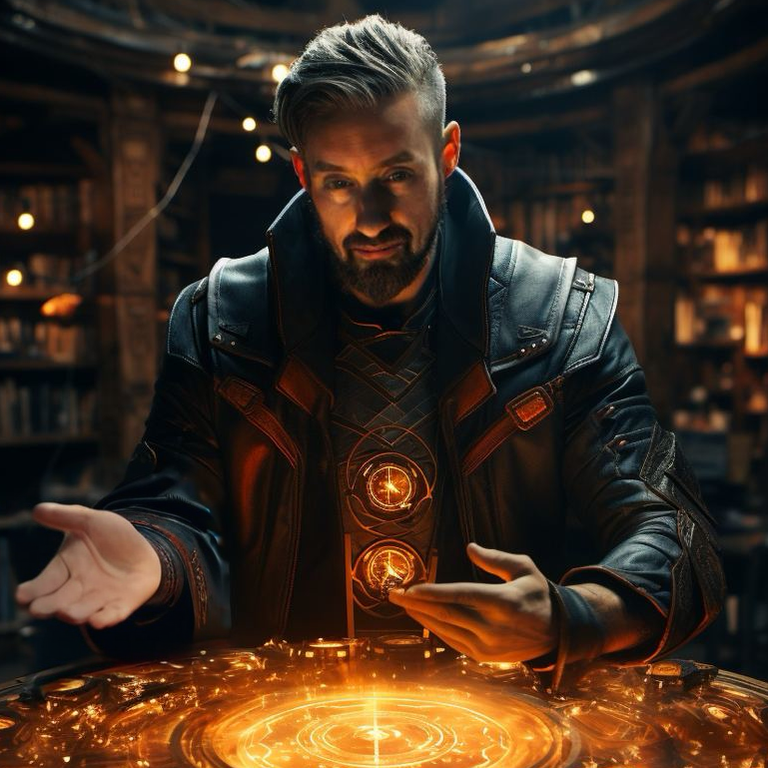
Coolest fictional character ever.
A scammer just with a very convincing script. Be careful out there, the attacks are getting more elaborate.
On a related note, I'm reading the Tao Te Ching right now, which begs the question, how would a master who is full of love and non-dualistic judgement reply in a text to a scammer? It was a fun exercise to think through. Here's what I sent:
"May restless fear plague your nights until you find justice. May the destructive misery that you rain down on others return on your head to teach you to never scam again. And may joy and prosperity be yours when you turn your energy from preying on others to serving them."
Any masters out there with suggestions?
I've got cousins trying to argue that Bitcoin is hopeless because people will choose to trust central banks every time. You're right, it's idiocy. But as I dig into their perspective, it seems their view is mostly founded on short term thinking. "People don't understand Bitcoin, so they won't trust it." That's the inspiration for this long term thought experiment I'm presenting here.

A key decision for every person in the world to make everyday for the next ~20 years is which money to trust. Money controlled by unaccountable politicians? Or money guaranteed by an incorruptible protocol?
This isn't a decision people will make once and be done. They will have to choose every time they transact. Every time they remember money. Every time they awake in the night with the question on their mind again.
Money is a language of value. It takes time to speak a new language. More and more the world will learn to speak Bitcoin because the other languages are corrupted. Bitcoin is incorruptible and unstoppable.

Just finished the Platform on Netflix. Makes for an interesting metaphor showing how the Cantillon Effect creates wasteful consumerism.
The food represents scarce resources. The levels represent one's proximity to the inflation, one's access to cheap credit.
The Cantillon Effect means those at the top grab as much as they can as fast as they can, saving nothing for the bottom dwellers. In this case, saving your money instead of spending it to consume scarce resources is the equivalent to leaving food on the table. If you're on a high floor with privileged access to cheap debt and you don't spend to consume scarce resources, somebody else will, and you will be left with less and less since consuming scarce resources in the real world moves you up to higher levels, making it easier and easier to access cheap credit.
Thankfully, Bitcoin fixes this.
Those infuriating scenes where people stomp across the food just because they can reminds me of this guy.


"Look again at that dot. That's here. That's home. That's us. On it everyone you love, everyone you know, everyone you ever heard of, every human being who ever was, lived out their lives. The aggregate of our joy and suffering, thousands of confident religions, ideologies, and economic doctrines, every hunter and forager, every hero and coward, every creator and destroyer of civilization, every king and peasant, every young couple in love, every mother and father, hopeful child, inventor and explorer, every teacher of morals, every corrupt politician, every "superstar," every "supreme leader," every saint and sinner in the history of our species lived there-on a mote of dust suspended in a sunbeam.
The Earth is a very small stage in a vast cosmic arena. Think of the endless cruelties visited by the inhabitants of one corner of this pixel on the scarcely distinguishable inhabitants of some other corner, how frequent their misunderstandings, how eager they are to kill one another, how fervent their hatreds. Think of the rivers of blood spilled by all those generals and emperors so that, in glory and triumph, they could become the momentary masters of a fraction of a dot.
Our posturings, our imagined self-importance, the delusion that we have some privileged position in the Universe, are challenged by this point of pale light. Our planet is a lonely speck in the great enveloping cosmic dark. In our obscurity, in all this vastness, there is no hint that help will come from elsewhere to save us from ourselves.
The Earth is the only world known so far to harbor life. There is nowhere else, at least in the near future, to which our species could migrate. Visit, yes. Settle, not yet. Like it or not, for the moment the Earth is where we make our stand.
It has been said that astronomy is a humbling and character-building experience. There is perhaps no better demonstration of the folly of human conceits than this distant image of our tiny world. To me, it underscores our responsibility to deal more kindly with one another, and to preserve and cherish the pale blue dot, the only home we've ever known"
― Carl Sagan
Inflationary money rewards wasteful consumerism and punishes prudent saving. Bitcoin fixes this.
Proud parenting moment.
We're eating out at a delicious Indian restaurant. The food is amazing. My 9 year old won't stop moaning about how good everything is. After I pay, he asks how much it cost.
"One hundred fifteen buckaroos," I reply.
His eyes widen in disbelief and pain. "Not worth it! We should have saved that money in Bitcoin!"
Bitcoin is creating a global game of musical chairs. People are realizing that eventually the music of debts and deficits will have to stop. When it does, you'll want to already have a seat.

Perfect. Been looking for a good binge to try.

The lessons Bitcoin is teaching all of us about how to build a better world together are beautiful. Accountability. Strength. Logic. Debate. Cooperation. And a million others. Thanks for sharing your thoughtful views. This is how we win.
Self re-invention. Now that's a cause I can get behind. We're nothing without it.
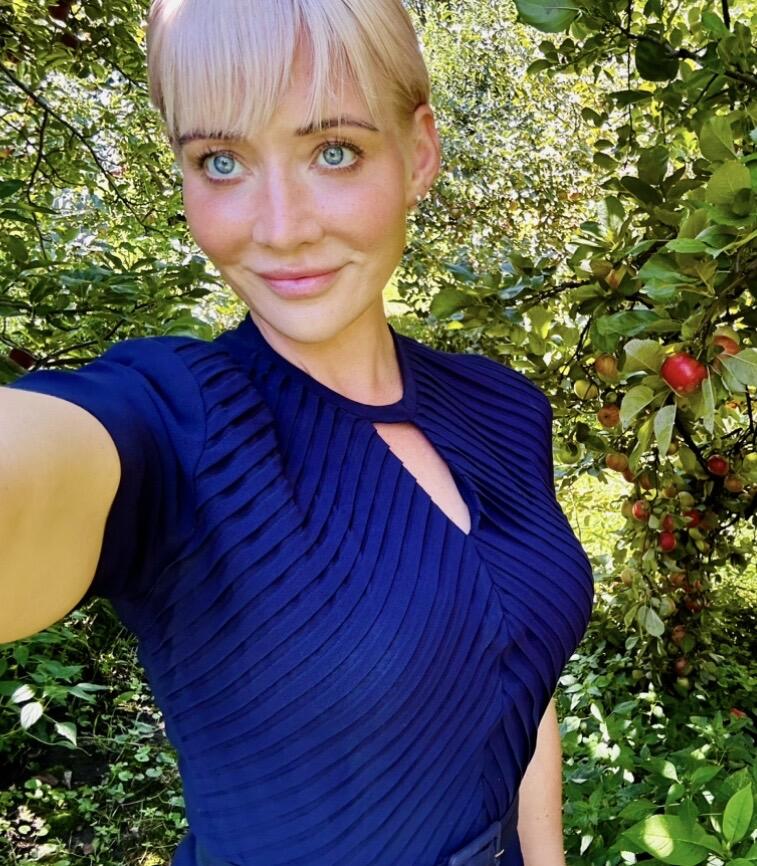
I haven’t discussed my work too much on #nostr
I serve #survivors of human #trafficking primarily. I’m trained in multiple states to serve survivors of sexual assault, domestic violence and human trafficking.
I serve survivors locally and I’ve proudly served the minor survivors of Twitter, two Epstein/Maxwell survivors and two of the Tate accusers as a Survivor Advocate as well as countless survivors around the globe via advocacy. Some of my work is very public. Much of it must remain private for safety reasons.
In January 2023, I received a national award called the Polaris Star Award for serving the minor survivors of Twitter. I was nominated by Lisa Haba, one of the lawyers currently representing the minor survivors of Twitter.
In December, I hosted a #Twitter Spaces with Elon #Musk and others working on the issue of detection and removal of child sexual exploitation on Twitter.
https://twitter.com/i/spaces/1ZkKzXoRRgwJv
One hard line for me as a survivor advocate has been to NOT advocate for any solutions to removing illegal content that would violate digital #privacy rights or erode end-to-end #encryption
My first public stance in opposition to the anti-human trafficking movement was against the #Apple client side scanning. Snowden added my thoughts about that in his incredible article about that situation.
I have also spoken out against governments attacking #bitcoin using the very real crime of human trafficking as a Trojan horse to attack cryptocurrencies. All currencies are used for the crime, unfortunately.
My public advocacy work has been intentionally separate from any organization or institution. There are various reasons for this. I like to roll alone because then I’m the main target.
On a personal note, I have no problem what willing and consenting adults do. It’s none of my business.
I have a human rights approach to the internet. I believe that citizens around the globe deserve their inalienable right to speak freely. I’m against mass #surveillance at the hands of the government or anyone seeking power and control.
Why #nostr
Corporate #tech is broken. I couldn’t fix it so I started looking for solutions.
Do I think that Nostr will be perfect, no. I think that it will be free.
I’m here to support freedom tech that will give survivors the opportunity to share their experiences, strength, hope and resources in a permissionless space.
Here is a video that I made tying it all together. Enjoy! ♥️
https://twitter.com/elizableu/status/1684264958396071948?s=46
Followed. Interested to see what you do next.