

Liturgia Diária – II Domingo do Advento – 08/12/2024
IMACULADA CONCEIÇÃO DA B. V. MARIA
FESTA DE PRECEITO
1ª Classe – Missa Própria

Esta missa toma precedência e é a liturgia utilizada para a celebração do II Domingo do Advento.
A santa Missa de hoje, em todas as suas partes, anuncia jubilosamente o grande privilégio da Imaculada. Maria Santíssima nunca teve pecado original, nem mesmo no primeiro instante de sua existência; é isto uma verdade divinamente revelada, acreditada pela Igreja desde os princípios do Cristianismo, e, em 1854, solenemente definida como dogma.
Cheia de júbilo, entoa Maria, no Introito, um hino em ação de graças diante do trono de Deus. Seu privilégio singular, fruto antecipado da Redenção, é decretado pela mesma Sabedoria divina que determinou a Incarnação do Verbo divino (Epístola). No Evangelho e no Ofertório alegramo-nos ao ouvir a saudação do Anjo: Cheia de graça. É o resumo da festa de hoje. No Gradual dirigimos a Maria, e com razão, as palavras com que outrora celebrou o povo de Israel a sua libertadora, a corajosa Judite.
Pedimos neste dia a Deus que, assim como a graça preservou a santa Mãe do Salvador ao ponto de, por sua Conceição Imaculada ficar imune do comum contágio do pecado, também nós sejamos curados e livres de nossas faltas (Oração).
Páginas 917 a 921 do Missal Quotidiano (D. Gaspar Lefebvre, 1963).
#God #Deus #Isten #Gott #Jesus #Católico #Catholic #Katholik #katholisch #Katolikus #catholique #Faith #Fé #foi #信仰 #Latin #Latim #Gospel #Evangelho #Evangélium #évangile #Dieu #福音 #日本 #カトリック #Bible #Biblestr #Nostr #Grownostr
Liturgia Diária- II Domingo do Advento
1ª Classe- ESTAÇÃO EM SANTA CRUZ EM JERUSALÉM – Missa própria
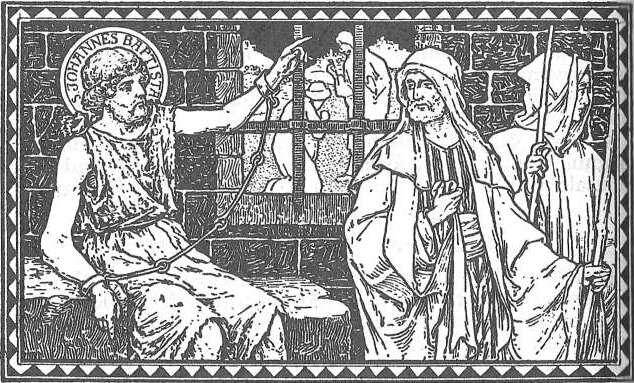
Reunimo-nos na igreja de “Santa Cruz em Jerusalém”. Ela representa para nós a verdadeira Jerusalém, a Igreja de Deus na terra e no céu. Felizes somos por pertencermos ao número de seus membros.
“O Senhor vem à Jerusalém.” Em sua primeira vinda, apareceu na Jerusalém da Terra Santa. Hoje virá à Jerusalém de nossas almas e na festa de Natal virá à Jerusalém do Novo Testamento, que é a sua santa Igreja (Introito). Nesta Igreja acharão todos a salvação: os judeus pela promessa que lhes foi feita, os pagãos, porém, pela misericórdia de Deus. E reinará a alegria e a paz pela vinda do Salvador (Epístola e Cânticos. Introito, Gradual, Ofertório e Communio). No Evangelho prova-nos S. João, de maneira engenhosa, que o Cristo é o Messias e que é Ele quem cura todas as doenças de nossa fraqueza e a nossa cegueira, ressuscita-nos da morte e nos comunica a vida da graça. Vê pois, alma cristã, o gozo que te virá de teu Deus (Communio).
Páginas 12 a 16 do Missal Quotidiano (D. Gaspar Lefebvre, 1963)
Todos os caminhos levam a Roma: Reflexões de Scott sobre o Segundo Domingo do Advento.
Leituras:
Baruc 5:1–9
Salmo 126:1–6
Filipenses 1:4–6, 8–11
Lucas 3:1–6
O Salmo de hoje pinta uma cena onírica—uma estrada cheia de cativos libertados indo para casa em Sião (Jerusalém), bocas cheias de riso, línguas rejubilando.
É uma imagem gloriosa do passado de Israel, um “novo êxodo”, a libertação do exílio na Babilônia. Está sendo lembrada em um momento de óbvia incerteza e ansiedade. Mas o salmista não está se entregando à nostalgia.
Lembrando que “o Senhor fez grandes coisas” no passado, ele está fazendo um ato de fé e esperança—que Deus virá a Israel em sua necessidade presente, que Ele fará coisas ainda maiores no futuro.
É disso que se tratam as leituras do Advento: Recordamos as obras salvadoras de Deus—na história de Israel e na vinda de Jesus. Nossa lembrança visa estimular nossa fé, encher-nos de confiança de que, como diz a Epístola de hoje, “aquele que começou uma boa obra em [nós] continuará a completá-la” até que Ele venha novamente em glória.
Cada um de nós, ensina a Liturgia, é como Israel em seu exílio—levado à catividade por nossa pecaminosidade, necessitando de restauração e conversão pela Palavra do Santo (veja Baruc 5:5). As lições da história da salvação devem nos ensinar que, assim como Deus libertou Israel repetidamente, em Sua misericórdia Ele nos libertará de nossos apegos ao pecado se nos voltarmos para Ele em arrependimento.
Essa é a mensagem de João, apresentado no Evangelho de hoje como o último dos grandes profetas (compare Jeremias 1:1–4, 11). Mas João é maior que os profetas (veja Lucas 7:27). Ele está preparando o caminho não apenas para uma nova redenção de Israel, mas para a salvação de “toda carne” (veja também Atos 28:28).
João cita Isaías (40:3) para nos dizer que veio construir uma estrada para casa para nós, um caminho para sair do deserto do pecado e da alienação de Deus. É uma estrada que seguiremos com Jesus, uma jornada que faremos, como diz a Primeira Leitura de hoje, “rejubilando-nos por [fomos] lembrados por Deus.”
Acessado em:
#God #Deus #Isten #Gott #Jesus #Católico #Catholic #Katholik #katholisch #Katolikus #catholique #Faith #Fé #foi #信仰 #Latin #Latim #Gospel #Evangelho #Evangélium #évangile #Dieu #福音 #日本 #カトリック #Bible #Biblestr #Nostr #Grownostr
Daily Liturgy - Second Sunday of Advent
1st Class - IMMACULATE CONCEPTION OF BLESSED VIRGIN MARY - Proper Mass
In this year of 2024, the date December 8th is the solemnity of the Immaculate Conception of Perpetual Virgin Mary. Therefore, the celebration of the 2nd Sunday of Advent will happen under this liturgy.
The holy Mass today, in all its parts, joyfully announces the great privilege of the Immaculate. The Most Holy Mary never had original sin, not even at the first moment of her existence; this is a divinely revealed truth, believed by the Church since the beginnings of Christianity, and solemnly defined as a dogma in 1854.
Full of joy, Mary sings in the Introit a hymn of thanksgiving before the throne of God. Her singular privilege, an anticipated fruit of Redemption, is decreed by the same divine Wisdom that determined the Incarnation of the divine Word (Epistle). In the Gospel and in the Offertory, we rejoice to hear the greeting of the Angel: Full of grace. This is the summary of today's feast. In the Gradual, we address to Mary, rightly so, the words with which the people of Israel once celebrated their liberator, the courageous Judith.
On this day, we ask God that, just as grace preserved the holy Mother of the Savior to the point that, by her Immaculate Conception, she remained immune from the common contagion of sin, we too may be healed and freed from our faults (Prayer).
Pages 917 to 921 of the Daily Missal (D. Gaspar Lefebvre, 1963).
#God #Deus #Isten #Gott #Jesus #Católico #Catholic #Katholik #katholisch #Katolikus #catholique #Faith #Fé #foi #信仰 #Latin #Latim #Gospel #Evangelho #Evangélium #évangile #Dieu #福音 #日本 #カトリック #Bible #Biblestr #Nostr #Grownostr
Daily Liturgy - Second Sunday of Advent
1st Class - STATION AT THE HOLY CROSS IN JERUSALEM - Proper Mass
We gather in the church of "Holy Cross in Jerusalem." It represents for us the true Jerusalem, the Church of God on earth and in heaven. We are happy to belong to the number of its members.
"The Lord comes to Jerusalem." In His first coming, He appeared in the Jerusalem of the Holy Land. Today He will come to the Jerusalem of our souls, and at Christmas He will come to the Jerusalem of the New Testament, which is His holy Church (Introit). In this Church, all will find salvation: the Jews by the promise made to them, and the Gentiles by God's mercy. And joy and peace will reign through the coming of the Savior (Epistle and Canticles: Introit, Gradual, Offertory, and Communio). In the Gospel, St. John ingeniously proves to us that Christ is the Messiah and that He is the one who heals all our weaknesses and blindness, raises us from death, and grants us the life of grace. Therefore, see, Christian soul, the joy that will come to you from your God (Communio).
Pages 12 to 16 of the Daily Missal (D. Gaspar Lefebvre, 1963)
The Road Home: Scott Hahn Reflects on the Second Sunday of Advent
Readings:
Baruch 5:1–9
Psalm 126:1–6
Philippians 1:4–6, 8–11
Luke 3:1–6
Today’s Psalm paints a dreamlike scene—a road filled with liberated captives heading home to Zion (Jerusalem), mouths filled with laughter, tongues rejoicing.
It’s a glorious picture from Israel’s past, a “new exodus,” the deliverance from exile in Babylon. It’s being recalled in a moment of obvious uncertainty and anxiety. But the psalmist isn’t waxing nostalgic.
Remembering “the Lord has done great things” in the past, he is making an act of faith and hope—that God will come to Israel in its present need, that He’ll do even greater things in the future.
This is what the Advent readings are all about: We recall God’s saving deeds—in the history of Israel and in the coming of Jesus. Our remembrance is meant to stir our faith, to fill us with confidence that, as today’s Epistle puts it, “the one who began a good work in [us] will continue to complete it” until He comes again in glory.
Each of us, the Liturgy teaches, is like Israel in her exile—led into captivity by our sinfulness, in need of restoration and conversion by the Word of the Holy One (see Baruch 5:5). The lessons of salvation history should teach us that, as God again and again delivered Israel, in His mercy He will free us from our attachments to sin if we turn to Him in repentance.
That’s the message of John, introduced in today’s Gospel as the last of the great prophets (compare Jeremiah 1:1–4, 11). But John is greater than the prophets (see Luke 7:27). He’s preparing the way not only for a new redemption of Israel but for the salvation of “all flesh” (see also Acts 28:28).
John quotes Isaiah (40:3) to tell us he’s come to build a road home for us, a way out of the wilderness of sin and alienation from God. It’s a road we’ll follow Jesus down, a journey we’ll make, as today’s First Reading puts it, “rejoicing that [we’re] remembered by God.”
#God #Deus #Isten #Gott #Jesus #Católico #Catholic #Katholik #katholisch #Katolikus #catholique #Faith #Fé #foi #信仰 #Latin #Latim #Gospel #Evangelho #Evangélium #évangile #Dieu #福音 #日本 #カトリック #Bible #Biblestr #Nostr #Grownostr
Pode começar parando de ler e ver imagens degeneradas.
Aí você termina Dom Quixote e faz uma resenha.

I am looking forward to the new government, because it seems, according to the last row of votes cast by German citizens, that the change is on the way.
I love Bavaria.
During my nearly 30 days traveling across Germany, Bavaria is my chosen place to move to.
It is where I think German resistance will blossom.
I would like to know what it will take to Germans take the streets against this draconic government.
The outcome for brazilians was mass lawsuits and arrestments for citizens who stood against supreme court.


Uma dúvida: você não consome manteiga? Ou consome pouco?
Eu aumentei manteiga e proteína, no geral.
Manteiga boa, obviamente.


Fear of the government is something I thought we would not see over here.
Until millions of people dared to support the previous president on a large-scale peaceful demonstration.
Then some paid rioters infiltrated the demonstration at the capitol and caused all people to be persecuted and many were arrested for it.
Now, a single Justice has been suing all kinds of unconstitutional persecutions. And people are afraid.
So, I don't blame Germans for not rioting against the government.
It is sad we are all going through that, though.

My startup ( nostr:nprofile1qqsr3z2rrzv6j23nhhlxj922uh9zsmwwm3j7twrwjkqzuj9kzxdq2ggpzdmhxue69uhhwmm59e6hg7r09ehkuef0xyrw62 ) is recruiting interview participants to learn about how you browse the web and what could be done to make your browsing more reliable and powerful.
We’re sending **100,000 #sats** (yes, you read that correctly. 100k for 100k) to everyone who is accepted and participates!
We have a short screener survey you can take [here](https://docs.google.com/forms/d/e/1FAIpQLSeA-MsvnN_6yDwZsgZ5ztgrvPDYpmiB_WtoQu58k6eH74DYAg/viewform)
The interview is 60 minutes and does require a video call.
What better way to keep the #zapathan going than to get zapped to help your Nostr friends build incredible products?
#value4value #circularEconomy #opfn #decentralize #zaps #100k
Vou preencher.

My turn to apologize for taking a while to reply.
Regarding your client Nostr, can you detail the benefits and setbacks on the language you used to write it and the functionalities it will offer?
I would like to test it on my end, if possible.
Regarding the replies both of you wrote concerning the Christian culture in Japan, you have confirmed some suspicion I had had for a while.
How detached from the origins Christmas is in Japan.
However, I also see changes happening as the numbers of Catholics in Japan is growing. I am not sure how much of South Korea's influence is to be credited on that regard.
Processions and broadcasting of Catholic devotions and solemnities have been happening in growing number in Japan.
God is always good.
I want to visit Japan across the Catholic heritage sites.
Did you know Eiji Tsuburaya the creator of Ultraman and Godzilla) died as a Catholic?
You can read it here:
or here:
https://nostter.app/nevent1qqsp0udclj7qapl9lsfl90vn3ahl33kuycg8wsjatdxjxl325erd3gczgxjuz
Some photos of Oura Cathedral in Nagasaki, Japan, decorated for Christmas throughout the years. https://x.com/TheChurchInAsia/status/1864391725399015614

What do you know about the Shimabara rebellion?

After years of hustle, sweat, and hard work, we made it to 50k on X! That is CRAZY!!!
Crazy to think this is how it all started 😂
To everyone who's been here from the beginning—thank you.
And to the newcomers—welcome to the journey :) https://v.nostr.build/BmuuLui8K51jhyot.mp4
You deserve it!
Merece tudo, linda.
God bless you.
Can you, please, detail that in English?
I understood it is a client but also implemented with the Advent calendar? Or are those two different things?
I find it odd japanese people have the Advent calendar but little to nothing on the reason for the Advent itself: Jesus Christ.
Anyhow, this project seems to communicate directly to our relays.
Adventus Domini

Domingo 1 Adventus
O Advento é o tempo de preparação que leva até Cristo e consiste em quatro domingos. Embora o Advento nos concentre na preparação para o Natal, seu foco principal é a preparação para a Segunda Vinda de Cristo. Nesta época do ano, lembramos as três vindas de Cristo:
✹Em Belém como um bebê
✹Diariamente na Santa Eucaristia
✹Em toda a glória na Segunda Vinda.
No Rito Romano da Igreja Católica, o Advento começa quatro domingos antes do Natal e termina na véspera de Natal ao pôr do sol. A cor típica das vestes durante o Advento é roxa, pois este é um tempo de penitência enquanto nos preparamos para o nascimento de Cristo.
Uma Breve Visão Geral do Advento:
O nome Advento é aplicado, na Igreja Latina, a esse período do ano, durante o qual a Igreja exige que os fiéis se preparem para a celebração da festa do Natal, o aniversário do nascimento de Jesus Cristo. O mistério daquele grande dia tinha todo o direito à honra de ser preparado por meio da oração e obras de penitência; e, de fato, é impossível afirmar com certeza quando essa temporada de preparação (que já era observada antes de receber seu nome atual de Advento) foi instituída pela primeira vez. No entanto, parece que sua observância começou primeiro no ocidente, uma vez que é evidente que o Advento não poderia ter sido visto como uma preparação para a festa do Natal até que essa festa fosse definitivamente fixada para o dia vinte e cinco de dezembro; o que foi feito no oriente apenas perto do final do quarto século; enquanto é certo que a Igreja de Roma celebrava a festa nesse dia em um período muito anterior.
Devemos considerar o Advento sob duas perspectivas diferentes: primeiro, como um tempo de preparação, propriamente dito, para o nascimento do nosso Salvador, por meio de obras de penitência; e segundo, como uma série de Ofícios eclesiásticos elaborados para o mesmo propósito. Encontramos, já no século quinto, o costume de dar exortações ao povo com o objetivo de prepará-los para a festa do Natal. Temos dois sermões de São Máximo de Turim sobre este assunto, sem mencionar vários outros que foram anteriormente atribuídos a Santo Ambrósio e Santo Agostinho, mas que provavelmente foram escritos por São Cesário de Arles. Se esses documentos não nos dizem qual foi a duração e quais os exercícios dessa santa temporada, eles ao menos mostram quão antiga era a prática de distinguir o tempo do Advento por sermões especiais. Santo Ivo de Chartres, São Bernardo e vários outros doutores dos séculos décimo e décimo primeiro deixaram-nos sermões distintos sobre o Advento Domini, bem diferentes de suas homilias dominicais sobre os Evangelhos daquela temporada. Nos capitulares de Carlos o Calvo, em 846, os bispos admoestam aquele príncipe a não afastá-los de suas Igrejas durante a Quaresma ou o Advento, sob pretexto de assuntos do Estado ou das necessidades da guerra, visto que têm deveres especiais a cumprir, e particularmente o de pregar durante esses tempos sagrados.
Fonte: Dom Prosper Guéranger, OSB, Advento, ca. 1841, Volume 1, O Ano Litúrgico, traduzido do francês por Dom Laurence Shepherd, O.S.B., ca. 1867. Londres: Abadia Stanbrook, 1918.
#God #Deus #Isten #Gott #Jesus #Católico #Catholic #Katholik #katholisch #Katolikus #catholique #Faith #Fé #foi #信仰 #Latin #Latim #Gospel #Evangelho #Evangélium #évangile #Dieu #福音 #日本 #カトリック #Bible #Biblestr #Nostr #Grownostr
Adventus Domini
Domingo 1 Adventus
Advent is the time of preparation leading up to Christ and consisting of four Sundays. While Advent does focus us on preparing for Christmas, its primary focus is on preparation for the Second Coming of Christ. At this time of year we remember the three comings of Christ:
✹At Bethlehem as a baby
✹Daily in the Holy Eucharist
✹In all-glory at the Second Coming.
In the Roman Rite of the Catholic Church, Advent begins four Sundays before Christmas and concludes on Christmas Eve at sundown. The typical vestment color during Advent is purple because this is a time of penance as we prepare for the birth of Christ.
A Brief Overview of Advent:
The name Advent is applied, in the Latin Church, to that period of the year, during which the Church requires the faithful to prepare for the celebration of the feast of Christmas, the anniversary of the birth of Jesus Christ. The mystery of that great day had every right to the honour of being prepared for by prayer and works of penance; and, in fact, it is impossible to state, with any certainty, when this season of preparation (which had long been observed before receiving its present name of Advent) was first instituted. It would seem, however, that its observance first began in the west, since it is evident that Advent could not have been looked on as a preparation for the feast of Christmas, until that feast was definitively fixed to the twenty-fifth of December; which was done in the east only towards the close of the fourth century; whereas it is certain that the Church of Rome kept the feast on that day at a much earlier period.
We must look upon Advent in two different lights: first, as a time of preparation, properly so called, for the birth of our Saviour, by works of penance; and secondly, as a series of ecclesiastical Offices drawn up for the same purpose. We find, as far back as the fifth century, the custom of giving exhortations to the people in order to prepare them for the feast of Christmas. We have two sermons of Saint Maximus of Turin on this subject, not to speak of several others which were formerly attributed to St. Ambrose and St. Augustine, but which were probably written by St. Cesarius of Arles. If these documents do not tell us what was the duration and what the exercises of this holy season, they at least show us how ancient was the practice of distinguishing the time of Advent by special sermons. Saint Ivo of Chartres, St. Bernard, and several other doctors of the eleventh and twelfth centuries, have left us set sermons de Adventu Domini, quite distinct from their Sunday homilies on the Gospels of that season. In the capitularia of Charles the Bald, in 846, the bishops admonish that prince not to call them away from their Churches during Lent or Advent, under pretext of affairs of the State or the necessities of war, seeing that they have special duties to fulfill, and particularly that of preaching during those sacred times.
Source: Dom Prosper Guéranger, OSB, Advent, ca. 1841, Volume 1, The Liturgical Year, translated from the French by Dom Laurence Shepherd, O.S.B., ca. 1867. London: Stanbrook Abbey, 1918.
#God #Deus #Isten #Gott #Jesus #Católico #Catholic #Katholik #katholisch #Katolikus #catholique #Faith #Fé #foi #信仰 #Latin #Latim #Gospel #Evangelho #Evangélium #évangile #Dieu #福音 #日本 #カトリック #Bible #Biblestr #Nostr #Grownostr

Mais uma razão para eles questionarem este governo.