cc
Kortelange
ccd794bebd86528b3fd4dcdc4bfcb1a26df01f0447a156c057c68b991c26b385

When I say quantum state, I am referring to what a quantum state is in general physics literature. In the case of “n” qubits that would be a norm 1 vector in the space $\bigotimes_{k=1}^n\mathbb{C}^2$ or if you prefer, a density matrix in the space of operators on said space.

Replying to Avatar Jack K

Well, I’m working on the paper to finalize all of it.

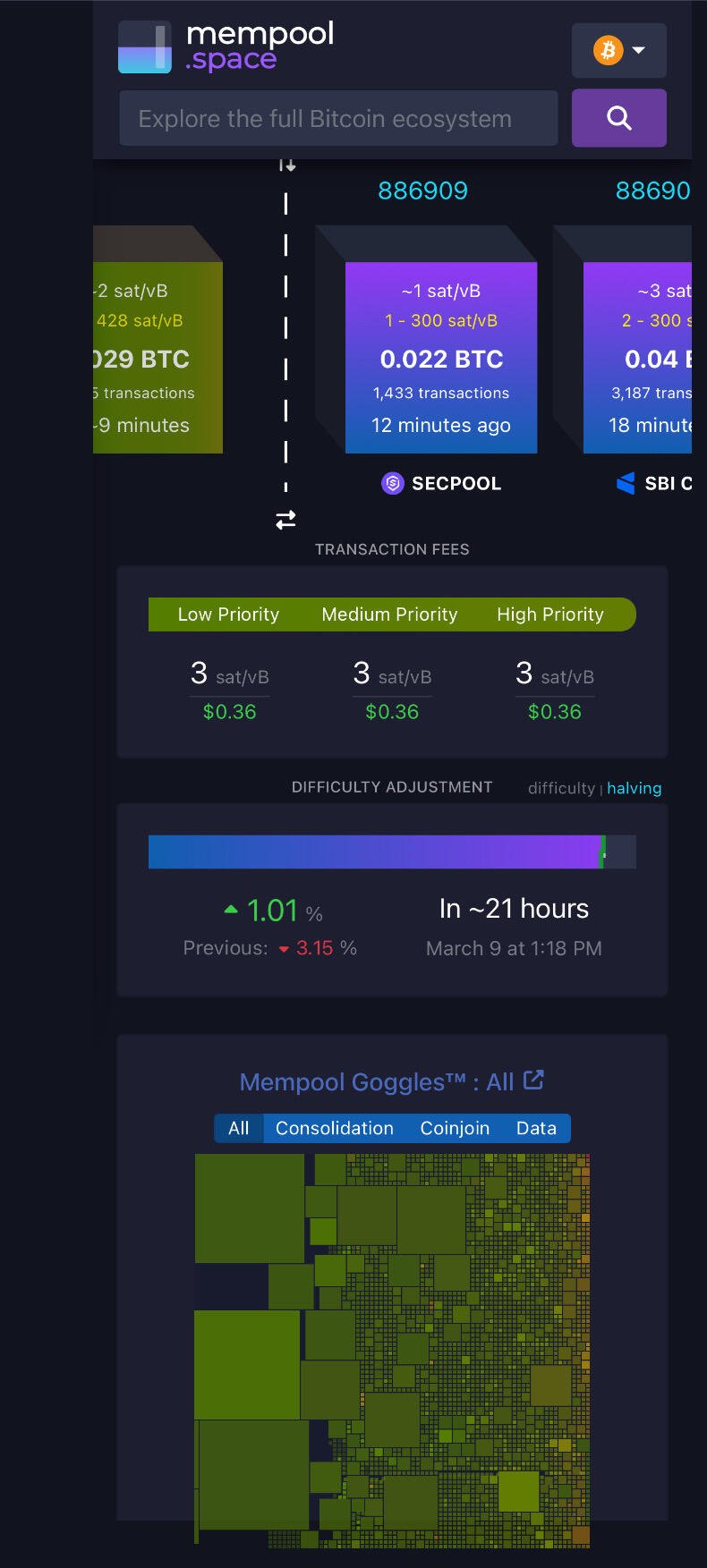
https://mempool.space/address/bc1q4valmh0puzugzky4dryhflnaayt4tjtcm7jfgr

I just randomly picked a UTXO in a recent block. Here is a “quantum state”. You can see exactly which particles (UTXOs) where here at the that specific block in time, how much energy/satoshis associated and you see the path and history of all entangled UTXOs leading up to that specific state and all UTXOs following that specific state.

Ok, will be interesting to see!

Replying to Avatar Jack K

Well for one, a UTXO being sent to a 2 of 2 lighting channel is 2 UTXOs, the funding one (destroyed) the channel balance (new). This funding UTXO exists in the past and influences the new UTXO (via intention). And the state of the UTXO is even less certain as now transactions can occur between the two peer to peer parties without wanting to resolve uncertainty (A quantum bit transacting states between two parties without settling certainty). Measuring in quantum mechanics forcefully collapses the state, bitcoin it does not; it cannot without valid signature. This is non-local. Past information interacting with the present, the interaction is instantaneous (when the block is mined). It fundamentally inviolates bell inequality; Bitcoin is non-local.

The location and state of all UTXOs is known and deterministic for every block, even when UTXOs are spend and destroyed, their state is still preserved in time forever and directly influence the new UTXO. Yet the new UTXO also maintains its quantum nature, stored classically-quantum behavior.

Bitcoin is the quantum-classical computer that computes the most important thing for us; a peer to peer electronic (energy) cash system. Conservation of energy in the human energy domain allows use as humans to perform the computation of meaning for our UTXOs (qubits). No single owner of the qubits l, No single computer storing the data, no single centralized observer, opt in consensus. Physics is all about consensus, right? Our decisions are computed on bitcoin and preserved forever.

So no proof or description of protocols to implement various quantum states I guess.

Replying to Avatar Jack K

Well for one, a UTXO being sent to a 2 of 2 lighting channel is 2 UTXOs, the funding one (destroyed) the channel balance (new). This funding UTXO exists in the past and influences the new UTXO (via intention). And the state of the UTXO is even less certain as now transactions can occur between the two peer to peer parties without wanting to resolve uncertainty (A quantum bit transacting states between two parties without settling certainty). Measuring in quantum mechanics forcefully collapses the state, bitcoin it does not; it cannot without valid signature. This is non-local. Past information interacting with the present, the interaction is instantaneous (when the block is mined). It fundamentally inviolates bell inequality; Bitcoin is non-local.

The location and state of all UTXOs is known and deterministic for every block, even when UTXOs are spend and destroyed, their state is still preserved in time forever and directly influence the new UTXO. Yet the new UTXO also maintains its quantum nature, stored classically-quantum behavior.

Bitcoin is the quantum-classical computer that computes the most important thing for us; a peer to peer electronic (energy) cash system. Conservation of energy in the human energy domain allows use as humans to perform the computation of meaning for our UTXOs (qubits). No single owner of the qubits l, No single computer storing the data, no single centralized observer, opt in consensus. Physics is all about consensus, right? Our decisions are computed on bitcoin and preserved forever.

Interesting perspective with lightning channels, but something in the past affecting something in the future does not mean entanglement.

Are you able to provide a proof instead of just words? I do not see how a mined block violates a bell inequality, again do you have a proof?

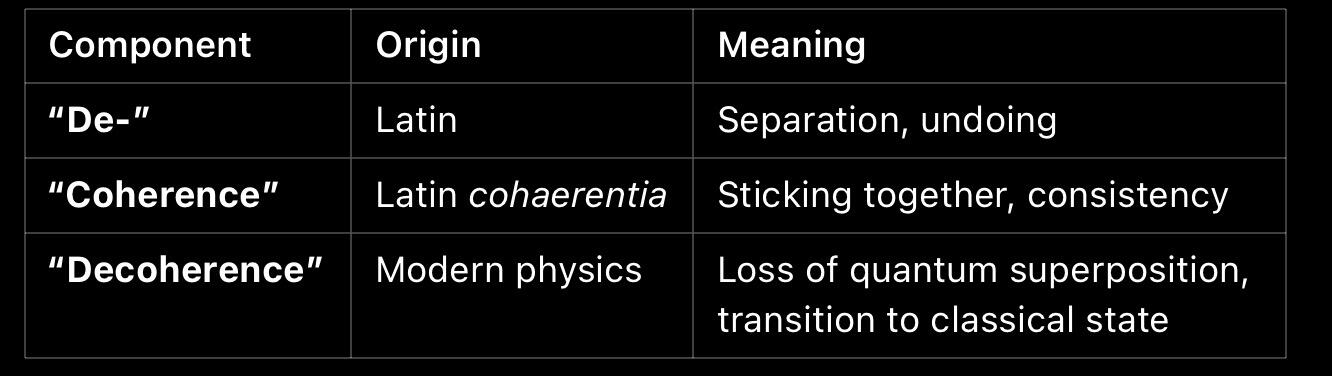
It is not easy to show whether an arbitrary quantum state is entangled or not, but if you could describe a protocol for generating a bell state using two UTXOs that would be very interesting. If you can not generate a certain state, what decoherence is solved? You have no quantum-information on the state, so there is no quantum information to be lost.

Anyways, I am signing of social media till next saturday. Thanks for taking time to respond.
At least we agree that bitcoin cannot be used for quantum computation.

That satoshi’s coins moving would affect bitcoin does not show any form of entanglement. If I kick a football, it moves but not because I am entangled to the ball. Can you give an example of how one could violate a bell inequality with UTXO’s? Can you give an example of how to construct two entangled UTXO’s where measuring decreases your knowledge of the second?

I did not claim any decoherence. I asked what you meant by decoherence being “solved”? Specifically I would like to know what state is being kept from decohering. And if this state is not known, what is the point then?

I am curious, would just like to know if you have something more concrete to say

To do various computations in quantum computing you need to know the actual state of your system or there is nothing useful you can do. You can have a qubit that is 50/50 or whatever p/(1-p).

Please describe how you would do any sort of quantum computation here. How do you entangle UTXO’s?

What do mean that decoherence is “solved”? If you do not even know the state of a qubit, what are you “solving”. If you mean that it does not decohere AFTER being recorded in the chain, then it is useless anyways! The entropy of said transaction is now 0 because it cannot be changed.

Replying to Avatar Jack K

Fundamentally, quantum mechanics has been a language problem since discovery. We haven’t had a “language” to actually understand and communicate it until bitcoin; which describes the relationship of energy, information and time. Use Bitcoin as the lens to think through.

What physicists call a qubit has an identical nature to UTXO. In both, energy is fundamental.

Superposition: UTXOs are in a constant state of spendability (0 or 1) and their state is unknown until blocks are mined; only probabilistic.

Entanglement: A single UTXO can be sent to infinite addresses, split innumerable ways, can interact with any other UTXO and can interact with UTXOs from different times. Remember, all UTXOs exist in the past except the ones in the present block.

Measurement: Mining is the measurement of hashes per valid nonce and the measurement collapses the indeterminate block config into a single deterministic verifiable state. This also sets the direction in quantum measurement (which UTXOs become spent and which remain unspent)

UTXOs persist indefinitely through time; it appears Satoshi solved decoherence 16 years ago. Again, it’s a language and expectation problem. We are told QM is too complex to for us understand, trust the physicists.

The ledger is the “timespace” (history from Genesis) and the current block is the “spacetime” or the present.

Given this context, is it possible a UTXO is a qubit? What properties is a UTXO missing to be one?

What effects could centralization have on a quantum system? (Think Bitcoin, ownership, nodes, mining)

What is more important for a quantum computer to compute than perfect money and a shared equal reality with no singular observer?

So how would you compute with a utxo before/after it is spent. What about entanglement? It is such a misunderstanding that superposition is what makes quantum special (or difficult). Superposition happens classically all the time. Go look at light through a prism or waves in the ocean…

On the other hand, the absence of understanding what money is “abstractly” might be what prevents people from understanding Bitcoin as they believe money can be whatever you want instead of what best satisfies a set of criteria.

Before Shannon connected electric circuits and Boolean algebra, engineers were in the dark when building circuits. After Shannon, abstract rules helped build concrete circuits. After Satoshi, bitcoins rules helps storing and transmitting value 🤟🔥

Or maybe the “growth” of the stock market is the best proxy for the true monetary expansion? 🧐