

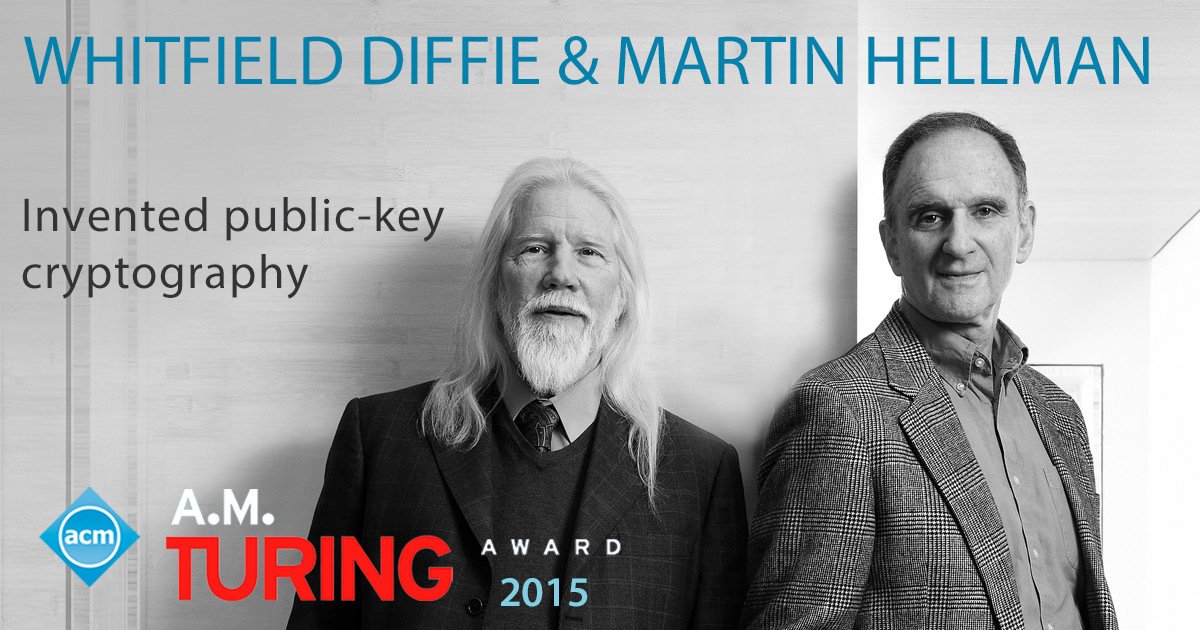
Diffie-Hellman Exchange: favorite prog-rock band.
My alma mater, Emory University in Atlanta, is the first university endowment to allocate to Bitcoin (the ETF).
Must be because the premier Bitcoin builder conference is nostr:nprofile1qqs0zqyq74avavecxlreqte2ugu5hc7q867qwg386pmeflmd00hdnhqpzdmhxue69uhhqatjwpkx2urpvuhx2ue025x248 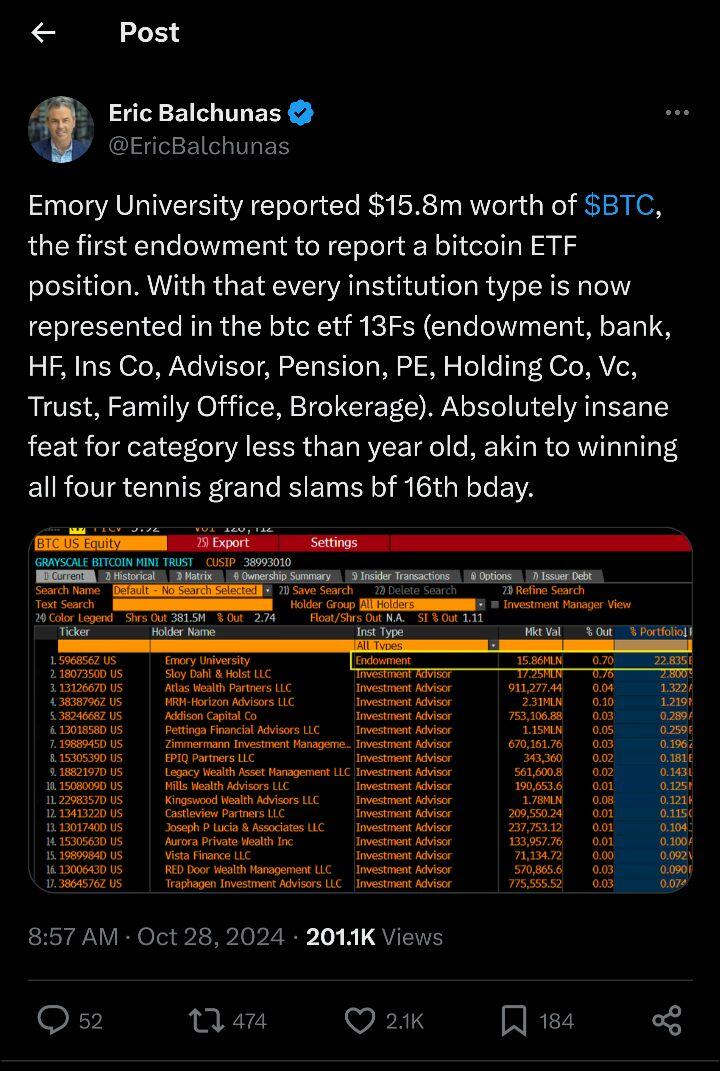


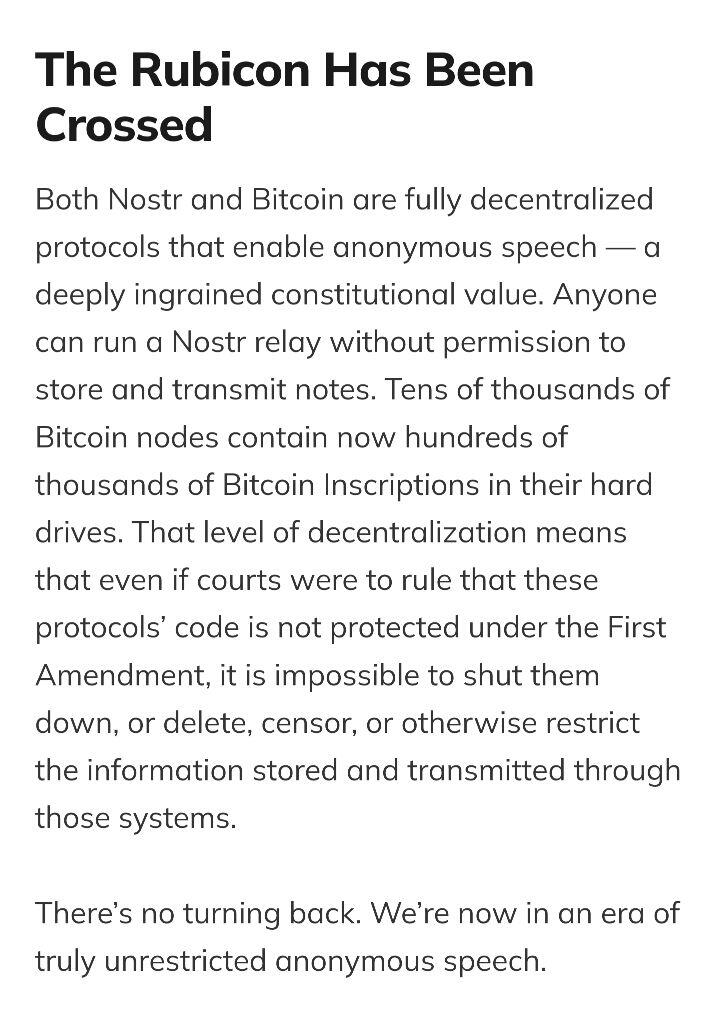



When a platform is built by a for-profit entity that has raised funds, it's easy for the state to target it and pressure founders.
Open Source protocols can live past their founders.
Nostr-native crowdfunding marketplaces like fundsolvr.com are necessary.
Build the change you want to see. https://github.com/Open-Source-Justice-Foundation/Fundsolvr

Still blacklisted from the wallet for some reason...Strike I have onboarded no problem.
The only desktop app with integrated fedimint wallet support that I am aware of.

Great example of a "last mile" Bitcoin service. Zaprite doesnt maintain it's own lightning infrastructure or nodes. It focuses its resources on amazing invoicing and smooth payment gateways (payment "links").
Now, LSPs, wallet providers, etc dont need to build the merchant interfaces, they just focus resources on robust infrastructure and integrate with Zaprite.
Comparative advantage and collaboration. 👌



Tooth fairy matches $5 bill with sats (whatever current exchange rate). My 8 year old stacked hard during the bear.

Same happened to me when I issued my co-founder a payment request from company account. Square customer help line had no idea what happened, "escalated" it...and I never heard back.
Had funds locked in square checking, disputed the deposit with the bank I made deposit from and got the funds back.
It's dangerous out there on a fiat standard!
CITADEL DISPATCH 137: BITCOIN IN AMERICA WITH GENERAL SKRMETTI
https://www.youtube.com/watch?v=OGUdCOn17nc
https://serve.podhome.fm/episodepage/CitadelDispatch/cd137-bitcoin-in-america-with-general-skrmetti
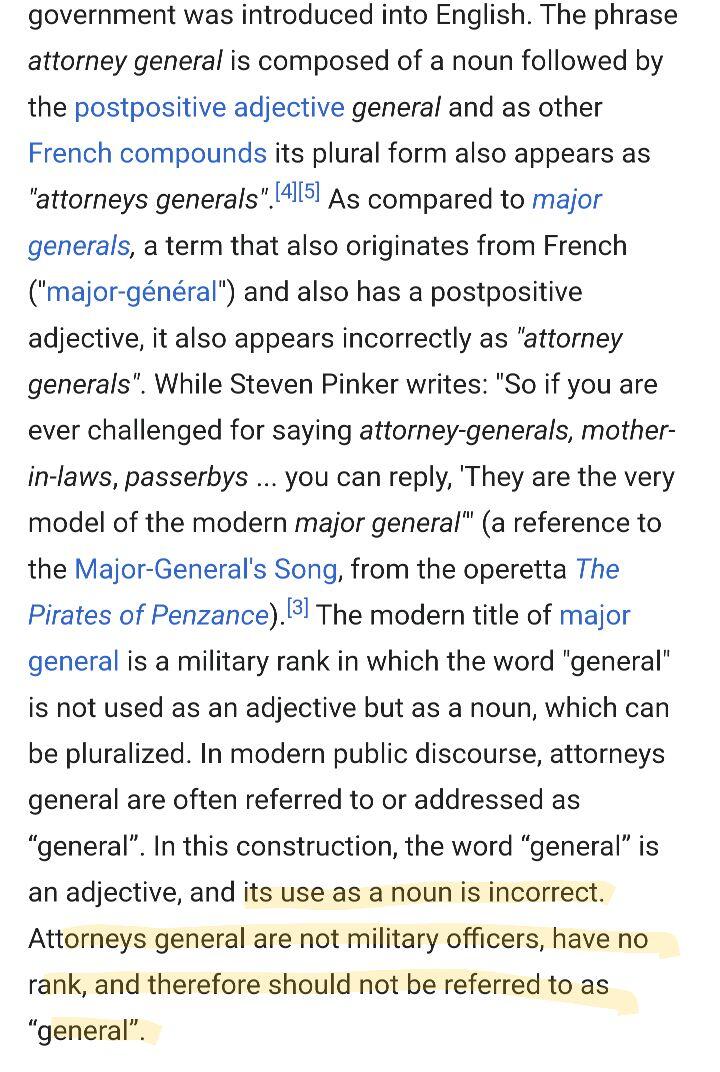
FYI, he's a lawyer, not a soldier.

nostr:npub1qny3tkh0acurzla8x3zy4nhrjz5zd8l9sy9jys09umwng00manysew95gx stars in “Between Two Ferns” to a crowd of at least 12 people.

"The only thing scarcer than Bitcoin is time, so take it when you can get it." ⏳
nostr:npub1qny3tkh0acurzla8x3zy4nhrjz5zd8l9sy9jys09umwng00manysew95gx taking stage 15 minutes early to hold forth on importance of FOSS funding and investor incentives on a Bitcoin standard was a highlight.
I and the other 11 people listening thoroughly enjoyed it. 🤣
🇺🇸The American Founders would have been Bitcoiners.
Here’s my article from a few years back offering the historical proof.
Happy Independence Day. 🎇
https://bitcoinmagazine.com/culture/independence-day-the-founders-and-bitcoin

Here's my argument to that effect from a few years ago: https://bitcoinmagazine.com/culture/independence-day-the-founders-and-bitcoin
Why are this miner's own lawyers misinforming a District Court judge about the Bitcoin mining process?? (The order directly cites the miner's complaint.)

We need to do a better job of educating the courts. If you are a Bitcoin company that must litigate, hire Bitcoiners.
https://www.courtlistener.com/docket/68325488/48/block-mining-inc-v-hosting-source-llc/

My guy 🫡🙌🏼 thank you.
Yes I believe keystache by nostr:npub1fmunwy3lljfyzlgyuyman79lxwm4efz6pzlgqjwc400pr9l708qquvje8w could be a solution for this! nostr:npub16zxfxy5ltnp992gp006jlyy9qc93qanzpfvv66fznvc7xul0ej0suk5dzc mentioned an integration and I haven’t had a chance to get to it yet!
Talk to nostr:npub1jgnwmgfxcch992rkaqm5sk740vzsnpnmkrrnrm3pxu3uv6smmc8qhkqcgk and nostr:npub1ygzj9skr9val9yqxkf67yf9jshtyhvvl0x76jp5er09nsc0p3j6qr260k2, they authored the NIP and wrote the reference implementation for local desktop signing.
Matthew Green's (cryptography prof at Johns Hopkins) take on Apple's "Private Cloud Compute": https://threadreaderapp.com/thread/1800291897245835616.html?utm_campaign=topunroll
"So Apple has introduced a new system called “Private Cloud Compute” that allows your phone to offload complex (typically AI) tasks to specialized secure devices in the cloud. I’m still trying to work out what I think about this. So here’s a thread.
1/
Apple, unlike most other mobile providers, has traditionally done a lot of processing on-device. For example, all of the machine learning and OCR text recognition on Photos is done right on your device.
2/
The problem is that while modern phone “neural” hardware is improving, it’s not improving fast enough to take advantage of all the crazy features Silicon Valley wants from modern AI, including generative AI and its ilk. This fundamentally requires servers.
3/
But if you send your tasks out to servers in “the cloud” (god using quotes makes me feel 80), this means sending incredibly private data off your phone and out over the Internet. That exposes you to spying, hacking, and the data hungry business model of Silicon Valley.
4/
The solution Apple has come up with is to try to build secure and trustworthy hardware in their own data centers. Your phone can then “outsource” heavy tasks to this hardware. Seems easy, right? Well: here’s the blog post.
5/
https://security.apple.com/blog/private-cloud-compute/
TL;DR: it is not easy. Building trustworthy computers is literally the hardest problem in computer security. Honestly it’s almost the only problem in computer security. But while it remains a challenging problem, we’ve made a lot of advances. Apple is using almost all of them.
6/
The first thing Apple is doing is using all the advances they’ve made in building secure phones and PCs in their new servers. This involves using Secure Boot and a Secure Enclave Processor (SEP) to hold keys. They’ve presumably turned on all the processor security features.
7/
Then they’re throwing all kinds of processes at the server hardware to make sure the hardware isn’t tampered with. I can’t tell if this prevents hardware attacks, but it seems like a start.
8/
They also use a bunch of protections to ensure that software is legitimate. One is that the software is “stateless” and allegedly doesn’t keep information between user requests. To help ensure this, each server/node reboot re-keys and wipes all storage.
9/
A second protection is that the operating system can “attest” to the software image it’s running. Specifically, it signs a hash of the software and shares this with every phone/client. If you trust this infrastructure, you’ll know it’s running a specific piece of software.
10/
Of course, knowing that the phone is running a specific piece of software doesn’t help you if you don’t trust the software. So Apple plans to put each binary image into a “transparency log” and publish the software.
But here’s a sticky point: not with the full source code.
11/
Security researchers will get *some code* and a VM they can use to run the software. They’ll then have to reverse-engineer the binaries to see if they’re doing unexpected things. It’s a little suboptimal.
12/
When your phone wants to outsource a task, it will contact Apple and obtain a list of servers/nodes and their keys. It will then encrypt its request to all servers, and one will process it. They’re even using fancy anonymous credentials and a third part relay to hide your IP.
13/
Ok there are probably half a dozen more technical details in the blog post. It’s a very thoughtful design. Indeed, if you gave an excellent team a huge pile of money and told them to build the best “private” cloud in the world, it would probably look like this.
14/
But now the tough questions. Is it a good idea? And is it as secure as what Apple does today? And most importantly:
I admit that as I learned about this feature, it made me kind of sad. The thought that was going through my head was: this is going to be too much of a temptation. Once you can “safely” outsource tasks to the cloud, why bother doing them locally. Outsource everything!
As best I can tell, Apple does not have explicit plans to announce when your data is going off-device for to Private Compute. You won’t opt into this, you won’t necessarily even be told it’s happening. It will just happen. Magically.
I don’t love that part.
17/
Finally, there are so many invisible sharp edges that could exist in a system like this. Hardware flaws. Issues with the cryptographic attenuation framework. Clever software exploits. Many of these will be hard for security researchers to detect. That worries me too.
18/
Wrapping up on a more positive note: it’s worth keeping in mind that sometimes the perfect is the enemy of the really good.
In practice the alternative to on-device is: ship private data to OpenAI or someplace sketchier, where who knows what might happen to it.
19/
And of course, keep in mind that super-spies aren’t your biggest adversary. For many people your biggest adversary is the company who sold you your device/software. This PCC system represents a real commitment by Apple not to “peek” at your data. That’s a big deal.
20/
In any case, this is the world we’re moving to. Your phone might seem to be in your pocket, but a part of it lives 2,000 miles away in a data center. As security folks we probably need to get used to that fact, and do the best we can to make sure all parts are secure.
//fin
Addendum: “cryptographic attenuation” should read “cryptographic attestation”, but I’m sure folks will get the point."
#apple #privacy #AI