🎙️ Escuchando este episodio de "A la de tres" en Fountain:
👉 https://fountain.fm/episode/0Gt2Wcar62TpUwgOG2h9
René ZZ habla de sus experiencias con Dios: un sueño difícil de narrar y esos 8 minutos de silencio absoluto en su piso de Madrid.
Ahora que estoy leyendo La mente en la caverna (David Lewis-Williams), veo paralelismos con lo que él llama “estados alterados de conciencia espontáneos”: experiencias intensas sin drogas, que cada cultura interpreta según su marco simbólico.
Quizás este libro le daría una perspectiva científica complementaria a su vivencia personal.

Thank you for your comment and for sharing perspectives so aligned with mine. It’s a pleasure to follow your contributions. Let’s keep shining lights into the shadows. #ResistTheMachine
Puppets of the past and present: In the 1930s, rural life was controlled by local overlords pulling the strings. Today, algorithms and digital systems do the same. The names have changed, but the fight remains: reclaiming control of our lives from invisible powers. Learn from the past to resist the present. Explore more stories like this on my Medium profile: https://medium.com/@decumbens
Unfinished Dreams: A Journey into Rural Memories
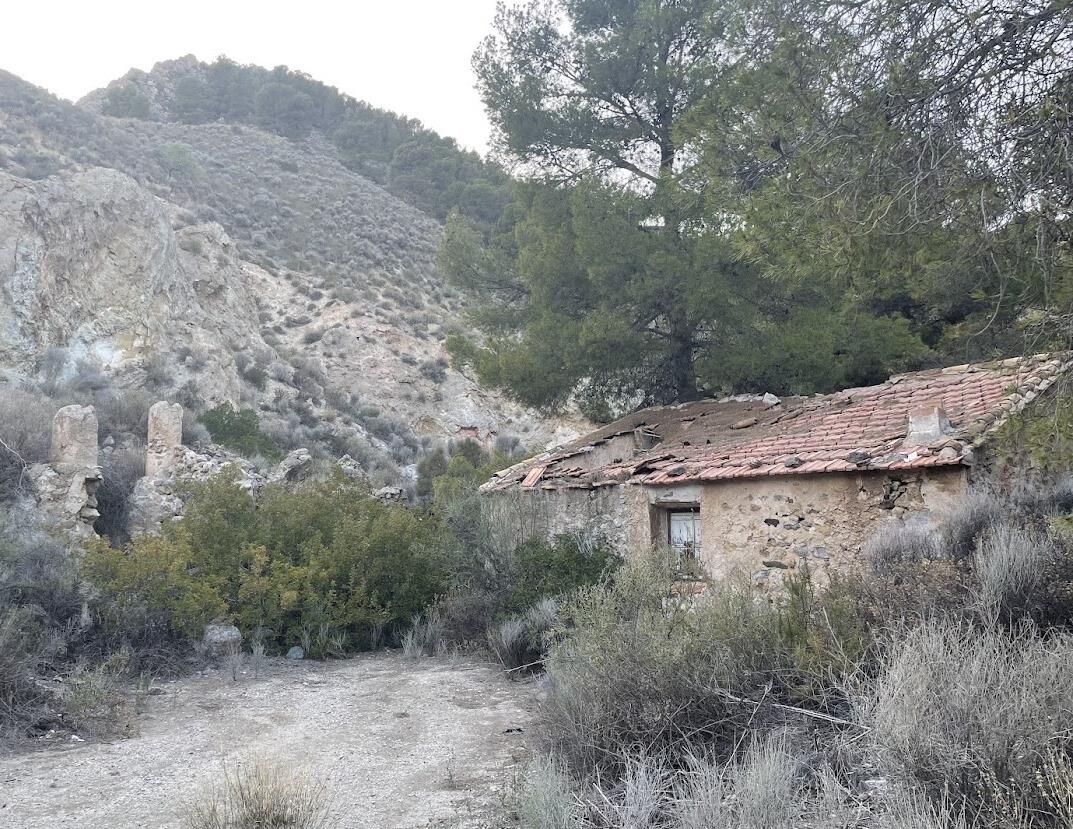
“Exploring the remnants of an unfinished project in a semi-arid landscape, I met Paco Castillejo, the last inhabitant of these lands. His stories reveal the deep connections between generations and the dreams left behind.” 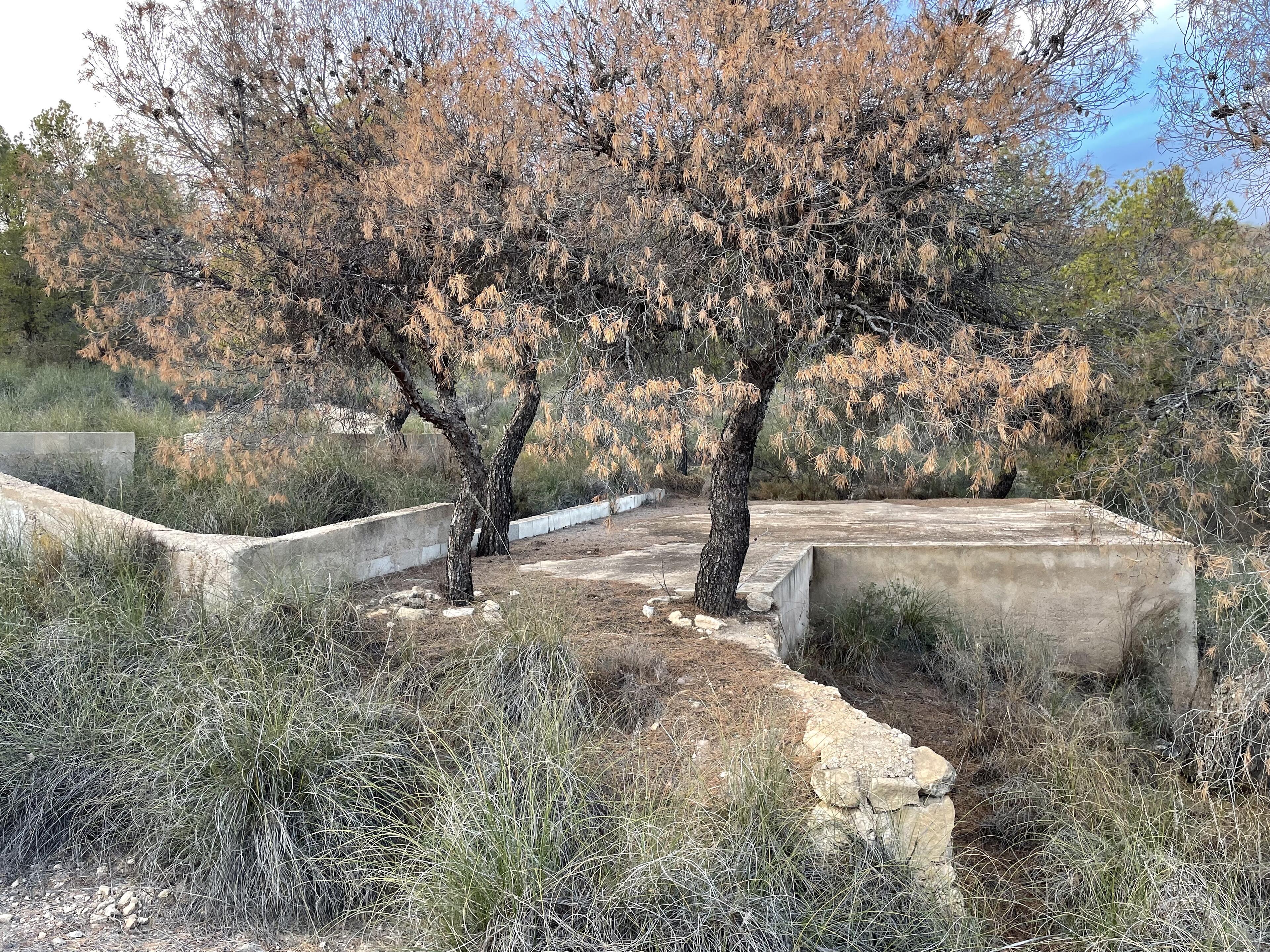

Fascinating to reflect on this insight from Satoshi. It’s true that Bitcoin thrives on a growing user base and increasing value. However, could the involvement of asset managers like BlackRock in ETFs, mining companies, and even developer funding create risks for decentralization? Wouldn’t this feedback loop potentially be influenced by centralized interests? Let’s discuss! #Bitcoin #Decentralization #ESG
Hi Lunaticoin,
I wanted to thank you for your incredible podcast, especially episode L248 about starting with Lightning from scratch. That episode was a true catalyst for me—it gave me the push I needed to dive deeper into the ecosystems of #Bitcoin, #LightningNetwork, and #Nostr.
There were some truly inspiring moments in the episode that motivated me to explore how these ecosystems interconnect. As a result, I created a diagram to help beginners (like me, just a few months ago!) understand the relationships between them. I’d love to share it with you and get your feedback.
Thank you for being such a valuable source of inspiration and education in this space! ⚡️
Cheers,
EchoesOfHistory 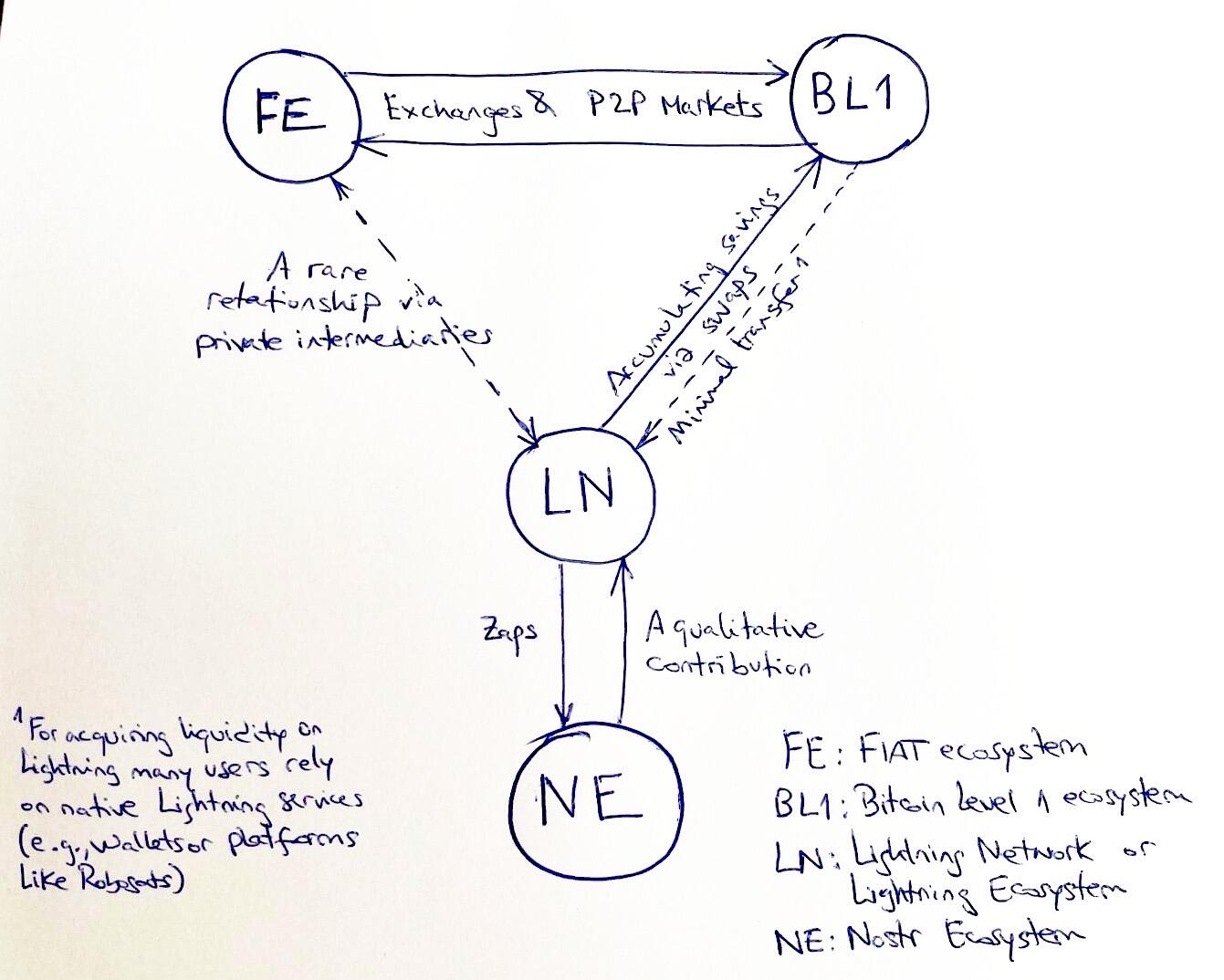
The #PlebChain community is what makes the #Bitcoin, #LightningNetwork, and #Nostr ecosystems so unique and powerful.
I created this diagram to help beginners understand the interconnectedness of these ecosystems:
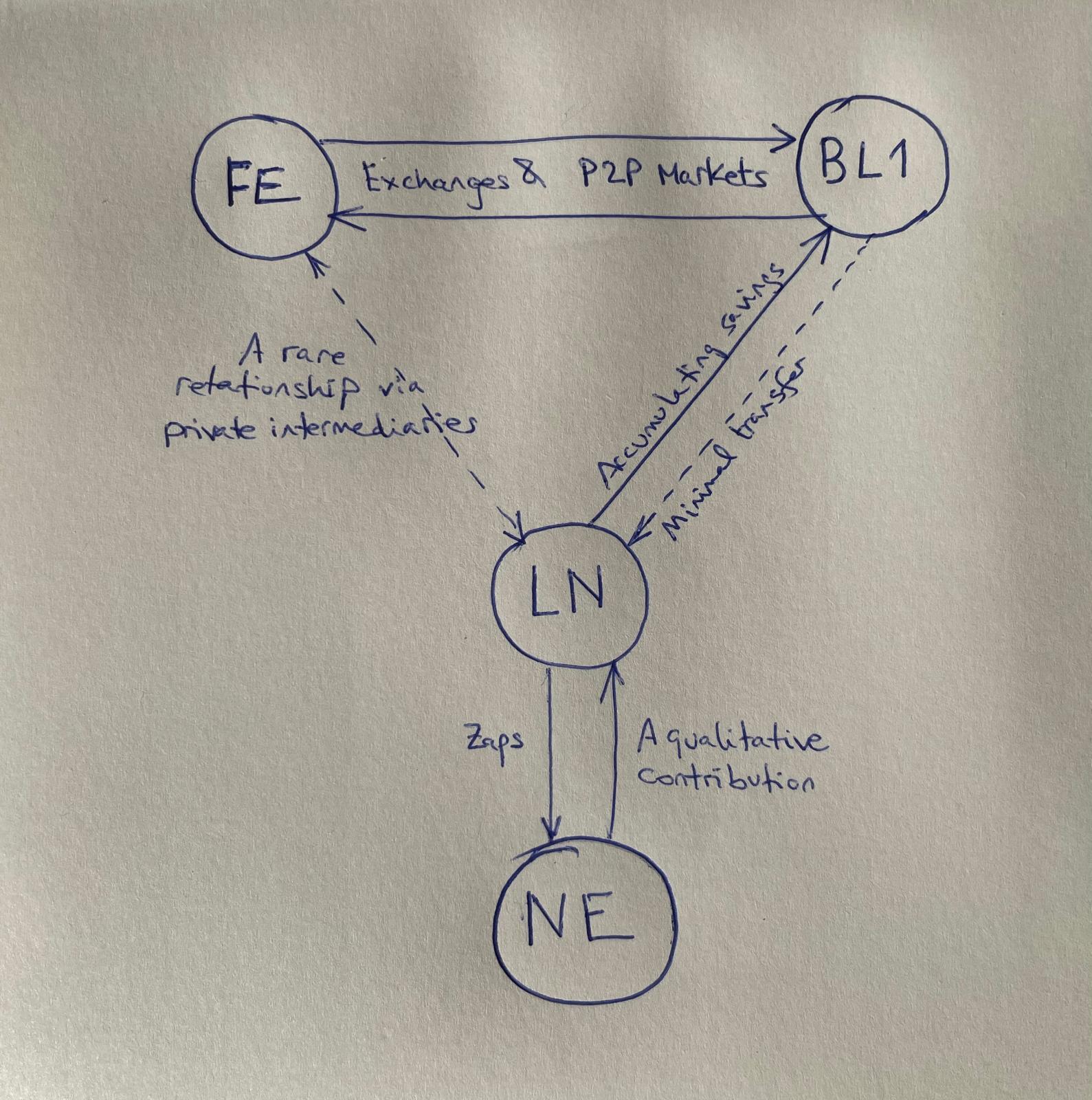
Quick explanation:
FIAT ↔ Bitcoin Layer 1: Where most journeys begin, converting FIAT to Bitcoin and vice versa via exchanges or P2P markets.
Bitcoin Layer 1 ↔ Lightning Network: Swaps allow movement between layers. Layer 1 is mainly for savings, while services like Robosats provide direct Lightning liquidity.
Lightning ↔ Nostr: Lightning enables Zaps for tipping and monetization on Nostr, while Nostr promotes Lightning adoption.
FIAT ↔ Lightning: A rarer connection, usually involving private intermediaries.
The grassroots efforts of plebs are what make these interactions meaningful. Together, we're building decentralized systems that empower everyone. 🚀⚡️
What are your thoughts on how the #PlebChain will evolve in 2025? Let’s discuss!

Thank you, JamPower, for such an inspiring message! 🙌
This year, I’ve also been reflecting on the interconnectedness of #Bitcoin, #LightningNetwork, and #Nostr ecosystems, and how they empower one another.
I created this diagram to illustrate these relationships:
This diagram might help beginners make sense of and structure the vast amount of information they encounter when starting out. Here’s a quick explanation to make it easier to understand:
FIAT ↔ Bitcoin Layer 1: This is the starting point for many, where FIAT currencies are exchanged for Bitcoin and vice versa, often through exchanges or P2P markets.
Bitcoin Layer 1 ↔ Lightning Network: The relationship between Bitcoin's secure base layer and Lightning is facilitated by swaps, enabling users to move funds between the two layers. Most users send funds to Bitcoin Layer 1 for secure, long-term savings. For acquiring Lightning liquidity, many users rely on native Lightning services (e.g., wallets or platforms like Robosats) rather than moving funds directly from Layer 1 to Lightning.
Lightning ↔ Nostr: These ecosystems work together: Lightning enables Zaps for tipping and content monetization on Nostr, while Nostr contributes qualitative value, promoting Lightning adoption.
FIAT ↔ Lightning: A less common relationship, facilitated by private intermediaries for direct access to Lightning liquidity.
I hope this diagram and explanation provide some clarity, especially for those new to these technologies.
What do you think? Does it resonate with your experiences this year? I’d love to hear feedback from the community! ⚡️💜
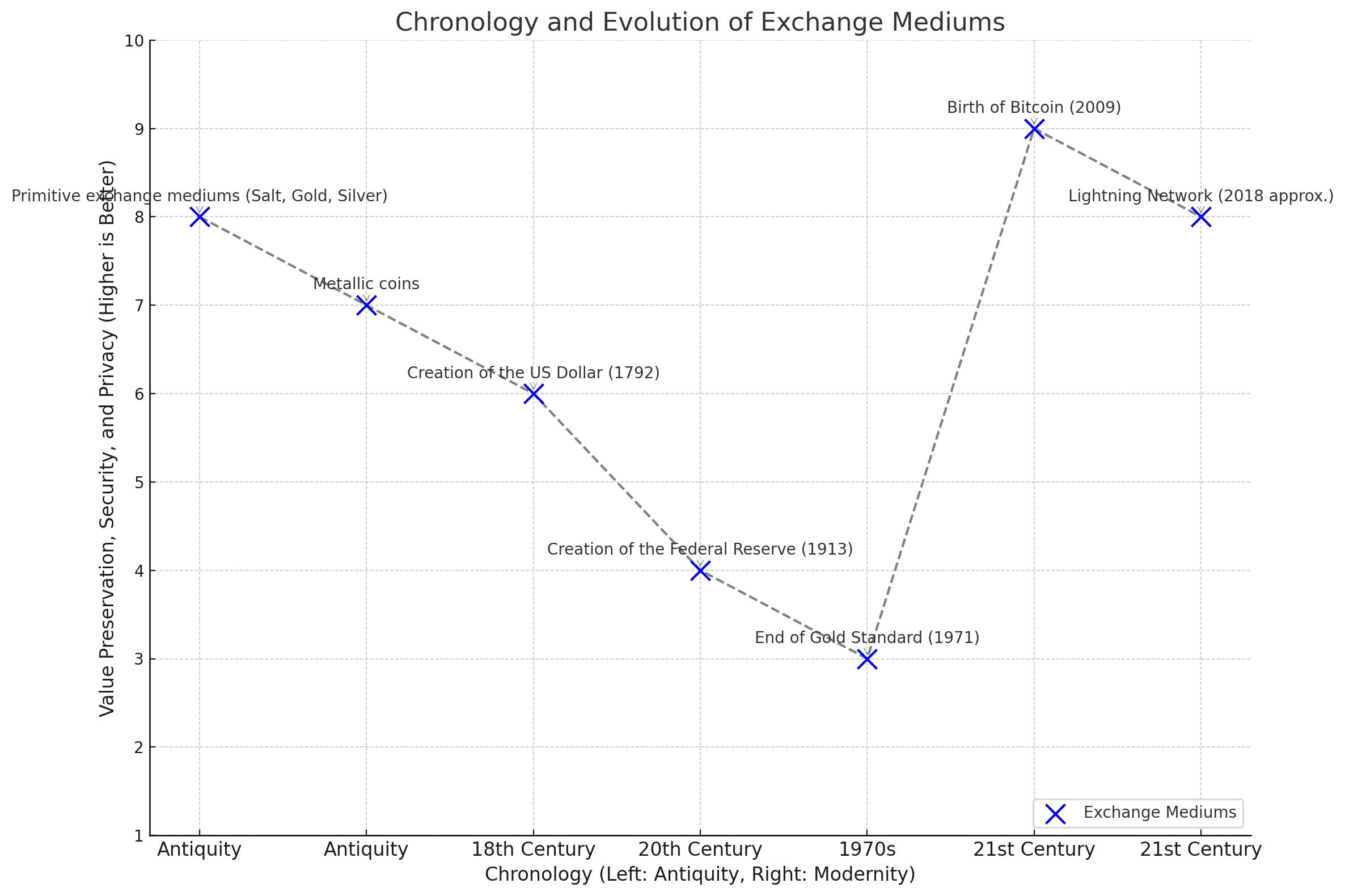
This diagram explores the evolution of exchange mediums through history. The X-axis represents chronology (from antiquity to modernity), while the Y-axis evaluates their ability to preserve value, security against confiscation, and privacy (higher is better).
From primitive mediums like salt and gold to Bitcoin and the Lightning Network, each step reflects technological advancements and societal shifts. I welcome any constructive feedback or suggestions to improve this representation.

Funny how these conversations about Bitcoin and privacy remind me of something I’ve explored in my writings about rural life: the importance of discretion and self-sufficiency. In the 1930s and 1940s, in many rural communities in Spain, keeping certain things private—resources or decisions—was a matter of survival, not just convenience. Now, in the digital world, Bitcoin seems to invite us to recover that mindset: protecting what’s ours and being cautious about what we share.
If this resonates with you, I’d love to hear how you see these connections between the past and the present. I also write about these topics on Medium: EchoesOfHistory

It’s an interesting question—perhaps central banks hold onto the old model because it offers predictability (at least for them), while decentralization challenges that control. History shows us how power structures often resist change until it becomes inevitable. I write about rural stories where autonomy and self-reliance were key, and it’s fascinating how those principles echo in the Bitcoin conversation. 💡 What do you think will drive the shift toward decentralization?
This giant sequoia tree was estimated to be over 2600 years old when it was cut down in the 1890s. https://t.co/GQXwTZWAby 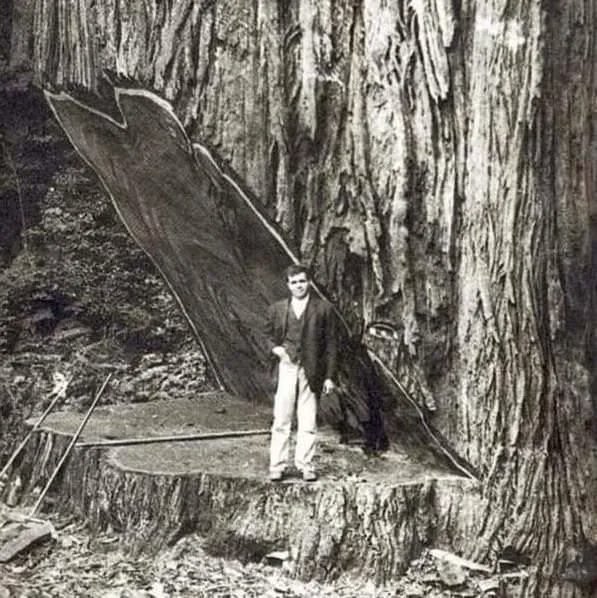
It’s amazing to think about the history a 2600-year-old tree might have witnessed before being cut down. I believe it’s a reminder of how we need to balance using natural resources with respecting their historical and cultural value. In the rural stories I write, I often explore this relationship between people and the land, and how learning from the past can help us make wiser decisions today. Thanks for sharing this—it really gives a lot to think about
I completely agree—without algorithms in the way, Nostr feels like the perfect place for meaningful content to thrive. Thank you for the kind words about my stories, it means a lot!
nostr:npub104zp04wlgddf0w84tj8jul3w75e7ydcuuhsull2etste5040xm2qg285rf Your bio is inspiring—‘Soil programmer and code pruner’ beautifully ties nature and technology, and ‘community is security’ resonates deeply with the rural stories I share. In the communities I write about, survival depended on shared effort, gratitude, and resilience—values that align closely with your philosophy. If you’re curious, feel free to explore my stories on Medium: https://medium.com/@decumbens. I’d love to hear how your perspective shapes the way you view history and our connection to the land.

Your post reminds me why I write about the history of rural Spain—it’s about preserving those transformative, yet often overlooked, moments that shaped generations. If you’re ever curious, feel free to explore these stories on my profile. Here’s to keeping history alive!

Lots of noise about a Chinese 6th Gen fighter. It would be prudent for "media" outlets to define what a 6th Gen fighter actually is. This how fox news describes it:
"Fifth generation aircraft incorporated stealth technology, with the sixth generation aircraft promising further advancements."
The above statement is nonsense. The video shows a new plane which does not make it 6th Gen.
6th Gen can loosely be defined as an aircraft that can be either manned or unmanned and interacts with companion aircraft and ground units with some level of autonomy, while providing seamless information sharing and intelligence gathering.
The effectiveness of this new aircraft and it's 6th Gen capabilities are completely unknown to the general public/media. They are trying to stir up/frighten normies to get them to go along with a new war against China in the coming years.
https://www.foxnews.com/world/see-it-china-stuns-maiden-flight-sixth-generation-aircraft
Do you think media narratives about military tech always serve geopolitical agendas, or could it sometimes just be ignorance of technical details?”
Your journey into Nostr is inspiring! I recently started sharing stories about rural Spain and cultural traditions here. Do you think Nostr could help connect people to forgotten histories?