Very interesting. Carter has the best voice for Arabic for LBJ a close second. Both southerners. https://video.nostr.build/019f72a573ae1b78dab59b35ebd2e365567e63586e9da04a13b60760d566628a.mp4
Bernie Madoff was a m*jahid against the worldwide demonic system run ditectly from under the throne of baalzebub in wallstreet. https://video.nostr.build/c9fc67e8d42d1bd4e29a7b201fad633b02931ad1e482d6a84c54636373593f75.mp4
This is how talking, let alone discussing anything controversial, with Trads feels like: 
Xitter gets more cursed by the day.

Shaykh Deng can show us the way but we have to be willing to walk on it. 

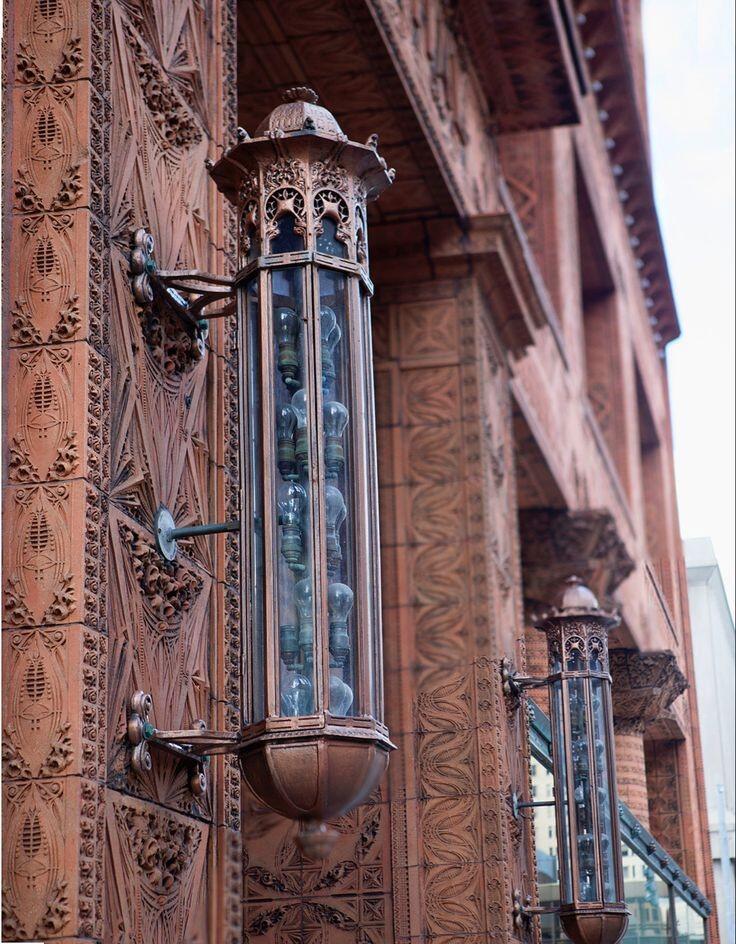
 Art Deco is the perfect mold for a new occidental style of islamic architecture.

Comedic genius that al Qassam made the fat one express gratitude for the food and drinks 🤣 https://video.nostr.build/82128acb9d6e7acab54d218212aab490f5d027eeb84153e6ed5d2a23dfd6d31c.mp4
We are now entering an era where the heat of battle blinds the bureaucrats and politicians. Just like the Gulf made the GAE's highest echelons turn a blind eye to China's rise, the risk of Sino supremacy across multiple fields creates an opportunity for the ambitious among us.
We engaged in succesfull resistance with the dollar pump on full capacity and the watchfull eye of the letter agencies.
Now is the time we can build the infrastructure for future sovereignty and growth. The world is too busy to care.
The Soviet intellectuals were right in their observation: under Communism, the future is certain, yet history always changes. This notion—unintended, perhaps—casts a curious light on the world of scholarship, where even the most brilliant historians, armed with years of meticulous research, find their conclusions unmade.
Within a mere five years of retirement, the intellectual fortresses they constructed are often reduced to ruins by the advancing tide of new evidence.
So much remains unknown; so many ironclad hypotheses crumble into irrelevance.
Why, for instance, did the West industrialize and rise to dominance while other civilizations faltered? The answer eludes us still, tantalizingly out of reach. Consider the Netherlands: all conditions aligned in their favor, and yet it was the English who first breached the threshold of industrial revolution.
And what of the Islamicate world? What missteps led it astray? I have come to believe that the very framing of this question as a central focus of effort is a misallocation of intellectual resources.
Definitive answers are an illusion, especially when the historical record of the Islamicate world lies in shambles, its archives scattered, incomplete, poorly preserved. Even in the Occident, with its comparatively meticulous record-keeping, what we uncover is not certitude but directional truths—hints of causality, never the whole.
This is why I am drawn to the SAIF approach: a call to direct collective energy not toward the dissection of history, but toward the realization of future industrialization.
Thr future of the Ummah is certain, even though it's history always changes.

Cringe edit I know but imagine listening to these people lol
https://video.nostr.build/2d548b9943647162e4cc35cd2fc7530bc132ad439369c2dd3227fbf3f3ad53ed.mp4
Type of audience: 

This is based on research by Kaufmann. Any muslim group that sees the sharia as an important guideline, would make this group of sustainable TFR. That is the given part. Not every subgroup, however, has the potential to be included in elite formation. That would be the second part.
The book is:
Shall the Religious Inherit the Earth? Demography and Politics in the Twenty-First Century.
No, I mean that community building efforts should concentrate on a few groups that already show much potential rather than try to "save" all nominal muslims. The higher TFR in these groups is already a given because they are more religiously conservative.
So, when trying to "islamize" a culture or create a new one, efforts should be directed towards these groups because the others will either be a drag or because their cultural footprint will be so small, that they are not too strong a competing force.
A world where total fertility rates (TFR) among the masses fall below replacement levels demands a shift in strategy for constructing new Islamicate cultures. Rather than striving to save or reform existing societies or cultures on a large scale, the focus should shift to ethnogenesis—the creation or emergence of new ethnic or cultural groups.
The "other" now effectively opts out of the future by limiting their cultural footprint in subsequent generations. Such stark differentiation among groups is unprecedented in this form. Historically, all cultural groups had comparable TFRs due to the inevitability of childbirth. Differences in reproduction rates were primarily linked to societal rank and wealth rather than divergent cultural codes.
This disparity in fertility today means that simply having four children allows a family to exert disproportionate influence on the cultural landscape of the future—especially when factoring in other means of cultural influence.
Strengthening groups that already align with a shared cultural framework is a more efficient strategy than attempting to reverse low TFR trends among the broader population or trying to convert others to our way of life.
Ambitious and capable elites, particularly those within the top 20% of society, are notably flexible in their loyalties. Their allegiance often shifts when they perceive a new group demonstrating vitality and a clear path to future dominance. This dynamic includes secular Muslims who lack strong ideological commitment to the prevailing liberal ideologies held by current ruling elites.
Such individuals will adapt and align themselves once they sense a shift in cultural and societal momentum. Therefore, a wise polity should prioritize empowering groups that exhibit promise and fit within the desired cultural framework. These groups will form the nucleus of a future elite, around which secular, nominal Muslims are likely to gravitate in due course.
From the courtyard of the white-plastered mosque rose the sounds of singing men, old and young alike. Their differing tones intertwined to create a zellige-like pattern, perfect in its seeming unevenness.
In Andalusian lyric fashion, the men sang in a melody that, to a Westerner's ear, resembled songs of All Hallows' Eve.
How ironic, I thought, that such a beautiful poem was being sung under the bright light of a rising moon, in a style reminiscent of midnight's eerie stillness.
The clapping hands set the rhythm; the flute carried the sentimental emotion. Anyone without a love to long for had conjured one from thin air. This night was reserved for longing, as only the brokenhearted could truly understand.
Her cheeks, rose-red, and her intense green eyes captured the moment. Even far away, surrounded by strangers and enshrouded in darkness, I was held hostage by her fleeting glances.
At long last, I understood why the men sang with such fervor. The heart had taken command, casting aside all else beyond its reach—for this night, at least.
Tonight, we surrendered.
"I saw the crescent moon and the face of my love;
They appeared as two moons high above.
I could not tell which one caused me to die—
The moon among men or the one in the sky.
Had it not been for those cheeks, rose-red,
And the wonder at the black tresses she shed,
It would surely seem to me,
That the rising moon was my love,
And my beloved was the moon above."

Yes, I agree. A xeet as controversial as that in MT should have been a thread rather than a simple hit like that. I misread the audience and by the time the comments came in, I realized I had to go back to the most elementary parts of fiqh and usul al fiqh to try to explain the reasoning behind that view, without appealing to any contemporary scholar. Insha'Allah the good outweighs the bad.

True, but maybe it was wiser not to throw this grenade into MT this time. The riba discussion was still needed though, but maybe not wise.
Did I engage in fiqh coal posting on X ?
Either fiqh is a way to structure human society with divine wisdom with enough flexibility to get God's people on top or it is a set if arbitrary rules used like magic spells to get into a place far away called heaven.
They want you to think that treating the Sharia like the first makes you a modernist kaffir while treating God's moral code like the second, makes you a pious member of the group of The Chosen One.
Fiqh maximalization on the basis of old manuals is destructive and makes any victory impossible.
 Engaging with femoids on X was a mistake