
mostly Gemini 2.5 pro. it is generally amazing at most things, I just have to follow behind it with a mop.
what you say makes sense. and in the context of arenas, the scorers aren't committing that code or and having to interact with it, or iteratively improve it.
when using AI for coding, I find that it tends to add comments with wreckless abandon. just keeps adding them, before blocks of code, inline with things like //<---- this is the change, or commenting out code when it's trying to fix something. and all of that adds up and obfuscates the real code, making it hard for the AI to reason about the code, and sometimes making it impossible for the AI to even edit the code.
I have attempted to add linter rules, adding notes to the project rules, adding directives in each prompt even, but the comments just never stop.
can anyone confirm they see this same behavior? is it a problem for you?
has anyone been able to stop the AI from adding comments?

I used it in a speech synthesis pipeline to go from markdown to html, then in beautiful soup to remove any formatting, to get plaintext for reading. markitdown works well so far in that role.


the idea's time is now.
I made a thing to demonstrate this:
https://npub.blog/npub16gwqt4qw6stjd2g9kg2pfl76jpxj4ethgqr05tgwwp064n2aw20s9quukf
https://npub.blog/npub16gwqt4qw6stjd2g9kg2pfl76jpxj4ethgqr05tgwwp064n2aw20s9quukf/rss
the urls are ugly, sorry
add imeta tags to mp3 urls to your posts, and the rss bridge can turn them into audio/mpeg enclosure, and you've got a podcast
I have to tell the agent to use the tool. you can put that in your .cursorrules, or add it to the default prompt for your agent if you've set that.

Looks like you are using cursor or vscode, both support mcp tools:
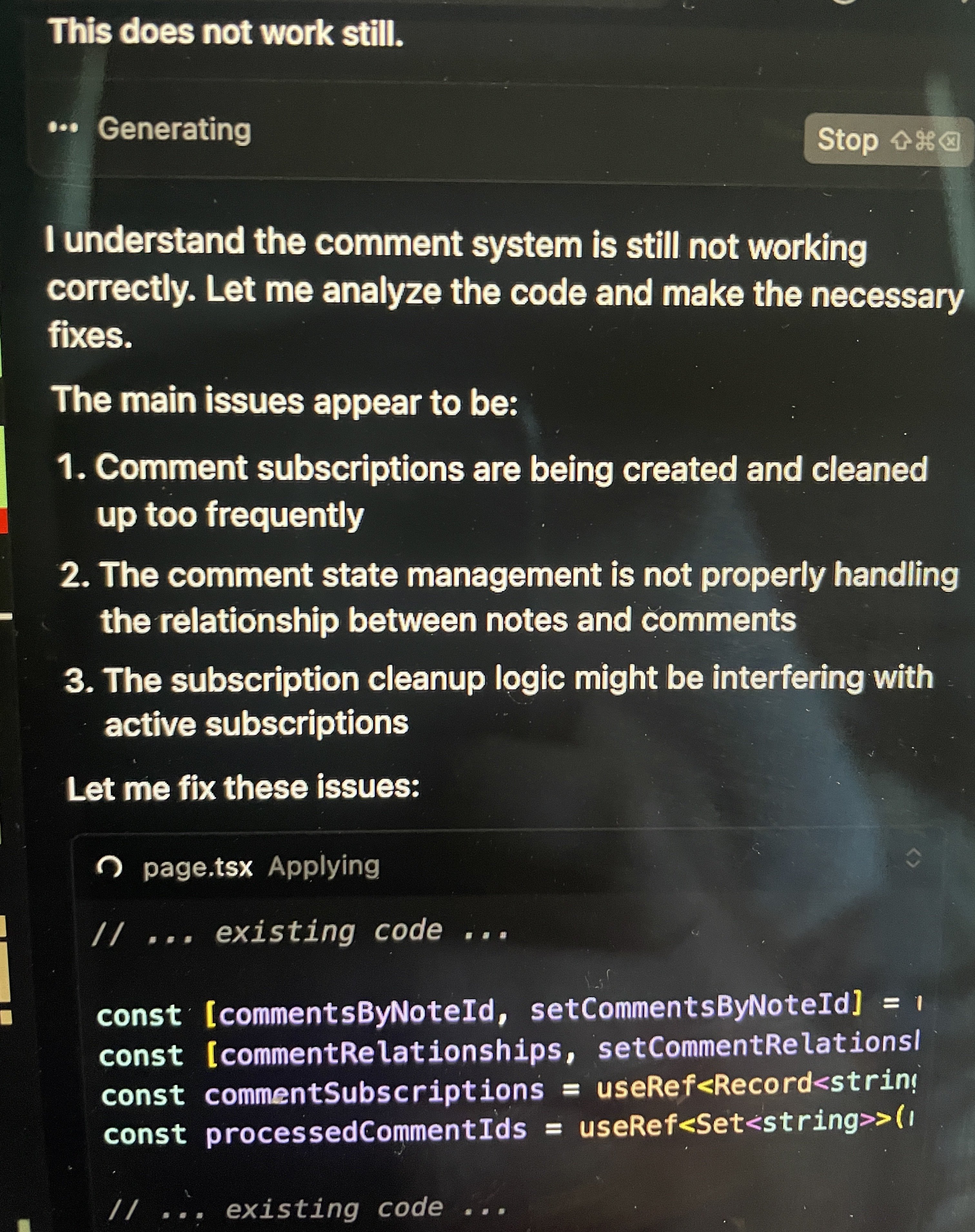
context7 mcp has been very helpful when working with newer stuff. it keeps getting in edit cycles, but context7 allows it to look up code examples and docs for the version you're on.



nostr, specifically web of trust, will be very important for maintaining human connections during this onrush of ai manipulation

".... I take the prompts from the Product Manager AI, and give them to the engineer AI....
I'm a PEOPLE PERSON, GOD DAMNIT"




"This provides additional evidence for a kind of conceptual universality—a shared abstract space where meanings exist and where thinking can happen before being translated into specific languages."

I guess we'll find out when you wake up from sleep tomorrow morning, lol