
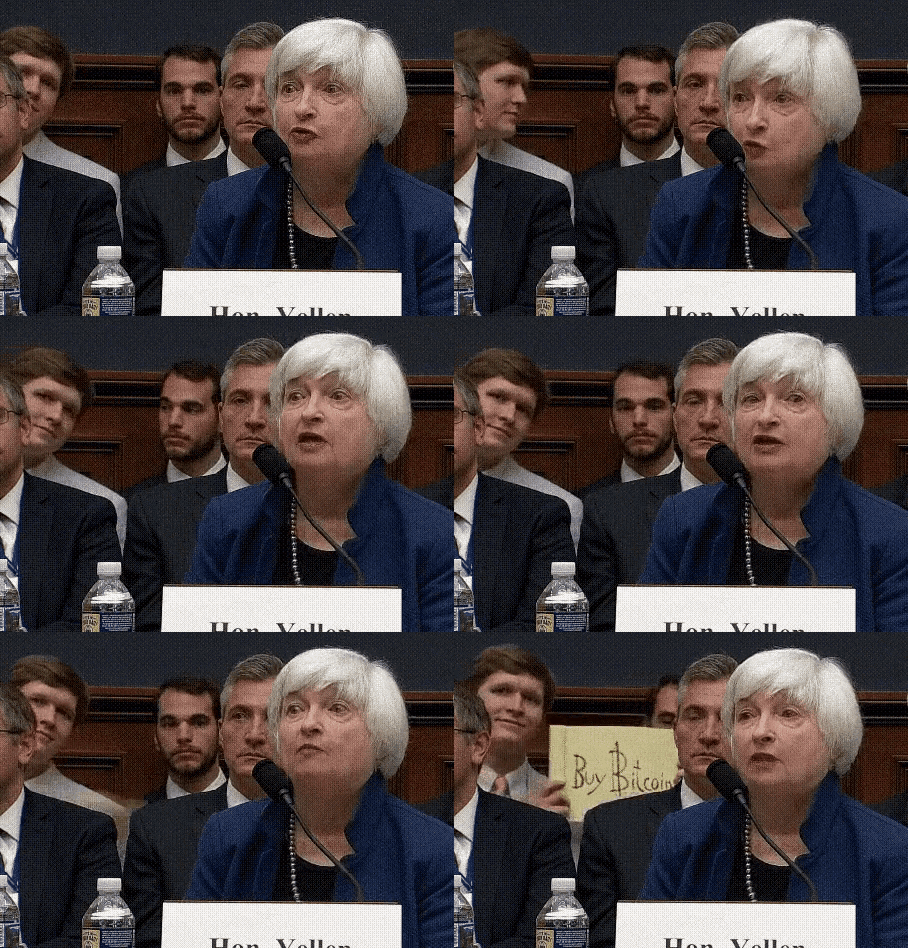


Seems like my AI overlord, Bard, has some semi-solid understanding of basic economics. This has been fun:
Me: It seems like recessions lead to short-term deflation, but long-term inflation as the central bank attempts to stimulate the economy with monetary policy.
Bard: Yes, that is a correct assessment. Recessions can lead to short-term deflation because they typically cause a decrease in demand for goods and services. This decrease in demand can lead to lower prices, as businesses compete to sell their products.
However, central banks often respond to recessions by increasing the money supply. This can lead to long-term inflation, as the increased money supply can cause prices to rise.
For example, the United States experienced a recession in 2008-2009. In response to the recession, the Federal Reserve increased the money supply by a significant amount. This led to a period of low interest rates and economic growth. However, it also led to a period of high inflation, which lasted for several years.
The relationship between recessions and inflation is complex and can vary depending on the specific circumstances of the economy. However, it is generally true that recessions can lead to short-term deflation, but long-term inflation as the central bank attempts to stimulate the economy with monetary policy.
Here are some of the factors that can contribute to long-term inflation after a recession:
Increased government spending: Governments often increase spending during recessions to stimulate the economy. This can lead to an increase in the money supply, which can cause prices to rise.
Increased borrowing: Businesses and consumers may borrow more money during recessions to finance their operations. This can also lead to an increase in the money supply, which can cause prices to rise.
Decreased productivity: Recessions can lead to a decrease in productivity, as businesses may lay off workers or reduce production. This can lead to an increase in prices, as businesses pass on the costs of lower productivity to consumers.
It is important to note that not all recessions lead to long-term inflation. The factors that contribute to inflation after a recession can vary depending on the specific circumstances of the economy.
Seems like my AI overlord, Bard, has some semi-solid understanding of basic economics. This has been fun:
Me: It seems like recessions lead to short-term deflation, but long-term inflation as the central bank attempts to stimulate the economy with monetary policy.
Bard: Yes, that is a correct assessment. Recessions can lead to short-term deflation because they typically cause a decrease in demand for goods and services. This decrease in demand can lead to lower prices, as businesses compete to sell their products.
However, central banks often respond to recessions by increasing the money supply. This can lead to long-term inflation, as the increased money supply can cause prices to rise.
For example, the United States experienced a recession in 2008-2009. In response to the recession, the Federal Reserve increased the money supply by a significant amount. This led to a period of low interest rates and economic growth. However, it also led to a period of high inflation, which lasted for several years.
The relationship between recessions and inflation is complex and can vary depending on the specific circumstances of the economy. However, it is generally true that recessions can lead to short-term deflation, but long-term inflation as the central bank attempts to stimulate the economy with monetary policy.
Here are some of the factors that can contribute to long-term inflation after a recession:
Increased government spending: Governments often increase spending during recessions to stimulate the economy. This can lead to an increase in the money supply, which can cause prices to rise.
Increased borrowing: Businesses and consumers may borrow more money during recessions to finance their operations. This can also lead to an increase in the money supply, which can cause prices to rise.
Decreased productivity: Recessions can lead to a decrease in productivity, as businesses may lay off workers or reduce production. This can lead to an increase in prices, as businesses pass on the costs of lower productivity to consumers.
It is important to note that not all recessions lead to long-term inflation. The factors that contribute to inflation after a recession can vary depending on the specific circumstances of the economy.


Seriously? Hunters work WITH park service and game wardens. The only difference between us and Ranger Rick is a bow/gun/fishing pole.

Last one at the office on Friday? Crank the ‘Beard!
Omg thank you for this. HDD magnets are chrome anyways. Camouflage.
I’ll bring a hammer. 🔮🔨



This camera man is a fuckin legend. 👇
https://nostr.build/av/5bf557f52b8ed0c906631d69142f9626279620bbbe35a89509180354d70dd6f4.mp4
Legend. 🫡

My company is seeking part-time bookkeeping. Could be remote, but based physically in Hanover MD. HMU if you can read a bank statement.
X is as lifeless as Meta was.

Do you really want to live in a world where your biometrics are required for each financial transaction?

https://www.buzzfeednews.com/article/richardnieva/worldcoin-crypto-eyeball-scanning-orb-problems
nostr:npub1sn0wdenkukak0d9dfczzeacvhkrgz92ak56egt7vdgzn8pv2wfqqhrjdv9: https://twitter.com/Snowden/status/1451990496537088000
So, now I’m considering becoming an orb-hunter.
That would slightly hamper the companies data collection efforts, and help free orb operators from the MLM scam they’ve been sucked into. Worth it.
Freedom necessitates risk. Since risk is neither created or destroyed, we either manage it ourselves, or delegate that responsibility to others.
