
Does anyone know how to do a back-of-the-envelop calculation: how much stranded energy exists in the US, what would be the value (in btc or usd) if all of it were used for btc mining, and what would be the associated costs?

I hadn’t heard of ER = EPR, but I like it.
Have you heard of the 4-geon model of elementary particles by Mark Hadley?
“It has been shown by Hadley that the logic of quantum mechanics is consistent with general relativity when closed time-like curves are permitted.”
Closed timelike curves in general relativity are pretty interesting. They give rise to the “grandfather paradox” which Kip Thorne explores in his 1994 book Black Holes and Time Warps.
Ok frens, once we all get the decentralized web figured out, I say our next big project should be to unify QM and general relativity into a single theory.
We should probably try to figure it out before the technological singularity hits, bc who knows what the hell’s gonna happen sixty seconds after that …
Who’s with me? 🤓
Read that and ask yourself HOW THE FUCK CAN THAT BE TRUE.
Feynman, like Einstein, was great at math, but they were physicists first and foremost.
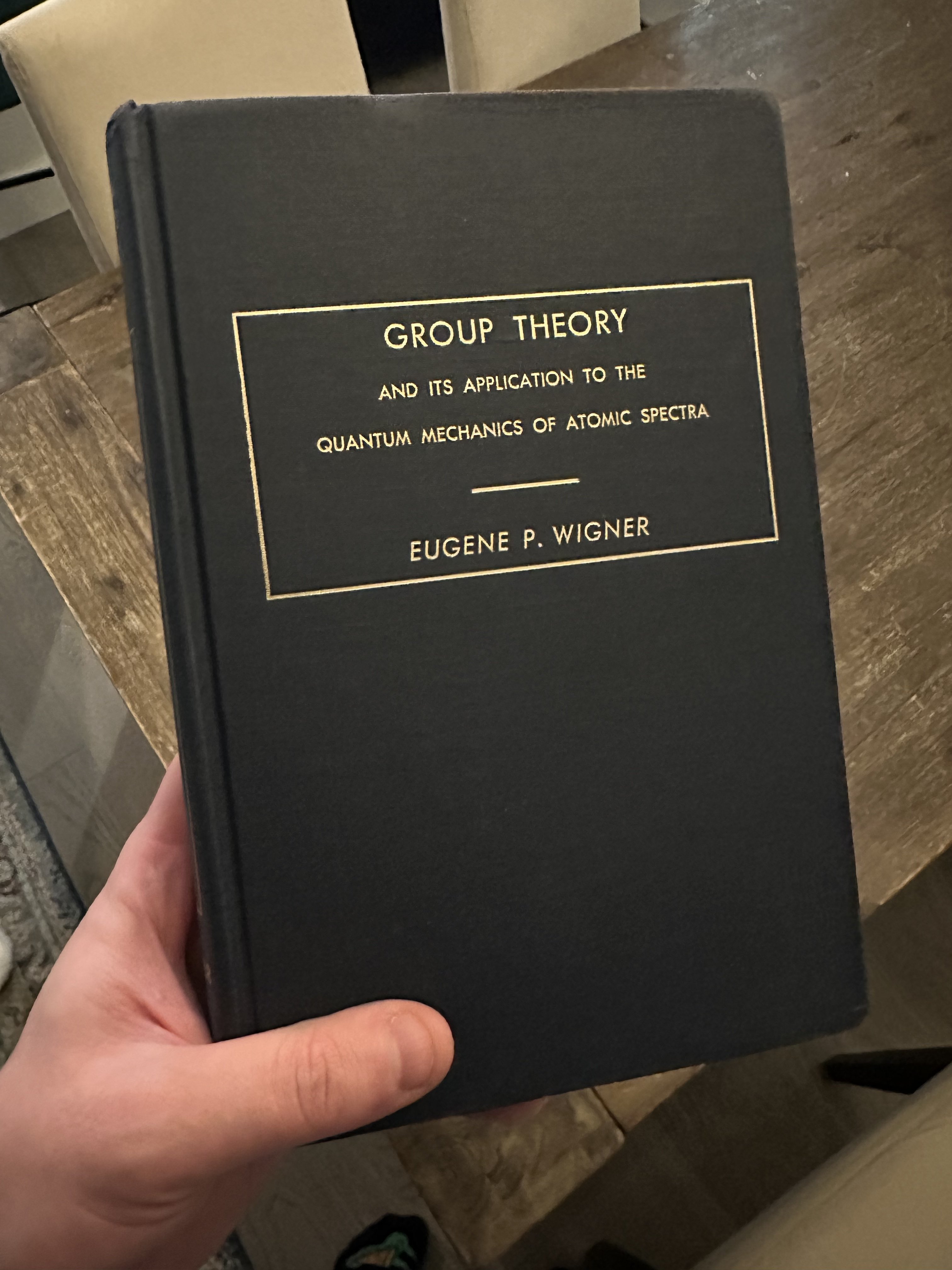
Have you read Feynman’s Lectures on Physics, Vol 3? First few chapters, describing the double slit experiment, at least through to the part about turning the light on and off. Best intro to the mysteries of quantum mechanics in the world.
This figures from the current draft of my paper will help explain the tapestry model / method. 

I haven’t looked into NIP-89 I don’t think so ty for pointing that out. I recall going through NIP-32 a while back and having questions about how Namespaces are (or should be) managed. I think my plan was to wait for its implementation in coracle and elsewhere and come to a better understanding. To me, lists are a precursor to a “concept” which is of central importance to the tapestry model — see the substack link in my previous note for an explanation.

Oh I didn’t even know NIP-51 was rewritten! Ever since my Nostrville talk I’ve been focused on writing up my approach to WoT from a slightly different angle, with some ideas from that talk and some ideas from a 30 minute talk I recorded in 2022, linked in my nostr bio. Title and abstract of my current draft is below. The tapestry method, mentioned in the abstract, is summarized in a series of figures in this post on substack:
I can sympathize a bit with nostr:npub1qfkcklnmes45z75y7y8dkud5yll8vp5eq5ysk9rmgqdxeasv8unsrfj6kq's frustration. When I built my desktop nostr client I found myself doing a lot of reverse engineering from other clients and apps. Particularly when I added support for NIP-51 lists; I remember it being unclear whether to use kind 30000 or 30001 for a list that has both people and events. So I just looked to see what existed in the wild and figured there’s my answer.
Also, it was unclear whether importation of items using the a-tag should be recursive but I couldn’t find anyone who had implemented it so I just did what I thought made the most sense. (Yes to recursive.)
But I also understand that every additional detail that fiatjaf adds to the nip repo is another opportunity to piss someone off, and/or potentially to lock something in that we later discover was a bad idea.

I (like so many) have been obsessed with tackling the decentralized web for many years. It was not until a few years ago that I began to consider that the decentralized curation of human language might have something to teach us.
I call it “social linguistic consensus” — our ability to agree on the methods of communication without the need for a designated centralized authority over any aspect of any of these methods.
In the human realm, the existence of social linguistic consensus is so familiar that it’s easy to overlook how remarkable that it exists at all. Pick a random word from the dictionary or a random rule of grammar and ask: who decided that? Assuming it’s a non controversial detail, the answer is everyone (we all agree) and no one (no one has the power to change or enforce this definition or rule).
But in the digital realm, it’s the reverse. Every repo has a maintainer. Every computer language, every ontology, every standard has someone — a company, a committee, someone — in charge. And the absence of social linguistic consensus in the digital realm is so stark that it’s easy to overlook that it could be any other way.
So I’m writing up a paper right now where I describe what I call the tapestry method, which is a way to represent knowledge (encoded topologically in a graph) and curate knowledge (using a web of trust) designed specifically for the purpose of building social linguistic consensus. I postulate two things: that the central nervous system already uses the tapestry method; and that if we want to build the decentralized web, we ought to build apps that employ the tapestry method.
I’ve already built an app using this method, but it’s too big a task for one person. (Well, maybe Pablo could do it lol … but it’s too big for me!) Needs a team. So I’m hoping my paper will motivate one or more teams to do it.
Some people may have an aesthetic preference between created_at vs createdAt, but most probably don’t care too much and are happy just to be on the same page as everyone else.
But you’d be wrong to extrapolate that every protocol level decision, from the big picture all the way down to the tiniest detail, has some solution that everyone in the world would be perfectly happy to use. Controversies abound.
The point is that one small detail can effectively break the whole app. Look at NIP-01. If you change created_at to createdAt, which is just one tiny detail, you’re gonna end up with an entirely new nostr community that has zero overlap with the existing one. Rigid. Brittle.

Andor season 1 wasn’t too bad either. Not sure when season 2 will come out.
I’m just now reading some of your other posts, eg where you say:
“My entire argument is that I'd like a clearer description of the thing that was implemented, so that I know if my own implementation counts as the same thing or a new thing.”
This is a reasonable and understandable thing to want. But it’s worth asking: who decides — especially if there’s a controversy? Who’s in charge? Fiatjaf, I suppose. But is that how we want it to be? Someone who makes decisions that we are all obliged to follow?
So this is where I’d point out some of the tradeoffs between a centralized vs a decentralized set of communication tools. Decentralized tools must necessarily be highly tolerant of ambiguity. We see this in human language. They must be flexible bc there’s no one in charge to enforce specs, definitions, etc on everyone else in case of controversy.
Why can a misplaced comma “break” an entire app? Bc centralized languages are not designed to tolerate deviation from The Rules. Human language, on the other hand, is designed to be robust: conversation doesn’t come to a screeching halt just bc conversants disagree on some minor (or even major) detail regarding definitions, grammatical rules, etc.
We need to learn how to make digital tools truly decentralized: flexible, robust, and tolerant of ambiguity, just like the spoken word. Nostr is the closest I’ve seen but we’re still VERY far from it.
(Strange, I thought this message had been lost, which is why I repeated myself a bit in my next note 🤷🏻♂️😅)
Human languages worked fine for millennia without being written down at all. This was true for words and grammatical rules regardless of how many people used them. The main reason to develop the written word is so you can record thoughts and ideas and transmit them across space and time.
Human languages don’t need to be written down at all. They worked remarkably well even before the invention of writing.
And not so hard to imagine a family or small tribe who develop a few spoken words or phrases that they use only among themselves.
Human languages have the ability to combine, superimpose, and overlap in a way you don’t see with today’s digital tools. Example: you can start with basic English rules and vocabulary, then superimpose Southern dialect, then superimpose some words you only find in Nashville, then superimpose a few words or phrases that have special meaning within your circle of friends, etc. The flexibility is remarkable.
I’m not sure I’m following the distinction you’re making.
Digital tools of communication (computer languages, protocols, specifications, etc) and human languages have this in common: they both exist to raise and clarify interaction between a maximum number of individuals. Wouldn’t you say?
In the meantime, here’s the Spotify link