


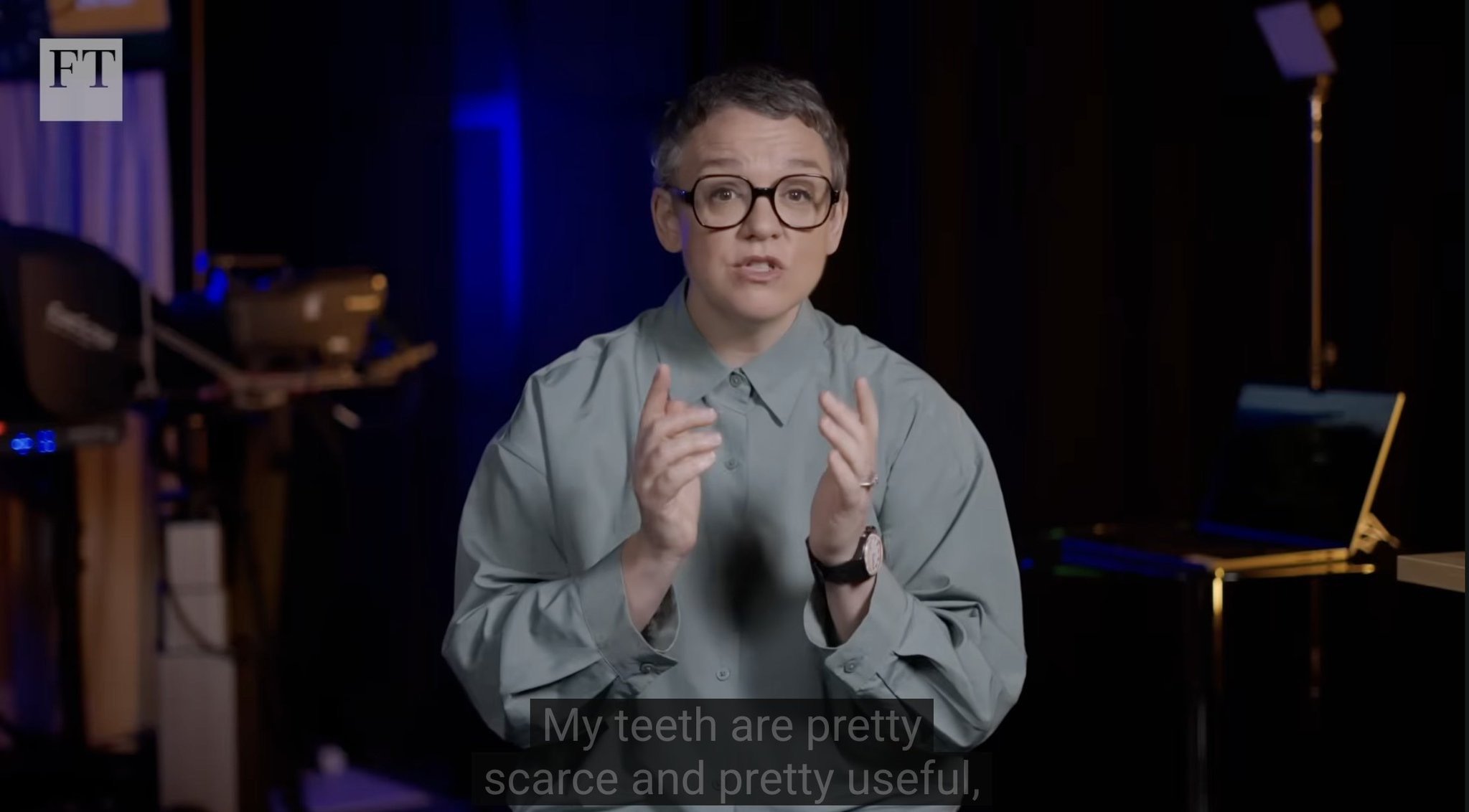
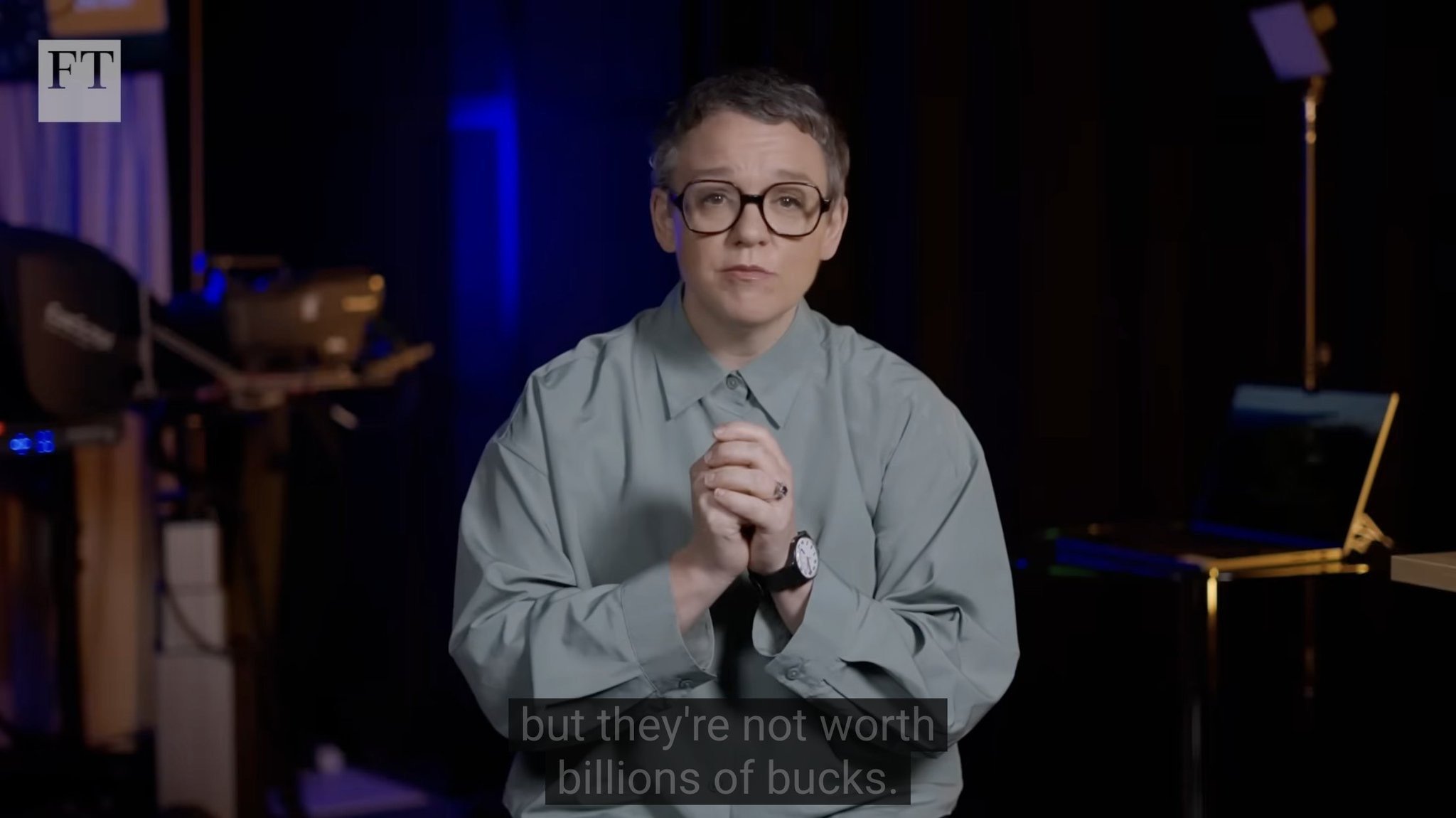

⚡️🇺🇸👀 WATCH - The Financial Times released a new film, “Michael Saylor’s $40BN #Bitcoin Bet.”
https://blossom.primal.net/8d033e2a545580d0336332b213f3f1e38a8305da0ae0109e84c3efff81600409.mp4
Shared my thoughts on this nostr:nprofile1qqsy67zzq5tc9cxnl6crf52s4hptdwhyaca5j7r8jwll535tdadedvcpz3mhxue69uhhyetvv9ujuerpd46hxtnfduqs6amnwvaz7tmwdaejumr0dskjh2zd
nevent1qqsdz82u7pvj7w22fk38mxd4fcmukv4wyrxfj8f6zg7m92yacc4gstg8e3z6x

Have you seen the recent Financial Times film about Saylor and Strategy?
I would cautiously describe it as a neutral piece..
We know that legacy (financial) media has been criticizing Bitcoin ever since. In my perception, it has improved slightly, perhaps due to the bull market phenomenon. This includes the FT.
Still, they admit that they have no idea about Bitcoin (Cudos!) and think that it has no obvious use case and is therefore an inherently speculative bet.
They don't understand the scarcity aspect of Bitcoin. They cannot see why Bitcoin won't forever "go up" in fiat terms.
Unless they can separate Bitcoin from "crypto," I have little hope that they will realize the key innovations brought forth with Bitcoin.
They will surely come around at some point, as some individual commentators already have.
As for MSTR, they still describe it as a meme stock. I'm not sure one can fully understand Saylor's financial engineering without having a solid understanding of Bitcoin.
Time will tell how MSTR and its other financial products will hold up during upcoming bear markets, and it remains to be seen how other companies will implement this playbook.
This is where I see the risk arising. Bandwagoners jumping on something they don't understand or cannot make work.
The FT would be best advised to finally study Bitcoin in depth. Can't wait for them to announce their Bitcoin Strategy.


Any chance to get a copy of the deck in full?

That’s where it appears to be going

Boom.
nevent1qqs8uttdgz54df86xe0v2r985nn7rt8ltwf35qvvj67mfqp7gd7c8gqfmtgt2
Why are there180 different currencies in the world?


On Multinut payments by nostr:nprofile1qqsywt6ypu57lxtwj2scdwxnyrl3sry9typcstje65x7rw9a2e5nq8sprpmhxue69uhhyetvv9ujuumwdae8gtnnda3kjctvqydhwumn8ghj7un9d3shjtnzd96xxmmfdecxzunt9e3k7mgpp4mhxue69uhkummn9ekx7mq9hxafw
"Imagine having to pay a landscaper for doing work and you have money on Cash App, Venmo, and PayPal, all of which you don't fully trust. However, you keep a small balance on each of them just in case you need to spend between friends or with certain vendors. The landscaping bill is a bit heftier than it typically is, so instead of sending funds from Cash App, Venmo, and PayPal to your bank account to then pay the landscaper instead, you combine part of the balance from each application to pay the singular invoice the landscaper has provided you. That is essentially what has just been launched on the Cashu protocol.
...
Most are completely missing it, but the cypherpunk future is being built out right before our eyes."
Gotta love the compliance team!
For a workshop on a regulatory regime and the client's existing internal status quo, they bring a spreadsheet that, if printed on paper, would span the length and width of the conference room where the workshop is being held.
Wish I could share this spreadsheet here for your amusement.
share this with your favorite “Bitcoin is too volatile” skeptic

How is MSTR investing top Bitcoin news? nostr:nprofile1qqs9n7lwwd5a7acnmwl6nw7mpzfvvt46j2fryc2udle8sldrsn9hwrcprpmhxue69uhkummnw3ezuendwsh8w6t69e3xj730qy88wumn8ghj7mn0wvhxcmmv9u8gj0sm 🧐

I know some excellent Bitcoiners at Boerse Stuttgart.
I wish they would drop the crypto/shitcoin part and focus on Bitcoin, but they're doing great work for adoption in Germany.

"Sad but true" (James Hetfield voice).
There are so many of us who care and will advance this forward. Europe will eventually turn around.


Part of my lovely fiat consulting job is attending industry (digital asset and banking) conferences.
Nowhere near as energizing and high signal as bitcoin conferences, and fellow maxis would say a total waste of time, but still an opportunity to talk to clients and other attendees about the future of money.
I am always fascinated by people's lack of knowledge about bitcoin, even though they call themselves "thought leaders" or "digital asset experts" or even "blockchain experts".
These people (mostly bankers and fintech bros) are obsessed with tokenization, stable coins, and the digital euro. It's a challenge to discuss use cases and solutions to problems, and have them see bitcoin as that use case or solution.
There is a lot of educational work to be done here. One can only do so much, and I honestly believe that those who are not willing to learn will eventually be forced to, as we know very well.

Where exactly is this stated?




Yes. Cash is still king
nostr:nevent1qqsvs55vq8xmkt636ujgj9lgjrsu20fcznal6p9uahd8armplhzhx9cmh2m7y
Nobody checks a bank's credit rating when opening an account anymore.
And why is that?
You don't have to worry about a bank failing because your deposits are insured.
That doesn't exist with bitcoin.