
I liked that book
I think often whether a certain piece of advice is good depends on the person to whom it is being given
For 4 agreements, if you take everything personally and get over-invested in everything that happens, being told not to take things personally and that your attitude will shape your experience is probably very helpful. If you're already a total hippie maybe you need to be told to invest in your own future.
Similarly, if you're a huge people-pleaser reading Ayn Rand & taking the message "it's OK to care for your own well-being" is probably very healthy. If you're a jerk reading Ayn Rand & taking the message "it's great not to care about others at all", it will probably make you pretty unpleasant to be around.
I believe that message is from YouTube, not from Inv

IIRC women are supposed to have an advantage in endurance swimming due to higher body fat

test-demic + normal seasonal "flu" deaths classed as Covid deaths

You make a good point, we should get rid of women's categories

Every race is a sprint

in sports with a possibility of serious physical contact / collision, absolutely
in sports where there's no direct contact I think it's fine (if you wanna lose a footrace or ski jump or whatever, go for it)

For pure theory here are 3 good options:
Per Bylund's Primer: How to think about the economy (easy)
https://mises.org/library/book/how-think-about-economy-primer
Henry Hazlitt's Economics in one lesson (intermediate)
https://www.liberalstudies.ca/wp-content/uploads/2014/11/Economics-in-One-Lesson_2.pdf
Ludwig von Mises' Human Action (hard but great)
https://mises.org/library/book/human-action
A couple of honorable mentions:
I think Rothbard's economic history is also excellent, eg. America's Great Depression
https://mises.org/library/book/americas-great-depression
Finally Bohm-Bawerk's refutations are especially skillful, eg. Karl Marx and the Close of his System
https://mises.org/library/book/karl-marx-and-close-his-system
The woman knew she was getting in the ring with a man, it's her fault too

the best cure for race blindness is living in an African neighborhood
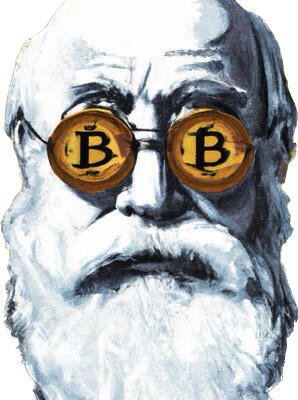


If I want to proselytize (I don't) I go on Twitter
If I want to speak to people who already understand freedom, I go on nostr
Not really
The decision you're thinking of is probably Citizens United v FEC
https://en.wikipedia.org/wiki/Citizens_United_v._FEC
The SCOTUS majority opinion was that when people join together into a corporation they retain their free speech rights.
The actual case was about a group airing a documentary critical of Hillary Clinton shortly before the 2008 US elections. The FEC ruled that it was election spending and thus subject to strict limits, while SCOTUS ruled it was political speech protected by 1A. Notably, the FEC had ruled in previous legal encounters with the group that Democrat documentaries critical of Republican figures were not election spending.

"No Man's Life, Liberty or Property are Safe while the Legislature is in Session"

Build a man a fire, keep him warm for a day
Set a man on fire, keep him warm for the rest of his life