

People get sick, our "germ theory" failed so it must just be a smaller germ
Same issue with particle physics - the collider doesn't find the particles we predict so they must be smaller than we thought


Our ancestors lost a foot of height and 10% brain mass when they started eating grain.
You implicitly admit the amount of sugar is what matters, and ignore the fact that modern processed food (including bread) has an order of magnitude more refined sugar than the foods of our grandparents.
If the "long" history of human grain consumption (a blink of an eye compared to our millions of years eating meat) shows the relative safety of grain, why does the short history of seed oil consumption (less than 200 years) not indicate a lack of such safety?
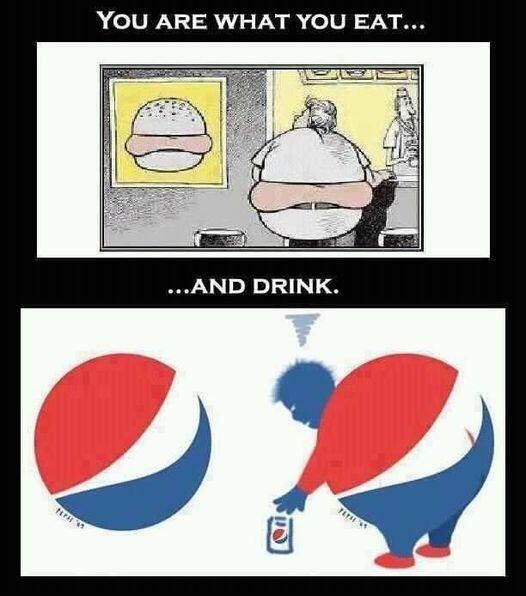
the buns are usually the worst part (grain, seed oils, sugar)


Sounds great, how much will 10 kilograms cost me?
https://barsoom.substack.com/p/the-eye-at-the-end-of-time
I recommend the first half of this (before the subscriber shill) and not the second half
I think there's a more fundamental division to be made here, rather than future vs past or Jesus vs "Progress" (which after all are not so different... being judged at the end of the world vs at the end of time)
Instead, I think the division is between subjective and objective, or more fundamentally between a reality that exists here and now independent of consciousness and a "reality" that is subordinate to consciousness. The "Eye at the End of Time" posits morality as something to be judged by a conscious observer (hence "Eye"). In contrast I view morality as part of reality - this works, that doesn't. This leads to flourishing, that does not.
I think this distinction (between a world of consciousness and a world of existence) is the fundamental philosophic and political distinction. The left supports group consciousness (an impossibility) while the traditional right supports divine consciousness (also an impossibility). Those who support reality for its own sake are rogues and hermits.
Well we've reached N of 1, at least
I have a graduate degree in economics & (more importantly) have spent thousands of hours studying (mostly Austrian) economics since then
I am of the opinion that Bitcoin is economically illiterate and it will be to the great shame of Austrian economists to have ever supported it
I regard Bitcoin as a better form of fiat - a "nothing" but with better rules than the dominant "nothing"
Also, do you imagine that Peter Schiff hasn't spent thousands of hours studying money?

The point is that any fluctuation at all means the Bitcoin doesn't represent a specific unit of computing power.
If the dollar is just a name for a certain weight of silver (as it was in 1780) then any fluctuation at all makes the label "dollar" meaningless.
This may seem strange, but let's use a different unit: the gram. If I promise to pay you 10 grams of gold 2 years in a row, and I give you 2 different masses of gold, then either I've cheated you or "gram" is just a measure of whim (or both, especially if it's my whim).
So if "Bitcoin" is a monetary unit that represents 10 petaflops of compute, and then next year it represents 8 petaflops, it's not really a unit at all. Similarly, a "dollar" that represents 10 grams one year and 8 grams the next isn't actually a unit.
There's a huge selection bias there.
If I take 10 hours to study Bitcoin and conclude that it is impressive from a cryptographic point of view but economically illiterate, why would I then spend thousands of further hours studying it?

Bitcoin aren't fungible - each UTXO can be tracked on the blockchain
What can you do with Bitcoins? Are they good to eat? Perhaps you can melt them down and make useful tools?
The computers have value, yes.
But how much of that power does a certain unit of Bitcoin buy me?
If the answer depends on the conversion rate between fiat and Bitcoin, that power cannot be the source of the value of Bitcoin (because it would provide the valuation at an arbitrary and fluctuating rate)
Subjective value doesn't mean it's just made up, it means it relates to the subject.
So if I have one gallon of water, I will put it to the most highly-valued use available to me (probably drinking it so I don't die)
If I get a second gallon, I will put it to the second-most-highly-valued use (which might be different than your second most highly valued use)
So the value of the water is subjective (it depends on who is getting it, how much water they already have, and what uses that person can imagine to which to put the water)
But it's also objective in that if you knew all the uses of water available to me and how I rank them in terms of the satisfaction of my needs, you could predict how I will use the water, and there is an objectively correct usage of a given volume of water (conditional on knowing the unknowable)
Bitcoin has no physical form and therefore no subjective or objective use. The first unit of Bitcoin I get doesn't allow me to do anything whatsoever, nor does the second, nor does any further amount. It's true that I can sign the chain to create new UTXOs for the next person, but that person also has no use for Bitcoin. The whole thing looks reasonable only in comparison to centralized fiat currency, in which the same drawbacks apply plus a privileged group is allowed to monkey with the system.
A thought experiment: Suppose Satoshi had promised to pay 1 Bitcoin for each Bitcoin mined, and the ledger tracks how much Bitcoin he owes you for maintaining his records, rather than being the "money" itself. Then suppose Satoshi disappeared and it became apparent he would never pay. Presumably the value of these promises would go to zero when it becomes obvious they would not be fulfilled. But, how is that any different from the current system?


I'm partial to the double conspiracy theory
(that neocons blew a hole in the Pentagon but Israelis learned about the plan and destroyed the towers)

The victory of reality over delusion is inevitable