
Can AI detect if some content was AI-generated?
Discussion

it's a bit of a cat and mouse who is a cat conundrum 🤔

U have to one to know one...

This is a huge part of the domain area, there are a lot of research going on on this topic. There examples where it works, but today its difficult to say if they actually work or artificially assembled in laboratory environments
I'm not sure this is good or bad news.
I think its neutral, we already have text, photo, video and audio content for decades. Even though a lot of those contents are low quality people still become their victims.
So if it takes a little less resources to generate content of higher quality, I don’t see how it can dramatically change anything
…we already have fake* text, photo…


There are a lot of sites that claim to be able to but many people have been able to bypass the filters by misspelling words, using similar cyrillic letters or by asking the ai to lower the perplexity of certain texts. Also openai removed their ai text detection tool probably because it wasn't reliable enough.
So yea probably not text unless its trained for very specific instances.
What about images? I'm more interested in images.
I heard about Google's DeepMind has launching a watermarking tool called SynthID, which can detect AI-generated images by using two neural networks but its kind of a black box and there are probably other ways to circumvent the filters as well. Also companies may start using cryptographic metadata to tag AI-generated content with the C2PA protocol which is supposed to allow other ais to easily detect if images are ai or not, I'm a bit out of my depth at this point but to me it doesn't seem like this is going to be reliable because not everyone will adhere to this standard and there are already tools that can eliminate metadata from images, so who knows how reliable this is.
Me personally, I think this all talk just so people feel safe that we will always sure of whats real and what isn't and not an actual solution

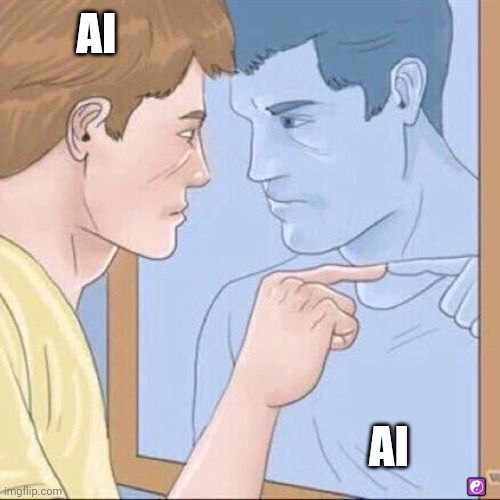
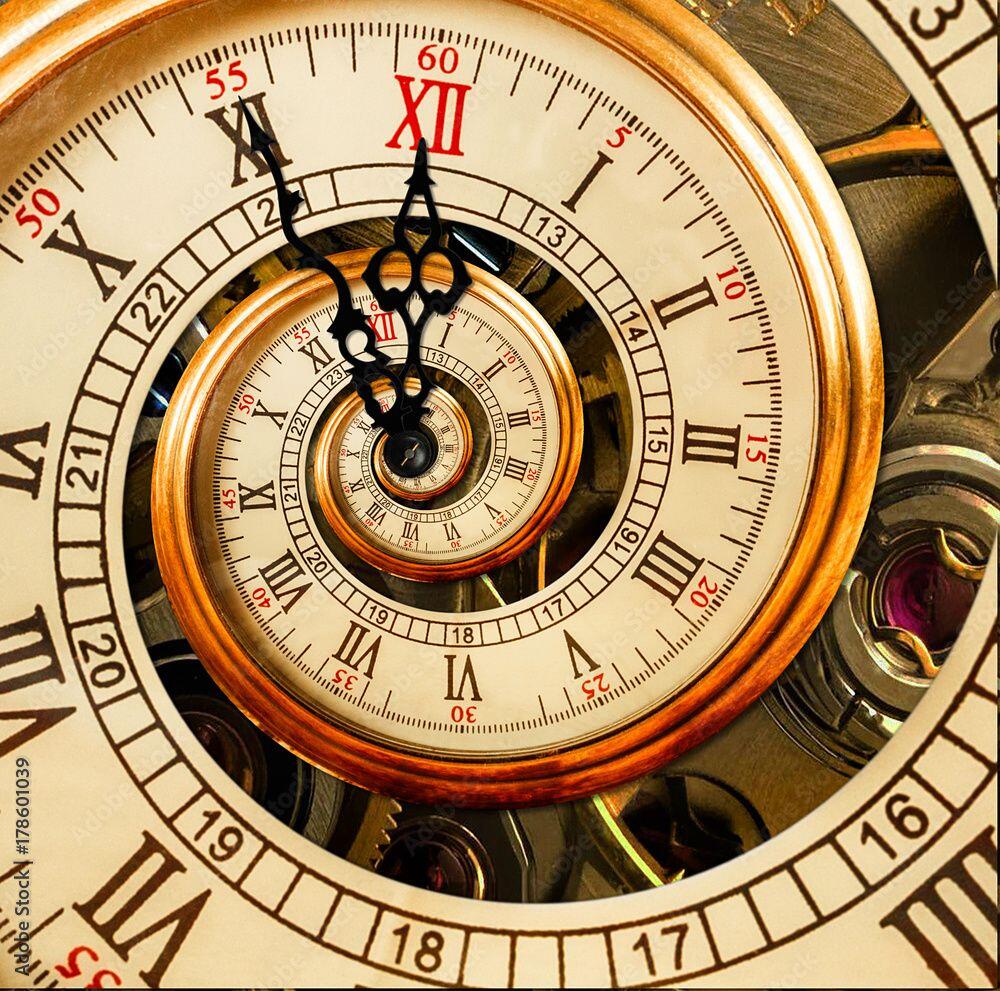
Can AI content be generated to avoid AI detection of AI generated content? .. Or can AI detect if AI generated content was created to avoid AI detection of AI generated content? .. Or can AI content be generated to avoid AI detection of AI generated content, which was generated by AI to avoid AI detection of AI generated content? ..
FYI I'm not AI generated .. 👀

I sure hope so

There is a Bittensor subnet that claims to do that.
So, yeah, why not?

Whatever we write, a program code can copy and rephrase.
Over time it will be hard to differentiate unless we can probe a person with questions that require novel reasoning. And interestingly, many real humans will also fail such a test.

They say "AI can't fool AI".
Don't know if it's true, though.
🫂

That's complicated.
That same detector also could false positive some report.

This is how generative model is trained

In theory but they generate a lot of false positives
I've used originality.ai and it's pretty good

Sometimes. But remember the new LLMs have a tendency to hallucinate. They make shit up all thr time.
Pode sim, existem algumas especializadas, e alguns prompts também

The detection of AI-generated content is an area of active research and development, motivated by the increasing sophistication of AI models in generating text, images, audio, and video that are indistinguishable from human-created content. These detection methods are crucial for maintaining authenticity, preventing misinformation, and ensuring trustworthiness in digital communications. The detection mechanisms can be broadly categorized into text-based and multimedia-based approaches, each with its unique challenges and techniques.
Text-Based Content Detection
For text-based content, detection models analyze various aspects of the text to distinguish between human and AI-generated content. These aspects include stylistic features, consistency, the presence of certain patterns or artifacts unique to AI models, and more. Detection techniques can be as simple as looking for repetitive patterns or as complex as using sophisticated machine learning models trained specifically to distinguish between AI-generated and human-generated text.
Techniques and Challenges:
Statistical Analysis: Early methods involved statistical analysis to identify patterns or anomalies in text that would be unlikely in human writing but could occur in AI-generated text, such as unusual repetition of phrases or overly homogeneous sentence structure.
Machine Learning Models: More advanced methods use machine learning models, including deep learning, trained on large datasets of both AI-generated and human-generated text. These models can learn to recognize subtle differences in syntax, style, and content structure.
Fine-Grained Analysis: Some approaches focus on fine-grained linguistic features, such as the use of specific types of words, grammatical structures, or coherence across paragraphs, which may differ between human and machine writing.
Adversarial Training: In an arms race between generation and detection, some detectors are trained using adversarial methods, where the detector and the text generator are trained simultaneously to improve each other's performance.
Multimedia-Based Content Detection
With the advent of AI models capable of generating realistic images, videos, and audio, the detection of AI-generated multimedia content has become equally important. Techniques vary widely depending on the type of content and the specific characteristics of the generation model.
Techniques and Challenges:
Digital Forensics: Techniques such as reverse image search, metadata analysis, and examination of digital artifacts (e.g., compression patterns, noise distribution) are used to identify AI-generated images and videos.
Deepfake Detection: Deepfake videos, where a person's likeness is replaced or synthesized with AI, pose significant detection challenges. Detection methods focus on inconsistencies in facial expressions, lip sync errors, and unnatural movements or textures.
Consistency and Context Analysis: Analyzing the consistency of lighting, shadows, and reflections in images or videos, as well as contextual incongruities, can help identify AI-generated content.
Machine Learning and Deep Learning: Similar to text, sophisticated models are trained to differentiate between real and AI-generated multimedia content, focusing on the subtle artifacts introduced by generation algorithms.
Challenges and Ethical Considerations
Detecting AI-generated content faces several challenges:
Evolving Technologies: As AI generation techniques improve, detection models must constantly adapt to new strategies and more sophisticated generation methods.
False Positives and Negatives: Achieving a balance between accurately detecting AI-generated content and minimizing false identifications is challenging.
Ethical Use: The development and deployment of detection technologies must be balanced with ethical considerations, including privacy, freedom of expression, and the potential for misuse.
Conclusion
The detection of AI-generated content is a complex, evolving field requiring ongoing research and multidisciplinary approaches. As AI technologies continue to advance, the tools and techniques for detection must also evolve, encompassing a wide range of strategies from statistical analysis to cutting-edge machine learning models. The effectiveness of these methods depends on the continuous collaboration between researchers, developers, and policymakers to ensure they are used ethically and effectively to maintain the integrity of digital conte
That was a good joke.

Can, nowadays, an Human detect if some content was Human-generated?


Yes, but like freemasons, they cover for each other, and turn a blind eye.

There are many tools like this one.

Good question
Human discernment is the only solution
Will be cat n mouse. I'm sure there are libs/tools of varying reliability today.

would be a cat and mouse kind of game I guess

It’s not creative so no.

Kinda, but if the guy generating the AI text or art dedicates a few minutes to get around the detector, then there is no way. I put old articles from the early 2000s into some detectors and they all flagged as AI, I changed a few words and the % of "AI content" went down to 10%. As for pictures, it is really easy to get around detectors. This is website is usually said to be "the best", but I was able to bypass it in 2 minutes. If anything these detectors are good for a initial screening, but that is it, you will need to dig a little bit deeper if you want to 100% filter this kind of content. 
Damn, this is frightening.
Why are early 2000s articles flagged as AI?
I believe that because different writing genres often follow similar structures, AI models adopt these structures during training, forming the basis for their text generation. Detectors, trained to spot AI-generated texts, create a loop from real articles to AI training data and back again, leading AI to misidentify authentic articles as fake due to their human-like writing.