You are not ready to read this, I know.

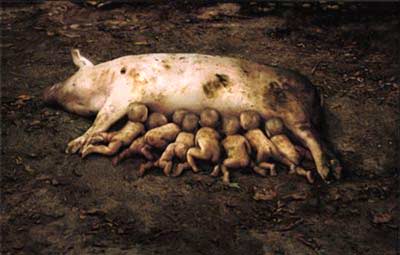
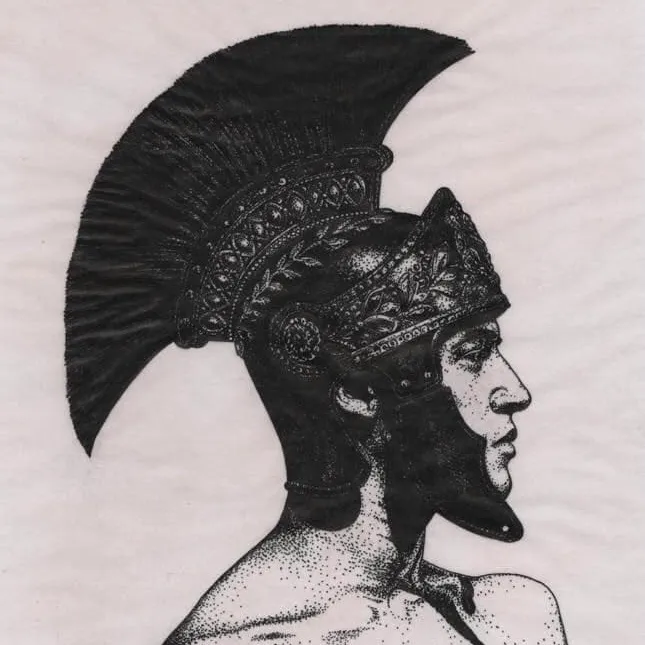
Three historical figures who fought against communism, history has sold them to you as the bad guys.

They obviously did bad things, but they have hidden all the bad things the victors did that were much worse.

All the communist deaths are whitewashed and there have been many more.

Now you can call me fascist and nazi, only I am not, unlike "normal" people, I read history and history is not black and white, it is not good and bad, be wary of any story that sells you this.

Study the fuck up, read, learn, don't let them fool you, form your own narrative not the bullshit they sell you in school.

All states are garbage, defend yourself and your own family.

#Bitcoin.

Reply to this note

Please Login to reply.

Discussion

The guy in the middle led the National Socialist party (research what NAZI was an acronym for) in Germany and then leveraged the power of the state in an attempt to exterminate an entire people. How was that “fighting communism”?

Well I see you have only read the history of the victors, I have little to argue with you.

Do you know how many Germans died at the hands of the Allies? Isn't it? Even after the war was over?

Much is said about the Nazi concentration camps, little is said about the Allied concentration camps.

I'll give you a hint, the Allies killed more Germans than the Germans killed Allies and Jews....

But keep believing the story of good guys and bad guys...because then you don't understand my message at all.

You didn’t respond to my point about Hitler being the head of Germany’s socialist party and abusing his power, like many at the head of socialist or communist parties do.

Even if what you’re saying is true about “allied concentration camps,” the Germans were literally slaughtering people en masse. The allies didn’t randomly choose to invade Germany and start killing Germans, like the way you’re framing it. They were trying to stop an authoritarian madman from killing millions of people.

You're just spouting the simplistic official narrative.

Tell me what good books you've read about WWII.

I am perfectly ready and happy to question everything. I don't doubt there is a lot of propaganda around WW2 and it makes sense that it would be skewing things in favour of the Allies.

I struggle to equate Germans killed by the Allies with Hitler's genocide of the Jews however, as the Allies were at war with Hitler. They all targeted each other's civilians, those were the rules of engagement back then. Since Germany lost the war one can expect they suffered more casualties (if the numbers in the book are right!). Hitler was not at war with the Jews, there wasn't even have a Jewish state back then.

A quick search however says Russia alone suffered more than twice the total German casualties, so something doesn't add up. https://www.nationalww2museum.org/students-teachers/student-resources/research-starters/research-starters-worldwide-deaths-world-war

Where did you get the numbers for German and Allied deaths?

Paradoxically, what Israel is now doing to Palestinians is the closest thing we have seen to Hitler's persecution of Jews.

the guy was very racist. He identified jews as the sources and main drivers of communism at the time and generalized this to the whole race. At the time communists were mass-murdering and committing genocides. The anti-communist motivation should be obvious for anyone who is not trying to ignore it.

fascism is nothing else than national communism

Yes well, the reality is that all states are communist, only that some focus on their country and others want to export their shit outside.

As long as they force me to pay for someone else it's Communism. All redistribution by force is Communism! No one should support that!

🎯

Hitler hated capitalism. He pursued a national and fascist policy. He sought hatred and blame among the Jews. NationalSOCIALISM is crap.

The state is the biggest gang and the biggest gang has too much power. Whether Hitler, Stalin, Mussolini, Mao etc..

Dictators and power over the masses are not a good alternative.

Read - Gustave Le Bon's "The Psychology of Crowds".

I'd argue Facism vs Socialism was akin to a civil war, much like the May Days in Barcelona (https://warwick.ac.uk/services/library/mrc/archives_online/digital/scw/may/) given the socialist roots of fascism (see Giovanni Gentile).

That said it is 💯 true they fought Soviet Socialism.

I enjoy many of your notes and the direction of your views resonates with mine often. For notes like this one I trust it could help the following discussion if you would choose a long-form note and elaborate more on it. Factually this note seems wrong to me but I sense you want to express something more than is written there.

It is difficult to express it all, but to synthesize so that there are no misunderstandings.

- History is written by the victors, there are many false narratives around the second world war as in other historical events, if you do not keep this in mind you swallow a totally distorted version of reality.

- There are no good guys and bad guys, from my point of view they are all bad guys.

- They are all bad because statism is bad.

- Some said they fought against communism but in reality they were also communists, states are inherently communist, in the same way the same people who fought against the USSR in the 80's were communists.

- It is really a struggle between the individual and the state.

- I find the account of the second world war useful because if you go deeper you realize the amount of lies, and it makes you question the current authority.

“History is written by the victors”, agree, that is the important part here, because in retrospect we can see all the atrocities of the wars and regimes, but those are not fully controlled and are sparked by the chaos of sudden change of direction of the huge states and millions of people, of which many are sick to the bone, but then there is no stopping of it and each new atrocity is just one more turn of the screw on a way to the previously intended goal. There is no way back. After all the dust settle, the victors forbid, decentivize and socially discourage a proper review of all the acts. Even less teaching the complexity in schools, because the ambiguity of events (not values) is undesirable for any new regime due to a limited time for establishing itself in a matter of one or two decades. It’s not black&white except of killing and stealing. And I agree that all states are guilty of the latter one. Who doesn’t fight wars? Owners of the mines and real estates that are being protected by the citizens who didn’t opt-in but been born-in.

Yes, war has to be the easiest way to control a people - and I guess its not limited to the hot phase where you demonise your enemy because you're fighting them etc, but its then natural to build on that deception to make a peacetime control structure.

I only just really started to appreciate this, particularly in respect of ww2. When you've seen how the state lies to further its interest even in something like covid, when we have the internet and the truth can now get out, its easy to see how total their control would have been after ww2 - and how irresistible the temptation to use that.

"History is a set of lies agreed upon."

-- Napoleon Bonaparte

Curiously, yesterday I recovered a video I was unable to finish watching nine years ago. The devastation and aftermath that can be seen are filthy 😔

https://youtu.be/R5i9k7s9X_A?si=gF2SjjkKv2WDWBE9

they all are bad guys

🎯

Socialists fighting socialists, we should just let them all kill each other, quite frankly.

"Study the fuck up!" - brilliant.

The hyperinflation in the Weimar Republic during the early 1920s and the onset of World War II are connected through a series of political, economic, and social factors that contributed to the rise of extremist movements in Germany, particularly the Nazi Party.

1. **Economic Instability**: After World War I, Germany faced severe economic challenges, including the burden of reparations imposed by the Treaty of Versailles. The hyperinflation that peaked in 1923 devastated the German economy, wiping out savings and leading to widespread poverty and unemployment. This economic instability created a fertile ground for political extremism.

2. **Social Discontent**: The hyperinflation caused significant social unrest and discontent among the German populace. Many people felt betrayed by their government and the Treaty of Versailles, which they believed had humiliated Germany. This discontent was exploited by radical political groups, including the Nazis, who promised to restore national pride and economic stability.

3. **Rise of the Nazi Party**: The economic turmoil and social unrest allowed the Nazi Party, led by Adolf Hitler, to gain support by promoting nationalist and anti-Semitic rhetoric. They capitalized on the public's desire for a strong leader who could restore Germany's former glory and address the economic crisis. The Nazis promised to reverse the effects of the Treaty of Versailles and rebuild the economy.

4. **Political Instability**: The Weimar Republic was marked by political fragmentation and instability, with numerous parties vying for power. The economic crisis weakened the democratic institutions, making it easier for the Nazis to gain influence and eventually seize power in 1933.

5. **Militarization and Expansionism**: Once in power, the Nazis pursued aggressive militarization and expansionist policies, which ultimately led to the outbreak of World War II. The desire to reclaim lost territories and assert Germany's dominance in Europe was fueled by the nationalistic sentiments that had been exacerbated by the economic hardships of the Weimar period.

In summary, the hyperinflation in the Weimar Republic contributed to economic and social instability, which facilitated the rise of the Nazi Party and set the stage for the aggressive policies that led to World War II.

It’s true that there isn’t a clear line that indicates the Allie’s being categorically good. Take the First World War for example. The Allie’s foisted most of the reparations from the destruction on Germany and it toppled their economy, led to extreme poverty, and, as everyone knows, they looked for the quickest way out. Keynes predicted how bad that decision would turn out in his The Economic Consequences of the Peace.

But claiming that the Axis did good for the world is a tough assertion to justify. On a utilitarian calculus, they certainly were horrible actors. It could not be argued that they produced better outcomes than they did bad ones. The world would be better off if someone like hitler never existed.

They fought against communism but they were socialists anyway

So you're saying Hitler fought against an evil ideology... with another evil ideology?

First of all what I am saying is that Hitler was not as bad as he is made out to be, and many things that have been told are lies.

Things that are lies for example the number of dead Jews was not 6 million but not even close.

Things that are lies by omission of the truth is that it is omitted that after the war more than 10 million Germans died due to the terrible conditions in which they were and also in concentration camps.

Actually the communists won and that is why history has whitewashed them.

It is also omitted that the Bolshevik revolution was a Jewish thing...and that the Jews had control of the main communist parties throughout Europe.

That doesn't take away that Hitler like any other statist was a son of a bitch, but people need you to take one side or the other, and history is always gray. They were all sons of bitches and finally the main victims were the German people themselves massacred by the Allies.

I guess you won't believe my words like many, but denying the holocaust is a prison sentence in many countries, think why.

It merely prompts me to ask questions about this and to be skeptical of claims in the history books that I thought were certain. It sounds like misinformation to me but I remain open minded, especially as I am aware of the frequent utilization of convenient scapegoats by state apologists.