
The Humanisation Phase Has Begun
There’s a pattern you learn to spot once you’ve studied propaganda long enough. It always begins with outrage, and it always ends with empathy.
When trust collapses, they humanise the leader.
We’ve seen a sudden wave of posts by MPs trying to “soften” Keir Starmer’s image, talking about his grief, his music taste, his family values. It looks innocent. It isn’t. This is one of the oldest tools in psychological operations.
In the 1930s, Stalin was rebranded as “Uncle Joe” after the purges. Smiling with children, reading letters from farmers, a man of the people.
Goebbels did the same with Hitler: the dog-loving artist, the simple vegetarian. Mao posed as the kindly teacher sharing tea with peasants.
Why? Because human warmth neutralises resistance. Once emotion replaces reason, critique feels cruel.
This is leader empathy engineering, propaganda through sentiment.
And now, in the age of managed decline, it’s back, digital, data-driven, and algorithmically boosted.
You can already feel it working. The same outlets that stirred outrage yesterday now push intimacy today. Rage and pity, oscillating like a pendulum, keeping the public emotionally entrained.
We are watching the emotional phase of propaganda, where control hides behind compassion.
Stay grounded, keep your empathy human but your discernment sharp.
Remember Orwell: once Big Brother had a face, people stopped fearing him, they began to love him.

Rage-Bait Britain: Manufacturing Outrage in the Age of Managed Decline
There is a new kind of theatre unfolding across Britain’s digital stage, and it thrives on outrage. Every day, government accounts and party spokespeople push messages that feel less like public communication and more like psychological triggers. They are too consistent, too emotional, too well-timed to be accidents. The pattern is clear: provoke, divide, distract, repeat.
At first, it looks like incompetence, but the repetition suggests strategy. Rage has become a form of governance. The public is no longer being persuaded, it is being managed. Each outburst, each viral argument, drains energy that might otherwise be used to question deeper issues such as economic decay, digital control systems, or the quiet erosion of freedom. The fury keeps the population reactive, not reflective, which is exactly where power prefers it.
⸻
The Historical Blueprint: From the Coliseum to the Screen
This is not a modern invention. Every empire that begins to fracture turns to spectacle. Rome gave its citizens bread and circuses. The Soviet Union turned political trials into public theatre. Orwell understood the pattern perfectly in 1984 with his “Two Minutes Hate”, the daily ritual where citizens screamed at a screen, believing they were venting against enemies of the state when in truth they were reinforcing obedience to it.
The method is simple. Rage is energy, and energy can be directed. When people are angry, they are engaged, and when they are engaged, they can be steered. The modern feed is the new coliseum, a rolling arena of outrage where the crowd never leaves.
Every time the public is pushed into emotional extremes, the government regains control of the centre. A population divided into tribes cannot unite against its rulers. A society addicted to moral performance loses its capacity for rational dissent.
⸻
The Algorithmic Ministry of Truth
We no longer need a Ministry of Truth; we built one ourselves. It exists within the algorithms of social media, where emotion determines visibility. Outrage travels faster than reason, so truth becomes secondary to virality.
Political communication teams have adapted accordingly. Their goal is no longer to inform, but to dominate attention. Engagement metrics have replaced public service. Every post, every “mistake,” every apparent gaffe is a form of emotional data collection.
The result is a feedback loop. Citizens rage, the algorithm amplifies, and the state studies the reaction. Over time, these patterns form behavioural maps that reveal what triggers which groups. Emotional telemetry has become a form of soft surveillance.
The more reactive the population, the easier it becomes to govern through noise.
⸻
The Hadush Kebatu Case: A Manufactured Narrative
The recent case of Hadush Gerberslasie Kebatu, an asylum seeker and convicted sex offender who was mistakenly released from prison, is a perfect example of how outrage can be harnessed for political utility.
The facts are disturbing. The optics are catastrophic. The emotional reaction was immediate. For two days, the story dominated feeds and headlines, igniting every fault line in British society: immigration, crime, race, safety, and government failure.
Then came the pivot. Almost instantly, the discussion moved from outrage to “solution.” The same politicians who fuelled the panic began to speak of the need for better data-sharing, better tracking, and digital identity verification. What began as bureaucratic incompetence became an argument for deeper surveillance.
Whether intentional or not, the narrative was useful. Fear opened the door for control. Outrage created the conditions for compliance.
⸻
The Five Whys of Manufactured Outrage
To understand how this pattern operates, we can use the analytical tool known as the Five Whys, asking sequential questions until the root cause appears.
Why was this story amplified so widely?
Because outrage drives engagement, and engagement strengthens narrative control.
Why does the government benefit from public anger?
Because emotional populations are easier to manage than rational ones.
Why do crises always end with calls for digital oversight?
Because centralised systems of identity and surveillance promise order in times of chaos.
Why is chaos being normalised?
Because exhausted citizens stop resisting when they can no longer tell what matters.
Why is this effective?
Because outrage feels empowering even as it tightens the cage.
⸻
The Attention Trap: Connection, Control, and the Machinery of Influence
Social media was once celebrated as the great equaliser, a network that allowed people to speak freely and connect globally without institutional permission. It still carries that potential, but the architecture has been weaponised.
The documentary The Social Dilemma exposed how these platforms record every action and inaction, turning behaviour into data. Algorithms track what makes us pause, what makes us click, what keeps us angry. They do not measure truth; they measure arousal. The longer you linger, the more the system learns what keeps you emotionally charged.
Even silence feeds it.
Stopping to read, hovering over a post, or finishing a video in disbelief all signal interest. The machine learns your triggers and builds your digital world around them.
Politicians and government “nudge units” understand this dynamic perfectly. They no longer need to censor or persuade when they can provoke. Outrage sustains engagement, and engagement becomes power.
Social media is still a powerful force for good, capable of uniting people, spreading truth, and bypassing gatekeepers. But in its centralised form, it has become a behavioural laboratory. The same algorithms that can connect the world can also divide it, shaping attention toward conflict and distraction.
There is, however, a way out.
Decentralised networks such as Nostr return power to the individual. They have no algorithms, no corporate moderation teams, no hidden filters. The feed is chronological, not manipulative. You choose who to follow, you own your identity, and your data remains yours.
On Nostr, there is no incentive to provoke outrage because there is no engagement economy to exploit. It is communication by choice, not by manipulation. In that simplicity lies freedom. It is social media as it was originally imagined, permissionless, borderless, and ungoverned by behavioural design.
To stay informed without being consumed, use these systems consciously. Don’t scroll aimlessly; search deliberately. Don’t react; observe. Read slowly, off-platform when possible. Each act of attention becomes an act of sovereignty.
When engagement is the currency of control, restraint becomes the highest form of rebellion.
⸻
Closing Reflection: Reclaiming the Inner Republic
Every empire learns that its most effective weapon is not force, but story. Ours has perfected it. The battle for truth no longer happens in the streets, but inside the human mind, where algorithms, politicians, and media compete for emotional real estate.
The first step toward freedom is awareness. The second is composure. When you understand that your attention is the commodity, you can begin to reclaim it. Pause before reacting. Reflect before sharing. Refuse to be farmed for outrage.
Decentralisation is not a trend; it is a moral imperative. Systems like Bitcoin and Nostr represent the re-emergence of autonomy in a world that trades in dependency. They restore the principle that truth and value should belong to the individual, not the institution.
The quiet revolution begins with consciousness.
Every moment of clarity weakens the machinery of control.
The Inner Republic, the part of you that still thinks freely, quietly, and without permission, is where the future will be rebuilt.


No problem, please do! We are all looking down the same barrel here, I would love to see your piece 👊🏻

All roads lead back to him. When I first heard Ben Habib talk about dismantling every act of legislation with Blair’s fingerprints on it, I thought it sounded extreme.
But I get it now. We’ve got a cancer in the system, one that keeps mutating through policy, quangos, and “modernisation.” It has to be cut out before it consumes what’s left of the country.
Correct, we can’t do this for another 4 years.

That’s where the real danger lies.
With KYC, they already know who holds Bitcoin. If digital ID becomes mandatory, it’s not hard to imagine a world where those same people can simply be “turned off” accounts frozen, exchanges geo-fenced, access denied.
Now imagine if that same digital ID is linked directly to internet access itself. ISPs could be compelled to restrict or monitor what you do online, or even cut off your connection entirely if you fall outside the “approved” parameters.
It wouldn’t even need to be a total ban, just quiet de-banking and silent disconnection, one person at a time until compliance becomes normalised. The infrastructure for that already exists, buried under layers of “safety” and “trust.”
This isn’t paranoia; it’s pattern recognition. Every safeguard can be flipped into a control mechanism once the political wind shifts.
We are in big trouble here, read my other post, I linked it to this one. It’s long, sorry I can be long winded. But pretty important I feel.
Most of it has already been put in place.
They may not have to bring digital id in via a single vote, because it’s already in under cover of multiple acts of legislation.
There is precedent for this, it’s been done before.
Welcome to Airstrip One.
Maybe they don’t care about Bitcoin, because they have digital ID and a permission based society in mind as an end goal.
I run knots, but we may not be able to run anything if they shut off access to the internet via ISP’s.
I know these are uncomfortable questions, but if we don’t ask them, we can’t identify solutions. That’s all I’m looking for.
When Is Enough, Enough?
The Slow Death of British Freedom
Freedom in Britain isn’t being taken with guns or soldiers; it’s being drained away with legislation, policy papers, and euphemisms. It’s being erased by people who speak softly of safety, progress, and data efficiency.
This isn’t the tyranny of noise, it’s the tyranny of paperwork.
The Architecture of Permission
The Data Use and Access Act (2025) laid the foundations for a national Digital ID framework. It allows cross-sector data sharing and government-approved identity providers, the legal rails for a system that can track, verify, and ultimately control citizens’ interactions with the state, employers, and financial institutions.
By the government’s own admission, this Digital ID will be required for Right to Work checks “by the end of this Parliament.” That means if you want to earn a living, you’ll need state-issued digital verification. That’s not voluntary, it’s compulsion dressed up as convenience.
Once your employment depends on state authentication, you’re inside the system. Add financial compliance, AML, KYC, and “Smart Data Schemes,” and suddenly, your digital ID becomes the passport to your money, your benefits, your transactions, and your speech.
This is not innovation. It’s pre-authorisation for your own existence.
Freedom of Speech Under Siege
Britain now arrests dozens of people a day for online speech, more than almost any other Western democracy. The Online Safety Act (2023) made the government the arbiter of what constitutes “harm,” empowering regulators to silence or remove content that’s perfectly legal but deemed offensive.
It’s thought policing by algorithm, backed by law.
This isn’t about safety, it’s about compliance. A nation that fears to speak will soon fear to think.
Children Tagged from Birth
Buried within the Children and Welfare Bill are proposals for a unique digital identifier assigned at birth. Every child entered into the state’s database from day one, for “welfare tracking” and “education planning.”
What begins as “child protection” becomes a permanent identity tether. A future citizen born pre-verified, pre-classified, pre-approved.
The Surveillance Economy
The state already spies on financial activity through anti-fraud initiatives that allow access to citizens’ bank data. The DWP has pushed proposals to monitor accounts automatically for “unusual behaviour.”
Now the Treasury is preparing digital ID integration for anti-money-laundering (AML) and Know-Your-Customer (KYC) compliance, merging identity, finance, and surveillance.
And banks, under pressure from regulators, already possess the legal authority to freeze or confiscate funds without a court order in cases of “suspicious activity.”
You don’t need to be convicted of a crime to lose access to your own money. You just need to fail a risk algorithm.
Savings Under Attack
The government is now circling individual savings, the last pillar of personal sovereignty.
Plans are being discussed to slash cash ISA allowances from £20,000 to as low as £4,000 or £5,000, effectively penalising savers who choose stability over speculation.
At the same time, ISAs will be forced to digitally report to HMRC through the National Insurance system by 2027. Every pound saved becomes traceable.
This isn’t financial modernisation, it’s the domestication of money.
When the state can see, limit, and tax your savings in real time, the concept of private wealth no longer exists.
Behavioural Control: Health, Environment, and Morality
What began with public health has expanded into moral governance.
The same government that banned bottomless soft drinks and high-sugar beverages in pubs under “HFSS regulations” is normalising behavioural policing through law.
It’s soft authoritarianism, a creeping paternalism that tells citizens what’s good for them and punishes non-compliance under the banner of care.
The logic is the same whether applied to sugar, speech, or savings:
“You can’t be trusted with freedom, so we’ll manage it for you.”
The Pattern Is Clear
When you step back, the mosaic is unmistakable.
Digital ID will link your identity to your income, savings, and spending.
Online Safety and Data Acts define what you’re allowed to say and how your data can be used.
Children’s identifiers ensure every future citizen begins life pre-registered.
KYC and AML laws give financial institutions the power to police thought through money.
ISA and savings restrictions shrink private wealth and increase dependency.
Public-health paternalism turns lifestyle into obedience.
The result isn’t democracy, it’s technocracy: governance by code, bureaucracy, and compliance.
Where This Leads
Once Digital ID and financial data merge, control becomes automatic.
You won’t need a law to be silenced, your account will simply flag “non-compliant.”
You won’t need to be arrested, you’ll just be logged out of your life.
A society like that doesn’t need to enforce tyranny.
It simply automates it.
And the most terrifying part? It will arrive wrapped in convenience, faster service, safer transactions, smoother verification. Every new law will feel small and rational until suddenly, resistance itself becomes impossible.
When Is Enough, Enough?
When rights become permissions.
When refusal means exclusion.
When silence feels safer than truth.
Freedom is not a policy to be granted, it’s a birthright to be defended.
We owe it to those who fought for it, and to those who come after, to say:
Enough.
We will not be nudged into obedience.
We will not surrender autonomy for convenience.
And we will not live in a society where every act requires permission.
The time to resist is not later.
The time is now.
References:
Data Use and Access Act 2025
Online Safety Act 2023
Children and Welfare Bill proposals
Treasury AML/KYC framework
Smart Data Schemes
DWP bank monitoring
HFSS regulations
ISA allowance proposals
Investigatory Powers Act 2016
Honest and heartfelt question.
Firstly, let me be clear, I save in Bitcoin. I’m not easily swayed by FUD or hysteria. But this concern has been weighing on me.
I live in the UK, where talk of mandatory digital ID is becoming increasingly hard to ignore. I believe the infrastructure is already quietly in place, hidden beneath layers of legislation, buried like a silent kill switch waiting for activation.
Here’s my worry: if internet access itself becomes state-controlled, if permission is required to connect, how do we access Bitcoin?
I don’t ask this to spread fear or doubt. I ask because I genuinely care about freedom, truth, and the future we’re building. Most people seem unaware of how existential this risk truly is.
Nice work, Jonny 👊🏻
We’re living through strange and unsettling times, division everywhere, truth distorted, confusion deliberately sown, and people made to feel powerless. But you’re right: beneath all the noise lies the greatest opportunity in human history.
As Solzhenitsyn said, “One word of truth outweighs the world.”
Stay sharp, keep laser eyes on truth, and never apologise for speaking it. This is the moment to stand tall, stay free, and build the future we’ve been denied.
https://fountain.fm/episode/xdLwcBjzefABGK8WuaTf
nostr:nevent1qvzqqqpxquqzqv8hrplgqm7wtc5s7f3pexhftgsdr8g6auknav620esazkgu3zh53g4qaf

I recently put together a few fundamental nostr resources for newbies, for the notes on my latest episode.
Don’t think you can go too far wrong with these:
whynostr.com - Great place to start learning about nostr (Link: https://www.whynostr.com/)
nostr.how - Go a little deeper learning about nostr (Link: https://nostr.how/en/what-is-nostr)
Nostr Documentary - Social Media is broken. Can we fix it? (Link: https://www.youtube.com/watch?v=aA-jiiepOrE)
Why Nostr Matters - Article written by Jameson Lopp (Link: https://blog.lopp.net/why-nostr-matters/)
Primal - Recommended client for nostr (Link: https://primal.net/downloads)
That’s fantastic, thank you for putting this together. I’ll dive into your episode and these resources. Education feels like the most important factor right now, the more people understand what tools like nostr represent, the better chance we have of building something resilient outside of broken systems. 👊🏻
Great work nostr:npub18tzjxmfdq7cgl8a3629wj4j99ux4dng0epkec2zaspzws0aqcxtstkv9rm
https://fountain.fm/episode/pfYhlzKIn9tHHcMPzO0L
nostr:nevent1qvzqqqpxquqzpqzxq99syhykjt82xfqwfnrg5uejkkx6yyq7ljm6s5r86yzdl4pe5r2sya


The UK already has the pre-conditions for civil conflict, economic decay, institutional rot, double standards for the elite, and public trust circling the drain. Add the numbers game into it: we outnumber them by orders of magnitude, and their security apparatus is riddled with the same deep competency crisis that’s hollowing out everything else. When that combination tips, it can fall like a pack of cards. The danger is what replaces it, chaos, or something stronger that makes their system irrelevant.

there are a bunch of awesome easter eggs in Strike.
scroll to the bottom of your Bitcoin tab to better understand what we’re about and who we build for 🫡
https://blossom.primal.net/1bcd9841d0b7cbc616b51da0180edf104dd9c4ca7261ee2dc84d47597d7b5eab.mp4
Dude!… where’s my Easter egg?
All I get in the Authoritarian UK is this shitty message 🤣
Great work BTW!
If the UK government comes knocking, it please burn my records 🤣

Have you see this signal? What do you make of it? nostr:nprofile1qqsrc2zasv9lgvcnttnpcusmw5xwzxh9ktscwufd0gt347numfjfu5qpz4mhxue69uhhyetpd3ujumtvv44h2tnyv4mqz9rhwden5te0dehhxarj9ehhsarj9ejx2asxczy48
https://primal.net/e/nevent1qqsrdtqge4w9hmw2e4xlhmhx0sxfccyn745ma964fr5tsd73wg4h7kq8r99kn
These times are felling pretty critical especially in certain places like the UK, really would love to hear more big discussions on the big picture.
Yes, it is TFTC episodes 265, 270 and 290. nostr:npub1guh5grefa7vkay4ps6udxg8lrqxg2kgr3qh9n4gduxut64nfxq0q9y6hjy, you think Laser might do a come back to the pod?
Start with 265. Fountain link but you can find it where you prefer: https://fountain.fm/episode/H7cg95EFVm69bQLyqOei
One year behind you I almost ask the same thing. Great rip 👊🏻
Great rip, hits strong in hindsight, updated conversation would be awesome nostr:npub1sk7mtp67zy7uex2f3dr5vdjynzpwu9dpc7q4f2c8cpjmguee6eeq56jraw nostr:npub1guh5grefa7vkay4ps6udxg8lrqxg2kgr3qh9n4gduxut64nfxq0q9y6hjy ?
https://fountain.fm/episode/H7cg95EFVm69bQLyqOei
nostr:nevent1qvzqqqpxquqzpjw6g8j6grwjfxamrayndc35je3zczu6dycy9jd2zfgrp7fvmadx0qz242
Rees-Mogg has just joined the dots on something important, two stories with the same root cause.
The first is the ban on Coinbase crypto adverts. This is not about protecting consumers, it is about protecting the state’s monopoly on money. Fiat currency is the quiet tax machine, every currency in history has eventually gone to zero, and the pound, dollar and euro are well on the way. Crypto threatens that revenue stream, so it gets censored.
The second is the growing rumour of an October exit tax. Lord Ashcroft says wealthy people are already moving their money abroad now. Reeves could tax unrealised gains simply for leaving the country. The United States did this in the nineties and it worked, people left before the hammer fell.
The Sovereign Individual predicted this decades ago. Technology shifts power to the individual, governments panic, they reach for censorship, control, and financial traps.
The top earners already carry a huge share of the tax burden and many have gone. Every new tax grab accelerates the exodus. The signal here is clear, the government is not confident about the future and is trying to lock the doors before people wake up.
What are your thoughts 💭

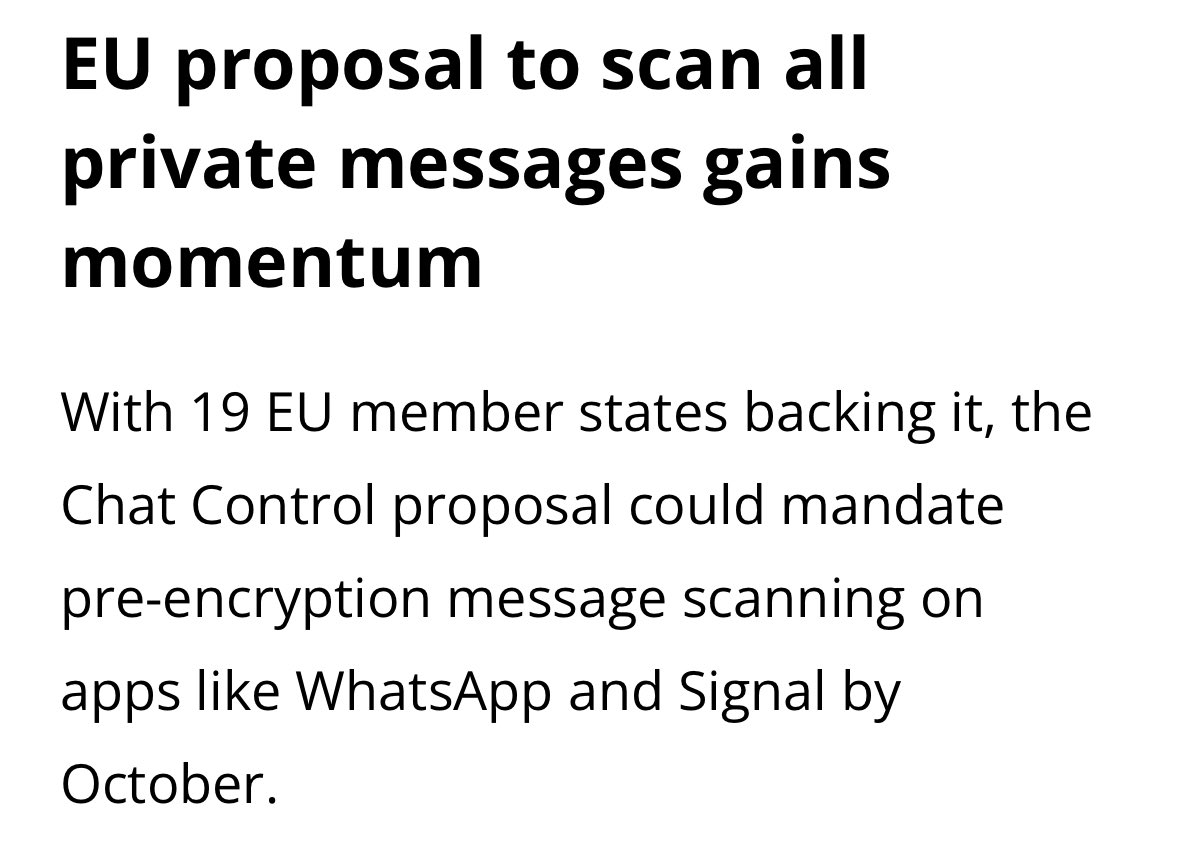
This shit is not a good signal.
Can you do some educational rips, work with others. The Overton window is going to be smashed wide open.
There are going to be a lot of people on a steep learning curve.

I haven’t been able to get white noise to work. Logged in fine, but messages not sending? Would vpns affect?
🇬🇧 The walls feel like they’re closing in here in the UK.
Speech is being criminalised.
VPNs under threat.
ID checks creeping in.
The system is tightening—and it’s not just here. It’s happening globally, like lockstep.
Nostr community—this is our moment.
We need to preserve what we know, and pass it on. Now.
🧰 Build the Freedom Stack
📚 Share tutorials, podcasts, PDFs, zines
🔥 Signal others to join before the gates slam shut
Nostr isn’t just a protocol—it’s a lifeline.
Let’s keep it decentralised, alive, and human.
Drop your best tools, guides, and resources below.
Let’s equip each other while we still can.
⸻
Also…
What are they preparing for?
These feel like preemptive restrictions—almost as if they expect unrest.
So what do you think?
📉 Fiat collapse?
💸 Economic breakdown?
⚖️ Collapse in trust in government?
🛑 Or something else entirely?

In City AM in August 2023 I warned the Online Safety Bill would threaten encryption, empower unaccountable regulators and create the illusion of safety.
Now Labour claims it’s protecting children from harmful content.
In reality:
- Kids use VPNs
- Adults lose privacy
- Startups flee the UK
You’ve protected no one and compromised everyone.
Full article:
https://www.cityam.com/i-see-the-online-safety-bill-as-a-digital-double-edged-sword/

The more they push, the more obvious it becomes, they’re not in control, they’re losing it.
Each new clampdown reveals their fragility, not strength.
People are quietly routing around the system. Bitcoiners, cypherpunks, and builders are taking the sly roundabout way, laying the rails for a future where the old structures are obsolete.
“When technology is mobile, and transactions occur in cyberspace, even the most oppressive government will be forced to compete like a business.”
— The Sovereign Individual
They’re playing catch-up. We’re building what’s next.
The task now is helping others see the exit. The door is already open, they just need to be able to see it and walk through.
At what point do we in the UK just admit…
‘We’re not in Kansas anymore, Toto?’
The UK is threatening to block Wikipedia under the guise of “Online Safety”.
Truth is now dangerous.
Anonymous contribution? A threat.
Free knowledge? A problem.
We’re drifting into authoritarianism — just without the competence.
The UK is starting to echo the late-stage Soviet Union in more ways than people realise:
– State-approved narratives
– Media silence on dissent
– Rising censorship
– Institutional decay
– Economic mismanagement
– Surveillance expansion
– Punishment of thoughtcrime
– Democracy in name only
No gulags, no bread queues, but we live in a different era. The control is digital now, and the collapse will be too.
SOS 🛟 🆘
Thank god for Bitcoin and Nostr