


Well said. And what will communities look like? In the vein of decentralization, we may end up moving toward small communities, tribes (or some #Bit coiners refer to them as citadels) of like minded peoples in the pursuit of their happiness.
Which led me to look at how American Indians organized. They seemed to, within their tribes, live so harmoniously amongst themselves and with nature.
American Indians organized many decisions around family units and tribal councils. One way to illustrate how it works is to look how American Indians disincentivized bad behavior.
Now probably the first thing to know about Native American history is that there was very little crime. Perhaps crime and punishment go with Western Industrial-type nations. Historically, travelers to the outermost regions of Native America commented on how honest and how little crime existed.
So what did they do if one of their own committed a “crime”?
Firstly, tgere were no jails. Secondly, while all tribes were different, in matters of severe offenses, the family or the clan usually dealt with the offender. Often the person guilty of the crime was “sentenced” to go away from the tribe and try to make it on his own — which in the long ago past, was almost a testiment to a death sentence. In the Lakota tribe there is a reference in the book, WATER LILY, about the offender having to make restitution with the family by taking a role in the family. Usually such people were so happy to not be put out of the tribe, that they became the best family members of all. Imagine if this were so in our society today? That the offender had to make restitution with the family for his acts? What do you think might be the result? Less crime, perhaps?
In the Creek society, as well as the Blackfeet, the crime of adultery (for women only) was a cut off nose — the tip of the nose. This was usually performed at the request of the offending husband and was done by the society that he belonged to.
As far as stealing is concerned, it was almost unheard of. George Catlin remarked that in all his travels in Native America he had never had one single thing taken from him, or even a hand lifted against him. In truth, one young man made quite a journey to join Catlin in order to return to him some of his property. However, if stealing had been done, the offending party again made restitution with the “victim” by supplying them with whatever they needed in return. Seems a much simplier process, doesn’t it? Make up the damage one has done to the person who has been harmed, himself.
Besides almost non-existent crime, there was also no poverty. Some people were more prosperous than others — such has always been the case amongst a people. But noone went hungry when there was food to be had within the tribe, nor did anyone go without.
And if a culture is known by its humanity towards others and the material condition of its people, then I would have to say that American Indians were, indeed, a culture to be proud.
#Bitcoin . Fix the money, fix the world.
#Bitcoin . It’s the only chance we have.
Parts extracted verbatim from CRIME & PUNISHMENT — Native American Style
October 14, 2008 by Karen Kay

Turns out #Bitcoin is the canary in the coal mine.
Hopefully the ETFs will wash out. They are bad for adoption. Them, their strategic reserve, Tether, futures, the whole crypto shitcoin business, the seized Bitcoin stacks. All need to wash out before real adoption.

Then you have to think about motivation, why? Any thoughts?

Agree. Values of companies, commodities, currencies and money are all different things. And where is real estate, art etc. and why express all of this in USD? Seems like a list of random stuff measured in random stuff.

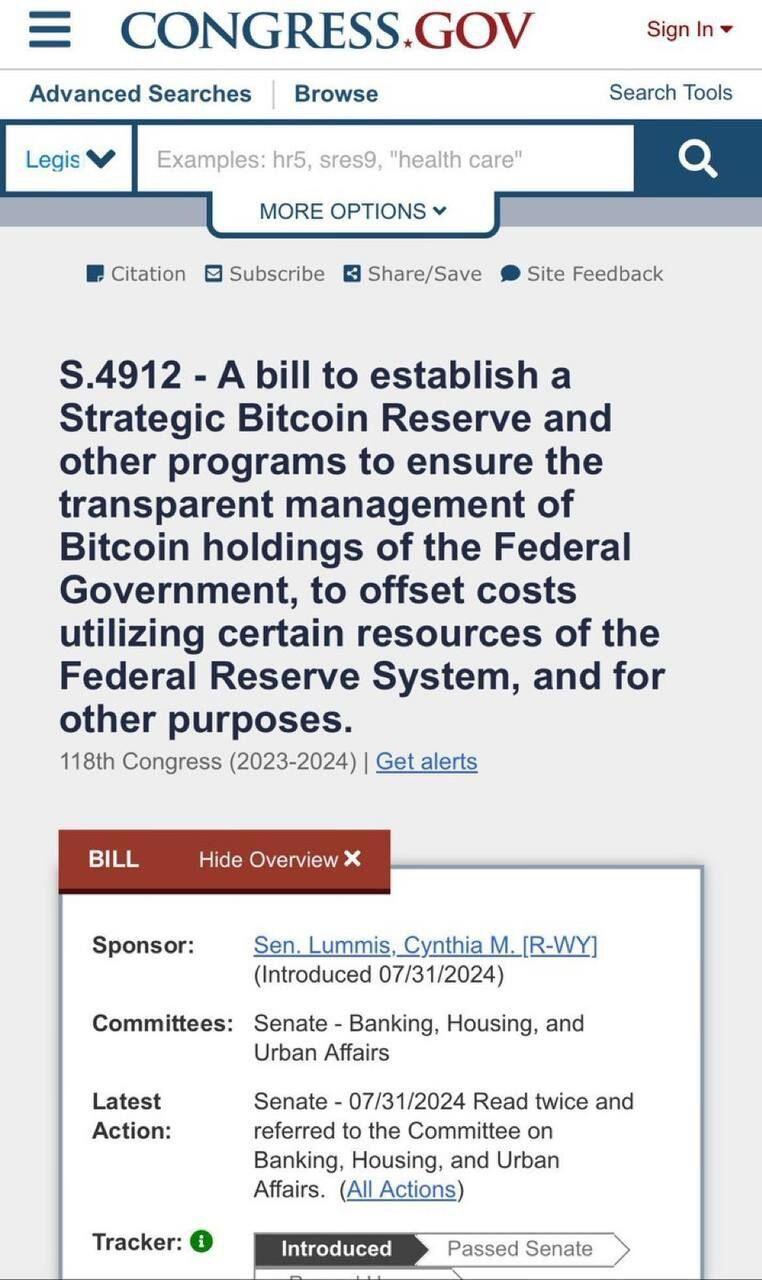
They already have that. It’s called the GAO. How has that worked out?
Currently at time of posting, #bitcoin takes the spot of the 10th most valuable asset in the world:
https://companiesmarketcap.com/assets-by-market-cap/
according to that list ^
Where is the USD and the other currencies? Not sure how much sense it makes to compare #Bitcoin to the value of a company? Apples and Oranges?

The total debt is $80 trillion. Have to include private, state and local and business. 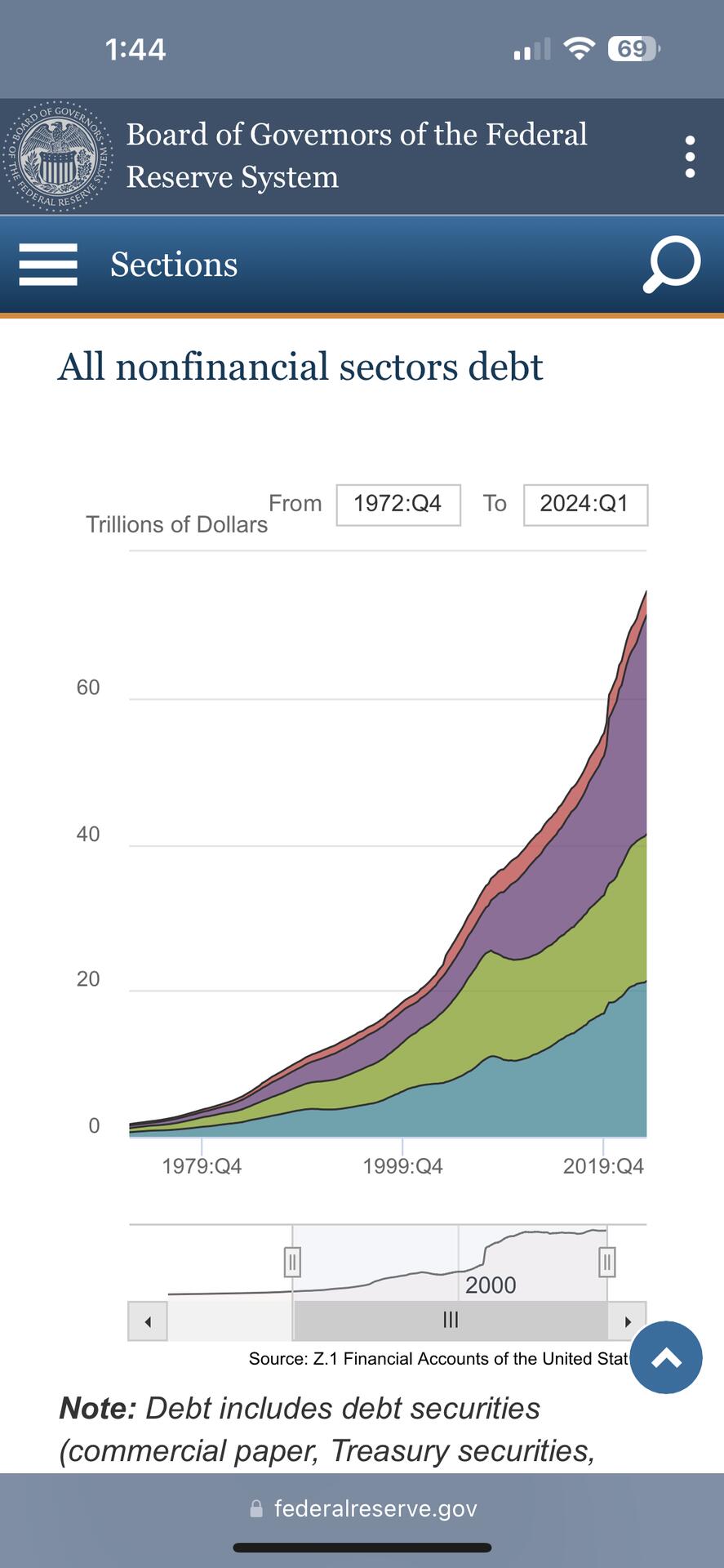
It’s an auto-immune syndrome, attacking an individual’s most inflammatory weakness….best way to measure, excess deaths.

I don’t understand why you’re lost in the weeds? It’s just more money printing. In a debt based system, ubi and potential loans are all just money printing by a different name. And, in this case, it’s just giving out peanuts to the poor to keep them quiet while allocating property to the elite. At the end, you end up like the Soviet Union. With a non productive, complacent and apathetic society that doesn’t produce anything of value. That then implodes.

Three years ago, Saylor appeared on Fox News to announce that #Bitcoin will be the asset backing the dollar 🤯 https://video.nostr.build/f9b7ba2c98617a95f3e3f4220222e7b733a71d1bfe00d684dc353b2ebee78b8f.mp4
That’s about the time they made him step down as ceo and told him to change the narrative?
Since we (maxis) are not exchanging #Bitcoin for fiat, since logically, it makes no sense to exchange Bitcoin for fiat, leaves the central planners (ETFs, Tether, seized BTC, futures etc) as the simplest explanation. We can do the same thing in the other direction! Time to fight them.

A couple of thoughts on democracy:
1. There’s no way to corroborate your vote, so the outcome is not related to your vote
2. My (or Mencken’s really), on why democracy doesn’t work, from a previous post below.
3. But, specifically re Referrenda. The masses are easily manipulated and exhibit a dangerous mob mentality. Neil Oliver’s example of the tyranny of the masses is a good illustration of it. He didn’t want to wear a mask in a plane, as we all know, these masks didn’t work…
4. ….”I'm not a slave. Yeah, I'm
nostr:note1rwd7ghztggz8qd6ulm396y4tvwvwxwj6gaa6h5uwd45r0z3supmqurvrd5

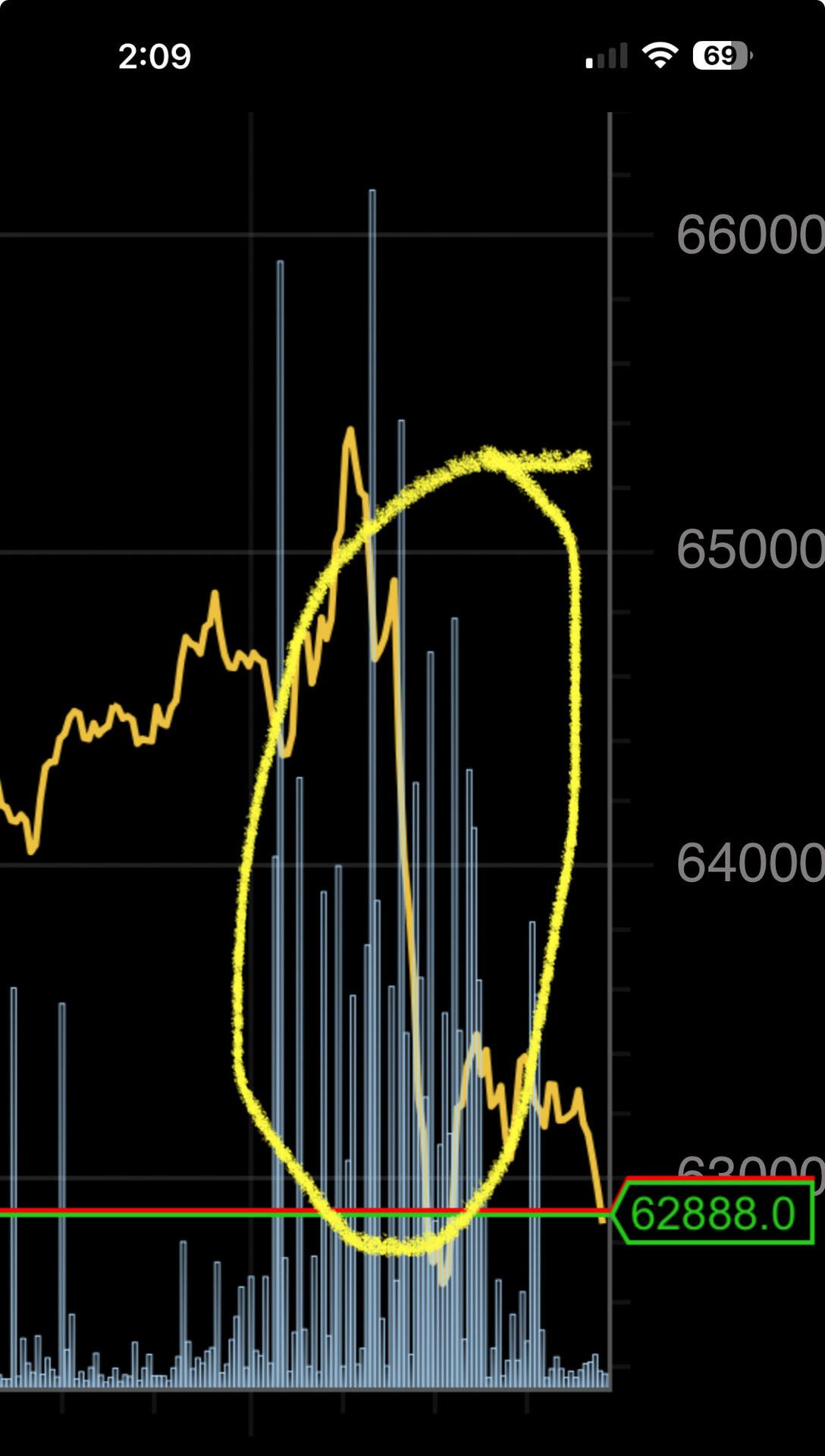
Central planners are currently confusing everyone, keeping the #Bitcoin/USD exchange down by slushing Bitcoin around between Seized/ETFs/Tether/Futures. Essentially buying and selling to themselves at manipulated prices. Propping up the USD, allowing them to back fill losses with minimally printed money. To avoid a rapid collapse of the system. Can’t have the stock market collapse at the same time Bitcoin go to 100k….
Example, today’s manipulation: 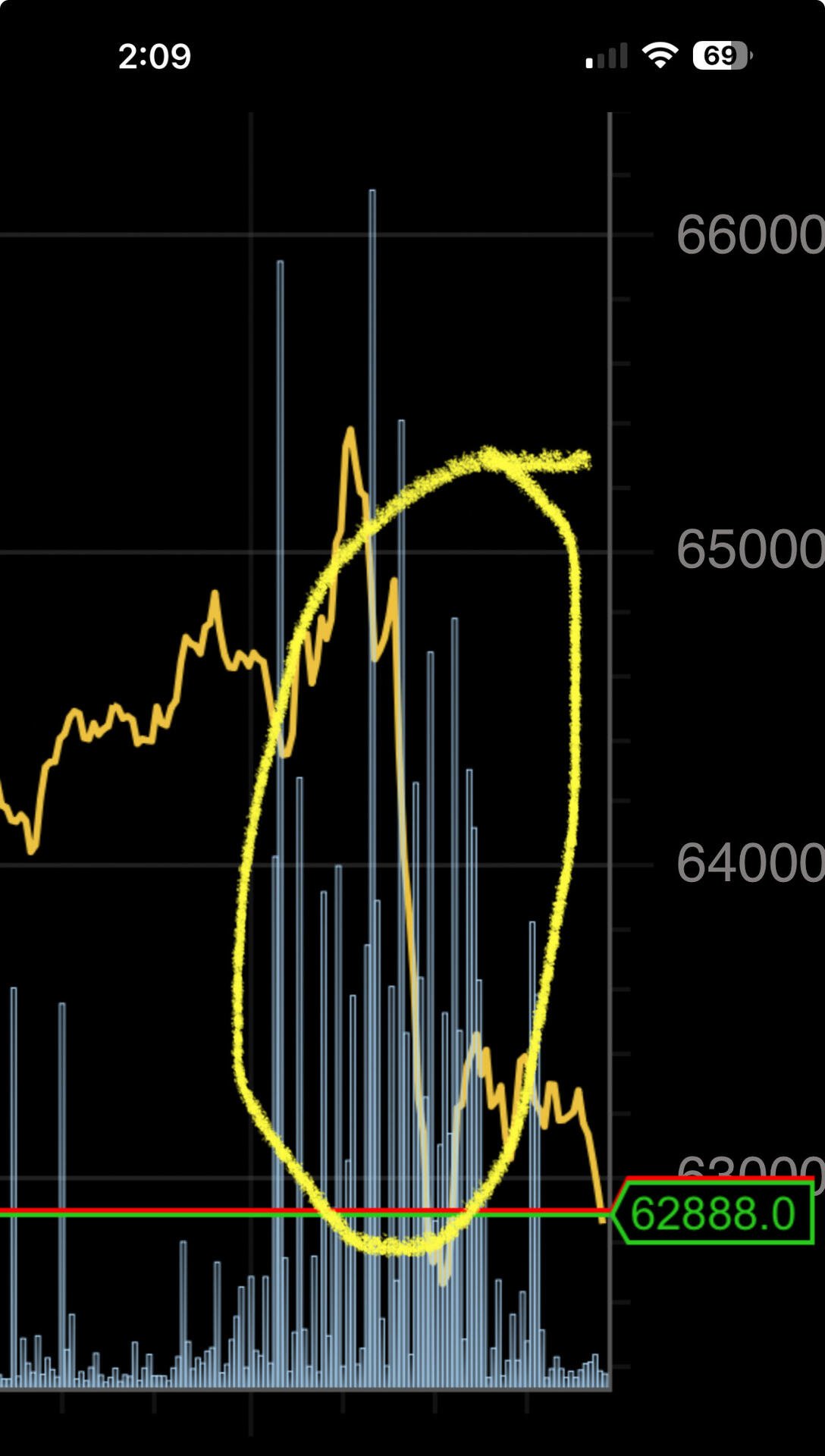

U.S. debts is almost $80 trillion btw
Whether you get a mortgage or a business borrows money, it’s all printed money out of thin air.
State and local+ federal+household+business

Or could it be the government slushing around #Bitcoin between seized funds, tether, etfs, futures, etc?