
GM frens.
DESECRATION
“In the meantime, the most eminent persons in Rome were put to death on false accusations. Even Scaevola, the pontifex maximus, who had the highest reputation amongst the citizens, came to an unworthy end. The Romans were fortunate only in one thing, that this venerable priest did not withdraw into the most sacred precinct {the temple of Vesta}. For the cruelty of the murderers was such, that they would have laid him upon the very altar, and cut his throat there, so that by his own blood he would have extinguished that fire, which religious devotion has ceaselessly kept burning ever since ancient times.”
Diodorus Siculus


Same. If i find myself in a shitty place, it’s also because i think about you.
Now you will find yourself angry thinking about me. That’s it. That’s how its done. Focus outward. 🫵🏻
There seems to be a correlation in how much you use the word “l” “me” etcetera when you have a conversation with someone and how depressed you are.

Good trip. Have you ever been to the ancient site of Baalbek and what are your thoughts on it?
GM. It’s a good day.
STRABO ON THE MAURI
“Here dwell a people whom the Greeks call Maurusians, and the Romans and the natives Mauri — a large and prosperous Libyan tribe, who live on the side of the strait opposite Iberia.” (Mauretania, Morocco).
“However, it is agreed by all that Maurusia is a fertile country, except a small desert part, and is supplied with both lakes and rivers. It is surpassing in the size and in the number of its trees, and is also productive of everything; at any rate, this is the country which supplies the Romans with the tables that are made of one single piece of wood, very large and most variegated.”
“Now a little before my time the kings of the house of Bogus and of Bocchus, who were friends of the Romans, possessed the country, but when these died Juba succeeded to the throne, Augustus Caesar having given him this in addition to his father's empire. He was the son of the Juba who with Scipio waged war against the deified Caesar. Now Juba died lately, but his son Ptolemy, whose mother was the daughter of Antony and Cleopatra, has succeeded to the throne.”
Strabo

THE KINGDOM OF DA QIN
“The Kingdom of Da Qin (the Roman Empire)- is also called Lijian. As it is found to the west of the sea, it is also called the Kingdom of Haixi (Egypt).? Its territory extends for several thousands of li. It has more than four hundred walled towns. There are several tens of smaller dependent kingdoms. The walls of the towns are made of stone.
They have established postal relays at intervals, which are all plastered and whitewashed. There are pines and cypresses, as well as trees and plants of all kinds. The common people are farmers. They cultivate many grain crops and silkworm-mulberry trees.* They shave their heads, and their clothes are embroidered. They have screened coaches (for the women) and small white-roofed one-horse carts. When carriages come and go, drums are beaten and flags and standards are raised.
The seat of government (Rome) is more than a hundred li (41.6 km) around. In this city are five palaces each ten li (4.2 km) from the other. Moreover, in the rooms of the palace the pillars and the tableware are really made of crystal. The king goes each day to one of the palaces to deal with business. After five days, he has visited all of them. A porter with a sack has the job of always following the royal carriage. When somebody wants to discuss something with the king, he throws a note in the sack. When the king arrives at the palace, he opens the bag, examines the contents, and judges if the plaintiff is right or wrong.
There is a government department of archives. [A group of] thirty-six leaders has been established to meet together to deliberate on affairs of state. Their kings are not permanent.
They select and appoint the most worthy man. If there are unexpected calamities in the kingdom, such as frequent extraordinary winds or rains, he is unceremoniously rejected and replaced. The one who has been dismissed quietly accepts his demotion, and is not angry.
The people of this country are all tall and honest. They resemble the people of the Middle Kingdom and that is why this kingdom is called Da Qin [literally, 'Great China'].”
Book of the later Han


I don’t buy sats on sunday but looks tempting.
😂
If you played the following pc games you can consider yourself an incredibly cultured man:
Commando’s behind enemy lines.
Commando’s beyond the call of duty.
What is your favourite ancient pc game?



Very Nice to see

I post every day. if the subject is of interest to you you can follow 🫡

Interesting thought. I had to read that twice.
✅ Human ingenuity.
🧺 In 1850 a day of labour by the average U.S. worker would get him 10 pounds of sugar. (1 dollar a day and 10cents per pound of sugar).
🚜 In 2025 a day of labour by the average U.S. worker would get him 280 pounds of sugar. (280 dollars a day and 1 dollar per pound of sugar).
🟠 Bitcoin has restraints because human ingenuity doesn’t.
✅ The idea of a Hollow Earth is a conspiracy theory pushed by moles to get us humans digging for it so the moles have free extra tunnels without doing any work.
Kind of how shitcoins work.
THE WORKS OF VIRGIL
Publius Vergilius Maro, better known as Virgil, was a renowned Roman poet of the Augustan period. His most celebrated works include the Eclogues (or Bucolics), a collection of ten pastoral poems depicting the idyllic life of shepherds in the Roman countryside; the Georgics, a four-book treatise on the art and science of agriculture that explores the relationship between humans and the natural world; and the Aeneid, a twelve-book epic poem chronicling the journey of the Trojan hero Aeneas as he flees the fall of Troy and ultimately founds Rome.
The Aeneid, in particular, became a cornerstone of Roman national identity, providing a powerful origin story that connected the Romans to legendary heroes and Trojan ancestry, thus elevating their status and justifying their imperial ambitions. Virgil's poetry, admired for its beauty, elegance, and emotional depth, captivated Roman audiences and profoundly influenced Roman culture, permeating literature, art, and even religious beliefs.


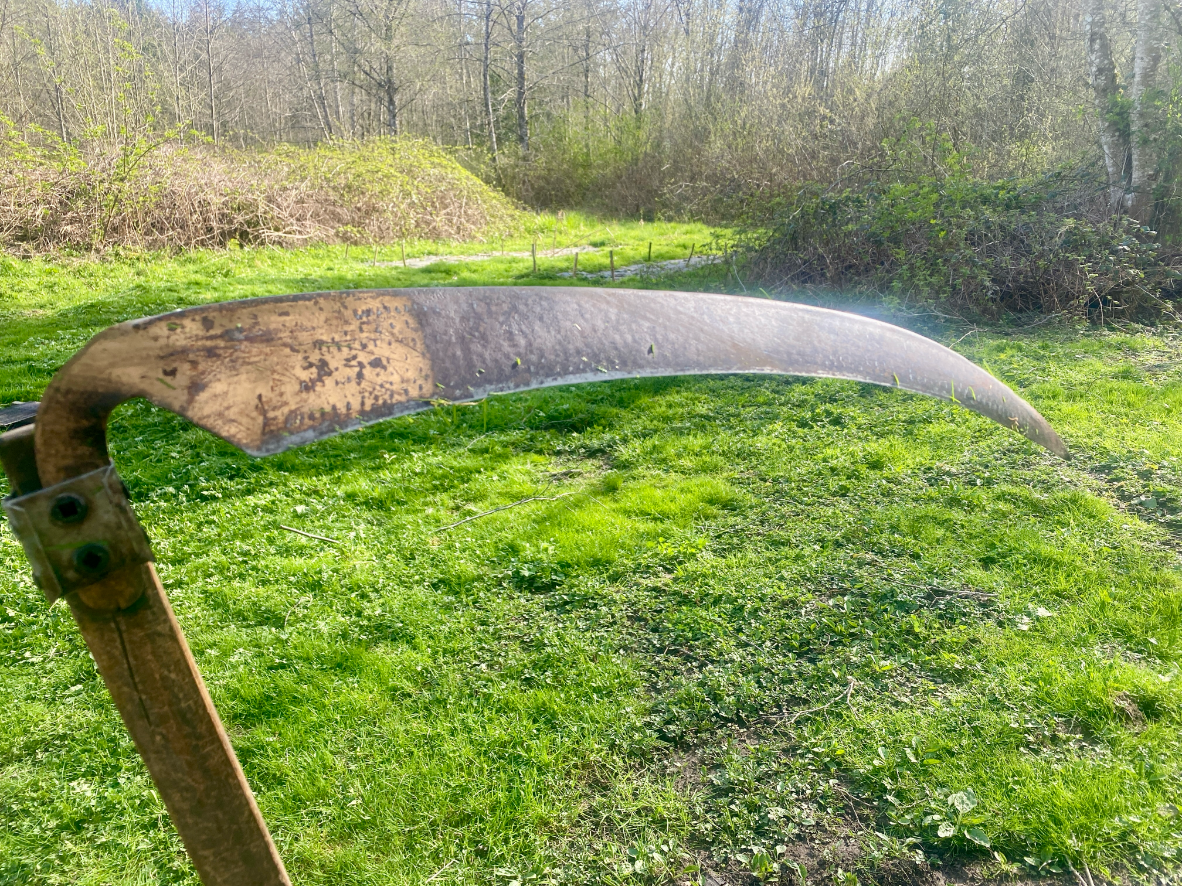
GN frens. 🟠🟣