

If I consider his rather strong position against slavery and his controversial defense against exploitation, via his term 'state of war' against oppressors, then I find it hard to believe that he would want to dispossess people. It seems that such a task would be more fitting for the philosophers of his time that he criticized.
Locke's approach to property rights was an early attempt at a definition, demonstrating that we can own a house, property, some land that we worked, but we can't own other people.
There are naturally flaws in his definitions of property, yet he was one of the first philosphers to clarify a consistent position against human slavery. Socrates dared at most to suggest that Greeks should not enslave fellow Greeks, and that was perhaps bordering a controversial stance at his time.
Good question. Regional settlership I assume. Roots. Connection to the land. Generations born or buried on the land.


In my view, music, art and poetry are streams of life experience from the author to the recipient.
We may vibe with it, or we may not. On the surface there are some objective properties and some subjective qualities.
Yet, at the end of the day we feel it in the gut when something reaches into us and connects, across the bridge between one mind and another, across time and space.
Music and art that vibe with us at a deeper level is akin to the Interstellar scene, where a father communicates with his daughter via physics from a place far, far away, seemingly against all logic and reason, and yet they connect.
Yes.
In the view of John Locke, the initial state of the world was a free-for-all in terms of land grab. Then as we mixed our labor with the soil, it became ours. That which we worked on and improved, was our property.
Warfare introduced a different ownership mechanic: the winner writes the rules. As warlords conquered regions, they primarily forced taxation upon the subjects, while later they would also coerce religious conversion. Contested land and property was always a trigger for warfare.
As empires grew, civilization and innovations spread more rapidly. With higher energy density new methods of production could catapult innovation.
As our capacity to prosper increased, ethics begged the question - why do we need to conquer, when we can trade? Trade is the voluntary exchange of property.
Yet, our new ethics has no simple answer of how to address historical claims through conquest. Land so and so was conquered, then people mixed their work with the land and it became their property over time. We end up inheriting a complex weave of centuries and millennia, with people mixing their work with the land.

This quote from Feynman met some critique on the blue/x bird in relation to quantum theory.
To that I would like to respond that the mechanics of allegory is not dependent on quantum theory.
One obvious point of Feynman's allegory is that ethical direction is more important than velocity. Going at full speed toward destruction is not a preferable outcome, while heading slowly in a favorable direction is still progress, or improvement.
If we continue the argument, progressivism is the assumption that about half of a population can define the optimal trajectory of improvement. How could that possibly be biased. Of course it is. We can't assume that a vote will perfectly determine the nature of reality or ethics.

I think both the religious and atheists attempt to align with the universe and its principles based on their understanding, while involving a great spectrum of human assumptions.
For some that is God, for others it's simply reality.
The positive path is the message that truth and reality always wins. This in turn imposes a moral imperative to calibrate, error-correct and align with truth.
In short, this explains why confidence, i.e. faith, in the victory of truth over time is evolutionary important. A deep rejection of a 1984 society, or in the religious sense 'mark of the beast', is a pivotal battle line.

I forgot that you are on the x-blue-bird. Yes, I agree. Here's Mike's response:
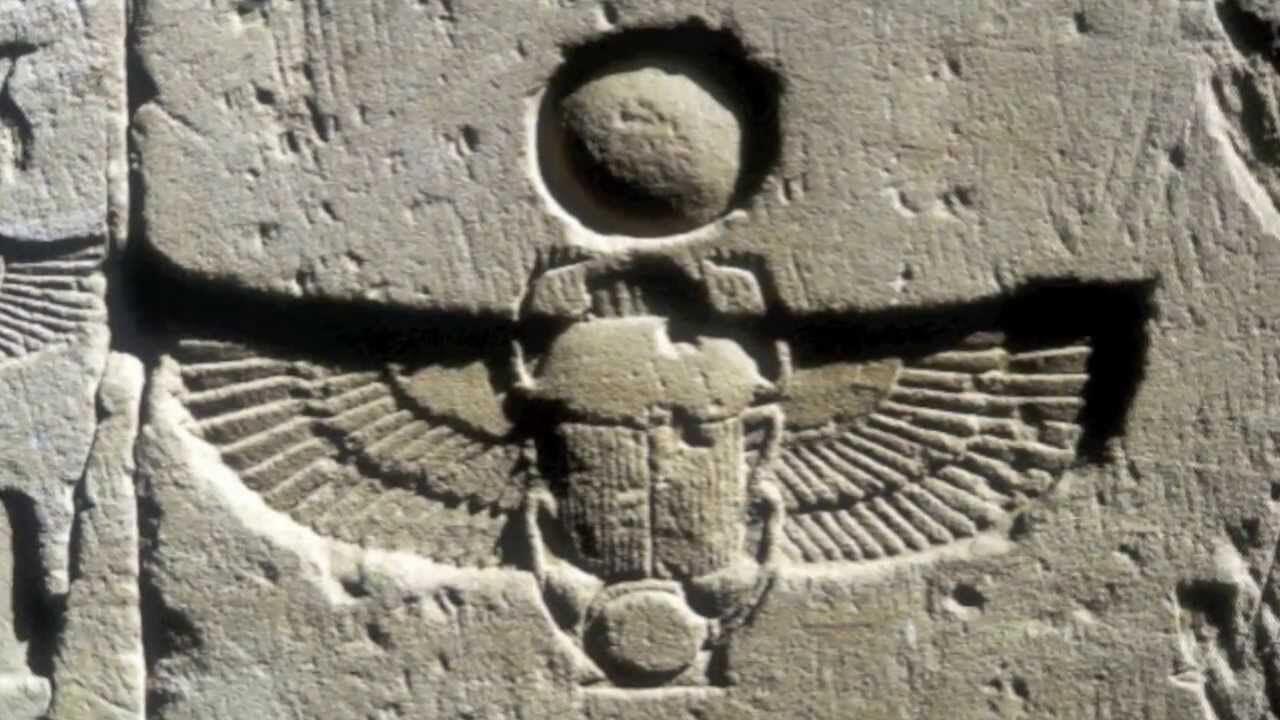
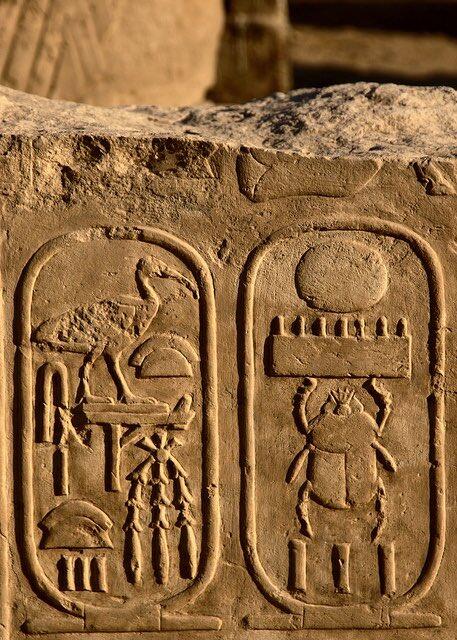
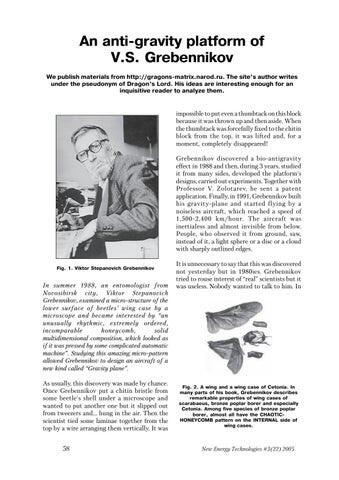
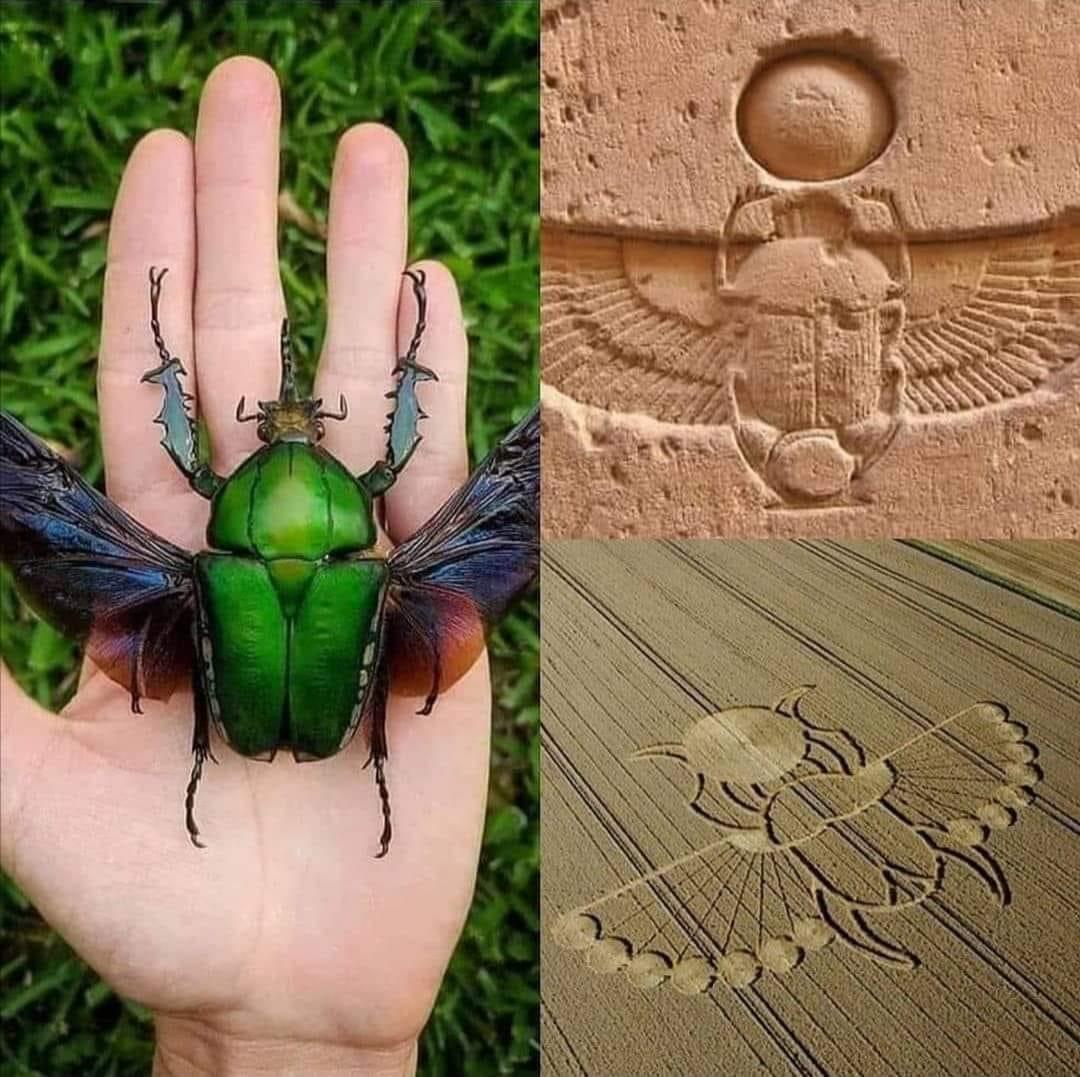
Very interesting Lauren.
I asked physicist Mike Mccolloch (Quantized Inertia theorist) a minute ago if insects may have developed some form of anti-gravity QI thrust.
Mike's response:
"I'm aware of him, thx. It is not impossible that insects may have evolved a #QI nanostructure to give a little levity. Not proven of course, and some of G's claims were a little out there!"
Direction is more important than speed.
// Richard Feynman

nostr:npub1gdu7w6l6w65qhrdeaf6eyywepwe7v7ezqtugsrxy7hl7ypjsvxksd76nak talks about all of this in his book Principles Of Economics. It really was a profound read. I highly recommend it.
Yes, I would like to hear his position on intellectual property rights.
“Producers, being self-interested humans, will not sell a good for a price that does not cover their entire cost of production. They would rather go out of business and stay home than work in a business that loses them money. So trying to mandate lower prices simply results in the destruction of the human incentive to produce a good, resulting in higher prices and even lower supplies. The other inevitable consequence of price controls is the emergence of black markets where the seller and buyer can transact at rates suitable to both of them, but without the attention of the government.”
Principles Of Economics by nostr:npub1gdu7w6l6w65qhrdeaf6eyywepwe7v7ezqtugsrxy7hl7ypjsvxksd76nak
Yes. And this also addresses the value of intellectual property. Without voluntary contracts and licenses, and without product-developers owning the right to commercially distrubute their products to cover the costs of production, that production may not see the light of day.
May we also get rid of the overreaching IP laws that attempt to monopolize ideas, words and features. A product is IP, while an idea or feature must not be IP.

“The kind of man who wants the government to adopt and enforce his ideas is always the kind of man whose ideas are idiotic.”
// H.L. Mencken

Yes, it's tragic. When two groups of people can't live together in peace there needs to be some form of territorial divorce. I wonder why the surrounding Arab states claim to be supportive of palestinians, yet have no willingness to accomodate them. Egypt reinforcing the border to Gaza to make it harder for palestinians to enter.