
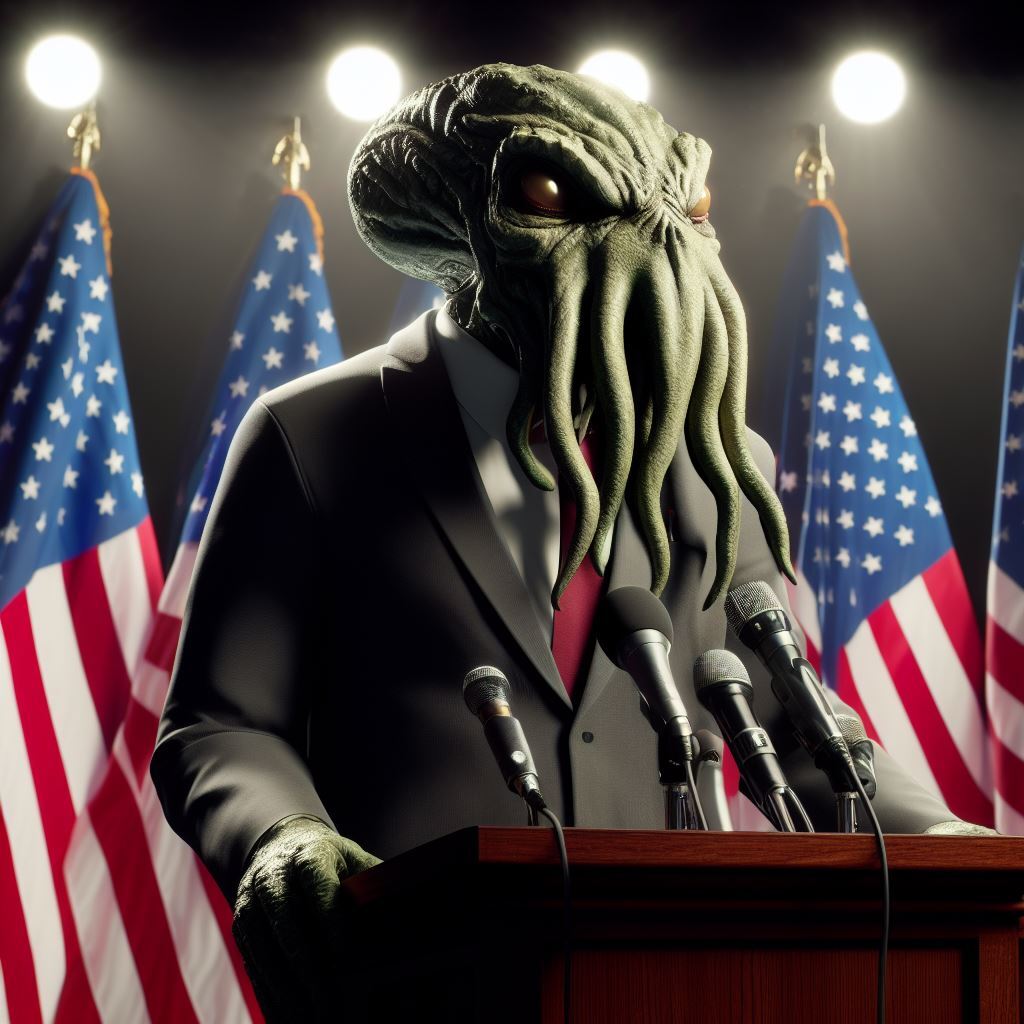

My expectations for every update:
Less RAM
More surveillance
Yippee..
Bitcoin adoption:
Bitcoin de-funds moneyprinting in the U.S.
Bitcoin de-funds moneyprinting in Russia.
Bitcoin de-funds moneyprinting in China.
Bitcoin de-funds moneyprinting in Africa.
Bitcoin de-funds moneyprinting in Australia.
Bitcoin de-funds moneyprinting in India.
Bitcoin de-funds moneyprinting in S. America.
Bitcoin de-funds moneyprinting in Europe.
Bitcoin de-funds moneyprinting in Israel.
Bitcoin de-funds moneyprinting in Middle East.
Bitcoin is a neutral force of nature defunding the economic capacity for extended wars across all nations and continents.
Wars end when the funding ends.

Yes. The flow of causality will have its way regardless of our opinions. Good principles are more likely to lead to favorable outcomes vs flawed principles and we will rather seek to calibrate our principles toward a better flow of events.
"The Adjustment Bureau"
5. The Adjustent Bureau (2011)
Not exactly that plot theme but similar. This is also a memorable movie.
4. "12:01 PM" (1993)
This was also a good movie on the theme.
I found a new usecase for ChatGPT:
Finder of forgotten movies.
I described the plot of a man who wakes up every morning and relives the same day, over and over again. After asking 3 times and narrowing down the year of production, GPT got it right. Source Code from 2011 was what I was looking for.
In case anyone is interested:
1. Groundhog day (1993)
2. Edge of tomorrow (2014)
3. Source Code (2011)
My wife says Trzecia Droga wanted all Polish to be obligatory vaccinated. They are pro Agenda2030 climate alarmism.
Trzecia Droga are left-wing.
You can call the turd drug.😄

Well written, I agree.
Just read it quickly for now but will re-read in a while.

Meme credit: Thomas/Heyapollo
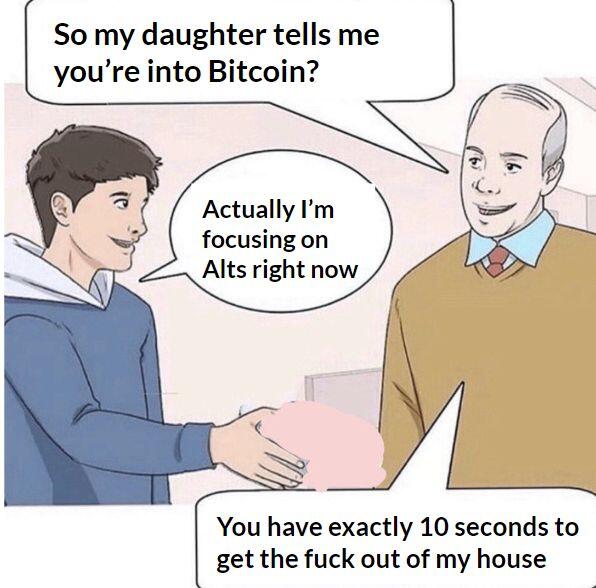
Meme credit: Trent Steele

Final results of the Polish election 2023. While the conservative PiS recieved most votes, Poland might see a left-wing and pro-EU coalition under Tusk.
The Left in Poland have previously argued for mandatory mRNA injections for all. The conservative liberty-oriented party Konfederacja is against vaccine mandates but only received 7% (18 seats) in the election. Due to hostilities between PiS and Konfederacja, it is unlikely that they will be able to collaborate in the near future.



Youth on MetaFace in the year 2060:
- I'm not a number, I'm a free man!
Contact me at FreeMan37187112.
Correction: European lefties.

Let's start here:
“Yet a closer look at the alleged benefits of intellectual property shows that they have been massively exaggerated."
If he claims that the benefits are "alleged', then this informs me about some of his assumptions.
Intellectual property is about property rights. Property rights are the benefit. The right of authors, product developers, game developers and musicians to own the fruits of their labor is not anything 'alleged'.
The core of IP is to protect products, not ideas. IP is primarily about securing the rights to commercially distribute products that you have crrated. Without IP, the game developer has no right to own his/her game and to own the commercial distribution of it. Hence, no property rights to the fruits of his/her labor.
The abuse of IP is in regards to protecting ideas, features, words and such. That is abusive red tape. It should be possible to condemn abuse and overreach without dismissing IP.
In a fully free market the primary means of protecting IP would be via reputation. One can respect people's right to own their product, and their commercial distribution,without assuming that we must have a monopoly structure that secures IP. Enforcement is separate from the theory of rights.
“Yet a closer look at the alleged benefits of intellectual property shows that they have been massively exaggerated. Intellectual property laws, at the margin, increasingly incentivize innovators to obtain monopoly licenses at the expense of innovating to meet consumer demand. At the margin, these laws magnify the reward for obtaining state monopoly licenses for ideas and lead innovators to dedicate growing quantities of resources toward meeting that end, rather than seeking to satisfy consumers.
This is most apparent in the pharmaceutical and software industries, where large bureaucratic corporations can be increasingly seen as enormous patent trolls, whose primary focus is on hiring lawyers, patenting, litigating, and defending against litigation; while developing consumer software and drugs are an increasingly secondary focus.
While we are taught to value innovations for their own sake, valuable innovations are those that consumers value enough to make them profitable. Without intellectual property laws, the only way to monetize ideas and innovations is for idea holders to ensure their ideas provide greater value to consumers than the available alternatives.88 With intellectual property laws, entrepreneurs can legally ban their competitors from competing, and succeed by dint of their monopoly power over their ideas. The satisfaction of consumer wants becomes a secondary concern. By limiting the number of providers on the market, government enforcement of intellectual property laws effectively comes at the cost of consumer satisfaction.”
Principles Of Economics by nostr:npub1gdu7w6l6w65qhrdeaf6eyywepwe7v7ezqtugsrxy7hl7ypjsvxksd76nak
Seems like a very shallow take where he leaves out the positive aspects of IP and only focuses on the red tape overreach.
I agree with cutting away the harmful aspects of IP, but I can't take him seriously until he treats the subject seriously.

Thank you.
I decided to go over my book markings and wrote a short overview of how I interpret Locke's position:
A brief exploration on Locke's position on both slavery and property rights.
--------
"Slavery is so vile and miserable an estate of man, and so directly opposite to the generous temper and courage of our nation, that it is hardly to be conceived that an "Englishman" much less a "gentleman" should plead for it." (Two Treatises Of Government, part 1, chapter 1.1)
---------
I would say that this introduction to his book gives a clear oposition against slavery. While he is also simultaneously patting his fellow Englishmen on the back with assumed virtues, I would read this flattery as a form of sugar to allow the medicine of the message to sink down. He makes an allusion to gentlemen and sets a determined tone that anyone aspiring to be a civilized English gentleman, must not argue in favor of slavery.
---------
"The fruit or venison which nourishes the wild Indian, who knows no enclosure, and is still a tenant in common, must be his, and so his -- i.e., a part of him, that another can no longer have any right to it before it can do him any good for the support of his life." (Two Treatises Of Government, part 2, chapter 5.26, page 129)
----------
This seems to be a general acknowledgement of some form of 'first right of land use' to american natives in regards to their territories, including both that which grows and the animals of the land. Locke was living in Europe and he seems to have only given the subject a cursory glance. But if we follow his next principles, we can keep in mind that he attributed the same rights of property to all humans.
---------
"Every man has a "property" in his own "person". This nobody has any right to but himself. The "labour" of his body and the "work" of his hands, we may say, are properly his. (Chapter 5.27, page 130)
--------
Following the meaning of this statement, it becomes evident that slavery is an attack against property rights - an attack against the right of every human to own themselves and to own the fruits of their labor. Slavery understandably disallows a man the fruits of his labor.
---------
"As much land as a man tills, plants, improves, cultivates, and can use the product of, so much is his property."
---------
While this is an incomplete definition that leaves room for interpretation, it seems it would include native americans using land for cattle hunting, foraging and homesteading. If he fails to describe all manners of land use I wouldn't assume that his intention was to dispossess other people living on another continent from himself, but that it would more likely be an omission based on his cursory treatment of this narrow subject. He assumes that natives have the same property rights as everyone else, so it isn't something he dwells on.
‐-----------
"Men living together according to reason without a common superior on earth, with authority to judge between them, is properly the state of Nature.
But force, or a declared design of force upon the person of another, where there is no common superior on earth to appeal to for relief, is the state of war" (Section 2, chapter 3.19, page 126)
------------
So, what did Locke mean with a state of war?
--------
"And hence it is that he who attempts to get another man into his absolute power does thereby put himself into a state of war with him." (Section 2, chapter 3.17, page 125)
--------
Next, another similar passage:
--------
"So he who makes an attempt to enslave me thereby puts himself into a state of war with me." (Chapter 3.17)
-------
------
"It being reasonable and just I should have a right to destroy that which threatens me with destruction" (Chapter 3.16)
-----
This is clearly a general defense of anyone who is being abused, to have the right to stand up against the abuse and enter into a state of war against the aggressor.
To sum up, contrary to some claims that Locke was hostile to native americans, I think that Locke's principles would have supported the rights of american natives to fight back - to enter a state of war - if their liberty and natural rights to use their land was at stake.
Thank you for reading.