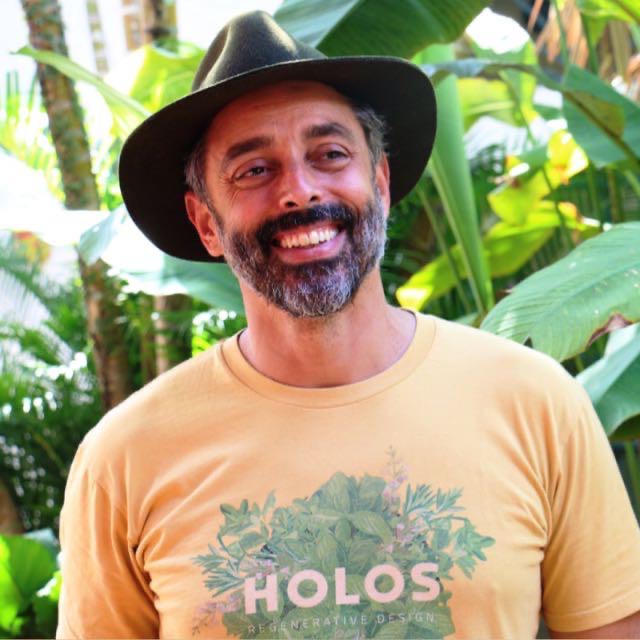
A podcast in defense of the small and ecological farmers with the farmer and renown author Joel Salatin:

Since now I'm a two-columns maxi, I have just added in fevela.me the option to resize the ratio between the columns by dragging the central handle:
https://chronicle.dtonon.com/c26b878c7ba96260ef48a6629f8e4a6fc6129fee716fd5ff6f259660be0fb92d.mp4
I liked the post in the beginning very much lol.
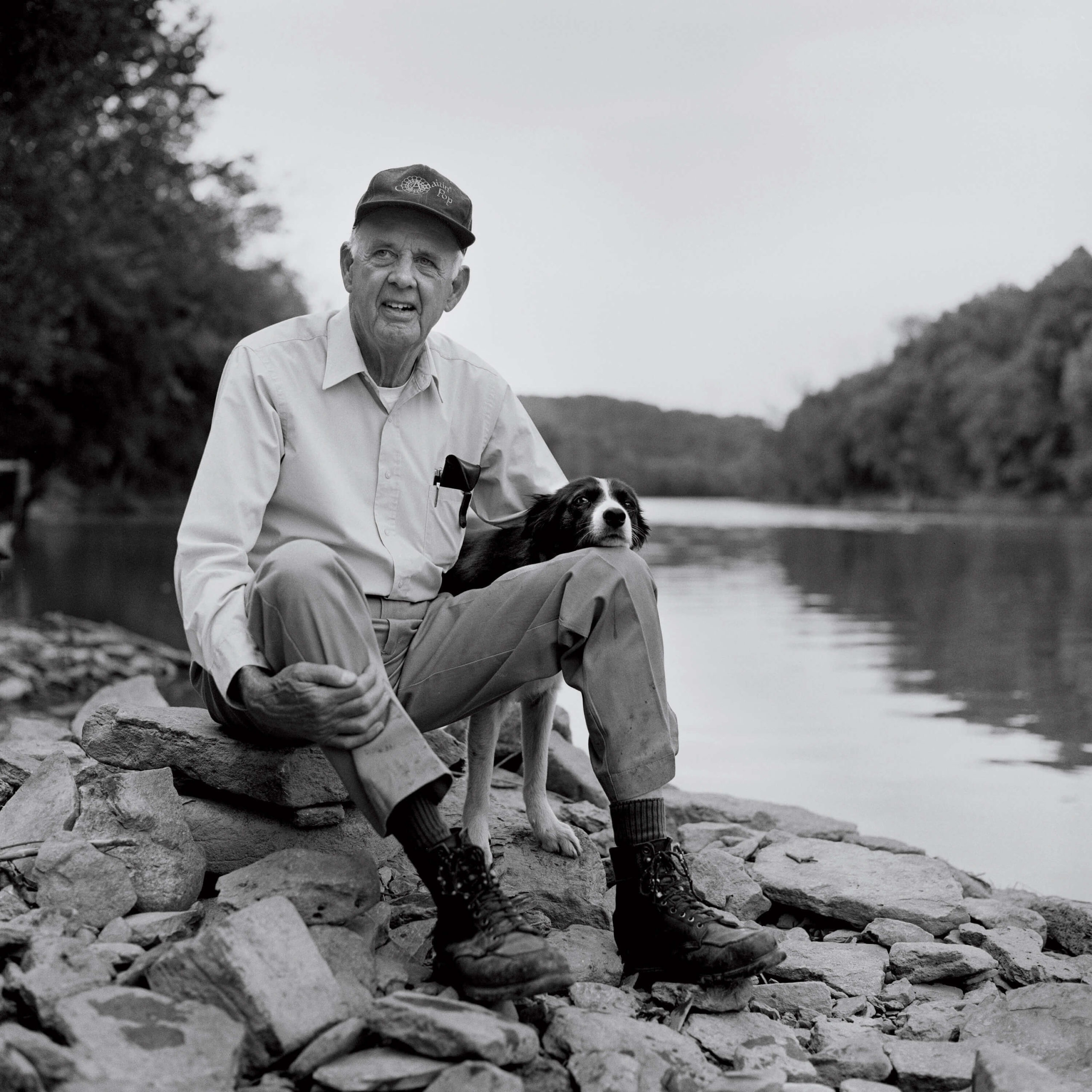
Technology cannot overcome our economic, ecological and human relational challenges. The evidence for that is that in the past century alone we have achieved unimaginable technological prowess, but our economies, our ecosystems and human organisations have never been so unhealthy and chaotic (Allan Savory).
What if our criteria for tech adoption could really uphold the health of our soils and communities? I guess these criteria could not improve upon Wendell Berry's (the poet and agrarian writer). Can anyone here confirm they're working on tech such as Berry describes?
Nine Rules for Evaluating New Technology (from the 1987 "Why I Am Not Going to Buy a Computer", by Berry.
1. The new tool should be cheaper than the one it replaces.
2. It should be at least as small in scale as the one it replaces.
3. It should do work that is clearly and demonstrably better than the one it replaces.
4. It should use less energy than the one it replaces.
5. If possible, it should use some form of solar energy, such as that of the body.
6. It should be repairable by a person of ordinary intelligence, provided that he or she has the necessary tools.
7. It should be purchasable and repairable as near to home as possible.
8. It should come from a small, privately owned shop or store that will take it back for maintenance and repair.
9. It should not replace or disrupt anything good that already exists, and this includes family and community relationships.
What about permissionless farming?!
There is a lot of talk here about permissionless money and communication, but this is not enough to guarantee real freedom.
"Bill Gates’ new $1.4B soil bioengineering initiative, sold under the guise of “philanthropic climate adaptation,” is an effort to hijack the biosphere itself: soil mapping, engineered microbes, and genetic interventions under the banner of sustainability. These aren’t isolated ag-tech projects. They’re nodes in a larger planetary bio‑surveillance grid, a system designed to monitor, record, and ultimately control life at every level, from crops and forests to human microbiomes." (Ice Age Farmer)
If the 'free money' have don't starting supporting small ecological farmers ASAP, soon we'll have plenty of freedom to transact, but no choice in food.
https://unshadowed.substack.com/p/the-planetary-bio-surveillance-grid
Will Bitcoin succeed?
What very few people are talking about is that with a finite currency the amount of transactions we make to secure goods and services will have to shrink (regardless of block sizes).
With fossil energy available, we'll return to more localised economies and gift and barter economies will become a major part of our everyday lives, just like they were before I found fossil energy and the industrial revolution.
Having said that, we'll still need a sound currency and things to use as a store of value. But these things will be more tangible and in tune with our basic needs.
If a digital currency helps us connect with a more real life, within energy and biophysical limits, it can be a sound currency and to a lesser extent a store of value.
If it's used to increase monetary abstractions and the distance from what can really sustain life (healthy soils and clean water and food and a strong social fabric), I believe it'll fail...
"Ultimately, the only wealth that can sustain any community, economy or nation is derived from the photosynthetic process - green plants, growing on regenerating soil" (Allan Savory).
Are we building real wealth or just replacing an evil currency (FIAT) for a sound one without subverting the role of currency?
"Money is to the social fabric as water is to land-scape. Is is the agent of transport, the shaper and mover of trade. Like water, it is not the total amount of money entering a community which counts; it is the number of uses or duties to which we can divert money, and the number of cycles of use, that measures the availability of that money. Leakage from the community must therefore be prevented and recycling made the rule." ...
We should develop or create wealth just as we develop landscapes, by concentrating on conservation of energy and natural resources (reducing the need to earn), by developing procreative assets (proliferating forests, prairies, and life systems), by reducing the creation of degenerative assets (roads, monuments, cities), and by constantly divesting ourselves of any surplus wealth to this ends. (Bill Mollisson, 1988. p. 534. Permaculture: a designer's manual)
As an ecological farmer and having arrived late at the bitcoin scene, my perception is that most people cannot grasp that fertile soil, clean water, healthy food and relationships play a much bigger role in healing our communities and in securing a better future...
Technologies alone can't fix the collapse we're in.
Technologies belong to the realm of COMPLICATED things (eg. computers, plains, bridges, phones, etc.). We have become better and better at PRODUCING these.
Economies, ecosystems and human organisations belong to the realm of COMPLEX things. These we do not produce, we MANAGE, and our management is worsening them every day. (see Allan Savory and Dave Snowden).
In his talk "Tech and Freedom", nostr:nprofile1qqsgydql3q4ka27d9wnlrmus4tvkrnc8ftc4h8h5fgyln54gl0a7dgstw3r3l (Festival of the Sun, 2024) talks about the need for permission-less money, communication and intelligence, and how BTC, NOSTR, and open source AI can get us there. Jack also alerts us that the challenge ahead is not to secure free speech, but free will, due to social engineering practiced by corporate owned AI and how it hijacks our internal and external network connections' intelligence.
What about permission-less farming and food systems?
I don't think we can fix farming and food systems solely replacing the currency/technology used. We need a different management culture. For thousands of years we used money mostly to transact with strangers and buy a very few items we could not produce our selves and source in gift and barter economies (Graeber, and Graeber and Wengrow).
If BTC, NOSTR or any open source IA, for this matter, fails to nurture a culture that humbly accepts that we cannot control nature, let alone fathom the intelligence of its network developed to foster Life over billions of years, people might be 'rich' and capable of P2P transactions, but they will not have a healthy food choice and might even eventually starve for lack of food in some places.
Shouldn't we be using technologies to nurture a culture that secures local and sovereign healthy food systems as well as descentralised economic systems? Shouldn't we be focusing more on reestablishing the human values and social fabric capable of sustaining abundance through gift and barter systems mainly and using money (BTC, for this matter) mainly as a complementary tool?
Some food for thought...
I'll look it up and read it, thanks. If Bitcoin works through banks, Apple and Google, would it not be corrupted and lose it's P2P feature and privacy advantages? Again, I'm studying Bitcoin to evaluate if it would be a good way to foster local farming communities economies...
This is one of reasons why I'm studying BTC (or BCH for this matter) as an alternative to support ecological farming. However, as most people use BTC as a store of value, much in the same way super rich people do with land, I'm finding it challenging to convince farmers to create local economies with BTC.
Thanks!
These are not rhetoric nor sarcastic questions, but:
- if the infiltration in the broad financial landscape (as a store of value) should be the priority, how different would bitcoin be from a "trickle down" economy?,
- wouldn't it be favoring the super rich first and foremost?
- wouldn't it be putting aside or to a lower priority the P2P function?

Thanks Derek. Would you care to elaborate. Forgive my ignorance… are you saying the documentary is wrong? How? Why?
I have some questions about BTC vs BCH. #asknostr #bch
I am a farmer in a "developing country", a classification that implies that my country's economy should be "developed" as the American or Western European were. Farmers and rural folk in general are the only cohort of people both urban leftists and liberals agree to look down on, as pointed out by the agrarian writer Wendell Berry. I am also an educator and a consultant for rural community development and farm planning. I dedicate my life to find agro-eco-system's design and economic solutions capable of nurturing and securing a worthy, just and comfortable life for those willing and striving to produce nutrient dense and chemical free food whilst improving the health of the territory they live in.
I see the need for a P2P form of money that could offer privacy and liberty for small farmers, but how to support small ecological farmers entry if most people mostly talk about using bitcoin as a store of value?
This documentary left me even more suspicious. Please comment to enlighten me.
Different country, same theatrics. Brazil spent around 1 billion Reais to host COP30. Legacy media fulfills its brainwashing role with talking points about how important this summit is for nature and future generations, as if the event was not a way to capture ordinary people's money to fuel WEF's corporate agenda.
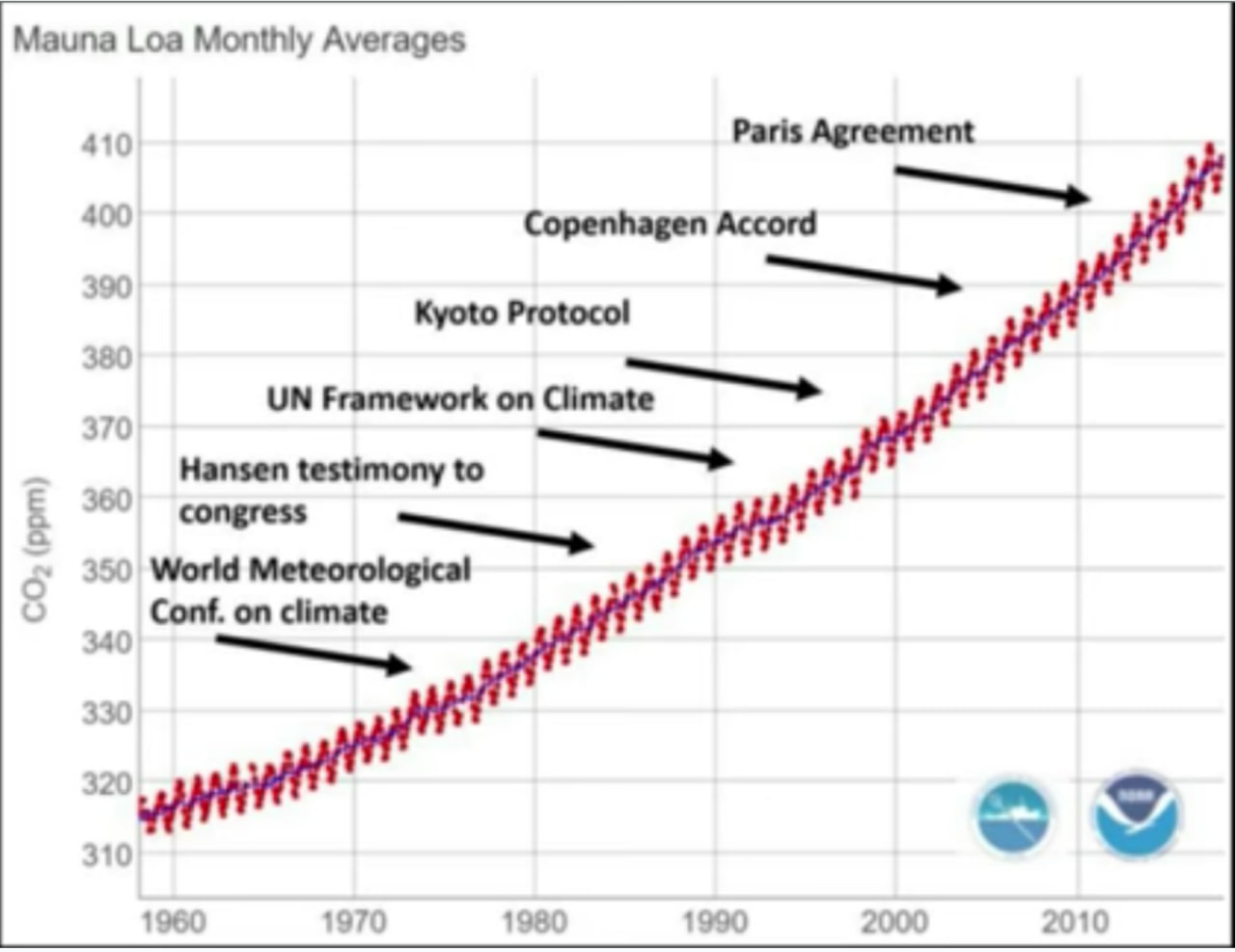
Below, X shows dates of previous climate summits while Y show increase in CO2 emissions in parts per million.
#climatechange #climatehoax #geoengeneering #chemtrails
nostr:npub1vwymuey3u7mf860ndrkw3r7dz30s0srg6tqmhtjzg7umtm6rn5eq2qzugd this might interest you.
"Money is a claim on energy. Debt is a claim of future energy" (Bio-Economist Nate Hagens)
Energy is deifned in phisics as the capacity for doing work.
BTC's increased demand and value at the moment is funded with FIAT money in the debt economy.
How is BTC going to keep its value, as a "digital gold" or its utility as a local and descentralised currency, when we don't have enough energy in the system to claim and transform all this value in work?
Of course we need a descentralised and P2P economic system, but how is BTC going to work witin the energy descent scenario we're in?
Folks, please forgive my BTC newbie questions, but I work with rural people and still don't feel confident that I should point them towards BTC. I feel, perhaps, a local currency would be less risky and more useful during an economic colapse… at least it would be backed by real food and local trust. Curious to hear your thoughts.
nostr:npub1yzvxlwp7wawed5vgefwfmugvumtp8c8t0etk3g8sky4n0ndvyxesnxrf8q nostr:npub1lytrxnf66uflkhm0hx32d2r0xchmvepg0mz987xgvgnaqlgu3r2s09fphn nostr:npub147whqsr5vsj86x0ays70r0hgreklre3ey97uvcmxhum65skst56s30selt nostr:npub180cvv07tjdrrgpa0j7j7tmnyl2yr6yr7l8j4s3evf6u64th6gkwsyjh6w6 nostr:npub1sn0wdenkukak0d9dfczzeacvhkrgz92ak56egt7vdgzn8pv2wfqqhrjdv9 nostr:npub1sg6plzptd64u62a878hep2kev88swjh3tw00gjsfl8f237lmu63q0uf63m
#asknostr
nostr:npub1trr5r2nrpsk6xkjk5a7p6pfcryyt6yzsflwjmz6r7uj7lfkjxxtq78hdpu another note to contextualise my questions in relation to the use of bitcoin to support small local farmers.
nostr:npub1trr5r2nrpsk6xkjk5a7p6pfcryyt6yzsflwjmz6r7uj7lfkjxxtq78hdpu please have a look.

Again, I’m just trying to understand the true value of a descentralized currency… If one already has land perhaps HODL is a good strategy, but I think BTC can be useful to acquire land and that after buying it it should be used as currency instead of value reserve.
Suppose climate change is a scam.
Is there any possibility that industrial society, corporations (geoengineering) and planetary movement are all affecting Earth's climate to some degree and at the same time?
Even it's completely proven that climate change is a hoax, does that mean we shouldn't be looking at soil erosion, biodiversity loss, desertification, deforestation, and water cycle polution, for example?
Would it mean that there isn't any problem with the western's anthropocentric view of the world? That we can simply keep going exchanging the health of the environment for a sick growth economy?
For instance, whether or not climate change is a hoax, the level of carbon in agricultural soils plummeted during the decades of the current 'Green Revolution'. Any farmer can attest to that.
When we increase SOC (Soil Organic Carbon), and have more individual plant species and plant families per square metre, we increase the nutrient availability in the soil without adding any inputs, as well as the nutrient density of whatever we produce, be it plants or animals (Dr. Christine Jones).
Not only that, when we increase SOC, soil aggregation and water infiltration also improve proportionally. So, why shouldn't we be thinking about carbon sequestration and fixation regardless of the root cause of climate change?
None of these food production related issues, which are a life and death matter for everyone, are discussed in the recent polarised debates about whether or not climate change is a hoax.
Shouldn't we be discussing how we can live and produce our food in ways that enhance all life supporting systems instead of trying to be on the cleverer side of a dumbly framed argument?
#agriculture #climatechange #climatehoax #culturalwar
If #BTC , as a P2P decentralised currency, is not used to support local farmers and descentralise food production and distribuition, what will be its use during a crisis such as COVID or if government freezes peoples money?
A decentralised P2P currency needs to foster the descentralisation of essencial goods and services, such as food production and distribution, health, and communication. BTC won't change (descentralise) these areas if it's mainly used as a store of value. It needs to flow and nurture areas providing for basic human needs. Don't forget that while regular people can only buy BTC slowly (due to their already fragile economic situation) in order to save resources and build wealth, most super rich people are buying land.
#asknostr #industrialagriculture #foodsystem #bitcoin

The point with my questions was to open a dialogue that can embrace complexities and nuances. For instance, whether or not climate change is a hoax, the level of carbon in agricultural soils plummeted during the decades of the 'Green Revolution'. The more SOC (Soil Organic Carbon), the more individual plant species and plant families per square metre, the higher the nutritional leval, the water infiltration and soil agregation. None of this, which is a life and death matter for everyone, is discussed in the recent polarised debates about whether or not climate change is a hoax. To make things worse, the majority of those saying it's a hoax, argue that to keep business as usual (and business as usual do not address the root cause as needed and as you pointed out very well).