
I was reading up on it last night and found this https://www.researchgate.net/publication/305525405_Effects_of_mineral_oil_immersion_cooling_on_IT_equipment_reliability_and_reliability_enhancements_to_data_center_operations
Hard to get a clear consensus from forums, some said mineral oil good, some bad, miners advised against in favor of $100/gal stuff
The expensive dielectric is definitely superior to any other option.
Growing cannabis in a cold frame heated with a homemade 110v bitcoin miner

Seeds are germinated and planted in the cold frame. Growing 5 different varieties this season.

I aim to keep the cold frame around 70f, by adjusting the opening throughout the day and keeping the custom 110v Bitcoin miner running at night. Last year I used an S9 to heat the cold frame which worked really well. The new miner is a significant upgrade.

I had to slap the enclosure together for this miner quickly so it's not pretty but it works. This is a single s19 hashboard running on 110v power utilizing a pivotal pleb tech Loki power supply spoofer installed on the control board. The spoofer tricks the control board into running on 110v power instead of 220v allowing the miner to run plugged into a standard wall outlet. I'm using vnish firmware to manually tune the miner achieving better than stock efficiency. An added bonus of using the Loki to run on 110v is that I am able to run this miner on the solar power system at my yurt during the day when it's not needed for heating the cold frame.
#permies #permaculture #homesteading #cannabis #weedstr #bitcoin #plebminer #meshtadel
Yeah but it was much more expensive than canola oil locally and much more viscous. I needed something I could get immediately close by. I also read that mineral oil is corrosive. Mineral oil might last longer than canola oil but I didn't need to use it for very long.
Amazing results from DIY Bitcoin mining maple sap reverse osmosis system.

This reverse osmosis maple sap concentration system utilizes an immersion Bitcoin mining heating loop to improve the efficiency of the system by heating the maple sap before it passed through a reverse osmosis filter. The immersion mining system uses canola oil as the dielectric fluid!
https://v.nostr.build/zZl0.mp4
https://v.nostr.build/A45L.mp4
Now that I've had a chance to run several hundred gallons of sap through the system I've have everything pretty dialed in. Depending on the ambient temperature and sap temperature the system is able to concentrate the sap 30-50% faster than before without the immersion mining heating loop. Additionally, the sap is getting concentrated to 7 brix in one pass vs 6 brix which means removing even more water before boiling than before.


The canola oil immersion mining heating loop is providing a 25% rebate on the power usage of the total system after upgrading the vanilla s9 hashboard to an s9j hashboard. So, the system process the sap faster saving time, removes more water saving propane/fuel and boiling time, and it pays a Bitcoin rebate on the power usage. By adding the immersion mining heating loop I've massively expanded the capacity of my existing maple sugaring equipment.
Because the mining system is temporary and I didn't have access to Bitcool or something similar for the dielectric fluid, the canola oil was a cheap readily available alternative. It has been working well with no noticable degradation.
There are some downsides to the system. First I lost a control board because I splashed sap on it. Then I lost two batches of concentrated sap. The heater gets the sap warm promoting the fermentation process, so I wasn't able to start boiling the sap quickly enough in the warmer weather. The bottleneck of the process is definitely at the boiling stage now.
This system can be built for less than $700 and is more efficient than similar systems costing over $2500... Necessity is the mother of invention as they say.
#homesteading #permaculture #permies #maplesyrup #maplesugaring #meshtadel #grownostr #bitcoin #bitcoinmining #homemining #plebminer
Welcome to the frontier, where plebs are producing their own food, using Bitcoin miners to do it all while disrespecting seed oils.

nostr:npub1f5pre6wl6ad87vr4hr5wppqq30sh58m4p33mthnjreh03qadcajs7gwt3z I am a new homeowner with 4 acres looking to get started in permaculture and homesteading. Where do I begin? What are the beginner resources? Thank you
For anyone interested in learning more about permaculture I recommend starting by studying the ethics and principles first.
The Essence of Permaculture by David Holmgren (co-founder of Permaculture) is a great introduction.
https://holmgren.com.au/essence-of-permaculture-free/
When first starting to apply permaculture and design systems, there are a few principles I recommend to put more focus on.
Slow and Small Solutions is important to keep in mind. It's very easy to want to do to much too fast when first building systems. Going too fast or too big is often met with unforseen issues due to lack of experience and observation.
Observe and Interact is also important, spend more time observing the existing conditions for which the system you want to create will be implemented. Observing how you interact and what your style/aptitudes are can offer lots of good information for improving systems before implementing them.
The design from patterns to details principle goes well with the others, thinking about the patterns and big picture of the system first and focusing on the minute details after it's up and running can save lots of time and money. It's easy to focus on making compost tea, and the perfect garden bed design but later realize that planting in the right location or at the right time offers much better yeilds for the time and money.
Personally, I've benefited a lot by making sure design systems that are easy to modify, move and expand. I avoid making anything permanent starting out and I try a lot of small experiments at once. I try to take good notes and review them regularly. I ask questions to people in my area, take thier advice, and take note of what's working for them. However, any time I thought to myself this is "the way" do something, I have been disappointed. Instead, I've learned to take inspiration from other's techniques and find ways to work them into my systems while taking into consideration my own aptitudes, style, and available materials/equipment. I've been surprised at how fast years go by and all the sudden systems are producing more yeilds than I can utilize.
A general rule of thumb is to spend at least one full year observing the property before implementing any major design. In that observation period, start designing the rough sketches of the systems. Get some small proof of concepts going.
I plan on offering v4v consultantions, if anyone is interested in being a guinea pig please reach out!
#permaculture #permies #homesteading
Permaculture Nest: Bitcoin is a Successional System

The next permaculture nest topic will be on designing for/with succession in systems and why I think Bitcoin is a successional system. Wednesday April 6th at 8pm eastern time. Tune in and chill out!
#permaculture #homesteading #permies #nostrnests #bitcoin #succession

This dude is going to get his Bit Coins confiscated by the feds via coinbase.

Three most likely things are retained placenta, ketosis, hypocalcemia.
Start by taking it's temperature to determine if it has a fever. Normal is 101.5-103.5 fahrenheit. If fever, it could be an infection from retained placenta if the placenta didn't come out. Hopefully this video is helpful in determining if it's ketosis or hypocalcemia:


Yes, it's all good for outdoor but the most stable variety is the redbud haze. The others are experimental.

My main goal beyond developing my homestead to provide for me needs is to help others do the same. I am working on offering more and more educationion. Seats for The applied permaculture class I offered last fall could only be purchased with Bitcoin.

We do balsamic vinegar and honey in the slow cooker with herbs.
Something like this:
https://nourisheveryday.com/thyme-balsamic-slow-cooker-lamb-shanks/

Trying bringing cash to a Bitcoin meetup and offer to buy some Bitcoin. You might find that no one wants the cash until you start offering to pay a premium over spot. Each local Bitcoin ecosystem will value no kyc p2p Bitcoin differently.


You growing a market garden? Selling the starts? Why so many?

I'm eating apple chips made from apples off a neighborhood tree, dehydrated with a Bitcoin mining food dehydrator, smothered in maple syrup produced from trees on the homestead with the aid of canola oil immersion Bitcoin mining, right now.


This has got to be a joke... Cold wallet in a vault for a nation has to be one of the silliest stacks for securing keys one could imagine.
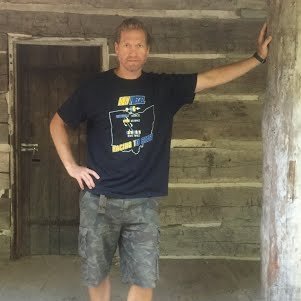
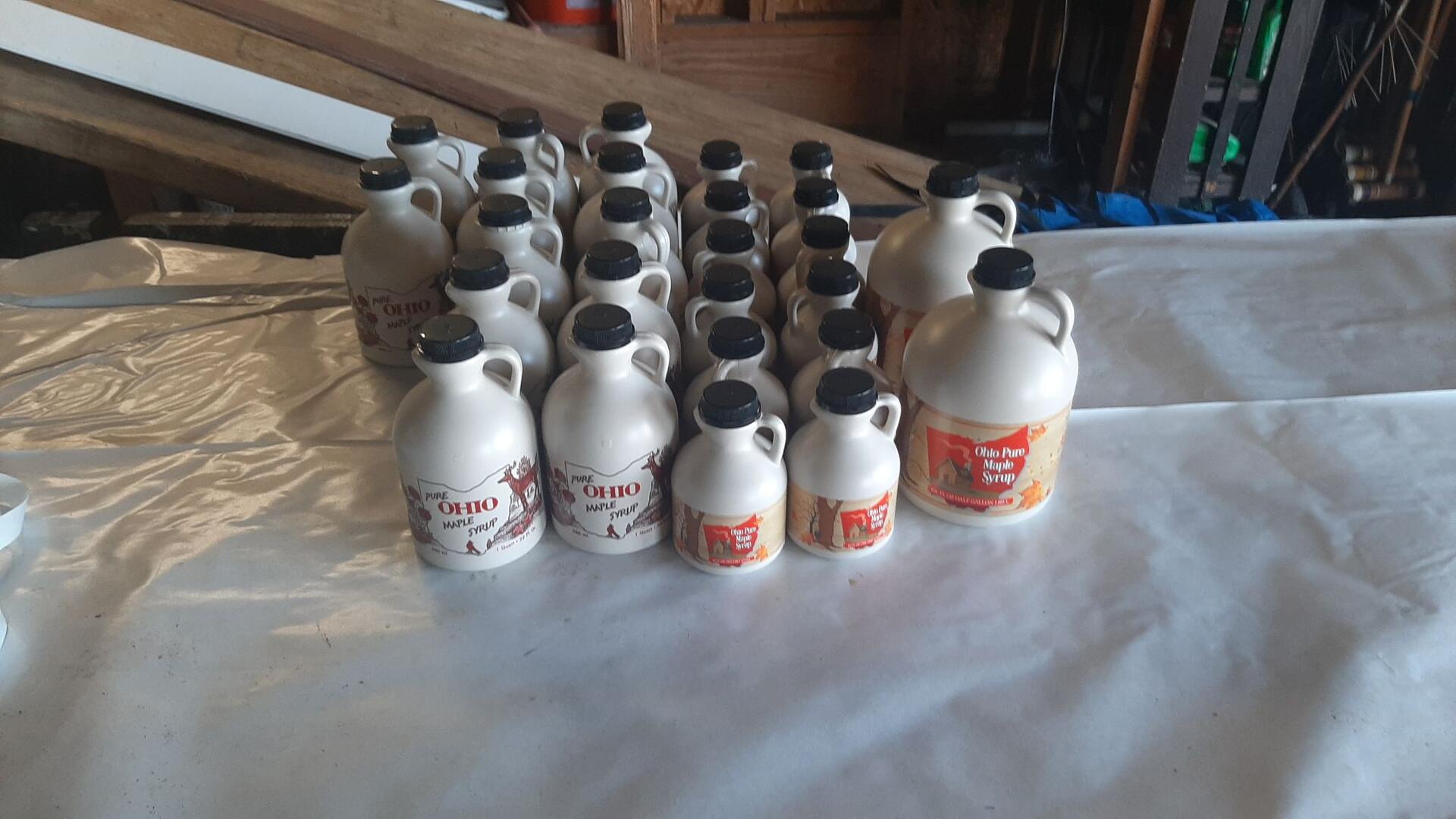
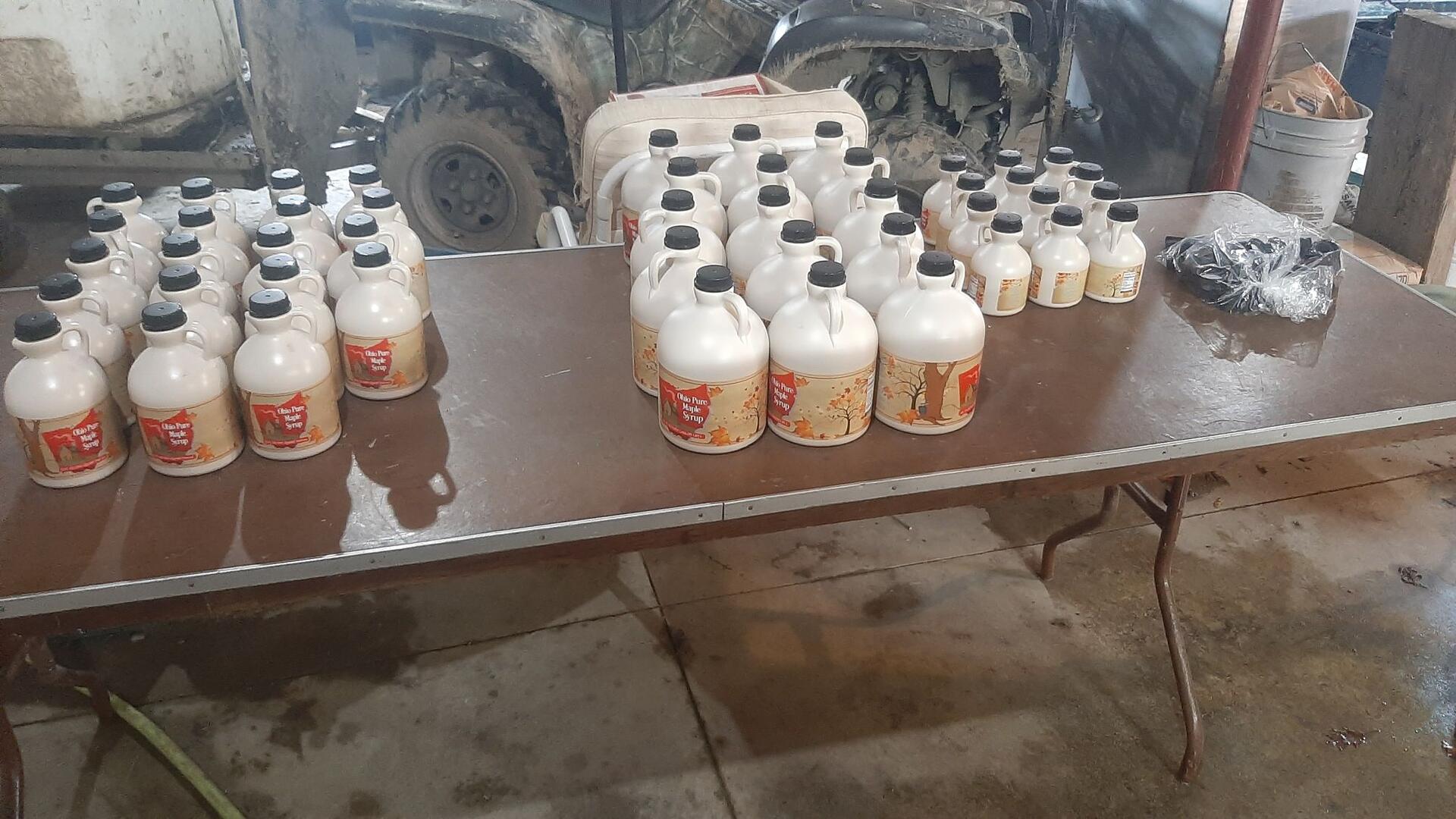
Maplesyrup 2024. I am sending out to Nostr this year before twitter. If you heard of this from nostr:npub1vwymuey3u7mf860ndrkw3r7dz30s0srg6tqmhtjzg7umtm6rn5eq2qzugd then let me know.. Pricing went up a couple bucks this year. Shipping is included.. I can also do glass mason jars of the pints and quarts, but it is $5 extr and may take a week.
1 qt. $27
2 qt. $47
3 qt. $68
1 half gal $45
2 half gal. $80
4 pt. $50
6 pt. $75
I am still in middle of season so you might not hear from me right away. I will get back to you over this next week.

This is a fantastic idea! The positive pressure from the fans of the miner plus the stack effect of the heat should creat a lot more draft than just the fans by themselves. Depending on the price of power, if it's close to break even if might be worth it. Hard to say if the added effect of the heat would be better than more powerful fans instead to create the airflow. However, if you put something like a food dehydrator between the miner and the exhaust chimney then it would definitely be worth it. Plus, if there is ever any coolness in the house the miner is probably all you would need to keep things comfortable.
Makes me think I should try using the miners as hot air exhaust fans in my yurt, they run on solar power anyway and it would save the power from running the existing exhaust fan. Been wanting to add cooling tubes that would draw air in from the ground below the platform as well. Thanks for the ideas!!

My journey to mining bitcoin from electricity created by the sun began last year on a mountain in Tennessee. At the time, my family was living off grid, exploring what it was like to take a step out of the regularly scheduled societal program and into a life of greater connection to the natural world and the people around us. We were living well with the sun as our source of electricity. So well, in fact, that there were many days that our batteries were topped off well before noon, which meant that our solar panels were capable of harvesting much more energy than we needed. I’d been hearing that bitcoin miners are really good at soaking up and monetizing excess energy, so I took a look at our system’s capacity and the miner options available. I discovered that Bitmain’s S9 miner was plug and play ready for my application, and it only cost $125. It was perfect as a low risk way to learn more about home mining and an easy way to test what it was like to mine on solar. I started plugging in the miner on sunny days after the batteries had reached full charge and it worked! I was turning the extra solar capacity into hard money. I was hooked and began dreaming of ways to optimize the system. Before long, I discovered an online community of home miners who were tinkering with all sorts of interesting ways to use miners to add value to their lives. In particular, I was intrigued by the work of nostr:npub17h5wenqrfy4hym0zg5kqytraa7zmcqm9ehw4yxmexd2yyhukq8vsuj88mq , who builds a tuner that allows a modified S19 series miner to run on 12v dc current straight from solar panels. This increases efficiency by eliminating the AC-DC power supply miners require when running from AC power sources. I purchased a tuner box from Dirty in November and began assembling the necessary components to build a completely off-grid solar mine. This week marked the maiden voyage of the system. As with any project that pushes the boundaries of what has previously been done, the road has been bumpy and winding. What follows is my attempt to get into writing the process, challenges, and successes of this project, both as a reference for future me and as inspiration and information to anyone who is curious about mining bitcoin with solar.
Before embarking on this project, I identified the following goals:
1. To invest capital in energy independence and resilience.
2. To expand my experiential capital in both solar systems and bitcoin mining.
3. To setup a relatively passive income stream that reduces the ROI of the solar system.
4. To harvest the heat from the miner to supplement home space heating.
I don’t currently live in a home that I’m able to add a solar system to, so I had to get creative. Fortunately, I found a family member who was willing to host the system in exchange for the supplemental heat from the miner. I have designed it so we can move it when we move to property where we have more space. The system is an asset that should bear fruit for decades.
The system is composed of the following components:
1. Solar panels. Due to the design, 12v panels are necessary for maximum utilization of electricity produced. Technically, higher voltage panels will work, but they will be limited to a fraction of their maximum output because the miner requires 12v supply. 12v panels are more difficult to find. I got mine on eBay. I started with 3 Kw of capacity, which is around the maximum draw of my miner. This doesn’t mean the panels will produce 3 kW. We’ll get to that in a bit.
2. Miner. Currently the firmware for the tuner supports Bitmain’s S19 series miners. I went with a j Pro 100Th machine.
3. Solar tuner box. This is where the magic happens, adjusting the power sent to the miner based on what’s available from the panels and batteries.
4. Batteries. 400ah of 12v lithium.
5. Racking. I spent a lot of time putting together racking that was as cost effective as possible while meeting aesthetic and functional needs.
6. Wiring, fuses, breakers, connectors. Due to the length of my runs, this required upsizing my wire.
Challenges in setting up the system:
1. Panel placement. The roof I have access to faces east/west. This is not ideal. After careful consideration, I decided to place panels on each slope of the roof. My hope was to capture more hours of sun rather than focussing on peak power production. The jury is still out on whether this was a good idea.
2. Wire run. Low voltage systems do best with short wire runs because of the expense of running wire gauges that are large enough to safely carry the amps the panels produce. The constraints of my system required wire runs of up to 45ft., which meant I had to upsize my wire gauge. This was expensive.
3. Setting up the tuner box. This was mostly due to my limited technical knowledge. I was learning how to setup and operate a solar system, a bitcoin miner, and the tuner all at the same time. There’s a learning curve. I spent a couple of days foiled by a bad sd card. Slow and steady wins the race.
After running the system for a few days, some things are becoming apparent:
1. The solar panels seem to be the limiting factor right now. In full sun they harvest around 750w, which is 25% of their rated maximum. My current hypothesis is that panel placement is largely to blame. The panels are flat on the roof, facing east and west. I knew this wasn’t ideal, but it seems to be even less so than I hoped. The next step is to try tilting the panels south as much as I can. Production should improve as we enter the summer months and the earth’s axis shifts to bring the sun higher in the sky, striking the panels more directly. I will need to make improvements if I expect to hash over the winter. There is enough space on current racking to add another panel or two, so that is another option for adding watts.
2. Current battery capacity will only extend runtime marginally. It works well if the sun is momentarily obstructed by clouds, but if I want extended runtimes when the sun is down I’ll need to add batteries.
3. Turning extra electricity into heat and BTC is fun! I see lots of potential to keep tweaking the system for maximum efficiency.
Questions? Ask away.
#solar #mining #plebminer #offgrid



To me, since there is no algo to help curate content, I try to consider the content people that follow me would enjoy and boost that. It's a way to add more value to following along with my homestead adventures. Hopefully we can all be resources for each other in this way and collectively aggregate the most valuable information into each of our feeds.


Nice boiler! It's only a matter of time until I end up with something similar. I'm already done sugaring for this season. Need to move on to other projects. It was the earliest run I've experienced so far in the several years I've been doing it. Glad the RO system is working out! Take good care of the filters and it will make the whole operation much more efficient and profitable.

There are actually 8 or even 9 forms of capital. Financial, material, living/natural, intellectual, experiencial, social, cultural, spiritual and vitality/health/well-being.

Compounding effect of gaining knowledge is hard to quantify at first but in hindsight, very valuable. This is one way DIY can pay big dividends even though it can be slower and riddled with mistakes and mishaps. The knowledge gained will continue to build upon itself.
Social and Cultural capital are often overlooked as forms that have been eroded by fiat. However, as the fiat incentives drive more homogeneity, it becomes even more valuable to focus on developing relationships and culture with people you can count on and cooperate with.