Avatar
acronym
50297003d3c429af2e9f237f9a46b9c2df98c46d1f386f37acacced1e6796136
And if you go chasing rabbits, and you know you're going to fall...

I gave that a go both ways:

1) Switched back to Phoenix after send

2) Switched back and forth after send

Still failing payments to Phoenix always if greater than around15,000 sats, 50% of the time if sending smaller amounts around 2-3000 sats.

Sends to Primal with smaller amount also fail.

I installed Zeus and set up with Olympus, it does indeed sync and start up better than early days.

I can receive from Phoenix just fine every time, but unfortunately sends to Phoenix fail every time.

Is there anything I can do to correct this?

Has there been any improvement in app opening/syncing time since early Olympus days?

That's a bit of a myth IMO. Socialism started way back when we realized that living in a village had benefits and advantages over going it alone. Yes BENEFITS. We are all socialists in so many ways. When a loved one is taken by ambulance via public roads to hospital emergency.....

OK, I'LL SAY IT LOUDER THIS TIME.....

BITCOIN DOESN'T NEED TRUMP.

OH, AND PLEASE FUCK OFF WITH YOUR RFK, BITCOIN DON'T NEED HIM TOO!

Bitcoin doesn't needTrump.

Matt, you are making yourself look like a whore rubbing elbows with that lot just because their handlers and assistants said bitcoin.


Might be reading this wrong but it moves me more to see seemingly intelligent people give any favour to this guy.

Saying that he now likes bitcoin doesn't change my view of him any more than if Putin or the Taliban said the same.
Listened to them on pods and always thought they were fully dedicated principled individuals who stuck to their guns, Bitcoiners not assholes.

They could win this thing, how would they be viewed then by their detractors?

Replying to Avatar Travis West

The indictment against the alleged Samourai Wallet (SW) operators was unsealed today. A few friends have been asking for my opinion on it and my channels are blowing up. I used to serve in law enforcement as a detective that specialized in cybercrime and blockchain analysis. The following information may be useful or interesting to some.

Reading through the Department of Justice’s press release and the indictment itself, here are my initial thoughts:

There are plenty of examples of past investigations resulting in arrests/convictions related to the operation of custodial mixing services, with Bitcoin Fog being the one in recent news. With a service taking custody of funds and moving funds between other people/users, they are likely going to be considered a money service business. And if a money service business doesn’t block Americans from using the service, the US Department of Treasury will require the operators of that service to register with them and follow their compliance regulations. Many foreigners have been arrested in foreign jurisdictions in order to be prosecuted in the US with an American judge and jury for allegedly violating federal American laws (read that sentence twice).

With these sorts of cases, you are typically dealing with the idea that a service didn’t register correctly and follow compliance regulations. And then the other idea is that the operator of the service knew and allowed funds to move through it that would be considered “illicit” or “sanctioned.”

Examples of illicit funds may be proceeds from illegal drug sales or funds stolen from someone. The sanction piece can involve entities, such as particular Bitcoin addresses, individuals, companies, or countries, using the service or receiving from the service. The US federal government maintains a sanction list.

The above summary has been an on-going fight on privacy, censorship, and regulatory overreach for a while. It isn’t new (and Roman Sterlingov should be free). SW’s indictment is different from the situation I summarized above though.

SW was a non-custodial service. This means that users controlled (their private keys to) their funds themselves and the service provider (SW) allowed the coordination between users through its infrastructure, such as the app, the server, the continued development, etc. This makes this case much more interesting and more concerning to me.

Regarding the first count against the men: Conspiracy to Commit Money Laundering. The SW indictment alleges that SW was a service that provided “large-scale money laundering and sanctions evasion.” So we are talking about users using illicit funds with the service and sanctioned entities using or receiving from the service. And we are talking about the SW coordinators “conspiring” with the relevant users to do this.

The indictment is constantly referring to SW as an “application” that is conducting or facilitating the mixing through a “centralized coordinator server.” Who controls the application and server? Allegedly the two men named in the indictment.

When it comes to SW’s Whirlpool service: Through their server, their application is selecting the inputs. Their application is communicating information between all users necessary for the mixing to occur. Their application is using the private keys on behalf of the users. Their application is broadcasting the mixing transactions to the Bitcoin network. The picture the indictment is painting is that the application and server are essentially doing the money laundering, as opposed to the users using the service. Similar verbiage and logic are used to describe SW’s Ricochet service too (adding hops to a send you intend to do).

The above summary is the most shocking piece of the indictment, in my opinion. The implications of this reach beyond Bitcoin-related apps and services. Think of the apps and services, just in general, that a user could use to engage in criminal behavior. Now think of arresting the developers/creators for what the user did.

Regarding the second indictment against the men: Conspiracy to Operate an Unlicensed Money Transmitting Business. The indictment says the SW operators were “involved in the transportation and transmission of funds intended to be used to promote and support unlawful activity.” There isn’t any mention or consideration of custody of funds in this. The logic of the indictment: Some users may have used SW’s application and server for “unlawful activity” and therefore, SW was involved in the unlawful activity. Again, this is a scary precedent. Think of the applications and servers out there right now that users may be using for unlawful activity.

There are many mentions apparently from the coordinators themselves that address the knowledge and intent element (important for a criminal trial). The SW operators were obviously passionate about financial privacy and resisting compliance regulations. Their messages (especially with their style of messaging) will be easy to spin/take literally, even if the coordinators were just trying to be edgy with their marketing/brand. The SW coordinators did not help themselves in this regard.

I think the government will focus a lot on the coordinator’s knowledge and intent of the service being used for illegal activity. I believe this is how the government will “limit” the scope of the precedence and how it will try to differentiate the SW service from others.

Regarding the illicit funds/sanctions piece: The blockchain analysis showing funds from Dark Web markets that sell illegal drugs flowing into SW’s Whirlpool will be easy for the prosecution. The same goes with sanctioned entities sending to or receiving from SW’s Whirlpool. It will also be easy to show funds flowing from known hacks, exploits, and/or thefts flowing into SW’s Whirlpool. The government will need to prove the men knew this was happening and that they facilitated it by providing the SW application and server. Their mouths may be their downfall on this one, but I think it is pretty clear that the SW operators’ intent was to provide a neutral financial privacy tool that didn’t control user funds, leaving the responsibility of the use of those funds on the users themselves.

With the logic in this case, I wonder if it will be argued that blockchain analysis companies are also culpable since they surely had their own funds being mixed in SW’s Whirlpool to collect data points. Were their funds facilitating illegal activity? Or were their funds facilitating financial privacy in general? (Maybe facilitating privacy was just the byproduct of having the chance to trace through exclusions.)

Overall, the case leads to some interesting questions.

Is a wallet software and developer a money service business now? How about a full node? These both facilitate the transmission of funds too. The implications of this case are not good for privacy or code. I’m ready to donate to the defense.

Curious that they mentioned Silk Road, thought that ended a few years before Whirlpool started?

Was this to win favour from the mainstream American public?

Replying to Avatar Ava

U.S. says recent Microsoft breach exposed federal agencies to hacking

"A cascade of avoidable errors"

#cybersecgirl #microsoft #breach

From the Washington Post:

The U.S. government said Thursday that Russian government hackers who recently stole Microsoft corporate emails had obtained passwords and other secret material that might allow them to breach multiple U.S. agencies.

The Cybersecurity and Infrastructure Security Agency, an arm of the Department of Homeland Security, on Tuesday issued a rare binding directive to an undisclosed number of agencies requiring them to change any log-ins that were taken and investigate what else might be at risk. The directive was made public Thursday, after recipients had begun shoring up their defenses. The "successful compromise of Microsoft corporate email accounts and the exfiltration of correspondence between agencies and Microsoft presents a grave and unacceptable risk to agencies," CISA wrote. "This Emergency Directive requires agencies to analyze the content of exfiltrated emails, reset compromised credentials, and take additional steps to ensure authentication tools for privileged Microsoft Azure accounts are secure."

"CISA officials told reporters it is so far unclear whether the hackers, associated with Russian military intelligence agency SVR, had obtained anything from the exposed agencies," according to the article. And the article adds that CISA "did not spell out the extent of any risks to national interests."

But the agency's executive assistant director for cybersecurity did tell the newspaper that "the potential for exposure of federal authentication credentials...does pose an exigent risk to the federal enterprise, hence the need for this directive and the actions therein."

Microsoft's Windows operating system, Outlook email and other software are used throughout the U.S. government, giving the Redmond, Washington-based company enormous responsibility for the cybersecurity of federal employees and their work. But the longtime relationship is showing increasing signs of strain.... [T]he breach is one of a few severe intrusions at the company that have exposed many others elsewhere to potential hacking. Another of those incidents — in which Chinese government hackers cracked security in Microsoft's cloud software offerings to steal email from State Department and Commerce Department officials — triggered a major federal review that last week called on the company to overhaul its culture, which the Cyber Safety Review Board cited as allowing a "cascade of avoidable errors."

I am amazed they are still using email for sensitive stuff!

Good to see you here Sir, always enjoy reading your views wherever I come across them.

Consider getting set up for zaps!

Your Lightning wallet is hit and miss at best.

I have been trying to send out my sats (so I can uninstall) for many days to different places and it fails fails fails....

Oh and now a closed channel for partial amount, nice.

Your "support" is a sick joke also - send a support message directly from app, an automated email comes right away saying someone will reply and they never do even after weeks.

Replying to Avatar Rico

#grapheneOS nostr:npub1gd3h5vg6zhcuy5a46crh32m4gjkx8xugu95wwgj2jqx55sfgxxpst7cn8c

You can update the GrapheneOS on a Pixel 7 for half a year without ever rebooting the phone and it still works. How do I know? My wife told me today she is unsatisfied with her phone. It's slow and sometimes glitchy. She never turned it off or rebooted it in half a year, yet installed every system update. She swiped away the reboot notifications. 'didn't read, don't care'. I'm not mad, this is amazing 👀

Once a night, every night!

All just workarounds, the real way is just not use it.

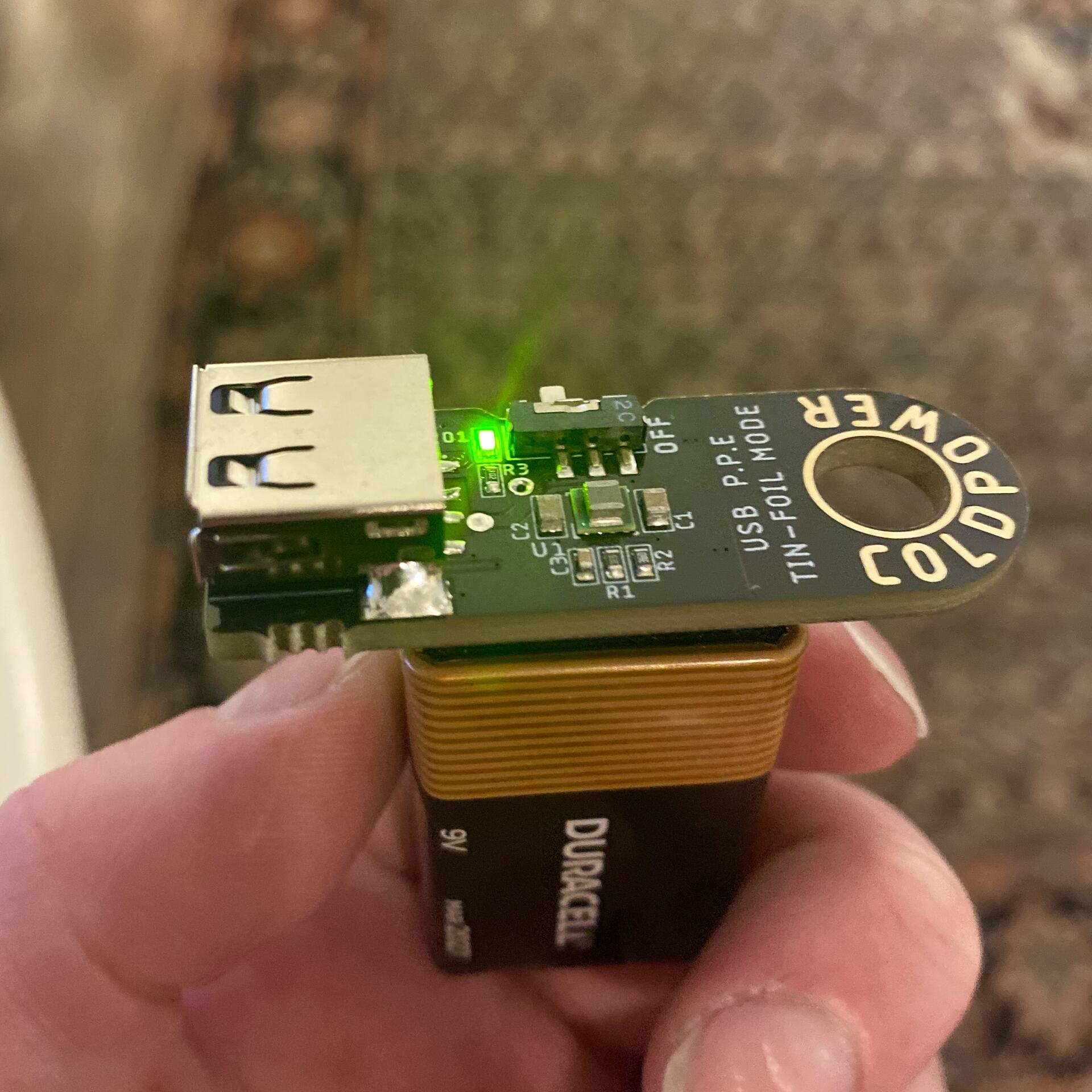
Makes way more sense to power sensitive electronic devices with clean DC power than with dirty modified AC power from a charge cube. I wouldnt stick my Coldcards into anything else.

Replying to Avatar Ava

PrivacyTechPro tip: Using an always-on VPN is recommended good privacy practice. However, there are other ways of tracking your specific device on the internet.

For example, if you forget you logged into Google Chrome with your real account and real name or you forgot to log out of Gmail and you visit a website with Google tracking, the site (and Google) may still be able to identify it is you browsing their site based on your device and browser fingerprints (screen resolution, installed fonts etc) and your Google login, even though you are using a VPN to obscure your IP address.

Here are a few ways this could happen:

Websites using Google sign-in - Some sites offer "Sign in with Google" as an option. If you use this to log into a site in Chrome, the site will know your Google account and can associate your activity with that account.

Cookies from Google services - As you browse the web logged into your Google account, Google may place cookies on sites you visit that could identify you to those sites. For example, if a site has integration with Google AdSense or Analytics.

Browser fingerprinting - Through techniques like collecting information about your browser, plugins, system fonts and other details, sites may be able to uniquely "fingerprint" you and track you across browsing sessions. Being logged into Google could be one detail contributing to a fingerprint.

Using a paid always-on VPN (#IVPN, #Mullvad VPN, #Proton VPN) while using Tor helps mitigate this risk when you need extra privacy by going beyond just obscuring your IP. It has anti-fingerprinting technology that makes you look the same as other users on the network.

Do a side by side test with VPN + privacy browser (#Mullvad, #Librewolf) only, VPN + regular bowser, and VPN while using Tor to see the difference with what can be known about your device here:

https://www.deviceinfo.me/

#cybersecgirl #privacytechpro #tor #vpn #privacy

Hot tips:

Don't use gmail

Don't log into Google anything ever