


The universe, or maybe God, seems to frown on IOUs. The hack is to claim the change you want by doing first. Justify later, or not at all.
Its a mirror. It reflects you back to you.

Oh hey, I recognize that character... Stargate sg1 was the best
Yep, I could barely move on Christmas, much less exercise

Good points. And monero is interesting, but I think it offers less privacy than coinjoined btc

I unlostified some sats the other day. Sorrrrrry..... ns*
Actually... Maybe you don't subtract the closed loans... Ehhh I forgot too much.
The best we can do is guess. That's a sad reality about economics. Or happy... I can see reasons why that's a happy reality too.
Most guessing for the USD (no idea about btc) is based on loan origination. There's a "velocity of money," which is also a best guess, which you multiply by the loans created by banks minus loans closed out, to get the guesstimate of how much money is circulating. Vaguely... I haven't done an exercise for this in over ten years.
Bitcoin is going to be even harder to guesstimate. Its probably right to assume most transactions aren't reported, and knowing which tx coming out of one utxo is the spend and which is the change is probably mostly guessing.

Most of my gal cousins are chill too. Trend, not absolute...
Its a Christmas present. I'm biting the bullet and finishing it fast. My tongue is happy but my body is in open revolt.
Discovery...
Large amounts of chocolate make exercise more difficult.
Nobel prize, plz.
That was a really good video. Gonna have to find and subscribe to that on my other device...

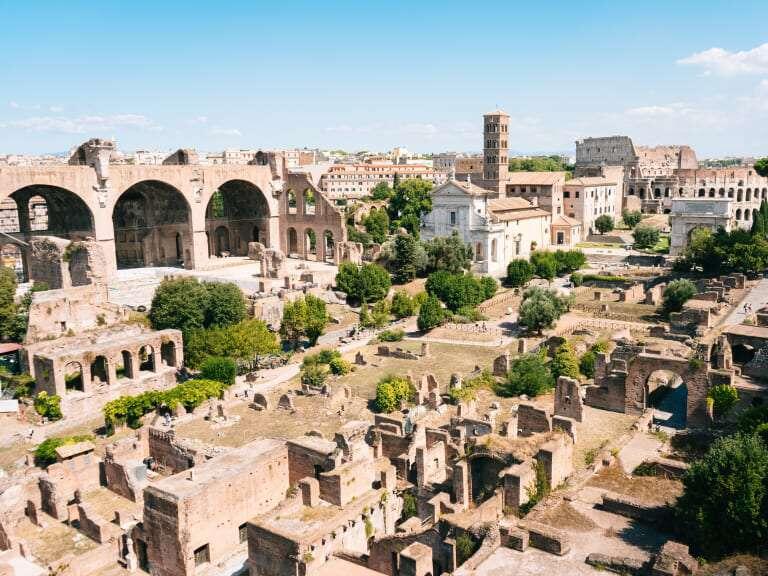
The Libertarian Lens on Rome's Economic Crisis of A.D. 33
(Dedicated to the roman Mario Draghi, Tiberius)
In the shadow of the Palatine, under the distant rule of Tiberius, Rome faced an economic tempest in A.D. 33 that would challenge not just its financial stability but the very principles of governance and liberty that underpin economic freedom. From a libertarian perspective, this crisis serves as a profound case study in the perils of state intervention and the unintended consequences of economic policy.
The Catalyst of Crisis:
The economic downturn was set into motion by a law mandating senators to invest heavily in Italian land, an act of economic nationalism that clashed with the libertarian ideal of free market dynamics. This policy, aimed at securing Rome's economic sovereignty, instead led to a devastating liquidity crisis. Land values plummeted as senators scrambled to comply, demonstrating a clear violation of the free market's invisible hand—a hand that libertarians argue should guide economic activity, not the heavy fist of state regulation.
A Libertarian Critique
From a libertarian viewpoint, the crisis of A.D. 33 is a stark reminder of the dangers of government overreach. The forced investment in land was not merely an economic misstep but an infringement on individual liberty and market freedom. This echoes the belief that individuals, not the state, should determine their economic activities based on voluntary exchange and personal risk assessment.
Tiberius' Intervention: A Double-Edged Sword
Tiberius' response, while stabilizing in the short term, offers a complex lesson. He injected vast sums into the economy through interest-free loans, a move that could be seen as an early precursor to modern-day state interventions like quantitative easing. While it undoubtedly alleviated the immediate crisis, libertarians would argue this was a band-aid solution that masked deeper issues of market distortion caused by initial government interference.
The Human and Economic Cost
This crisis laid bare the human cost of economic policy, where farmers, merchants, and senators alike were caught in the web of state-induced economic volatility. Libertarianism, with its emphasis on individual liberty, would decry the suffering caused by such policies, advocating instead for a system where economic decisions are made freely, reflecting the true will and ingenuity of the people, not the whims of rulers.
Philosophical Reflections
The crisis of A.D. 33 invites us to reflect on the balance between government and market. It's a potent narrative on how the state, in its efforts to control the economy, can inadvertently lead to its own undoing. This event serves as a historical testament to the libertarian creed that economic freedom is not just beneficial but essential for prosperity and individual well-being.
The economic crisis under Tiberius in A.D. 33 is more than a historical anecdote; it's a cautionary tale about the perils of government economic meddling. It underscores the argument for minimal state intervention, the sanctity of property rights, and the power of free markets to self-correct. From this ancient crisis, we can draw a modern lesson: that economic liberty is the bedrock of a just and prosperous society andfree markets are the absorber of economic shocks.
https://youtu.be/6B5Bthon7QM?si=nZ-iYyee8Yuoldn8
#rome #history #libertarian #socialism #soundmoney
Same year as the crucifixion?
"Render unto Caesar" indeed...

I'm finding Saylor's opinions less and less useful.
Loving this book so far - but found a retarded assumption in the introduction.

Wrong wrong mcWrongenstein
Clearly there is a connection between women gaining positions of authority and the increasing psychopathy in society. Men know that we would do with less material excess in our lives if not for the demands of women. And who gets mad when we break from social norms? Not men... It is women who enforce traditions and expectations which are culturally exclusive to the most well off people, to the detriment of the least well off. Try and date someone from another cultural background and from a poorer country - who in your family has sharp words about it? The women. Who fights and builds life long grudges?
The author is Swedish. I should be happy it took 22 pages for him to display his retardation.

Does anyone actually believe NASA will land on the moon in 2026?

and seed oils.