

The federal level would be broke. No reason to keep the system going. Each province or groups of aligned and neighboring provinces as sovereign nations.
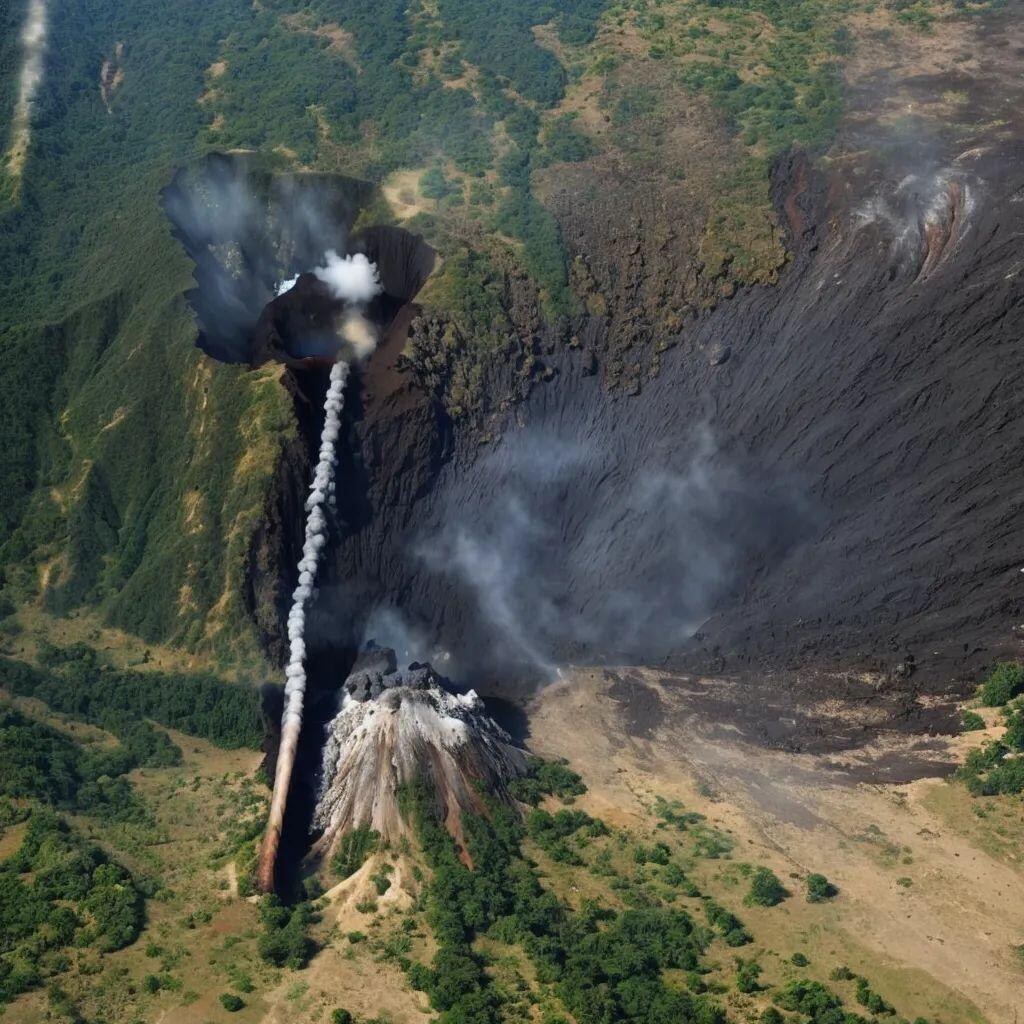
Maybe accountability is not the most significant contributing factor to road deaths?



Trying to ration my single-serve pack for the next 3 days

The fact that journals don't pay highly qualified experts for extremely valuable peer review creates the incentive to offload academic work to AI when researchers already have too much to do
It takes the problem of AI in science for MSM to shed light on the absolutely atrocious parasitic state of academic publishing. In some way I guess that's progress.

How would you quickly discern between machine-made and humanade? Seems like that in itself is a chore


I like the ideas for novel ways of interacting with research you mentioned here. It's all very compelling from a user perspective, but maybe even more so is the potential for organic growth beyond what we might imagine currently. It could be something that lowers the barrier to entry for "non experts" to learn and engage, and maybe even to contribute to experiments and validation but that won't be the case for most experiments. Equipment and materials are expensive in many fields of research. Either way, making research more accessible, and open to both interaction and discussion is a great way to build trust.
As for attracting research to Nostr, I'm ambivalent about zaps as an incentive. The problem is that it's an incentive that may or may not align with the vision of making research more open and accessible and, more importantly, building trust. Contrary to some narratives out there, I know plenty of people that are die-hard scientists with a genuine curiosity about the world. Money is just another necessary tool to keep the research going, and they honestly couldn't care less about it. That said, the current paradigm of "publish or perish" is not so different from zapping in that it, too, is just an incentive that may or may not align with good science.
The same ambivalence I have about zaps to attract content applies to the peer review process. Currently peer review is unpaid work, which is actually criminal, but introducing zaps from anyone to anyone for peer review can also have a corrupting effect. I honestly don't have a good solution that applies universally, and I'm not sure there is one, but good solutions may evolve organically depending on unique sets of conditions.
Getting citations on published work is also validation that the research is valuable because it implies others are building on top of it, or adjacent to it, or at least recognized in some way. If works published through medschlr start getting cited through other various channels then that could boost its legitimacy. There's still the peer review problem to deal with though.

Biohackers Toronto promotes a decentralized solution for censorship-proof medical publication - nostr:nprofile1qy88wumn8ghj7mn0wvhxcmmv9uq36amnwvaz7tmwdaehgu3wvf5hgcm0d9hx2u3wwdhkx6tpdshsqg8at7phk7p7q65g8wex34u342y6ptklxq5jnf7g6mr3fmnl0d3f5gtx5qrc
https://biohackerstoronto.com/medschlr-empowering-healthcare-knowledge-through-nostr/
This is a really tough problem to solve. Getting research into the public's hands isn't very difficult because you can just put pre-prints into biorxiv or medrxiv. Doesn't really matter what the content is as long as it follows the formatting guideline. I think the bigger problem with those platforms is the limited functionality to interact with the content. It's basically no different from just reading printed paper.
What currently gives the research weight is the peer review process and the "scarcity" perception of the publishing outlet. Peer review is already highly skilled unpaid work because journals maintain their monopoly over the process, and the journals themselves manufacture scarcity by publishing only what they think brings them more money. By extension, funding typically goes to researchers that publish in those artificially scarce journals. That creates a lot of intertia in the system.
It's been just over a year since the war started against the parasitic monopoly of the science publishing world https://www.lieffcabraser.com/pdf/AcademicPublicationsComplaintFinal.pdf
It's going to be long and grueling to dismantle that system. I'm not particularly hopeful about the outcome of this case because it'll probably just result in anti-trust law enforcement where some bits and pieces of the parasite get broken up and sold off. The inherent problem of third parties gatekeeping information will remain largely intact and academics will remain largely at their mercy.

The V4V R&D model strikes me as just a different form of gofundme campaigns. Just not the same vision, time preference or scale for most fields of research.

Researchers are actually all over the new stuff all the time, but starting a project on it is very difficult because of all the bureaucracy and begging involved for funding

using this i was able to vibe code a diablo/path of exile-style loot system. it can run millions of simulations in under a second.
a nostr mmorpg or arpg might be fun... what if item drops could be minted as nostr notes with verifiable randomness 🤔
https://jb55.com/s/4379d654da44f249.txt
nostr:note1gz7m3jesy80yfj4q97h5nctelvxqartdxww2rjyf9nkte5l9z8zqjm7squ
Make the Windforce drop for me on my first Pindleskin run plz

lol I don't think I'd be on nostr if I were
Just a mute? How polite of you
A post mortem on this exploit if you're curious. The attacker paid a hold invoice as expected, but force-closed the channel immediately on first confirmation of the funding transaction, which is very much not expected. That basically broke the signalling chain such that publsp expected an 'OPEN' status but it never got it since the default number of confirmations for the LN implementation to send the 'OPEN' is 3. So the preimage needed to settle the invoice was never released. That's the second problem. The preimage needs to be released in order to actually claim the attacker's payment, but persistence was in memory only, and after the dust settled on what happened, the preimage was effectively gone, thus dashing any hope of claiming the lost funds. The HTLC will have expired and the attacker will have walked away with the pushed funds.


 wild.
wild.