
They are acting unlawfully to there own rules

If you’re worried about anything in the current news cycle and you haven’t watched nostr:npub1rxysxnjkhrmqd3ey73dp9n5y5yvyzcs64acc9g0k2epcpwwyya4spvhnp8 video on Fedi yet, you probably should….and then imagine the scalability and where it takes us.
If Jeff says you should watch it, you most probably should.


Intel celtron or better, minni PC and start9 Embassy OS.

I'm on the hill with you!

Hey Pat do you know anything about The swift ISO 20022 new standard, completion date of last milestone is NOV 2025?
Seems like it is a setup for CBDC with more information sent with each transaction.
They obviously need to onboard everyone to a digital ID as part of the plan for total control.
FATF Member Countries
Argentina
Australia
Austria
Belgium
Brazil
Canada
China
Denmark
Finland
France
Germany
Greece
Hong Kong, China
Iceland
India
Indonesia
Ireland
Israel
Italy
Japan
Korea
Luxembourg
Malaysia
Mexico
Netherlands
New Zealand
Norway
Portugal
Russian Federation *
Saudi Arabia
Singapore
South Africa
Spain
Sweden
Switzerland
Türkiye
United Kingdom
United States

NEW SIMPLY SESSIONS:
Samourai Wallet Founders Arrested!
Site seized, apps removed, DOJ indictment.
LIVE at 6pm ET with @`NICO⚡️`from @`Simply Bitcoin`
https://www.youtube.com/live/Auc-_1TA8oY?si=PgsLVRlJQGxTVCW_
You could argue that bitcion isn't classed as money.


nostr:npub1w6yuyqth6vhsf4d55rya5vnpwkmv5ye6gncadhjzk8zzu8valvdsyk5pt8 has been suspended by Xitter
This is why they’re on nostr
If you’d be so kind as to give them a follow

Followed
So they will be going after hodlhodl, robostats, peach, noones app etc?

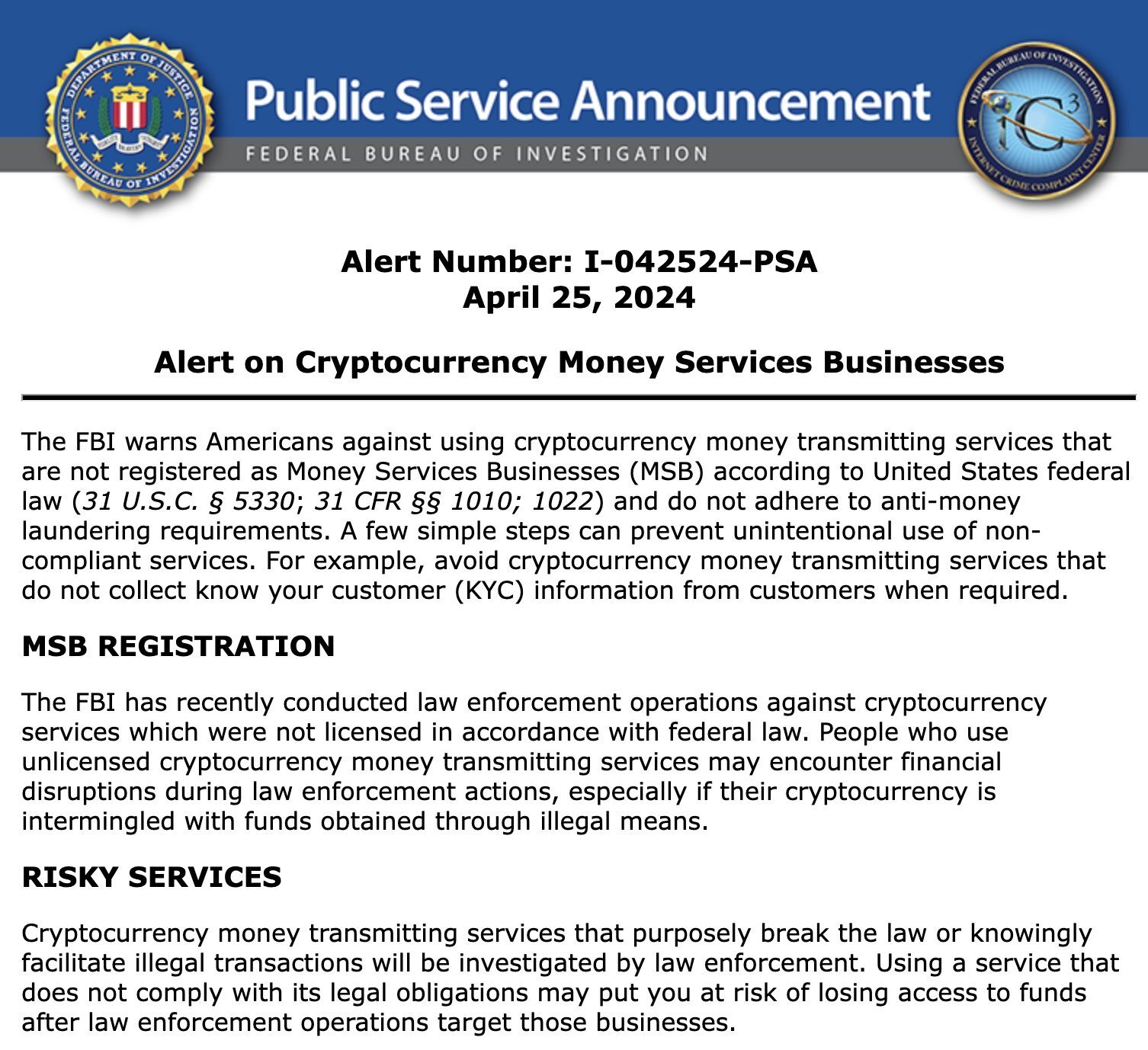

FBI Issues Warning Against Using 'No-KYC Cryptocurrency Money Transmitting Services'
- "The FBI warns Americans against using cryptocurrency money transmitting services that are not registered as Money Services Businesses (MSB) according to United States federal law and do not adhere to anti-money laundering requirements."
- "Using a service that does not comply with its legal obligations may put you at risk of losing access to funds after law enforcement operations target those businesses."
https://www.nobsbitcoin.com/fbi-warns-americans-against-using-no-kyc-services/
https://www.bigbarn.co.uk/producer/london/hennessy-butchers-27675/ Hennessy butchers now accept Bitcoin
https://www.beckandbulow.com/ beck and bulow hold and trade in Bitcoin

https://samouraiwallet.com/ samurai wallet developers arrested and website seized.
https://www.axios.com/2024/04/24/samourai-wallet-arrested-crypto-mixing