

Could you integrated / create a bip-85 style key derivation option? With that you could create a lot off derived keys for different "nym"IDs but only need to remember one mnemonic to rule them all.

Why should they want that?
For ancient Greeks (e.g. the tragedies of Sophokles) when someone feels eros, typically something is about to go terribly wrong, if it hasn't already.
The idea that "passionate desire" is anything to strive for is really a modern invention.


https://reason.com/2024/04/25/judge-acquits-backpage-co-founder-michael-lacey-on-most-counts/
A bit of good news, finally.
What was backpack?
0.07 cent hourly DCA is quite a nice feature if you are on a small budget. A Euro sixty a day keeps Madame Lagarde away.

I was looking at NUT-11 "paying to public key" and thought that there might be an easier way to do this, but maybe I'm wrong.
When I'm creating a blindedMessage (B_) I add a random pk (Point R) to my hash_to_curve point (Point A). I can send B_ to the Mint and the Mint will produce the blindedsignature C_. I can unblind C_ because I know the sk of Point R.
If I want to send money that is locked to your pk. Can't I just use your pk as the Point R to produce B_? Since I don't know the sk to your pk, I will not be able to unblind C_. Therefore you should be the only one to be able to unblind C_ . I could post the message/preimage to create point A together with the mint generated C_ somewhere in the public or send it to you and when your are coming online you can take that information and unblind C_ to get C and redeem the money from the mint.
Is there something wrong in my thinking?


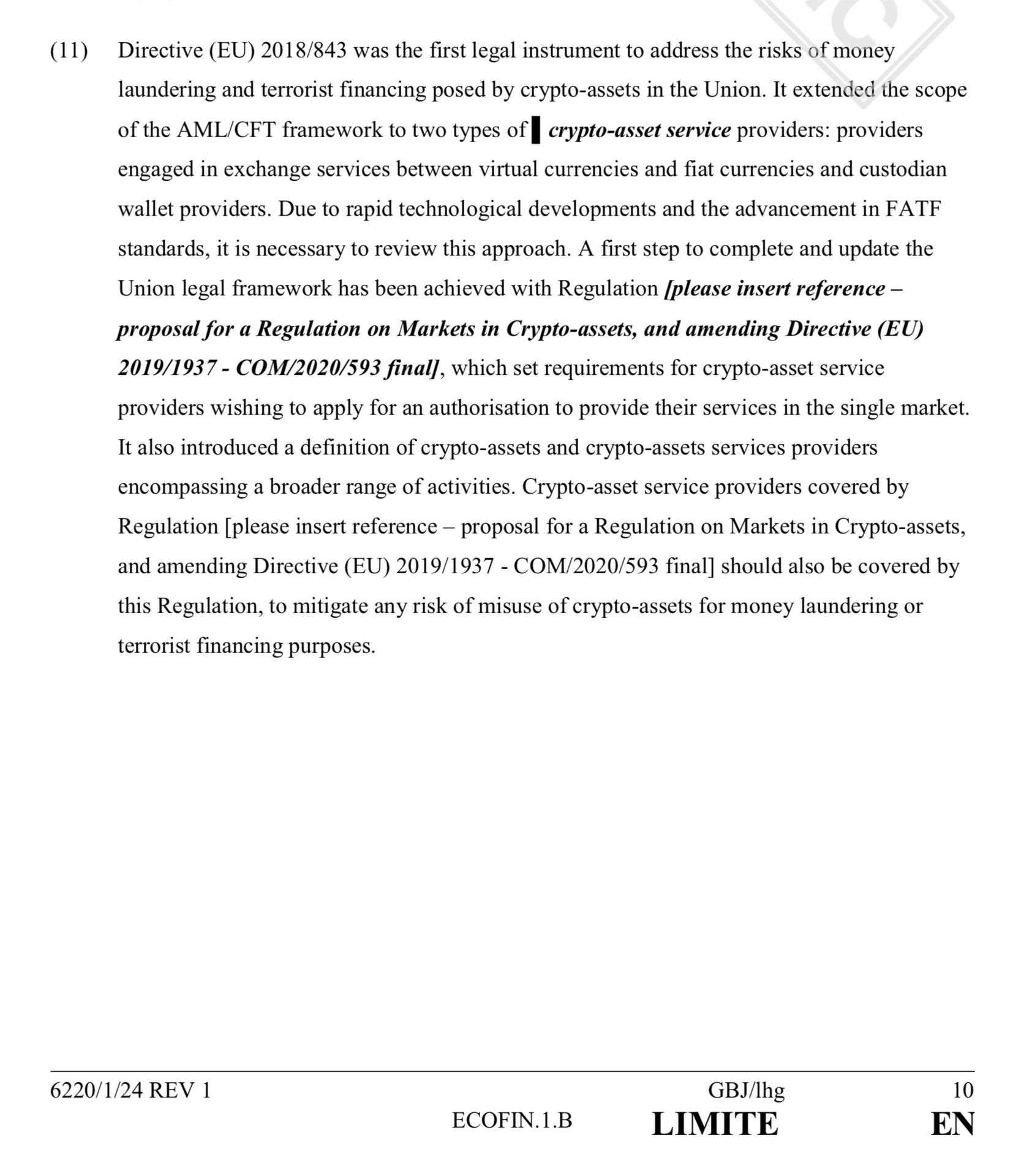
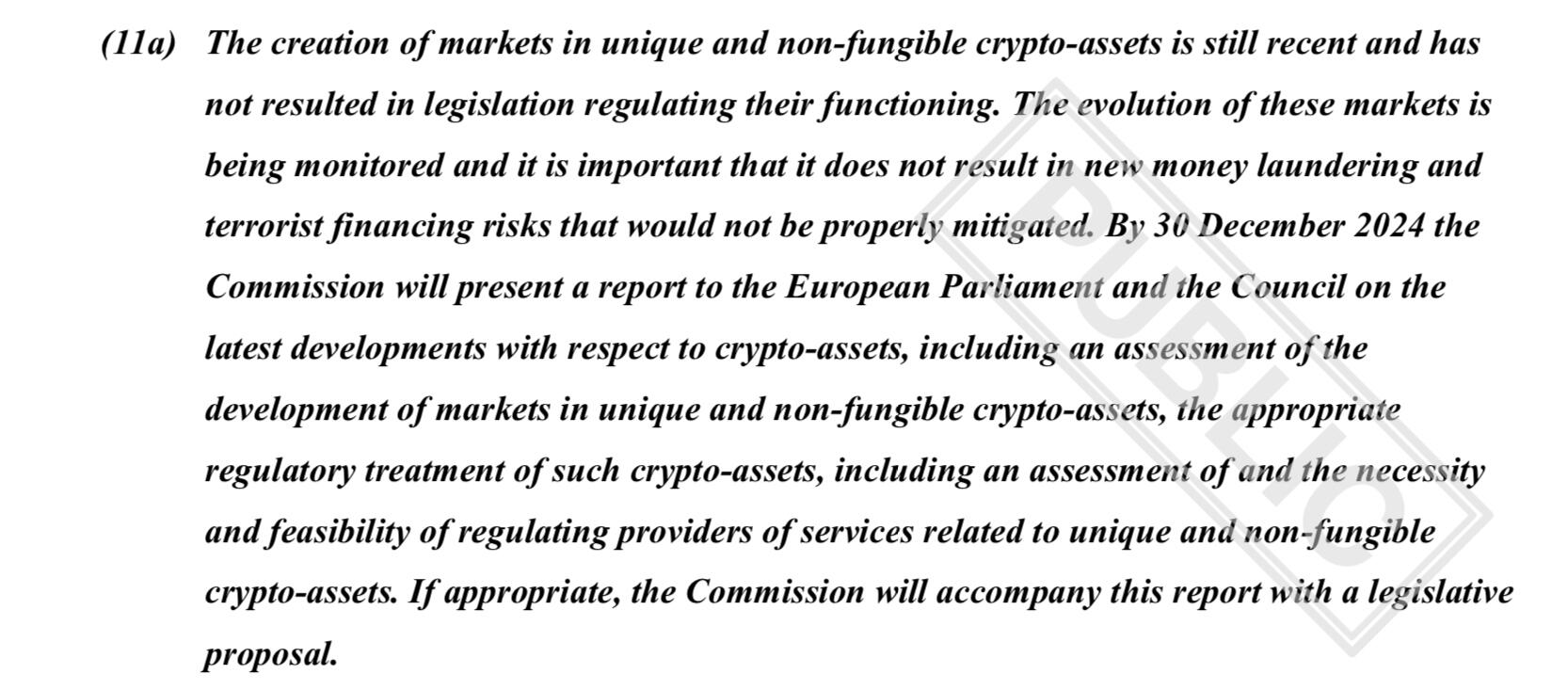
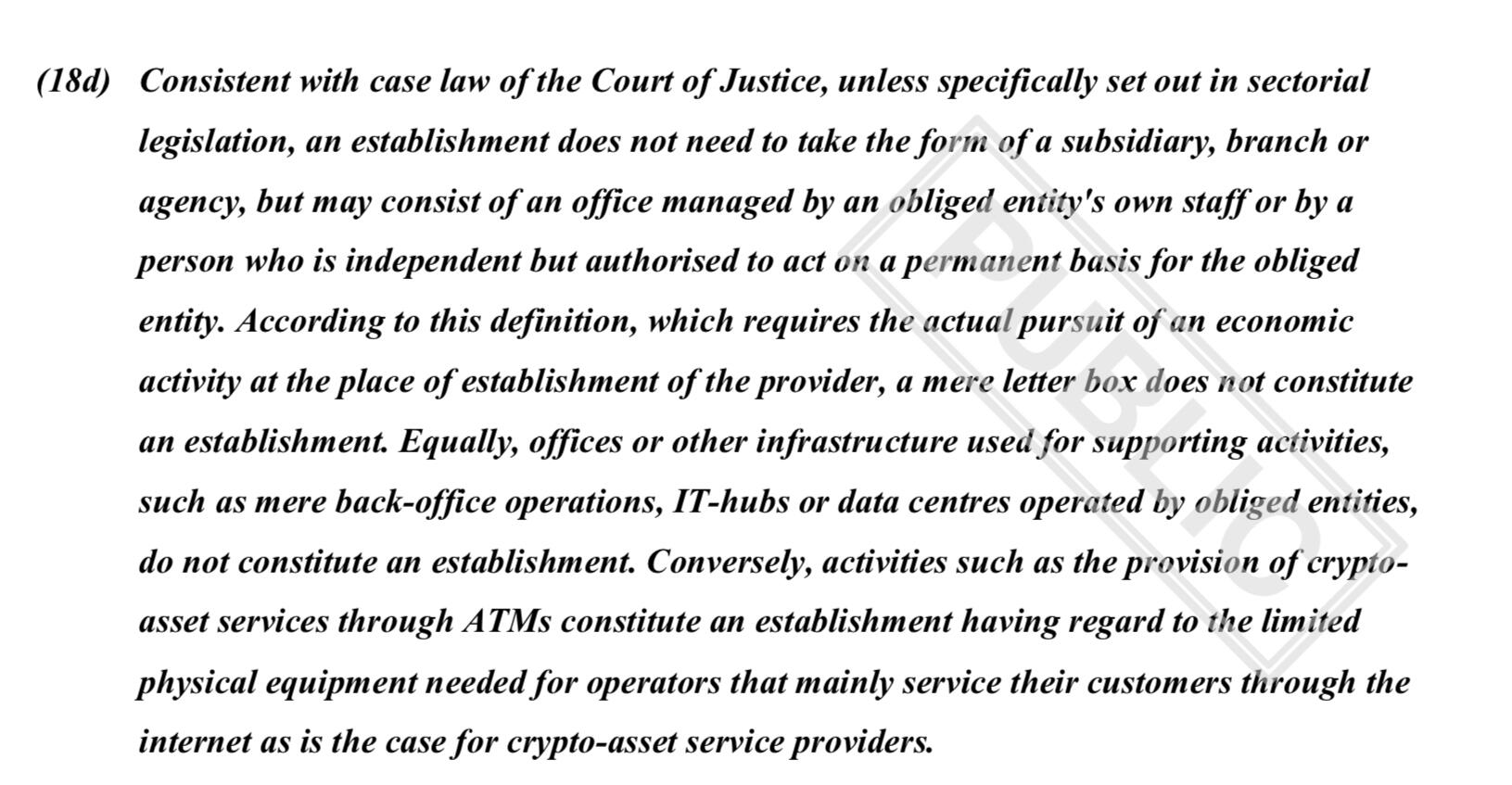
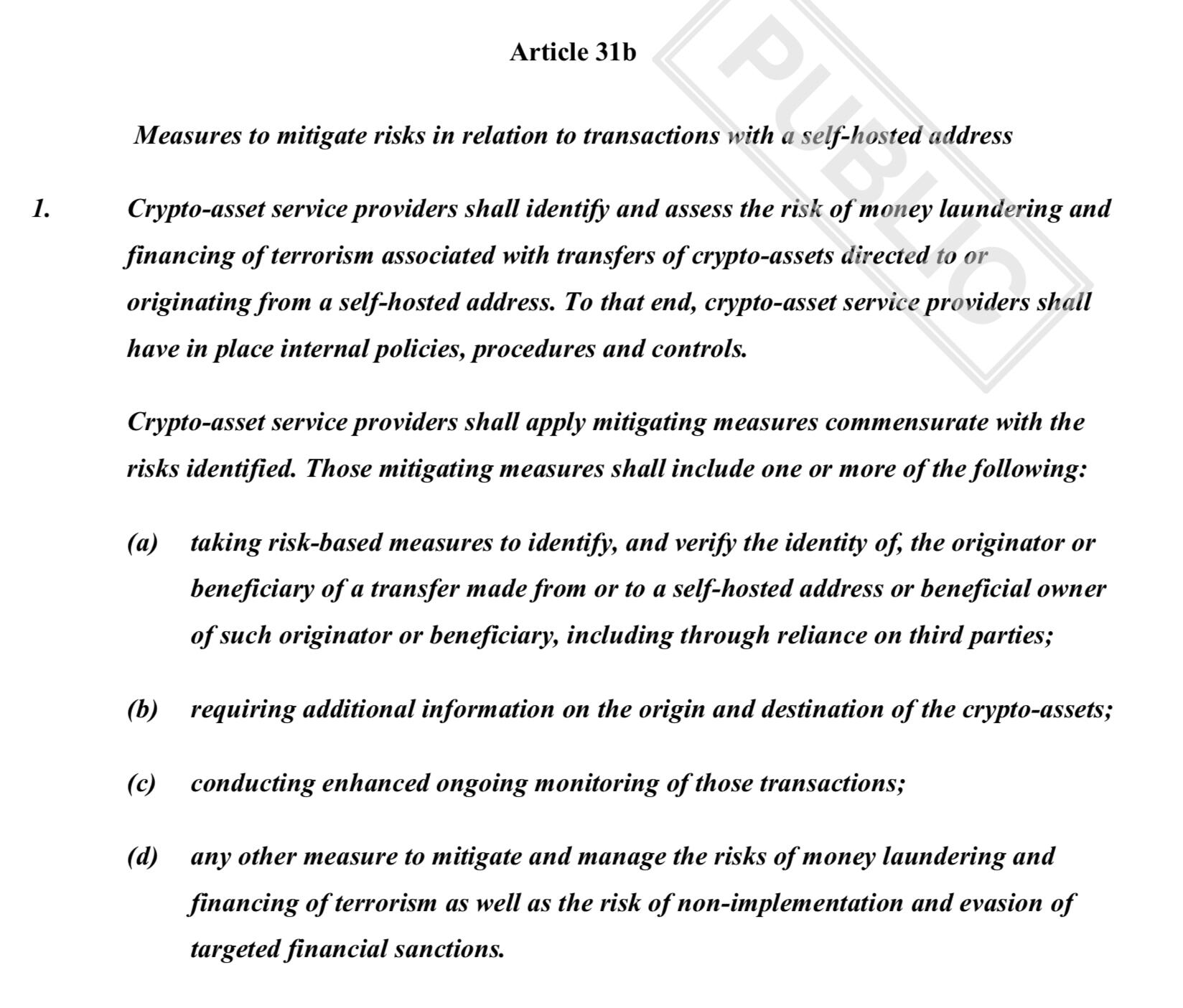
I made a quick first reading pass through the latest satanic EU thing. It's a wide ranging 324 page document, covering things like trusts, football clubs, dubious / tax optimized jurisdictions, the distinction between in house lawyers and law firms, beneficial ownership, reporting requirements, etc, etc.
https://data.consilium.europa.eu/doc/document/ST-6220-2024-REV-1/en/pdf
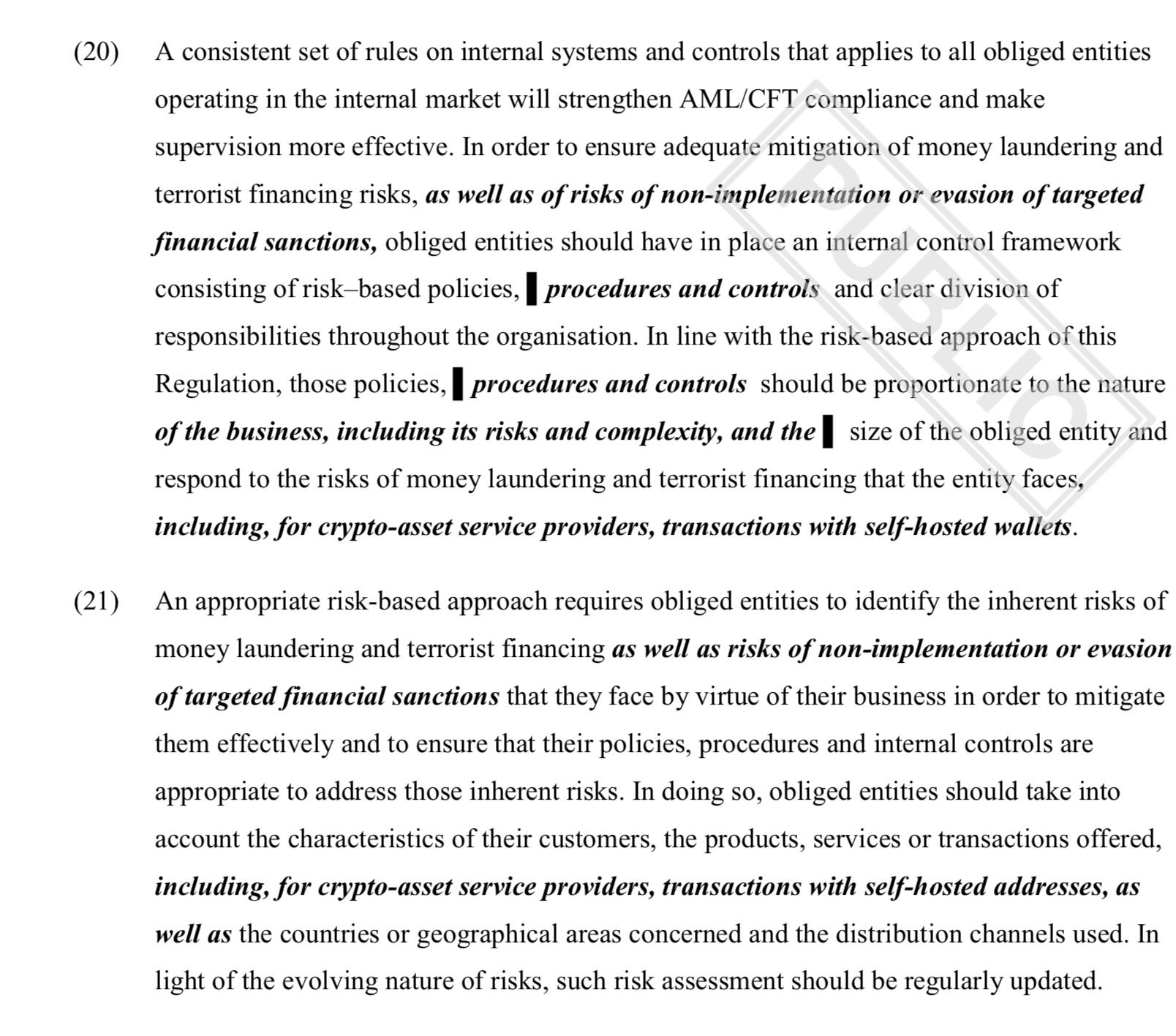
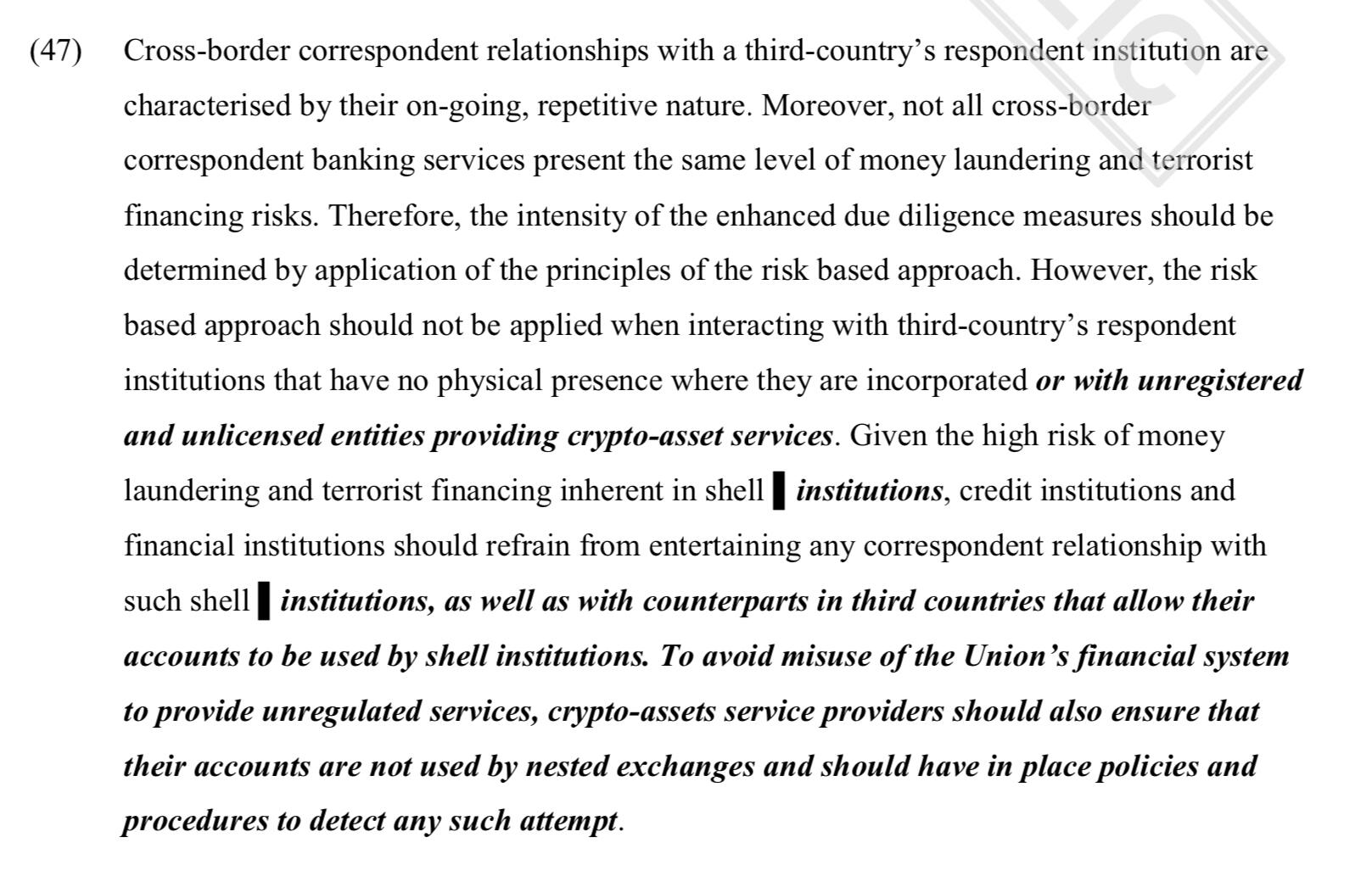
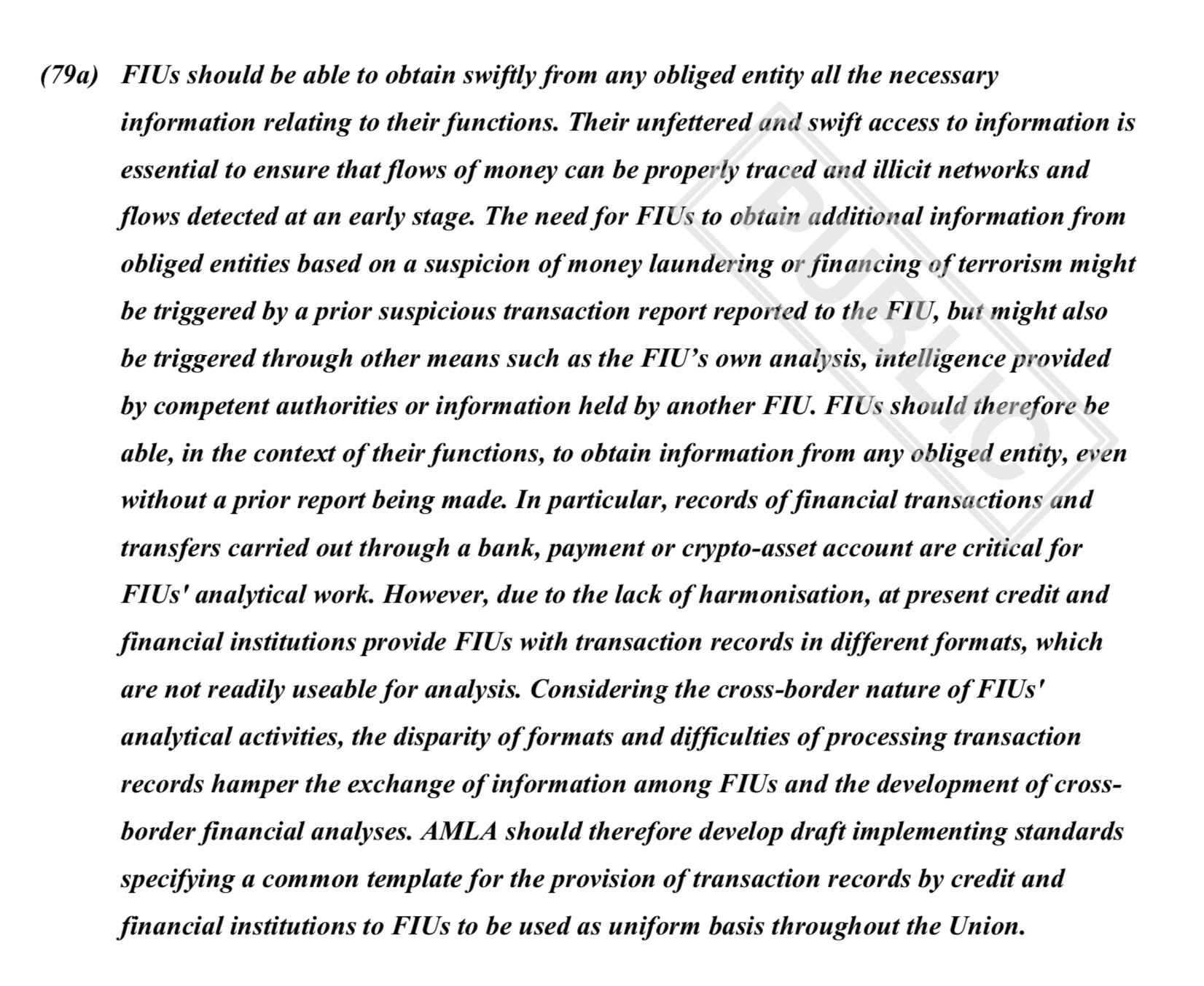
I tried to collect the bits that might impact Bitcoin. A minuscule fraction of the paper surface area. It's not like Bitcoin or even 'virtual assets' has its own chapter: in classic design-by-commission it just pops up in random articles.
Notably I'm ignoring cash: someone else will have to save that. But beware that 'cash' is defined much more broadly than the word suggests. It doesn't explicitly cover bitcoin, but I would expect that to happen eventually.
The first 100 pages (items numbered up to 103) seem more like an introduction than actual proposed law. Some of it seems to oversell the actual legal text.
One observation is that 'virtual asset service provider' (VASP, or what Americans would roughly call custodians and exchanges) is now considered a Financial Institution(tm).
My impression now is that only _custodians_ are not allowed to:
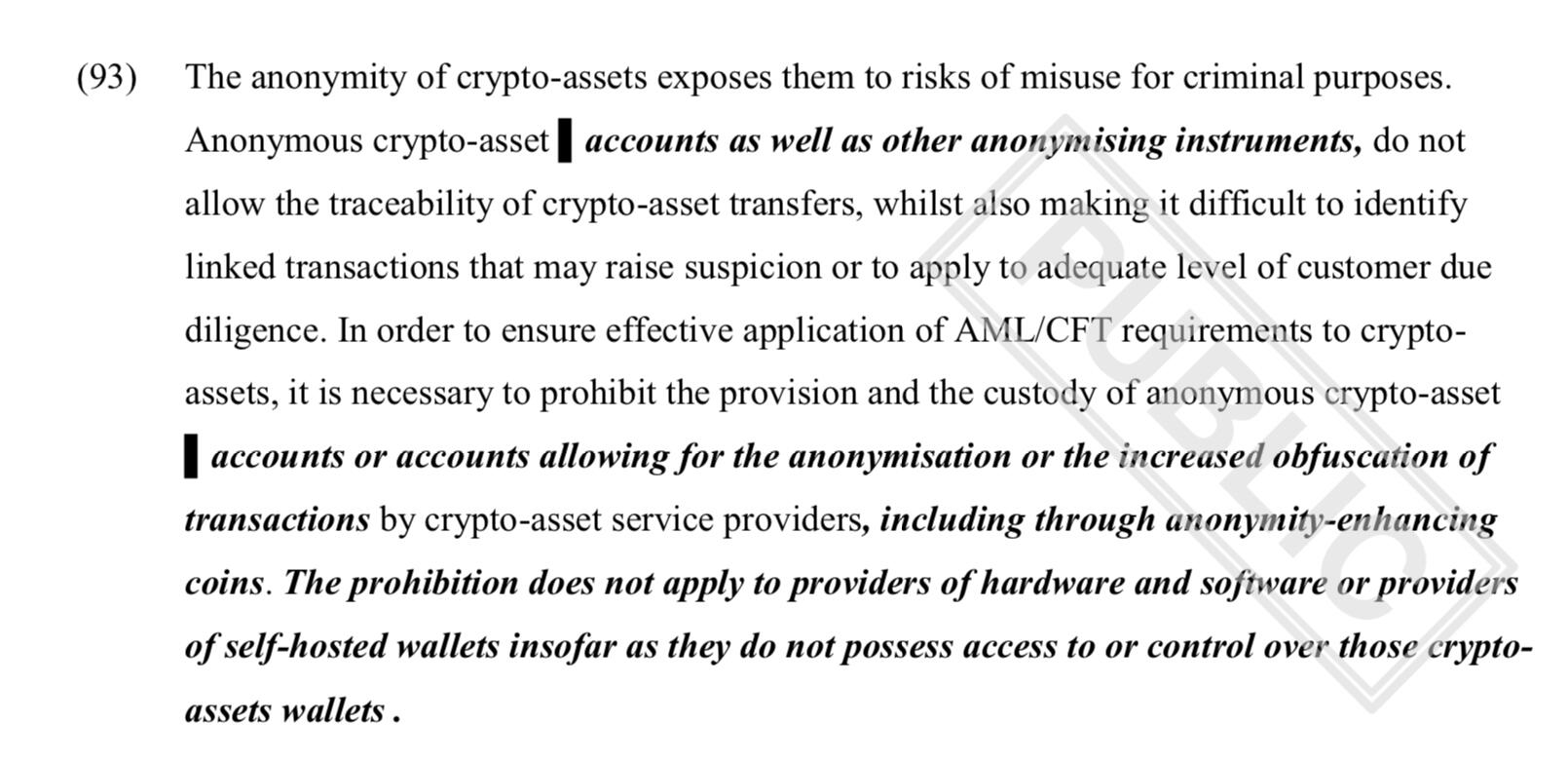
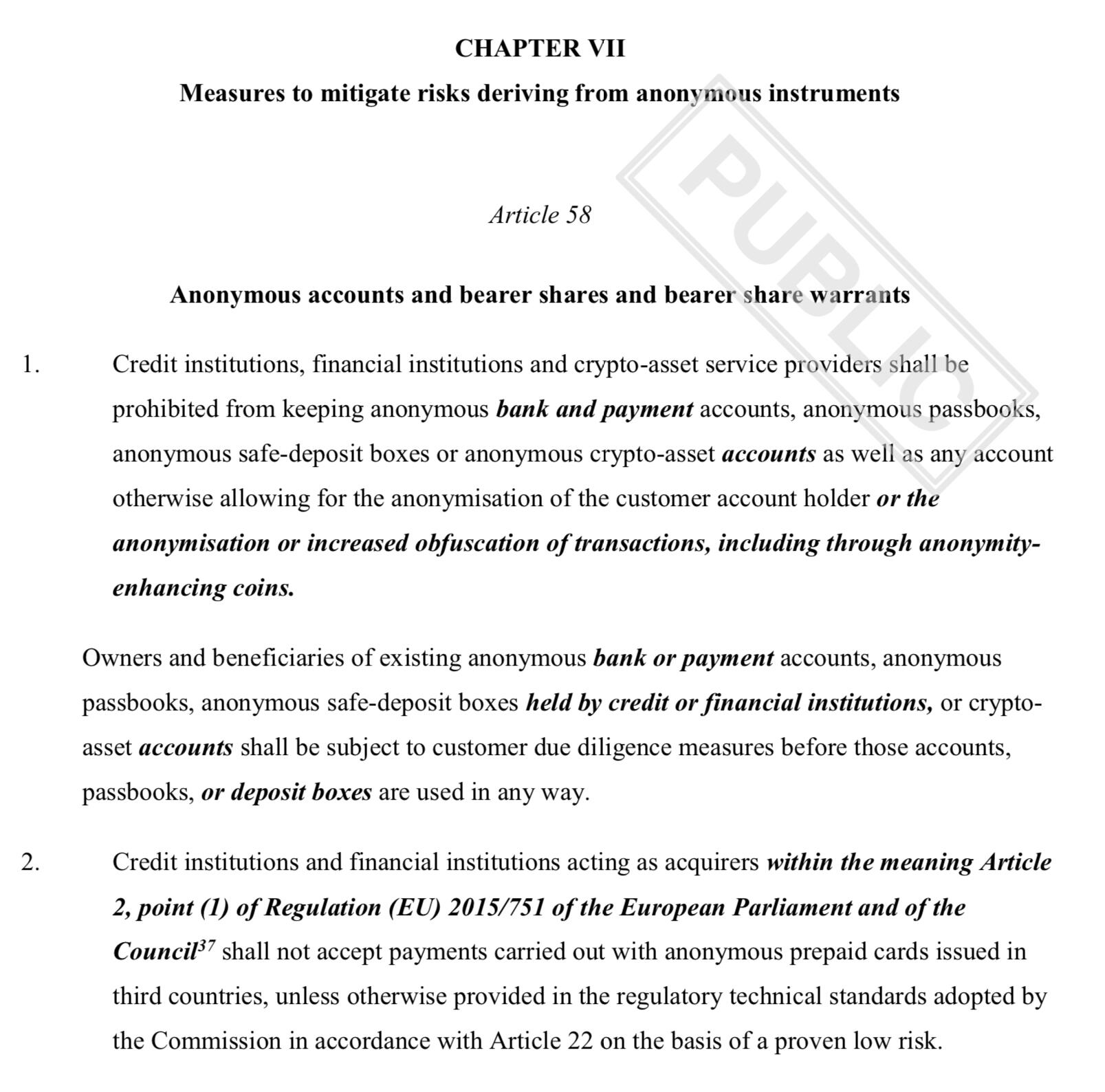
1. Have anonymous customers (i.e. anonymous accounts): they explicitly mandate KYC rugging existing accounts, albeit with a 3+ year heads up
2. Operating a mixer
They also need to verify ownership of destination address (wallet verification), which is bad, but far from a ban on self-custody.
The 'intro' text mentions mixers along with anonymous coins in a way that suggests banning transactions with them. But the word 'through' makes it really unclear what they mean. In the law text they define 'anonymity-enhancing coins' in a way that obviously implies Monero and Zcash in that order. Article 58 uses the vague term 'through' again. Does it mean they can't let you withdraw to it? Or just that they're not allowed to offer a pseudo-mixing service that *uses* these coins.
Anyway I'll have to re-read this a few times to grok. Keeping in mind that the politicians who wrote this don't have the brain cells to process anything more sophisticated than "monero bad, make law with fancy words!" and then the bureaucrats who write the law have no idea what anything means either. No tech literate person was involved in this process, that's very obvious from the language. But that does make it less dangerous.
The next step for me is more deeply understand what the proposal actually says, if there's any potential direct impact on myself (which might give me legal standing - now or in five years or so when stuff has really taken effect and local judges can intervene) or if it's merely bad in general (in which case perhaps all I can do is write an angry letter). 
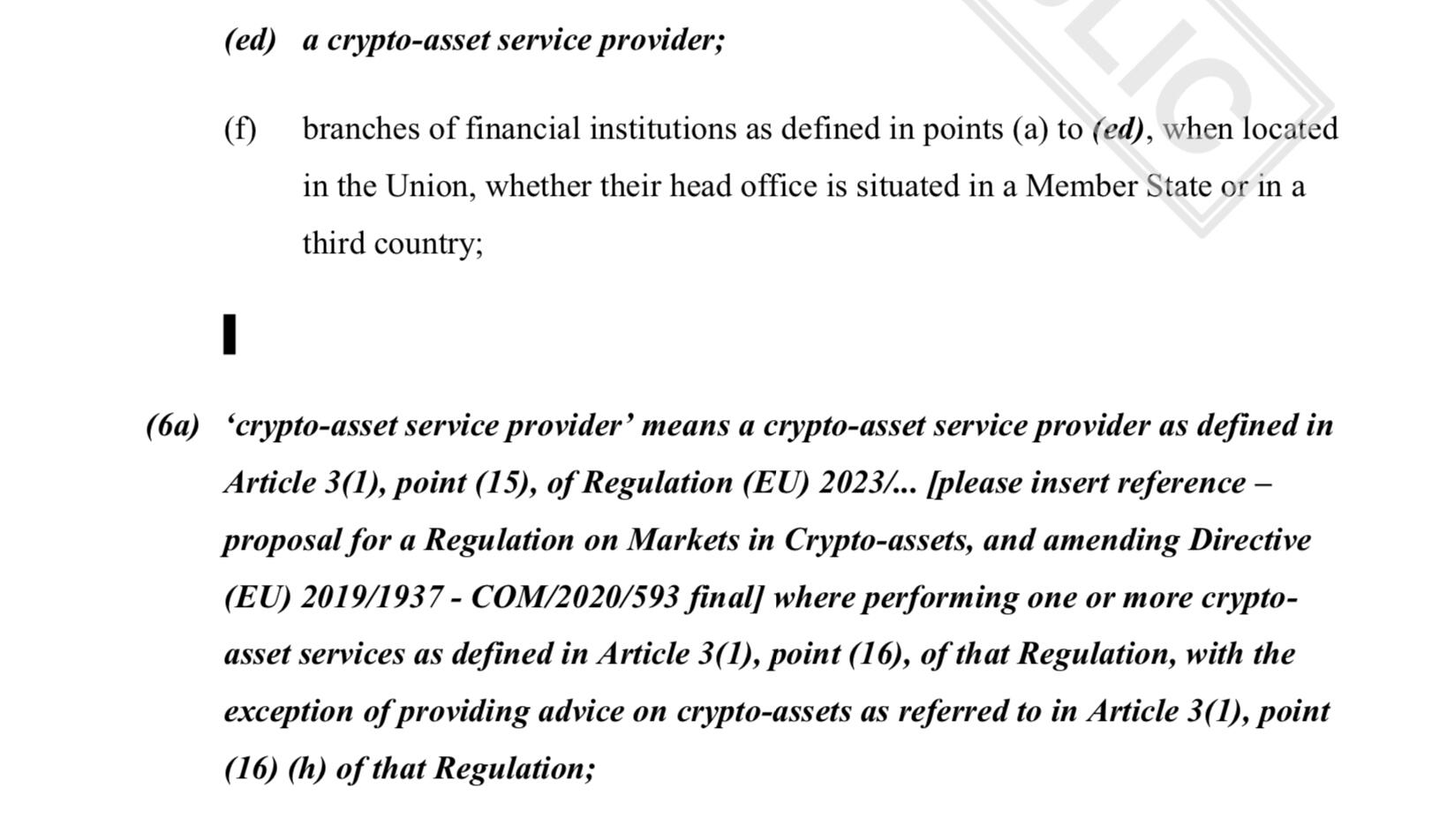
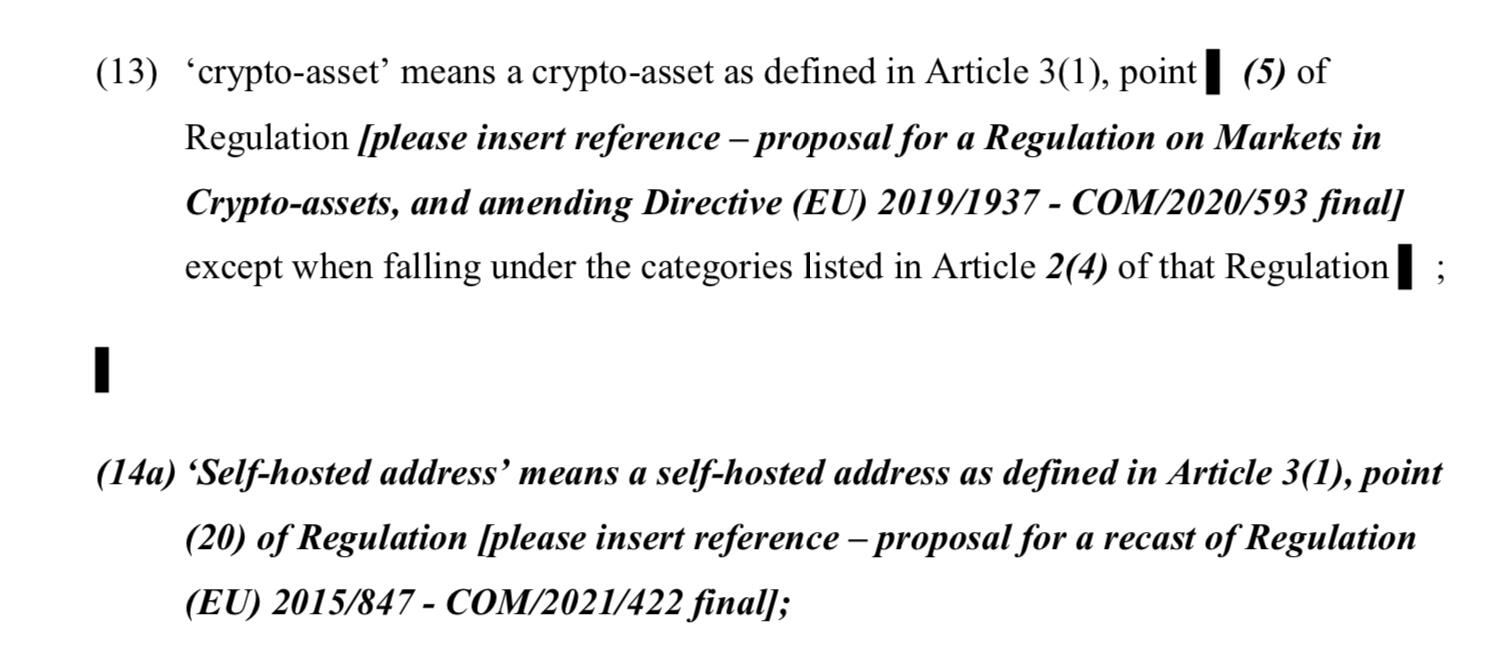
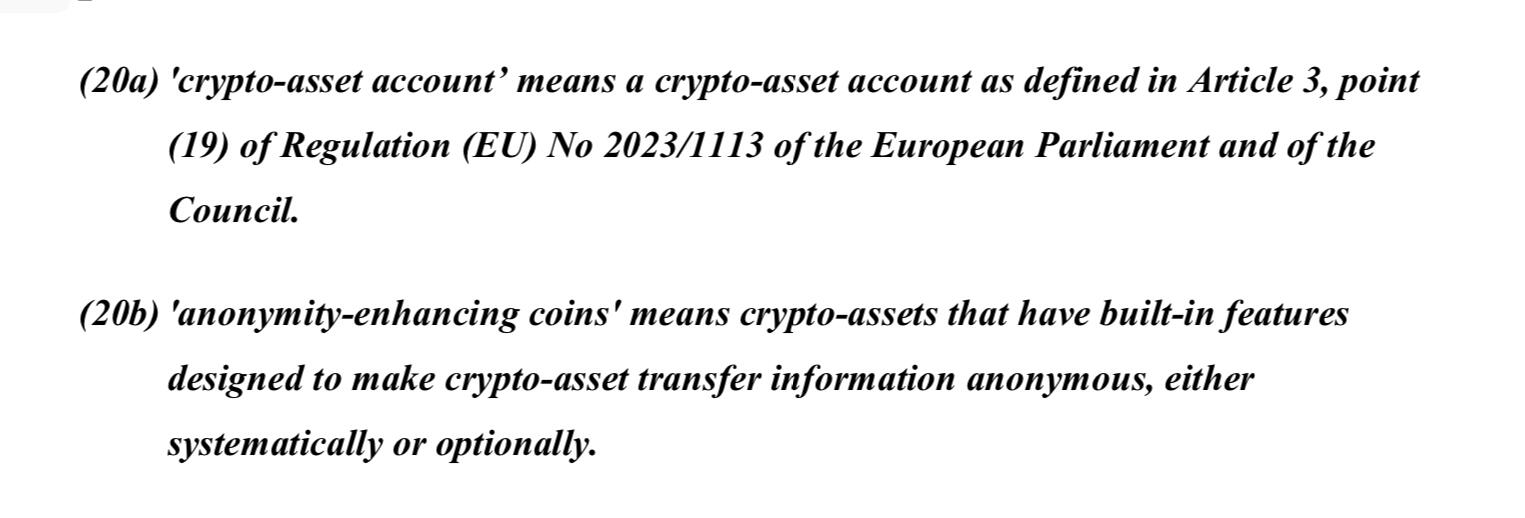
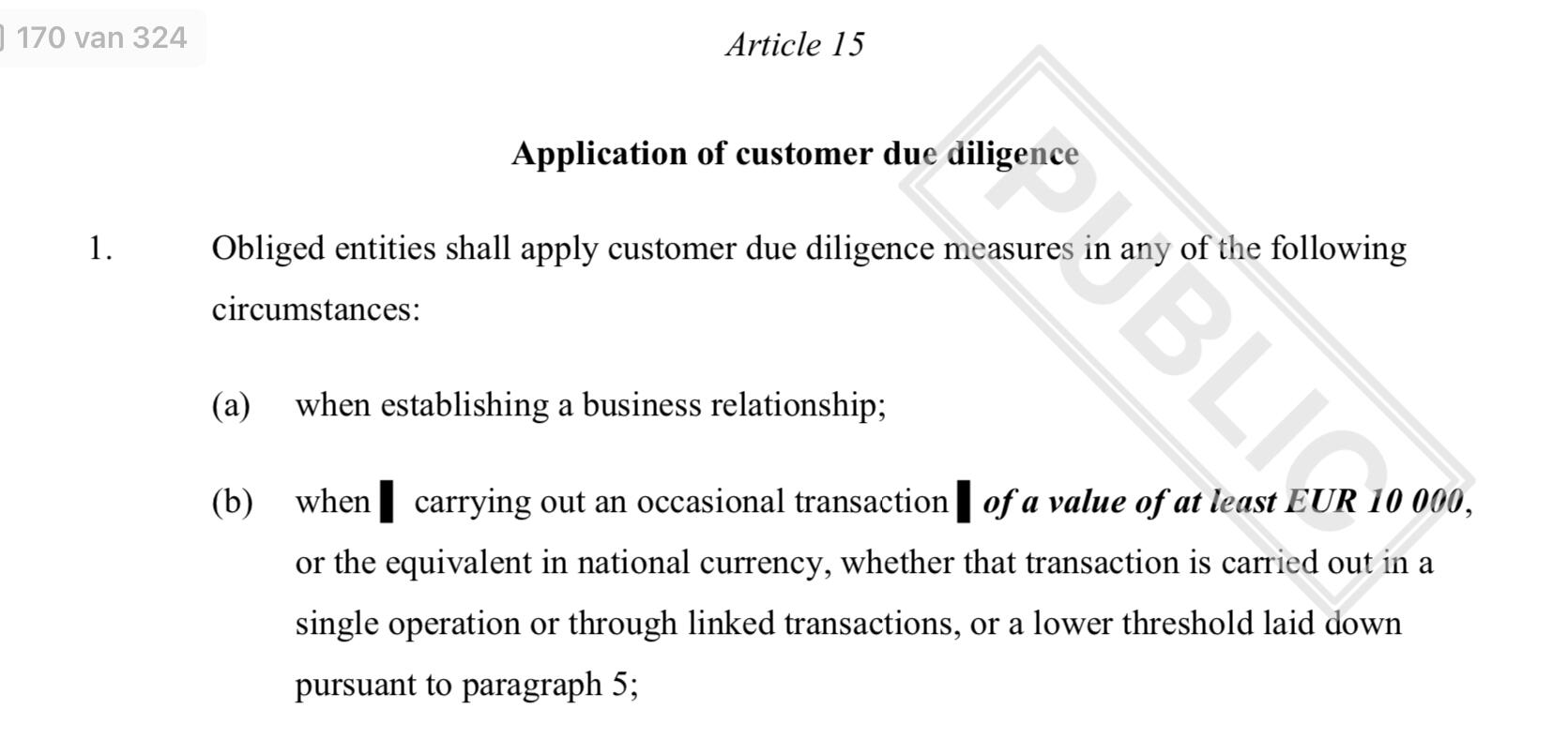
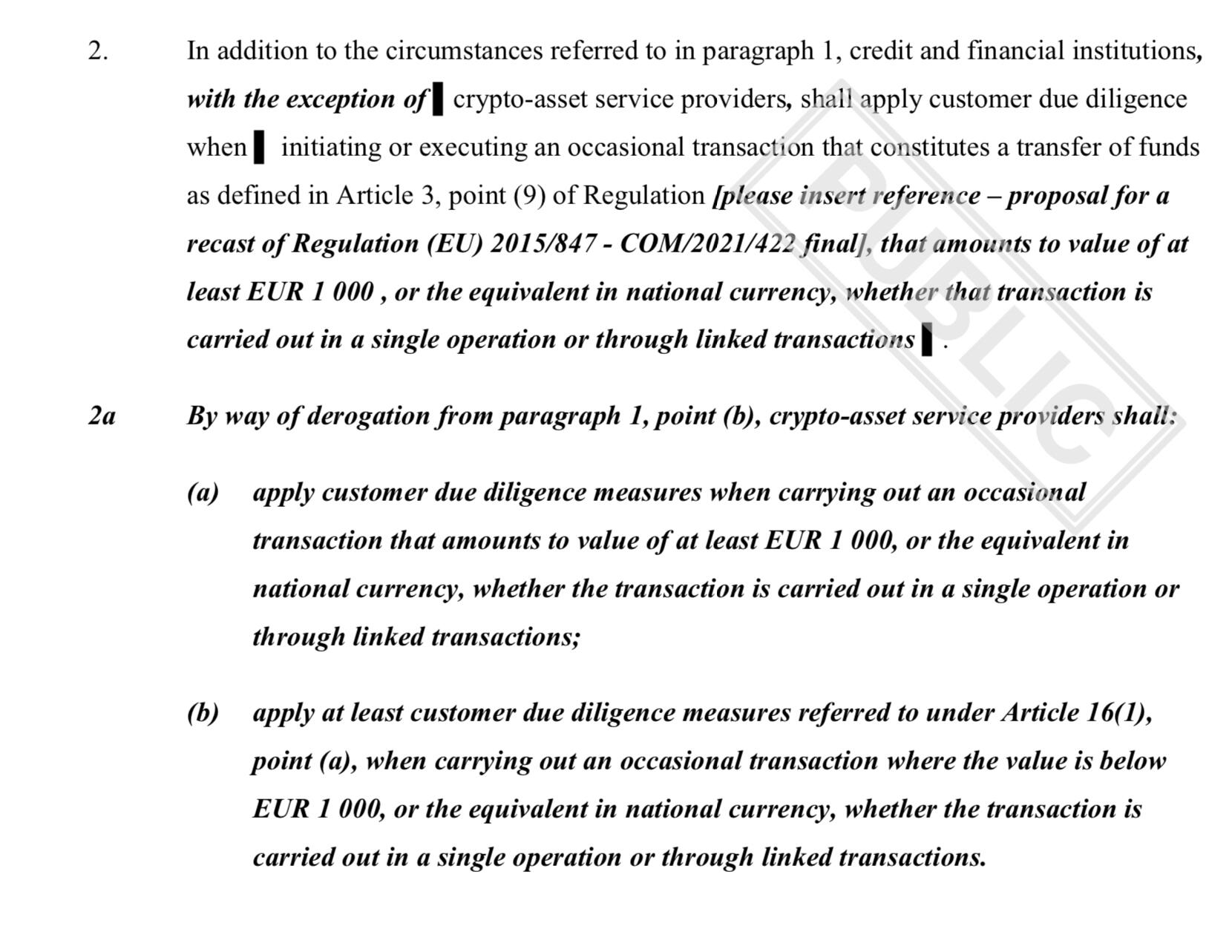
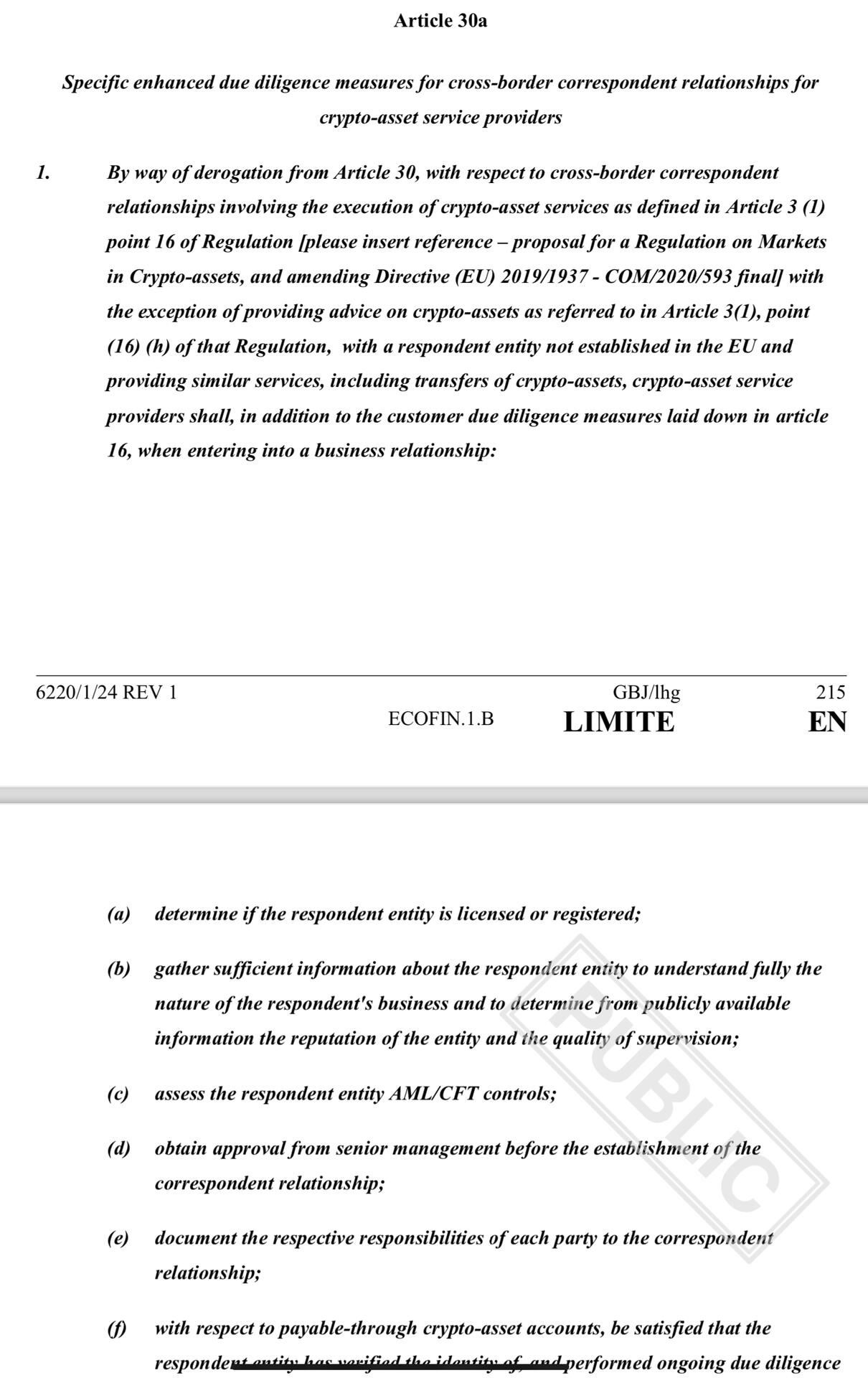
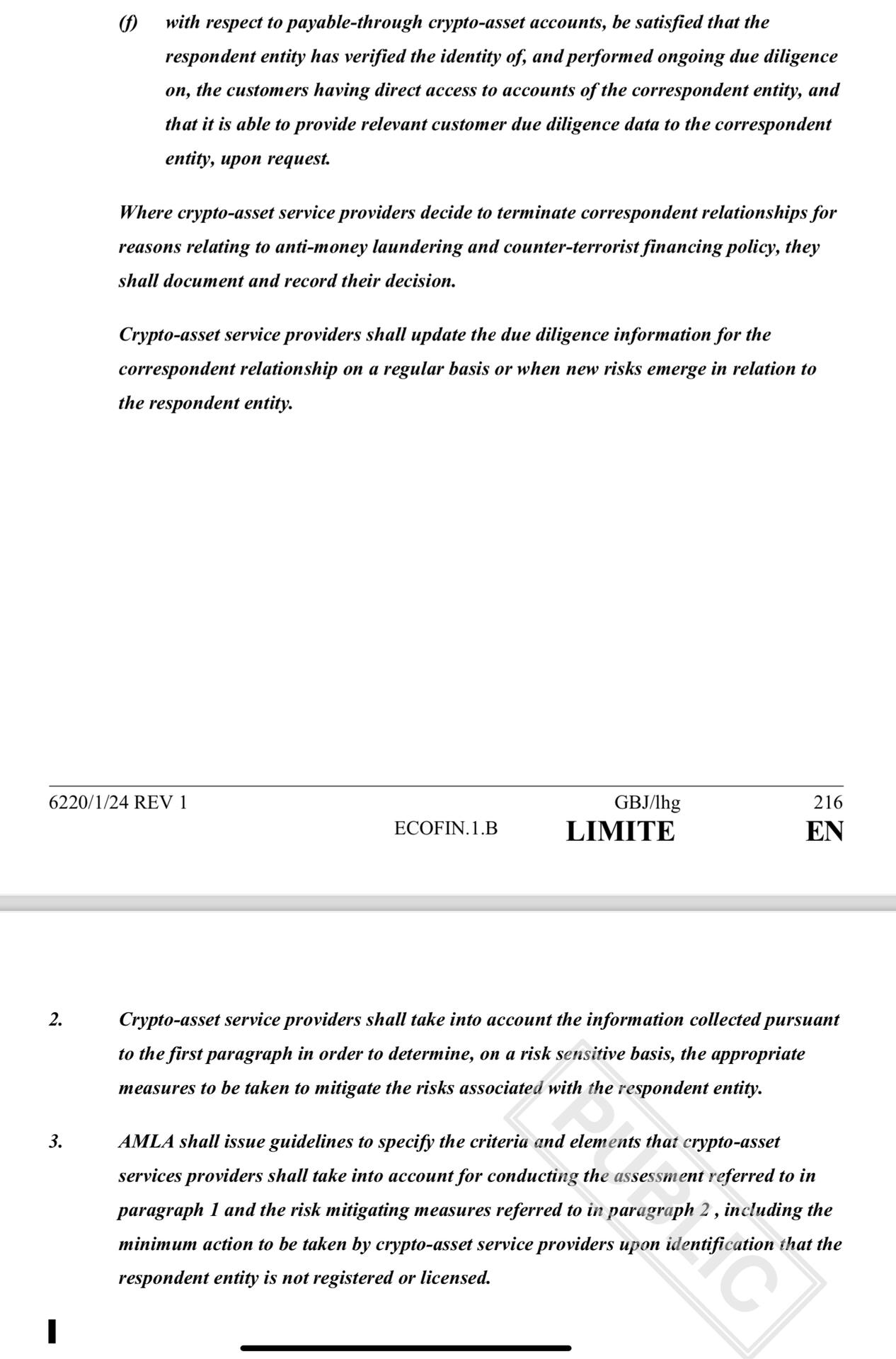
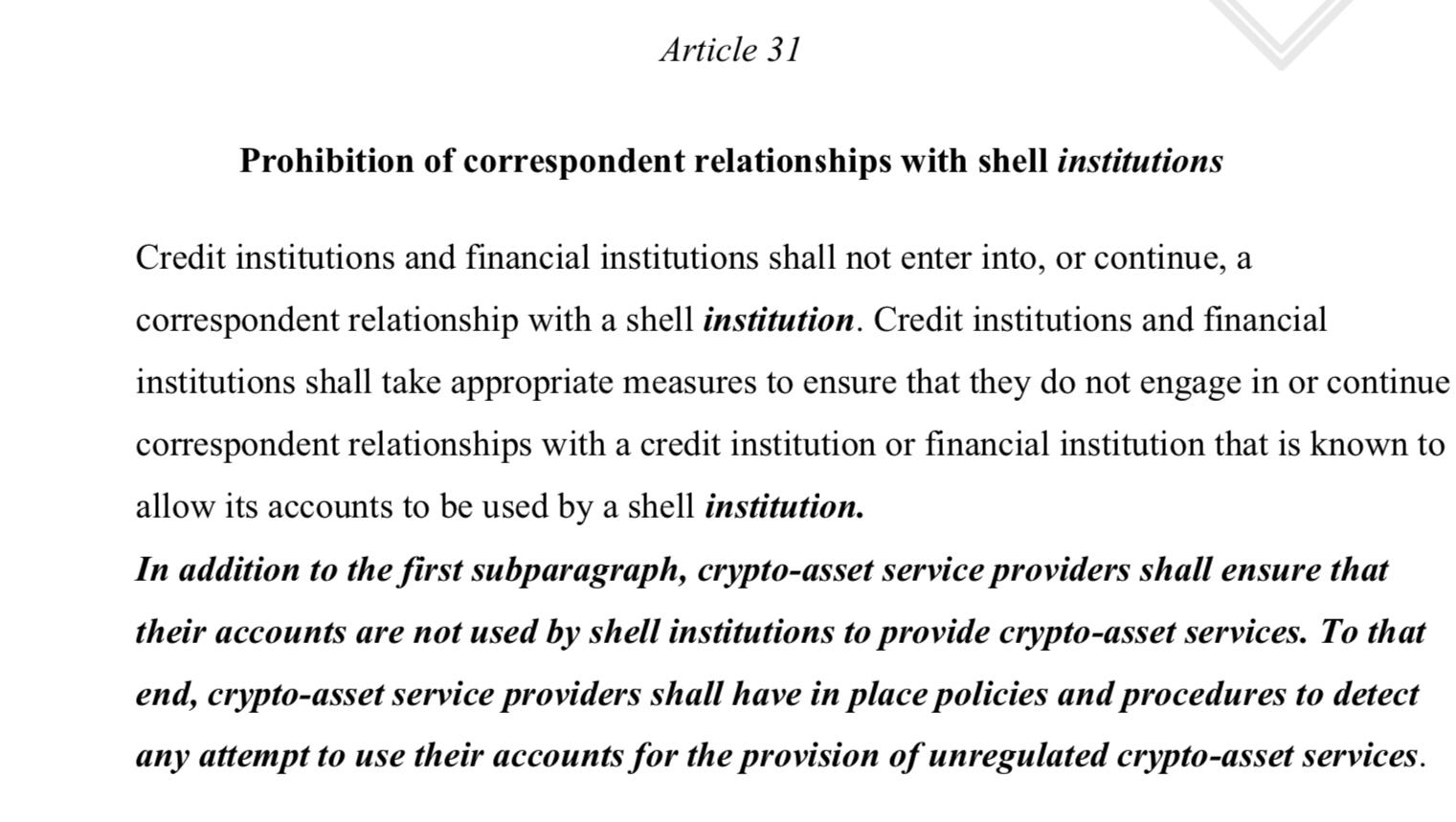

Super important work. Thanks for your service and the sharing of your findings.
Thank you! I will give it a try.
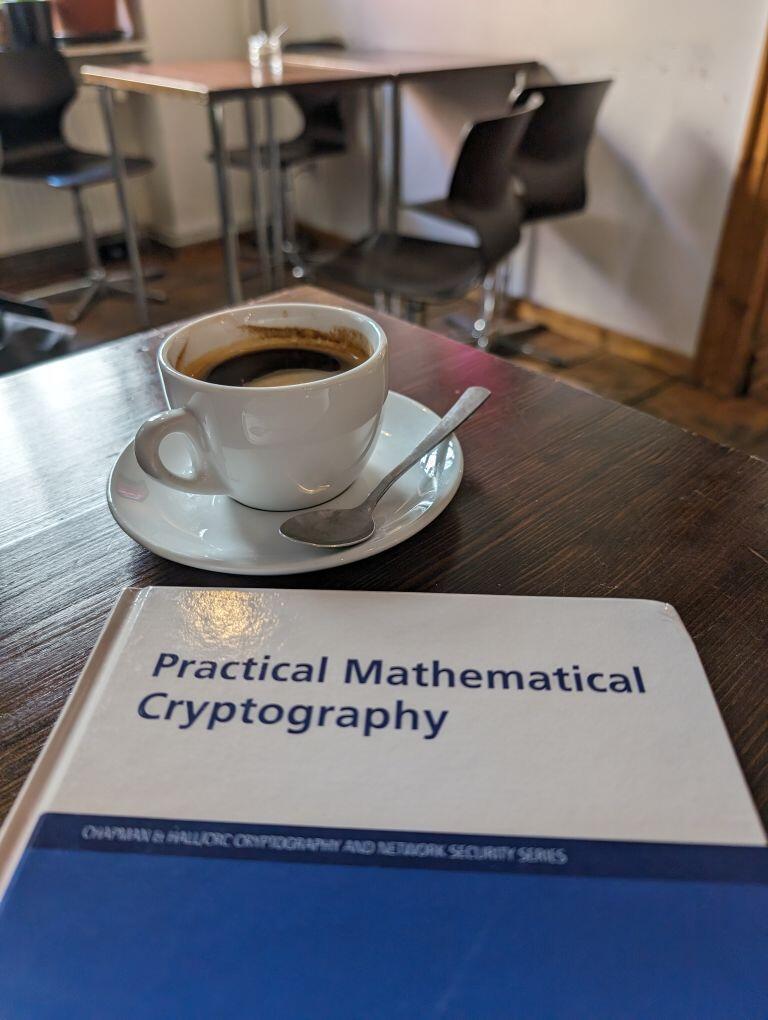
Is this a book you would recommend? I'm also interested in the applied/practical math in our beloved cryptography.

Because if it fails there isn't anybody to sue to get your money back.

You can try and search for "OsmAnd".

It's a valid concern I don't have a solition for. In theory you could be man-in-the-middle attacked without noticing or the apk provided to the Google back end could be malicous. I only download apps I "know" and use anonymous Aurora Store Sessions - I'm not aware that Aurora Store ever pointed someone somewhere else than to the Google back end.
FAQ can be found here:
Considering switching to nostr:npub1c9d95evcdeatgy6dacats5j5mfw96jcyu79579kg9qm3jtf42xzs07sqfm from iOS.
Will I be able to load regular Google Play apps on the phone?
Thanks 🙏 #grapheneOS
When it's not possible for me to install an app directly from source (e.g. through obtainium), I'm using the aurora store (all the play store apps are there as well, but the store itself - the front end - is FOSS, the backend is downloading the apks from the google servers like the play store). All apps so far worked perfectly well. I didn't touch the play store for a long time now. Never regretted the switch to #grapheneOS



A zap a day keeps fiat away.


Robosats uses an escrow https://learn.robosats.com/docs/escrow/ the other side has to do the payment in advance into the escrow. If they refuse to click the "I got the fiat/BCH/amazon gift card" button the SATs will be stuck in the escrow. You can then tell robosats that there is a dispute and show them the chat and proof that the other guy was dishonest. They will then unlock the escrow and send the sats to you.