
 #m=image%2Fjpeg&dim=768x1024&blurhash=_FD9I%3FE2Ios8RPX4R%2ByC-UM%7BX8WBjZoz00tj%252s%3Do%23oMni01oz%3FHoe%25MWUadJBxa%25Mn%23nibEWX%7EVRjNGj%5DV%40W%3DRk-ot6M%7BbvNasDX7M%7DoLX8s%3AWVWUxZWBWrRjaxs.W.nj&x=02fe3512802f346f752bf81d40253f92db7fe01b427be6132896039336c22138
 #m=image%2Fjpeg&dim=768x1024&blurhash=_CAv%2C%25%3FaM%7Dsms%3AxaW-TK%25f-nIUNHWVs%3AyD%25MNGM%7CxFbFfk%7EB%252V%5Bn%24IpV%5BjEM%7DxtxZe.RjR%2BNHtR%25LNdNes%3AxZsmoyWqjGsSIpbIt6t6ozxaxGxZbaNeNcjss%3ANHWqxZs-&x=f1226e7473b364e3a391e504c9cd37031636d2a63ea64ce741149f9f0a3ecbe3
 #m=image%2Fjpeg&dim=720x1608&blurhash=%5B15%3Da%7D.SIA%3Fc%5EksTjbrtxSITXRs9ELNFoKo%7C4UInV%5BX4D%2BRkt7XRqyMyM_WA-Xnkoet7-CVutSxu&x=858eaeed1c45abb445c697384222bd5e7f8057f89b4973fe5f6fec5f6e3365be
Bandwidth should not be a problem. The higher your ping gets the more stale shares you get. From traffic perspective the miner dose not have that much. Only takes a block (2mb) every 10min + some back and forth conformation on hashrate.
Not sure what Q/P ratio means but obvious the newer the miner the more btc you get per power consumed.
On older miners you get more hashrate per $. (With lower efficiency obvious)
Prices will be dependent most Lilly on the location you want to buy.
For me it’s like
s9 with 14Th per 1kWh @ 160€
S19 with 110Th per 3kWh @ 1500€

Hi, the miner runs on 12v dc current.
As far as I understood the apw3 runs 120/240v with 1200w so you can run a s9 with 120v.
There is a guy on yt who runs 1 s19 hashboard on an apw3 but you will need additional stuff.
If you want efficiency you would need to do that. If power is not a concern go for s9.

Yes complexity is increasing.
I do have something like a star configuration. So all solar feeds the battery and then I have the loads connected to the battery.
If you like the distributed system you can use buck converter instead of mppt. Not as efficient as mppt but they are cheaper.
Also if you don’t like centralized battery you can hock up battery’s with buck boost converter (24v to 24v) or buck converter for 24v-12v like in a dasy chain.
For me relatability is the highest priority.

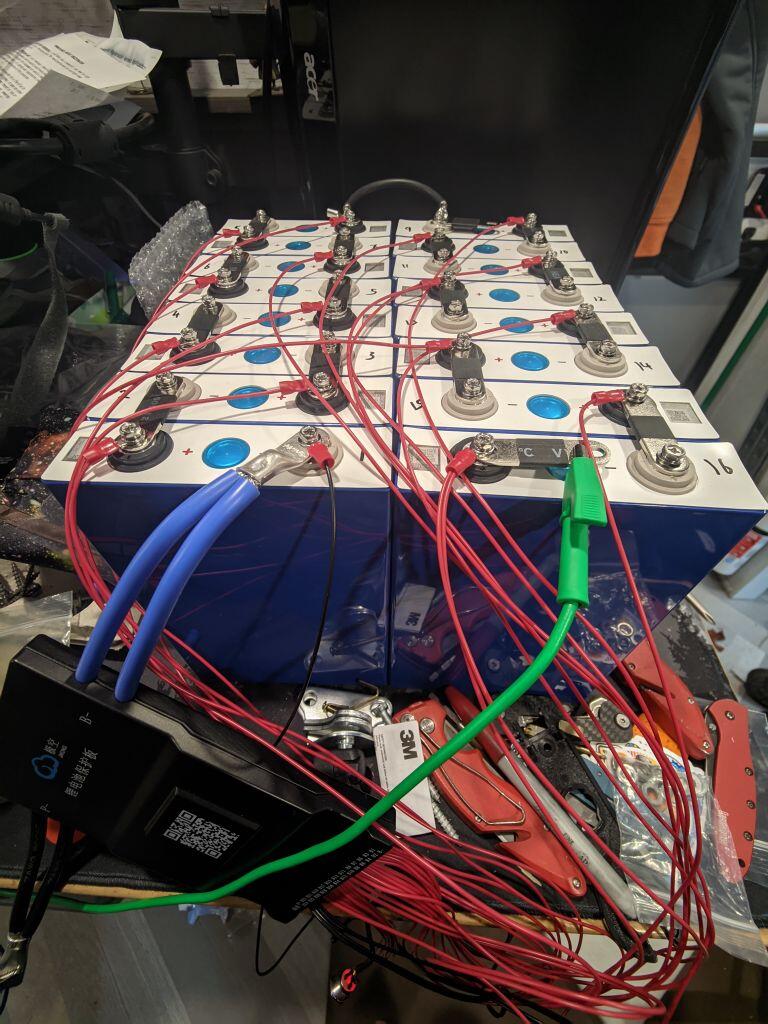
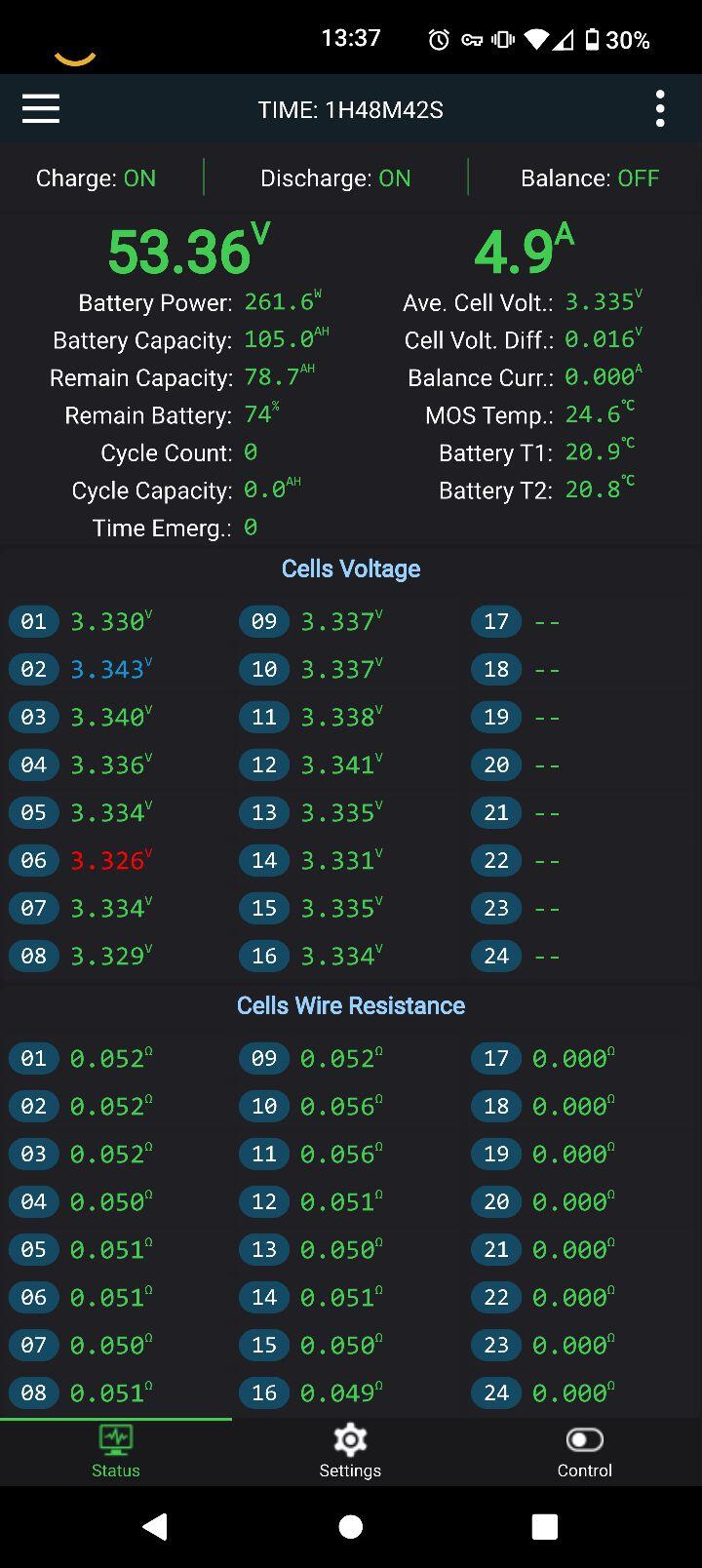
25kWh diy battery with 18650. nerd myself ;).
Hydro is no option, don’t have a creek nearby.
Wind might be an option but regulations are strict.
I wanted to have a look into gasification.

Nice. I have 25kWh diy storage. We already have snow.
From your picture there is not much more you can do if vertical giving you the most power already. Maybe the right side of the house.
Winter is tough. I want to use wood gasification with 4stroke generator for winter month but I have no spare time currently.
Hi.
For the plugs I can recomand XT60 they are good till 60A so 20A shouldn’t be a problem.
Do you have a battery ? Or doing directly dc solar to the load (otherwise I do not understand what the capacitors are good for)
With solar-mppt-battery-load you can store power and the solar is mor efficient. This is more true for grid down situation.
Battery wise old car batteries work fine especially if you get them for free. Or if you like the task use Li-Ion. These can be scavenged form all modern battery appliances (laptop, e-bike, scooter,…)
Maybe have an option to go from dc to ac. This could be tied in as the regular ac during grid down.
Hi, what’s the purpose of the pannels on the side? Is this south/north Don’t know your location.
There is shading on them. As far as I can tell from the picture they will maybe generate 1/2-2/3 of the possible power. If you want to counter winter. This can be a good method. During summer they won’t be producing much. (If possible you can increase Generation when mounted lower to the ground, only if you can counter shading form obstacles on the bottom.)
How much power do you need?


Basicly if you have shaded pannels ina String Bypass diods will reduce the voltage of the string by the voltage of a pannel.
For better understanding with some basic numbers. A pannel Has 40V and 10A.
9 pannel no shade. 360V 10A
9 pannel 3 shaded. 240V 10A
9 pannel 3 shaded. 360V 1A
If you now have 2 Strings 9 pannel ea on one string 3 shaded. In parralel 360V 11A
Maybe 260V 18A if the mppt is controlling correctly
If you go for more strings in parralel do 3x6 pannel (string the shaded in one string)
Be aware that you will drastically increase the A on the mppt. Overpanneling on A only with very good cooling on mppt not recomanded.
Best case string out shaded pannels maybe use a microinverter for each pannel of the shaded ones.
If you charge a battery use a second chargecontroller for shaded pannels.
The drop in power for shaded pannels results havily on Amps. Eaven some light clouds can result in 10-25% power drop.
If you have still some questions feel free to ask.


If you look through the blocks you could try 30-50 sats/vB
Did see 3-5blocks in the last 10h.


The pile of fiat needs to be big enough. 15-50 trillion was estimated by Greg Foss.
Most likely it can hold the line for for some more years.

If the btc stay in circulation the price holds but the Fiat transfers to the miners.

In Fiat world the rich could do that infinite. Here in bitcoin they get poorer by spending.
So there will be an end to this. Also you have the opportunity to take some free sats by mining.
Btc is the smart Game.


How did you calculate the 0.64 BTC?
Is your revenue after 3 years 0 on BTC mining?
Can you use the infrastructure or electrical for the purpose of the cabinet after 3 years? This could reduce the initial costs. Maybe postpone the full cabinet building and invest in btc but this would be very risky.

Start small - go big
Started with 100w solar 500wh battery
Now 4,5 kw solar 25kwh battery
Target this year is 2500 kwh
Hopfully some mining with acces power currently I have only 1 s9 ;)

Best to use solar when you have acces power ;) doing the same. Waiting for variable prices and sucking up negative power ;)
Thx. If you need more information I have 4,5kW diy solar with 25kWh diy battery.