

I'd agree on everything you wrote here.
Only after writing my replies did I scroll further down in your posts to find out that you're coming from the opposite corner as you formerly had lots of meat in your diet.
My perspective was more from the vegetarian/vegan side of things. I know a few people who're eating vegan/vegetarian diets and are struggling with a bit too much weight. My reasoning is that vegans (and vegetarians who don't eat much cheese or other protein rich dairy) are adding another challenge on top for themselves through their diet (in combination with the typical low exercise lifestyle) by skipping on meat. Because they'd basically have to have legumes like beans or lentils as a component of *every* meal in order to get enough protein *without* too many calories, but most people don't do that. Then they end up eating more of the pervasive carb rich foods, because their body basically commands them to ingest enough protein until they have eaten enough of that.
(I might be putting up a strawman here:) Seems to me that many of the people who're arguing for meat and against fruit/carbs/grains are oversimplifying things by just saying: meat is healthy food and lots of carbohydrates and thus most/sweet fruit is bad/unhealthy.
IMO anyone who seriously tries to argue that any of meat/fruit/carb/fat/.. is inherently healthy or unhealthy is arguing a lost cause.
Yet, people arguing that meat is healthy (while the world population is AFAIK hitting record numbers in obesity and dietary health issues) might well be getting at least *something* right, even though their oversimplified message isn't correct.
Many people who're struggling with obesity might be better off exchanging some carbs in their diets for meat (or other foods high in protein and low in carbs). Not because meat is somehow better food than fruit. But because the average person today doesn't burn enough calories to live on a diet that contains lots of calories but only little protein *without* ingesting more calories than they need.
I've come across a few slightly or not so slightly overweight people who seemed to think that they could lose weight by adding some more "healthy food" to their diet, meaning by that things like fruit. To a certain degree this misunderstanding is understandable, as fruit is (according to my perception) quite often being marketed as specifically healthy, while I cannot recall having seen an ad for some meat being marketed as specifically healthy.
nostr:npub1acg6thl5psv62405rljzkj8spesceyfz2c32udakc2ak0dmvfeyse9p35c
Gossip 0.9.0 shows quite a lot of such (above) reaction notes (kind 7) in my main feed. Inconvenient.
Aren't reactions supposed to only show as symbols/numbers below the reacted to note, as opposed to showing as a note of their own?
I have the setting for reactions enabled. But if I turn that off, that won't help with this right?
nostr:npub1acg6thl5psv62405rljzkj8spesceyfz2c32udakc2ak0dmvfeyse9p35c nostr:npub1jlrs53pkdfjnts29kveljul2sm0actt6n8dxrrzqcersttvcuv3qdjynqn
Now I'm wondering: shouldn't it really depend on the individual preference of a user, which subselection of _all_ notes (from an identity they're following) they want to see in their feed?
The main reason why I stumbled upon these reaction notes is: they appear somewhat "empty" because the reacted to note isn't shown (at least by the version of Gossip I'm currently running). Thus they don't enrich the feed in a directly visible manner. I'd have to do several clicks to find out what they're about.
IF instead these reaction notes came with the reacted to note in some way attached to them, this probably wouldn't even have bothered me, because it'd have been "real" content with context: the identity I'm following liked/reacted to not some unknown note but this directly visible note here.
It seems like a legitimate use case (to me) for people to want to see the reaction notes of other identities.
Then the question is: wouldn't it be useful if the client allowed the user to configure whether reaction notes of followed identities are shown or not? The user might also want to configure this differently for each followed identity.
Seems to me, whenever such reaction notes are indeed shown, they should per default come _with_ the reacted to note as context, otherwise they just dilute the feed, because who wants to click on each and every one of them to only then find out what they're about?
Somewhat like a cryptic URL (youtube or anything) in a post without a title or other info that you first need to click on to find out, I don't think most people find that convenient.
Another thought: maybe the reaction notes of a followed identity could be fetched as an isolated feed (not mixed with the other notes) that'd be accessible from the profile page, just like the "View Their Posts" button.

nostr:npub1acg6thl5psv62405rljzkj8spesceyfz2c32udakc2ak0dmvfeyse9p35c
Gossip 0.9.0 shows quite a lot of such (above) reaction notes (kind 7) in my main feed. Inconvenient.
Aren't reactions supposed to only show as symbols/numbers below the reacted to note, as opposed to showing as a note of their own?
I have the setting for reactions enabled. But if I turn that off, that won't help with this right?
Addendum on the battery energy density.
The reason why one cannot make a battery with higher and higher energy density is: from higher energy density directly follows higher fragility. The safety margins that keep the battery from violently "discharging" become smaller and smaller, the higher the energy density.
Most if not all energy storage/source tech (maybe except solid/liquid (hydro)carbons) follows this characteristic, be it a hydropower dam or compressed hydrogen storage tech.
Fundamentally they're all physical/chemical limits of the materials involved. The reinfored concrete to build a dam just has its structural limits, as do the electrode/electrolyte materials in batteries, there's no getting away from that.
Ooops, indeed a bot.
So, how do you support your claim here?
I mean, Club of Rome stating the _obvious_ fact that earth has its limits and therefor many processes/behaviors just cannot be scaled up more and more without something breaking in a dire way, there's nothing "malthusian" about that.

I’m not endorsing this politician
I just like this lesson on techno-optimism he gave on tv https://v.nostr.build/a0mL.mp4
> Club of Rome are neo-Malthusians
Nah, maybe Milei has picked up this narrative somewhere without questioning or he's intentionally misinterpreting Club of Rome's primary message: earth and its ecosphere are finite and they won't bear an ever-growing mass flow of waste chemicals coming out of unsustainable processes without undergoing radical detrimental changes.
Nothing "Malthusian" about this message, it's pure physics/chemistry.
Which isn't to say I reject Milei in general. I excpet he'll overall bring more good than bad for Argentinians. We'll see.
---
As to Techno-optimism .. it appears often quite naive to me.
Somehow people seem to think that there will be many more major scientific/technological break-throughs that will radically improve the situation with scarce resources.
I think this is mostly false hope.
Why? Because in many fields it seems like science/tech is already operating close to some hard physical limits.
Take batteries as an example. Some people believe we will magically find new kinds of batteries, maybe made from novel materials or something, that will have x-times the energy density. I don't think we will ever invent a battery with say 5 times the volumetric energy density of current Li-Ion type batteries.
Why? Because fundamentally what a battery does is store energy in the form of many electrons at high potential in some fixed volume of material. How should it be possible to increase the density or potential of the electrons further and further? That'd be absolutely unrealistic.
I think the current volumetric energy density of batteries isn't too far from the maximum we'll ever reach. Maybe we'll some time reach factor 2. But 5 or even 10? I very much doubt it.
Similar situation probably goes for many other fields/topics that are already close to physical/chemical limits.

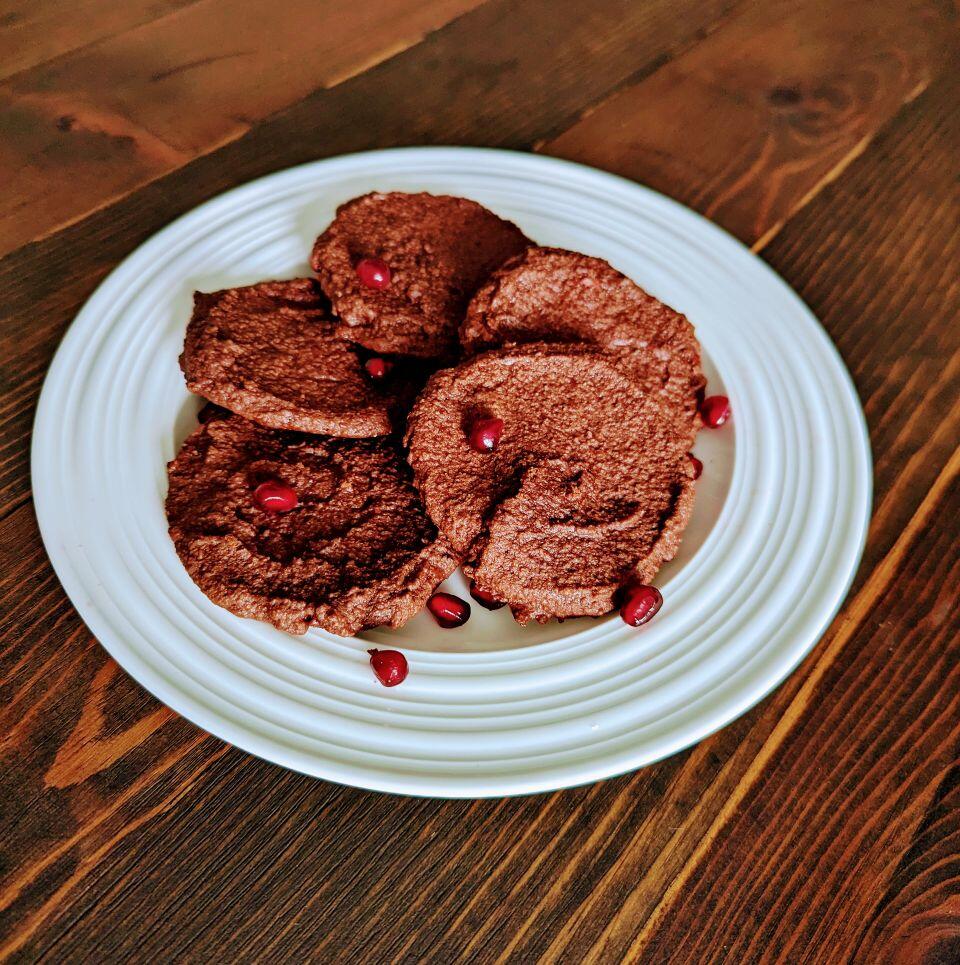
Pomegranate is a wonderful fruit.
Whenever I peel one, it feels like meditation to me ... maybe because I really need to concentrate on carefully pushing/pulling the kernels out so they don't get damaged and so I can keep them fresh for a few days in the fridge.
I've planted a hand full of little pomegranate trees in the last two years in different parts of the city where I live. One of them already survived the last winter. I hope the the other three will make it to the coming spring, we'll see.

> Open, interoperable, and decentralized networks are the future.
That'd be great.
I doubt they will exit their niche though.
How about this abstraction? Centralized mega data silo companies developed through some kind of techno-cultural evolution .. they evolved to form a symbiosis with the intuitive portion of the brain of internet users.
While the rational reasoning (thinking about long-term benefit) of internet users _should have_ led them away from centralized enshittified platforms and towards nerdy decentralized free networks .. it didn't.
Why?
Because people live most of their lives intuitively. They shop at Amazon because it's easy, even though in the long-term the oligopoly harms everyone but the shareholders.
Will the intuition of the majority of people ever opt for decentralized networks?

nostr:npub1cdak4q4f3h3k3sgyh0rd5dj4w8k95f3mquzh6z3ew76vqkh60e3slyczgz
Why wouldn't you first give WINE a try with such apps?

> Researchers at The University of Texas at Austin found that E. coli bacteria use iron levels as a way to store information about different behaviors that can then be activated in response to certain stimuli.

nostr:npub1znvyq8yk3e9m4gn67y5ndh5tnne3apnqzue56w4panamkzlgd8mqq6hk2l
TLDR: publishing "new" content (that repeats known/documented stuff) over and over again is necessary, if you want people to see your topic
In a way I want to agree with you, that the info is already out there in millions of texts/videos/podcasts .. so it wouldn't be absolutely necessary to regurgitate it all perpetually, just adding more redundancy.
The internet is a vast pool of content which people COULD sift through when they're looking for answers to questions about the world, trying to understand.
I guess the problem is: not that many people are actively thinking: "The monetary systems seem broken, I should go read up on the internet for hours to see if someone already found a decent solution."
Many people (including me most of the time) are mostly just consuming content (without an adhoc goal behind the consumption, other than seeing something new) that passes by in timelines/feeds/streams, be it news sites, or social media or public TV/radio.
Those timelines/feeds/streams almost always put "new" content as the next item to consume (instead of mixing in random old content to give it another chance at resonating). This design of feeds basically forces people who want to direct attention to a specific topic, to always fight for a share of the current timelines by continuously churning out "new" content about their topic.
If you want to increase exposure of the public to a certain topic, it helps to put the topic where people will scroll past it, over and over again.
As an aside: I think your typical chronological timeline/feed/stream - as obvious as it may seem - is a fundamentally flawed principle. In an abstract way it means "New is everything that matters, nothing else does."
I think alternative feed compositions would be much more interesting. For example if the (mostly) chronological feed also showed random old content, the share of it being some inverse function of content age.

Fridges use a condenser not a heat pump.
https://learn.apolloheatpumps.com/heat-pump-vs-condenser/
I've seen some online sources that don't understand the difference, but any engineer in industrial heating will tell you the same.
Heat pumps can only function efficiently in temperate climates and require the user to have additional equipment (boiler, on demand, etc) to heat water.
There are no free lunches in thermodynamicss.
nostr:npub1gl723nmngd9adxh8hqgyrpnam8ha8m8pu04vfakr6g8k9e4y3m4s7ukd90
Feel free to obsess about jargon :D
All these apparatuses share the identical working principle and thus they can be put into this category that's commonly referred to as "heat pump", as you are well aware.

It's the thing that keeps your groceries from rotting and your beer/champagne chill.
And, provided there's a reliable supply of electricity, it's also an efficient/reasonable tech to heat/cool your home. nostr:npub1lck4ea3wjk4tgxds0dhc57m4609nqeh6ufwxk39vurulxrzexq7ssjg5k4


nostr:npub1acg6thl5psv62405rljzkj8spesceyfz2c32udakc2ak0dmvfeyse9p35c
Using gossip client, is there a way to find the specific note that contains a media file (picture/video/..) saved in the cache dir?
From time to time I browse a thumbnail view of the cache dir for interesting content.
The search feature doesn't return the containing note when I search for the filename.

In „Die Wahrheit über unser Geld“
https://www.youtube.com/live/C8-xoeTiKvg?si=ClHQ2F_IiVLvnqLA
Ab 1:33 ca.
Danke.
Hab hier auch ein kurzes Video gefunden, in dem er das sagt: nostr:note15zp8v0cwz8n2d4mnsry4wkx5c0lj9ac54lf7cm8a85uhnacwwnwqje27dy

Wo genau hat Maurice Höfgen das geschrieben/gesagt?
Der Kontext würde mich interessieren.
nostr:npub1yu25lwrnht0knsl2swsd5mn966s4p54l3aejplpnzsjg6aryt3jq9t9xxs

Just a link. No description or one sentence what this is or why it could be interesting .. or even just the title of the video? --> just saying: I won't click to find out myself. nostr:npub1flek5nt8lge8audxs6jht5qsddrczcqfqrmgej66grm7g42npw4q8q9rd5