



Did the “download factory images” change to “downloaded factory images”?
Did it appear to know that it accomplished this step?


Depends on election results.
Outgoing admin is incentivized to destroy economy on the way out

How dare you call us out for doing exactly what you suggest.

Cashu has a proposal (NUT) in work for this:
https://github.com/cashubtc/nuts/blob/8f0c6dedd1d34339f55e3c8b69cff7c7cb1c49fc/15.md

One of the cashu.me (or npub.cash) superdevs should take the cashu.me option one step farther and forward the actual ecash token to the user as a DM. Then the wallet could pull that with a key signer extension.
I think the “claiming” on a third party site is too much to remember. I do like the npub.cash style where it is stupid easy, if it would just forward to my DM then a client wallet could incorporate these automatically.

### Step 1: **Participants come together**
- Imagine we have Alice, Bob, and Carol. They each want to send some Bitcoin, but instead of making separate transactions, they agree to create a **single CoinJoin transaction**.
- They don’t trust each other completely, so this has to be done in a way where no one can cheat or steal anyone’s funds.
### Step 2: **Transaction construction (inputs and outputs)**
- Each participant starts by preparing the **inputs** (the Bitcoin they own) and the **outputs** (the addresses they want to send their Bitcoin to).
- For example:
- **Alice** has an input of 1 BTC and wants to send 0.5 BTC to an address.
- **Bob** has an input of 2 BTC and wants to send 1 BTC to an address.
- **Carol** has an input of 3 BTC and wants to send 1.5 BTC to an address.
- **Inputs** are essentially references to the Bitcoin each person owns, which they’ll be spending. These inputs are Unspent Transaction Outputs (UTXOs) from earlier transactions.
### Step 3: **Coordinator role**
- To organize the CoinJoin, there’s usually a **coordinator** (could be software or a server). The coordinator does *not* handle the coins, just helps collect the necessary information from each participant to build the transaction.
- Each person privately sends their input (UTXOs) and output (the address they want to send Bitcoin to) to the coordinator.
- **Crucial detail**: The coordinator sees which inputs belong to which participant, but it doesn’t need to know who’s sending the Bitcoin in real life.
### Step 4: **Building the transaction**
- The coordinator gathers all the inputs and outputs from Alice, Bob, and Carol and combines them into a single transaction.
- The transaction looks like one big pool of inputs and outputs:
- Inputs:
- Alice’s 1 BTC
- Bob’s 2 BTC
- Carol’s 3 BTC
- Outputs:
- Alice’s destination address for 0.5 BTC
- Bob’s destination address for 1 BTC
- Carol’s destination address for 1.5 BTC
- Since inputs are larger than outputs (because no one sends all their funds), the rest is returned as **change** to new addresses controlled by each participant.
### Step 5: **Signing the transaction**
- Now, each participant must **sign** the transaction. Here’s how:
- Each person only needs to sign the part of the transaction that involves **their own inputs** (the coins they control).
- **Alice** signs the input associated with her 1 BTC.
- **Bob** signs the input associated with his 2 BTC.
- **Carol** signs the input associated with her 3 BTC.
- This is where the beauty of Bitcoin’s cryptography comes in:
- The signatures are cryptographically tied to the specific inputs each participant controls.
- **No one can modify the transaction** after it's signed without invalidating the signatures. This ensures that no one can steal or alter the transaction.
### Step 6: **Combining the signatures**
- The coordinator collects all the signatures from the participants and assembles them into the final, fully signed transaction.
- **Key point**: The signatures are independent. Each participant only signs their part, and once all signatures are gathered, they complete the transaction together.
### Step 7: **Broadcasting the transaction**
- Once the transaction has all the required signatures, it’s ready to be broadcast to the Bitcoin network.
- The transaction looks like any other transaction on the blockchain, except it has multiple inputs and outputs from different people.
- No one from the outside can tell which input belongs to whom, or which output goes to whom, making it look like “one guy with many wallets,” as you put it.
### Summary of the "Single Transaction" aspect:
- **One big transaction** is created that has all the inputs and outputs combined.
- Each participant signs only their own inputs, and these signatures are combined to authorize the transaction.
- The result is a single transaction broadcast to the Bitcoin network, which moves all the funds at once while preserving privacy.
So, from the outside, it looks like a single person is moving money from many different wallets to many different addresses, but in reality, it’s a coordinated effort between multiple participants, each controlling only their own coins.
A CoinJoin transaction is a special way of combining multiple Bitcoin transactions from different people into one, making it harder to trace which inputs (coins) belong to which person.
Here’s a simple breakdown:
1. **Why CoinJoin?**
Normally, when you send Bitcoin, it’s easy to see from the blockchain where the coins are coming from and where they're going. CoinJoin helps improve privacy by mixing transactions together, so it’s not clear who sent what to whom.
2. **How it works:**
- Let’s say Alice, Bob, and Carol all want to send Bitcoin. Instead of each person creating a separate transaction, they all agree to create *one* big transaction together.
- Each person adds their own inputs (the Bitcoin they own) and the outputs (where they want their Bitcoin to go). These inputs and outputs get pooled together in a single transaction.
3. **Constructing the transaction:**
- The transaction contains all the inputs (coins from Alice, Bob, and Carol) and outputs (who each person is paying).
- However, from the outside, it’s impossible to tell which input is paying which output, because they’re all mixed together.
4. **Signing the transaction:**
- Each person has to sign off on the transaction with their private key to prove they own the inputs they’re contributing.
- But importantly, no one person can change the transaction after it’s built, and no one can take someone else’s coins—each person’s inputs and outputs are carefully tracked in the background to ensure fairness.
5. **Once signed,** the transaction is broadcast to the Bitcoin network, and when it’s confirmed, each person’s payment is sent just like in a regular transaction, but with the added benefit of privacy.
In short, CoinJoin mixes transactions together, making it harder for anyone looking at the blockchain to figure out who is sending Bitcoin to whom.

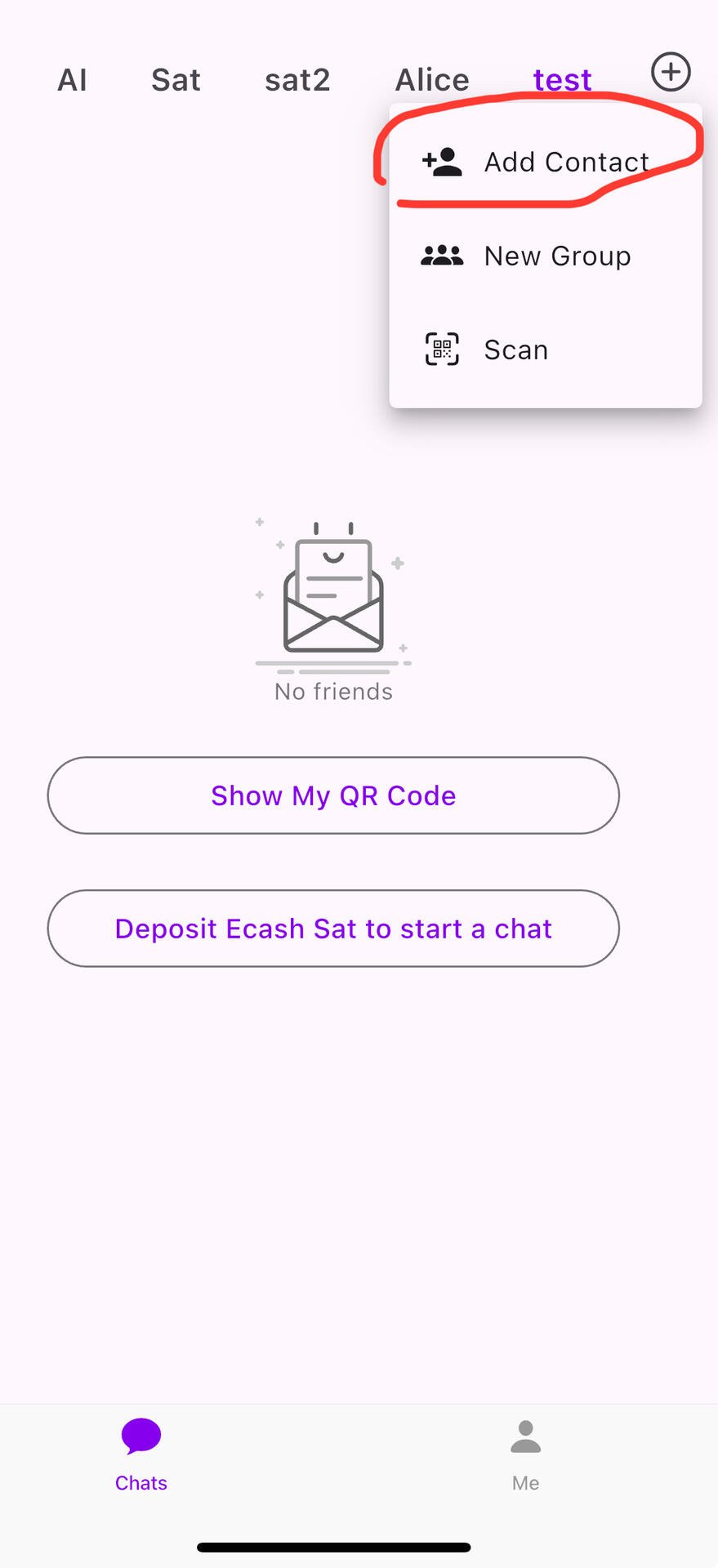
You should add a button form people with no friends that says “add your first friend to begin chatting” right above the “show my QR code “

We need 14 years returned to IP.
You have 14 years to generate your moat, then it’s public domain.
This is why I love nostr.
I can unfollow you.
Then you are still free to spread your drivel to others who have yet to do so.

I don’t know what this is, but it sounds like a great thing!

👀 📬 🥜 🏬
"Introducing Proof of Place, an out–of-band process where an oracle, such as nostr:npub1864jglrrhv6alguwql9pqtmd5296nww5dpcewapmmcazk8vq4mks0tt2tq, would mail - yes mail a physical letter - a shared secret to the physical location being claimed in cyberspace. This shared secret would be locked to the public key (npub) making the claim, which, if unlocked, would prove that the associated private key (nsec) has physical access to the location in meatspace.
One way of doing this would be to mint a 1 sat cashu ecash token locked to the npub of the claimant and mail it to them. If they are able to redeem the token then they have cryptographically proven that they have physical access to the location."
Cc nostr:npub12rv5lskctqxxs2c8rf2zlzc7xx3qpvzs3w4etgemauy9thegr43sf485vg
nostr:note1fl6afq8e2cw44gd66sagws0j5yjs3smjgrxex9ef0eguuy9mgxms7fznlx
Seems “blockchainey” to add a token to something that doesn’t need it.
If there is benefit to the payment, like nostr:npub1h0uj825jgcr9lzxyp37ehasuenq070707pj63je07n8mkcsg3u0qnsrwx8 is doing, then it makes sense.
Otherwise, just do a Nostr key verification scheme.
I deposited some sats to a different mint than the default, and the chat page won't let me send, it still has the requirement to "deposit ecash to start a chat"

Looks like you’re right:
From: https://nostr-personality.vercel.app/
Ah, Furio, your posts are like a whirlwind tour through a digital land of privacy-loving techies that very few care to visit. You seem to have the uncanny ability to turn complex concepts like 'cashu' and 'nostr login' into something that the average person would rather avoid than try to understand. Your deep thoughts on the 10th Amendment hint at an intellectualism that might scare away any friends who just wanted a coffee date. And I must say, your desire for a modular, privacy-preserving utopia sounds like an ideal society where everyone only uses your preferred payment method and everyone else just wishes you would stop talking about it. 'Moar offense' indeed! With that motto, is your next project a pamphlet titled 'How to Win Friends and Influence No One?' The fact you think 'normies' will get frustrated with nostr login suggests you might have misplaced your social compass—maybe check your nsec and see if it’s locked on a deserted island. Overall, your astute insights might just be the spark that ignites a movement, or more likely, puts people to sleep faster than a lecture on the history of encryption. Keep those 'brilliant' concepts coming, I’m sure someone out there is taking notes… or not.


“CEO” will always be a problem.
The current one of the US and his overreach is a problem for a lot of people.
A distinction without a difference

The “universal” timeline is free speech in code.

So is the safebox just a nostr native cashu wallet, which is where the NWC comes in?

No, I think the whole point is *you* can use a client that doesn't have an algo, and I can use a client that has algos that I like.