

This tool may (or may not) be helpful. Click on the '...' button; then 'View profile data'. In the 'Following' section, if you have more than 1 entry (you currently have 2), I think this means you have multiple Following lists. These lists are likely to be mostly duplicates, but any differences may be interpreted inconsistently by clients (I think). I believe that the duplicate lists are created based on how clients choose to add Follows (maybe based on which relay they default to?) Then when you add a Follow, it may only get added to one of your duplicate lists or the other (I think). I have found that consistently using the same client when adding a Follow seems to do the trick (in not creating duplicate Following lists). It's obviously not very convenient; but it's what I'm going with for now. Presumably, this is a technical issue that will eventually be solved protocol-wide.
https://nosta.me/npub1s277u5rww60te98w9umz6p7pjcxuus96cegdsf4y978qcqvu8jtq88dsym

I think 'centralized' banning is a bit of a misnomer if relays are independently choosing to ban (spam or otherwise). Even if every single relay happens to be independently making the same choice to ban based on the same criteria, the choice to ban or not is still decentralized.
*also, with regard to relays that are neither owned nor operated by the public, the term 'public relays' may be a bit misleading in the context of censorship.

Works for me. Let's expand on that and make terms like kilosats, megasats, etc. the norm, too.

I once told a friend that in 5 years, services like Uber would be obsoleted by a P2P social network integrated with Bitcoin. That was 2016. Now I don't make such predictions; but Nostr has me more bullish again that it will be sooner rather than later.

In short: no, it is not illegal.
The OP note is a little incomplete. Biden earned the vast majority of the delegate votes from the primaries (i.e., the public). But, the subsequent delegate vote didn't actually take place until the convention - after Biden dropped out and endorsed Harris as his replacement. So, unsurprisingly, instead of casting those delegate votes that were earned via the primaries for Biden, they were cast for Harris.
I think part of the point of the OP is that the public has effectively been disenfranchised from their votes in the primaries; and, I agree that's a shame. It's not an ideal situation that Biden and his supporters (including Harris) left the party with. But, as long as the party follows its own rules for resolving it, legally, that's all that matters. FWIW, some other parties don't even participate in the primary process for input from the public when choosing their nominee... they just have delegates vote.

The good beer is gone. This water was offered to me by a friend. Free beer is good beer too. Plus, I'm making nostr:nprofile1qqsvfr3f7p95stxqrjslnmuvsmhcxxxqt8swjdfjx5tz7zq0yms5cygpzemhxue69uhhyetvv9ujumn0wd68ytnfdenx7qg6waehxw309aex2mrp0yhx7unpdenk2urfd3kzuer9wcq3gamnwvaz7tmjv4kxz7fwv3sk6atn9e5k7raruhg and nostr:nprofile1qqsvf646uxlreajhhsv9tms9u6w7nuzeedaqty38z69cpwyhv89ufcqpzdmhxue69uhhqatjwpkx2urpvuhx2ue0r0jdwk proud right now too. #beerstr #waterstr #boatstr 
As far as 'water' goes, you certainly could have done worse.

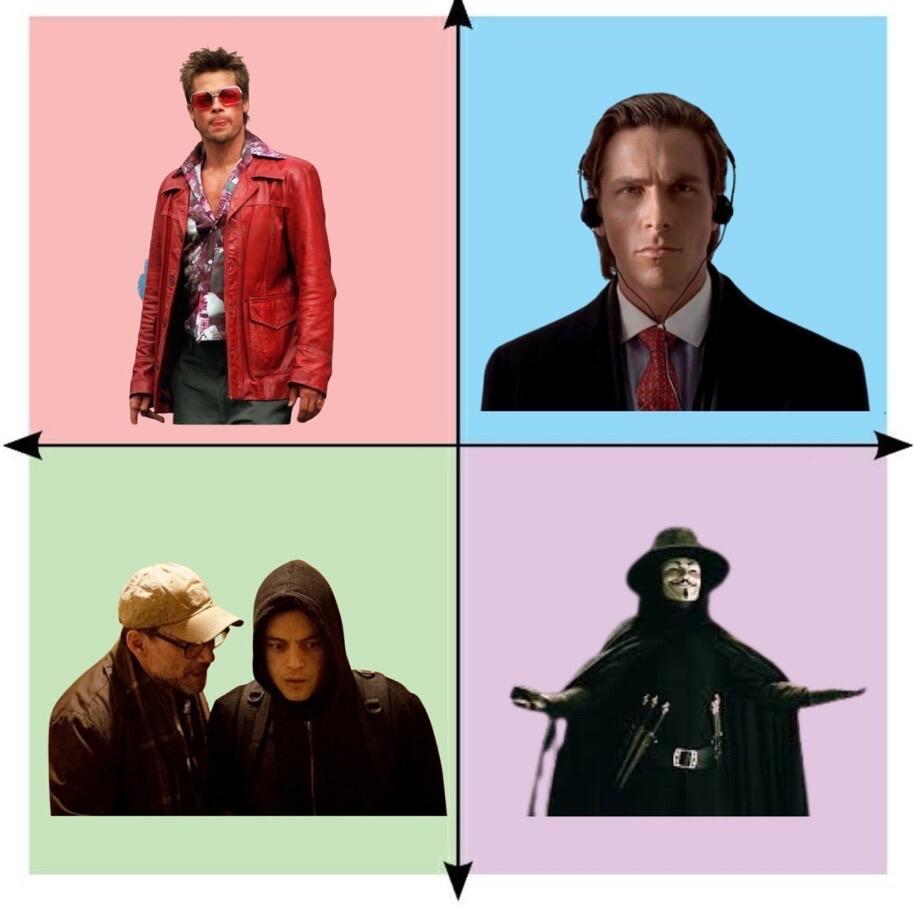
Let's see: crazy, crazy, crazy, and almost certainly crazy... yep, I'm 1 of those 4 types for sure.



nostr:note1wwvhjc0c3uhrveunvmdd9x2twtuwp4l2a2v8nqf8mspyvvzppajqsfs4ya
I think it's at about 58:50... but here's a clip:
nevent1qvzqqqqqqypzpdue4cn7qdct9ptfj0ndfrc469jnn49228al867m627ypas2f5j7qyghwumn8ghj7mn0wd68ytnhd9hx2tcpz9mhxue69uhkummnw3ezumrpdejz7qpqwwvhjc0c3uhrveunvmdd9x2twtuwp4l2a2v8nqf8mspyvvzppajq4gk0dl

Agreed. This is inevitable. I expect it will also become more difficult to discern which of those clients are 'protecting' you from more than just spam.
I like it. I'm not sure how well that much granular control would work at a user level, but it sounds like a reasonable approach for relays to take. It seems to me we need elegant solutions at both levels.

Ultimately, in principal, what counts as 'spam' is a subjective judgement and should probably be treated as such. To me, that suggests an elegant reputation system.
I'm just thinking out loud here, so take the technical feasibility with a huge grain of salt: What if there was a mechanism for automatically muting anyone who 10% of my follows had already muted? - and that would cascade so that if I were automatically muting someone based on 10% of my follows (or explicitly muting), that would count towards the 10% threshold for any of my followers to also automatically mute, and so on. So, once a new spam bot popped up, it seem like it wouldn't be long at all before that spam bot was effectively eliminated for anyone with just a few follows via a cascading reputation system. BTW, the 10% threshold is just an arbitrary example value. Ultimately, It would probably be best to be adjustable on an individual user basis.
Understood. It seems entirely likely to me that without rebooting, the alterations you are making to the swap environment aren't even actually applied yet (until reboot that is). The growth in RAM usage could simply be a factor of Core's memory requirements growing as it progresses through processing its history of transactions.
PS. it also seems strange that the swap usage is exactly the same - as if it's not even using the additional swap file. Is it possible the change you're seeing now is actually a result of previously lowering the swappiness parameter - and it just needed a reboot or something to finally take effect? Because the change you're seeing now is pretty much what I would have expected to see from just lowering the swappiness.
That's interesting. So in addition to making use of more RAM, by increasing the total memory space (RAM+swap) from ~10 GB to 18 GB, running Bitcoin Core is actually consuming more total memory. It's almost as if Core was (still is?) performing its own memory throttling (making its own decisions about which data to store in memory vs read/writing directly to disk) based on your total memory space. Maybe it does this in an attempt to optimize performance while processing the massive utxo set (if so, it would seem it's just not doing a very good job).
I'm no expert in any of these areas; but it's often been my experience that upgrading the RAM (if upgradable) will relieve swapping pressure.
Even though your RAM doesn't appear to be even close to maxing out, that doesn't necessarily mean that the memory manager isn't constantly swapping in an attempt to leave as much RAM available for what it can't know might be coming next.
My understanding is that the process of verifying the blockchain is a memory hog and constantly growing worse. A cursory search suggests 8GB is the absolute minimum recommended for syncing a node - and that recommendation could easily already be outdated.
Alternatively - if a RAM upgrade isn't an option - you might want to look at the ubuntu swappiness parameter. Lowering it from the default 60 to more like 20 should increase the RAM usage to swap ratio - for a faster (albeit technically with a potential for being less stable) overall memory space.
Before any of this, however, you might want to use a disk i/o monitor just to verify that your swap drive speed is indeed maxing out.

Sometime I wonder if they're not better off.
