

You can rehypothecate a synthetic?
Let’s break it down and explain why you might want to care.
A synthetic asset, also known as a "synth", is a financial instrument that mimics the characteristics of another asset or asset class without requiring the owner to own the original asset.
Rehypothecation is a financial practice where a broker or financial institution uses a client's collateral for their own purposes.
Rehypothecation can be risky, as over-leveraging assets can lead to complex chains of obligations. This can increase systemic risk if the market declines.
My understanding of the 2007/8 financial crises is these are the methods used. With the property market as asset base and with the banks playing the role of bad actors.
This is now what Saylor is doing with $MSTR he is buying Bitcoin, packaging that Bitcoin up as $MSTR shares, these shares have no direct relationship to the underlying asset.
Then investment firms are creating funds tracking the performance of $MSTR shares either betting for or against them and selling synthetics at multiple times the underlying asset of $MSTR shares, which has multiple times the underlying asset of $BTC.
This model is actively being replicated by many other firms copying this model, believing it to be sound.
Why should you care about this?
We know that the 2007/8 crises was a tremor and we are yet to experience the actual earthquake.
Bitcoin was created by Satoshi to counteract what happened in 2007/8 by creating hard money.
Saylor through $MSTR and others through ETFs, which while currently backed by real Bitcoin (as far as we can tell), are creating synthetics and being rehypothecated.
Meaning that Bitcoin is becoming part of the problem rather than the solution. Not only that, it is dramatically increasing the size of the problem.
It has never been more important for us to self custody Bitcoin and not allow its use as a Synthetic or to allow it to be rehypothecated.
Saylor discusses this here, it sounds clever, and to be frank I don’t understand most of it, but it is actually using Bitcoin as a leverage device:
https://v.nostr.build/C0z85M8H3Gbyc6Y2.mp4
nostr:note19stecwggn4c5u6qntdc42vxnv09q9dy6vvh3sfyzwx9296xtgess8cwmdp
I am afraid bitcoin is just another chip at the casino.
I take it everyone has watched 'the big short', sort of describes everything you need to know about derivatives



Well it's never a bad idea to gain a historical perspective, but how far one chooses to go back can significantly shape your understanding.
Regarding Americas involvement in the middle east since WW2, I have come to the general view that America exercised its post war position of strength to build a global dollar empire. As its internal economy and productivity have slowly gone into decline America has increasingly relied on its dollar empire to extract the wealth of other nations to maintain its dominant position.
Therefore I would say American military activity has primarily been in the service of America, not Israel, although for sure, Israel has considerable influence in American politics.
Post Kennedy, I would probably subscribe to the view of America as a military industrial complex, especially with regard to its external world affairs. It seems to me that for large sections of the American people world affairs are largely divorced from their domestic concerns and are of little consequence. Hence why this is relatively minimal opposition to the current foreign wars. Now America can fight these foreign wars simply by supplying weapons to foreign armies I suspect will only exacerbate this problem.
This is all quite high level and overly simplistic but as soon as one attempts to focus on the specifics I find the complexity multiplies beyond comprehensive.
Therefore read and learn by all means but don’t do it as a means of figuring it all out.
I really need help understanding international politics, especially American involvement in the Middle East & Israel. I'm quite confused.
> Is it true that most of the wars the U.S. has fought in the Middle East were primarily in Israel's interest?
Is this true, partially true, or completely false?
> If true, why are Americans allowing it? Are they unaware of this, do they support it, or is there another reason?
>If not, how do people explain the "Clean Break" memo, AIPAC funding, and the seemingly unwavering support for Israel's current policies?
I genuinely want to understand this and mean no harm to anyone.
https://www.naturalnews.com/2024-10-08-us-invaded-iraq-zionism-george-w-bush.html
Are you asking as an American or not as an American?
He must have driven a Fiat.



I remember watching this at the time, the threat of nuclear war was the prevailing narrative of fear from that period.
Only if they are not worried about getting to their destination.

Imagine your bad day has a purpose, which is to cause you reflect on the direction of your life and work.
Life indeed is often a series of failures which take us closer to where we need to be.

The power of the US state to manage bitcoin into a controllable bound space through the creation of laws restricting its use and by occasionally incarcerating users indefinitely on spurious charges.
The US has already used these tools to restrain bitcoin adoption and growth and there is nothing to stop them from repeating the same tactics again and again and again.
I am not saying that they want to kill bitcoin, only turn it into something they control, which I already think they do simply because they already have the tools required.
These are some reasons why the Bitcoin market may not equal the size of US treasury market in particular.
Another might be the brics nations forming a gold backed currency standard and becoming the dominant global commodity price setter.
There will be other scenarios where bitcoin will just continue much as it is or becoming an alternative inflation tracking asset. What can I or anyone really know about what will happen?
But just being better is not in itself, imo, sufficient to guarantee becoming the dominant asset class.
I should clarify I have used it, mostly on desktop, and it would be my first choice if I needed business finance software.


Creativity is the purpose.

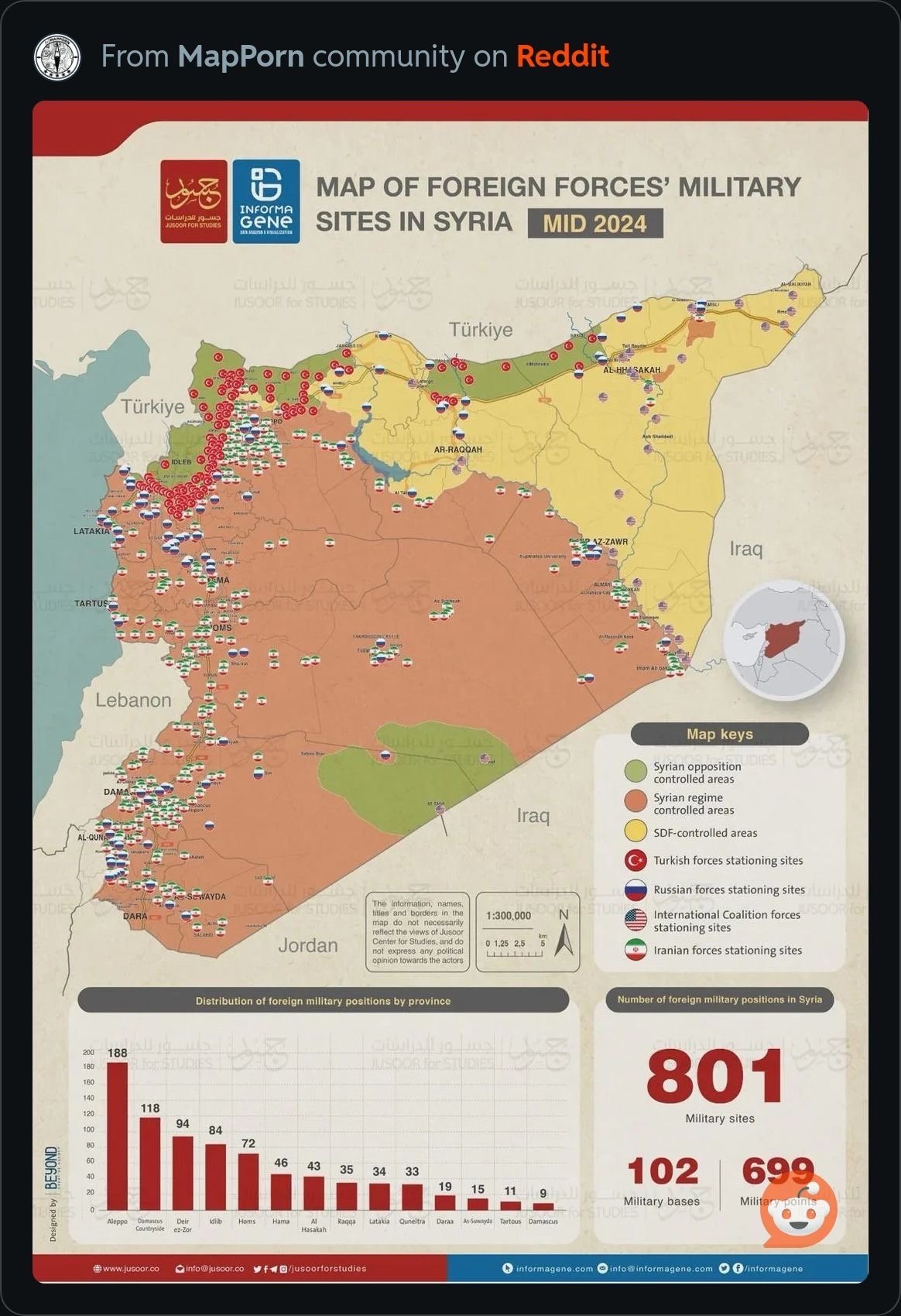
Next, add in the hundreds of years of history which brought this about.
This is the race committee. We have completed the wind sampling and this race is now live.
Yes but it can be a hard slog as you battle with becoming unrecognisable to those around you.

Thanks. Things becoming clearer now.
Who changed how following works? Who has that ability?

I agree. Even the enlightened users on nostr carry their shadow.