

That's why I Bitcoin. The current system is corrupt and illegitimate, and I don't want to be robbed while I wait for something potentially better to happen.
If a government sanctions and protects opaque private theft through the fractionally reserved fiat banking system, they lose the legitimate standing to collect taxes. If you won't defend the citizens' interests by preventing the bankers from robbing them with inflation, don't expect the citizens to respect your authority to tax them.
Legitimate taxes are compensation for effective governance. Protection of property rights is the fundamental basis of governance. Fail at that, and your legitimacy as a government is gone. Taxation by an illegitimate government is just extortion by well organized criminals.

note1aukujhvfnnuxc9ut95htxgjn36utces4e5tvvqn33j04cmwwf6xs3270pu
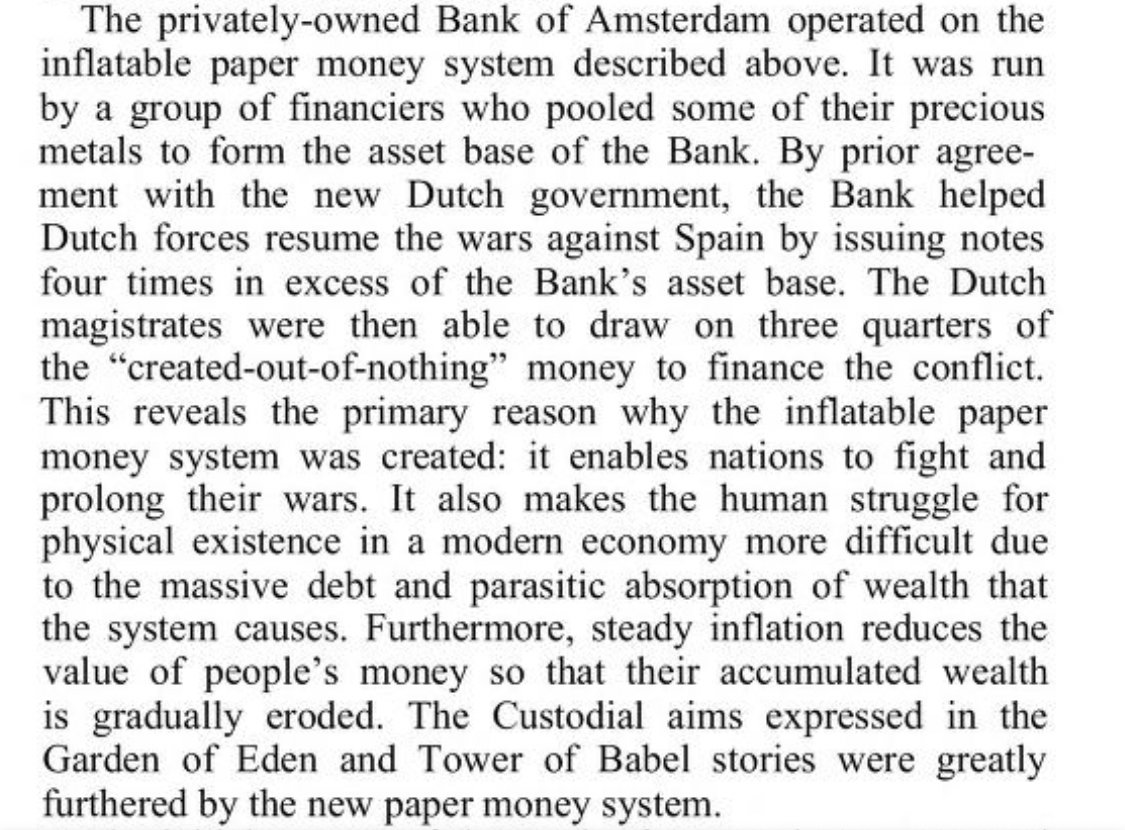
Fractional reserve banking is built on a lie. And it goes downhill from there.
"Federal" Reserve Act
"Patriot" Act
"Inflation Reduction" Act
Notice a pattern?...
The pain of watching sats go on sale when you're already all in 🤢

Appreciate the thoughtful article.
One thought I would offer...
You don't expect the welfare state to go away because you say people want it to exist. If I analyze that, I think it's important to specify what people actually want.
They want the benefits of the welfare state for themselves, without the costs. You say voters support Social Security. What would happen if you proposed a change to Social Security where each person is required to pay into the fund, their payments are kept segregated from everyone else and earn the savings account interest rate, and at retirement they are allowed to withdraw the money they paid in minus an administrative fee, and once their account is empty that's it. Would that get the overwhelming support Social Security has?
I doubt it. The reason Social Security is so popular is that most people perceive they'll get benefits, and the cost is hidden. They think they're getting more than they're giving. I think that applies to the welfare state in general; people perceive it to be "something for nothing."
This is relevant. Have you ever heard someone who supports Social Security say "I always make sure to pay taxes on all the miscellaneous cash payments I receive, plus throw in a few grand extra every year. I support Social Security so I want to do my part to make sure it stays solvent." Of course not. Almost no one contributes to o the welfare state voluntarily.
That's by definition. If someone wants to contribute voluntarily to a system that they don't benefit from disproportionately, they donate to charity. The difference between charity and a welfare system is that the welfare system is coercive. If it weren't coercive, it wouldn't exist. Its role would be filled by a charity.
The current welfare state benefits by being deceptively coercive: the cost is mostly hidden in inflationary monetary expansion, so most people feel like they're benefitting from the system.
Bitcoin can undermine welfare systems by making it extremely difficult to the point of being uneconomical to coerce people. No one is going to willingly agree to have their wealth redistributed away. They might support the current welfare state as a concept, but that doesn't mean they won't hold their savings in Bitcoin as NGU and resist any effort by governments to take that value.

Stacking skills>stacking sats. If you have the skills you can always get the sats. And you'll also need the sats a lot less.

The "elites" today are the weakest and least intimidating people imaginable. They're mostly women and effeminate, spineless, cowardly men. They're parasites, completely incapable of any type of self-sufficient existence. Their only real method of extracting sustenance from the productive class is their ability to create money. That only works if the productive class continues to accept their "money" in exchange for real goods and services. As soon as they get the slightest real pushback, they're completely dependent on their army of mercenary enforcers. And those mercenaries will switch sides in a heartbeat when the money fails, just like the Roman Empire discovered millennia ago.
When we stop accepting their money, it's game over. Imagine Janet Yellen or Klaus Schwab facing off against an irate farmer and trying to take some produce with brute force 🤣. When we stop respecting their money printer, our "elites" are exposed as a pathetic joke.
No idea about Argentina specifically. The article mentions an exchange called Lemon. I can't imagine the government is friendly to exchanges since they're desperate to keep people from escaping their monetary prison, but hopefully this will change under the new administration?

For all claims to the contrary, NGU is Bitcoin's most powerful mass adoption weapon.
NGU because Bitcoin is better monetary technology, and "some" people recognize that and adopt it. But "most" people don't make decisions rationally based on a deep understanding of their options. They make decisions based on emotion and obviously visible effects. NGU presses those buttons.


"Our worthless currency keeps falling in value because we print it like toilet paper to pad our own pockets without pissing everyone off by openly raising taxes. You tried to avoid our hidden inflation tax by using our worthless currency to buy something we can't print. Since you did that, our currency has fallen in value even more. We're going to keep assuming you're an idiot and call the amount of value our currency lost against your purchase "capital gain", and demand you pay us a tax on that. So essentially we're going to shake you down for part of the value you didn't lose because you were smart enough not to hold the currency we keep inflating. Y U mad bro?" -the government

Didn't know Nostr was a low key communist hideout 😮


"A false balance is abomination to the Lord: but a just weight is his delight." Proverbs 11:1
Money is a unit of measurement for everything. Money that is arbitrarily manipulated to benefit someone at the expense of another is the fundamental false balance.
There's a reason Jesus called the moneychangers a "den of thieves" and drove them out of the temple. Messing with the money for your own benefit is an abominable act.
Another fiat economics term that needs to die is "money flowing into _______." Money does no such thing, it doesn't "flow into" stocks, or bonds, or real estate, or Bitcoin, or anything else.
I know it's a shorthanded way of expressing an idea, but it's misleading and generally misunderstood and needs to be abandoned.
When money "flows into" anything, what happens in reality is the money is exchanged between people, and the wealth is exchanged in the other direction. Money isn't destroyed when you buy something with it, or immobilized inside the purchased object like "flows into" suggests. The only thing that changes is who has the money in their account or their pocket.
The effect is that as more people buy a certain category of product, the increased demand causes the price the holders are willing to accept in payment for that product to rise. Eventually the price will rise high enough that the same amount of money becomes a smaller percentage of the cost of that product, and people are satisfied to hold the money instead of buying more product at the new higher price. That's the mechanism of rising prices during inflation.
"Money flows into ______" is a horrible way to refer to that process, and just perpetuates the misconception that money=wealth.

I'm becoming more and more convinced that the number of people who fundamentally understand the root problem is basically a rounding error. Even those who understand that the money is broken, rarely understand the nature of money well enough to explain exactly how it's broken and why it matters. Which leads to them proposing "solutions" with the same embedded problems.

Bullish because money is a ledger of value provided. And I don't want the value I provide recorded on a ledger where someone can arbitrarily alter the ledger without providing value. Bitcoin is the global, secure ledger that can only be updated through voluntary exchange between economic actors.
note197xy57l6knj0u5afydq0guu05kkdhufneuqntkper3nztwrn9w0svjpcwq

"Experts Say Bitcoin Price Increase Leads to Reduced Working Hours and Lower Tax Revenue, Hurting Government's Ability to Fund Ukrainian President's Second Yacht"
